
Stuck to the chair,
Hands and fingers sweaty:
A sultry London heatwave

Stuck to the chair,
Hands and fingers sweaty:
A sultry London heatwave

I was given my first camera, a Kodak Brownie’, when I was about 7 years old. Since that time I have owned a variety of cameras and camera ‘phones and I have taken many thousands of pictures.
In the early days, I used to have prints made from negatives. Later, I became converted to colour slide (‘diapositive’) film and produced many colour slides. With the arrival of computers and the Internet into my life, I reverted to film that produced prints and when it became available, I had digital images of my photographs put on compact discs. Nowadays, I hardly ever have prints made from my digital images.
Ever since I first began taking photos, I have enjoyed showing them to other people: relatives, friends, colleagues, and whoever else showed even the tiniest bit of interest. However, when you present people with an album full of photographs or arrange a slide projection session, most folk begin to lose interest fairly fast. Many of them have agreed to look at someone’s pictures mainly out of politeness, rather than genuine interest.
All of that has changed with the advent of social media and Internet sites for displaying photographs. People need only look at pictures when they are interested and for as long as they want without risking offence to the photographer. Often, if they want to, viewers can express their approval and/or make comments. What is more, the viewers need no longer be confined to the friends and acquaintances of the creator of the images. It is possible to make images available to everyone, who uses the Internet. Some may not be happy with that, but I am. My desire to ‘show off’ my pictures to as many people as possible has been fulfilled!
I find that apart from sites like Facebook, the website ipernity.com is a superb place to post pictures. Other users of the site are often both appreciative and helpful with their comments and suggestions. My Ipernity page is http://www.ipernity.com/home/adam
PLEASE TAKE A LOOK!

Once for grinding grain
Water rush-es fast
Beneath a disus’d mill wheel
The water wheel at the Watermill Theatre near Newbury in West Berkshire, UK
My latest book, whose subject I will not yet reveal, is almost but not quite ready for publishing.
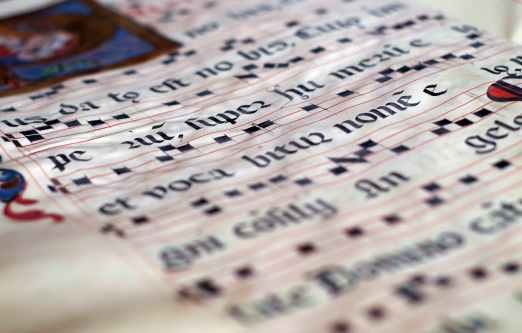
I have reached the stage with my latest book where I am looking out for things like: putting commas where full stops ought to be and vice versa; checking spelling; replacing a word or phrase with a more suitable one; making sure that names start with upper-case letters; and so on. In other words, I am trying to edit my text prior to publishing it. I read my manuscript over and over again, hoping to spot errors. However, frequent perusals of a familiar text can cause errors to be missed. So, I will ask someone else to proof-read my work. Even then, one cannot be sure that all ‘blemishes’ have been identified, but two sets of eyes are better than one when it comes to spotting ‘typos’ and other mistakes.
Even when it has been proof-read, there is still much to do before the book can be published. I will need to choose some illustrations and decide where to place them. I will also have to re-format my text so that it conforms to the publisher’s requirements. And then, when the book has been published, the really hard part begins: marketing my work!
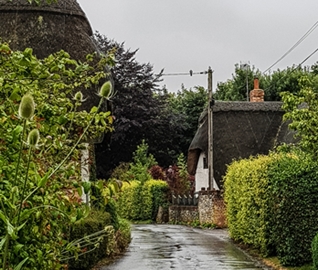
Thatch’d roofs and gentle rain
Puddles under foot
A typical English summer
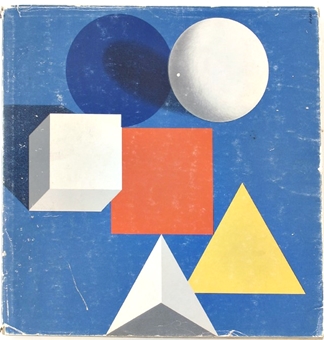
National museums in the UK do not charge entrance fees to view their permanent exhibits. However, they do charge, often quite high, fees to view special temporary exhibitions. This is nothing new. In 1968, I saw superb exhibition at the Royal Academy about the Bauhaus school, founded in pre-WW2 Germany. It was so excellent that I visited it on three separate occasions. Likewise, with a wonderful exhibition about Tutankhamen, also held at the Royal Academy.
Now, several decades later, the museums and galleries have caught on to the idea of ‘blockbuster’ exhibitions. These try to attract vast numbers of visitors, who would not nomally visit the institution where they are being held. They often succeed in drawing the crowds, but by slightly devious means. For example, recently the Royal Academy held an exhibition called: “RUBENS AND HIS LEGACY. Van Dyck to Cezanne”. I thought, as I am sure many other visitors believed, that this was primarily an exhibition of works by Rubens. Well, it was not. There were a few paintings by this great master diluted by a far larger number of works by other artists. It would have been more honest, but less ‘sexy’ and attractive to the public, to have called this exhibition something like “THE LEGACY OF RUBENS”.
My wife visited the current exhibition at the Tate Britain, a real crowd-puller called “VAN GOGH AND BRITAIN”. Who cannot resist seeing pictures by Van Gogh? Few, judging by the crowds of people jammed into the rooms where the exhibition is being held. And, how many paintings and other works by the man who cut off his own ear were on show. There were only a few. The rest of the show was of paintings by other artists, who were definitely not of interest to the bulk of the visitors, who had paid £18 a head to see a Van Gogh show. Clearly the name of the exhibition draws in the ‘punters’.
As with the Van Gogh exhibition, the recent Leonardo da Vinci exhibition at the National Gallery was also disappointing. A few works by the great Italian master were vastly outnumbered by works produced by inferior artists, in whom most visitors were uninterested. And, most of the ‘fillers’ in the exhibition had only tenuous connections with Leonardo.
Of course, not all blockbuster exhibitions fail to live up to their promise. Apparently, the Alexander McQueen exhibition at the Victoria and Albert Museum was a brilliant show that concentrated on the subject promised by the exhibition’s name. Another really good temporary exhibition, which attracted an entry fee, was one dedicated to Roy Lichtenstein at the Tate Modern.
Given the absence of entrance fees and the constant insufficiency of public funds, our national museums and galleries need to raise as much money as possible. The blockbuster exhibitions must be a good way of doing this. It would be better if their naming was a little more related to what the visitor is likely to see.
The Anglican cleric Reverend Wilbert Awdry (1911-97) is best known for his series of children’s books based around the now well-known Thomas the Tank Engine. He published his series of books about railways, The Railway Series, in 42 volumes between 1945 and 2011 (two were published posthumously). Each volume was a small colourfully illustrated story about railway engines with faces and personalities. Being a lover of trains from an early age, I devoured and enjoyed these stories from the earliest day that I was able to read to myself.

One of my favourite of Awdry’s books was called Eight Famous Engines. I cannot remember why I liked it, but I do remember that I mis-read the word ‘famous’. For several years, I thought that ‘famous’ was pronounced ‘farm house’. It puzzled me that the book seemed to have little or nothing to do with agriculture, but that did not stop me from liking the book and re-reading it many times from cover to cover. It was only when I had outgrown these railway books that it dawned to me that the letters f.a.m.o.u.s spelled ‘famous’ and not ‘farm house’.
In addition to the Awdry railway books, I enjoyed leafing through a particular well-illustrated geography book, which I used to borrow often from the local public library. One of the many photographs in this book that caught my attention was captioned “A POLISH FIELD”. You can probably guess what I will write next. Yes, for years I thought that it was a picture of a field containing plants that when harvested became shoe polish. It was a long time before it dawned on me that it was a Polish field rather than a field of polish.
Now, many decades later, you might be pleased to know that I do not make mistakes like the above when I am reading.

I must have been about eleven years old when the headmaster of my preparatory school, the Hall School in Hampstead, interviewed all of us individually in preparation for our applications to secondary school. When I had answered several questions using the word ja (pronounced ‘yah’), the headmaster said that it was wrong to say ja when I should be saying ‘yes’.
The reason that I said, and often still say, ja instead of yes is that my parents were born and brought up in South Africa where ja is often used to express the affirmative.
In my childhood, I heard my parents using words that form part of South African English. At table, I always wiped my hands and mouth with a serviette, rather than a ‘napkin’. And, when we relaxed we usually sat in the lounge, rather than in the ‘sitting room’ or ‘drawing room’.
If I wanted to see a film, my father would enquire at which bioscope it was being shown. And, if a light bulb needed changing, he would insert a new globe.
When we were in the car we used to stop at a robot, if the traffic light was showing a red light and then proceeed when it changed through amber to green.
By now, you can see that I was raised in England, but acquiring vocabulary that was only used many thousands of miles away below the Equator in South Africa. So, it was not surprising that I answered the headmaster with ja instead of ‘yes’. But, he probably had no idea about my parents’ background.
Many years after leaving home, I began visiting India and encountered another local English vocabulary. For example, when the car needs more fuel, you fill up at the petrol bunk. And, if you have baggage, you put it in the car’s (or bus’s) dickie, rather than the ‘boot’. And en-route you drive round a circle, rather than the ’roundabout’. When you board a train, you do not enter a carriage. Instead you board a bogie. If you want your coffee without sugar, do not say ‘without sugar’ but do ask for sugar less. And, so it goes on…
English might well be one of the world’s most used languages, but it abounds with regional variations. American English is a prime example of this. As Oscar Wilde wrote:
“… we have really everything in common with America nowadays, except, of course, language“

If, say, your dentist were to offer to take out two of your teeth for the price of one, and you needed to have only one tooth extracted, would you be excited by this special offer? I bet you would not.
Supermarkets are always making offers such as buy one, get one free. Once, we needed four burger buns. We entered a branch of Tesco’s in Baldock (Hertfordshire, UK) and found that burger buns were sold in packets containing twelve buns. Reluctantly, as there were no smaller packs, we took one pack of twelve. As we were heading towards the check-out desks, a lady who worked for Tesco’s chased after us. She was carrying another pack of a dozen burger buns. She said:
“You didn’t take these.”
“We only want one pack,” I told her.
“But you must take a second pack. There’s a special offer. Two for the price of one.”
I told her that we really did not need 24 burger buns; we only wanted four. As it was obvious that she was not going to take ‘no’ for an answer, we took the second pack of buns without any idea of what we were going to do with them. As far as I could see, we had simply helped Tesco empty their shelves of a perishable product, which if not sold would have had to be thrown away.
Another supermarket chain, tries to encourage purchases by offering the customer a free cup of coffee after paying for the goods. And if you have bought enough, a free newspaper is also on offer. These are nice gestures, but do they compensate for the higher than average prices of many of the goods on offer in their stores?
Parking in shopping centres can be costly. Some supermarkets have large car parks associated with them. They are often close to other shopping outlets, and charge a fee for parking. However, car owners who make a purchase in the supermarket are given a voucher that allows them to avoid paying for the parking.
Special offers are, of course, designed to attract sales. And, we as customers are often happy to take advantage of them. However, I still refuse to believe that many would go for a two for one offer on tooth extractions. But … maybe … I could tempt you to accept three extractions for the price of one!

Why does fish and chips
Taste much better by the sea?
Something in the air?
 yamey
yamey 