From Bhuj in Kutch to Wembley in London and back

THE BHARATIYA SANSKRUTI DARSHAN Museum in Bhuj houses a fascinating collection of artefacts which were collected from all over Kutch by Ramsinhji Kanji Rathod (1907-1997). Amongst these is an amazing collection of various kinds of textiles collected from all over the former Kingdom of Kutch (now part of Gujarat). Rathod also collected clay articles from the Harrapan site of Dholavira long before archaeologists began to take an interest in the area. I could continue by listing many other fascinating exhibits in the museum, but I will concentrate on three of them.

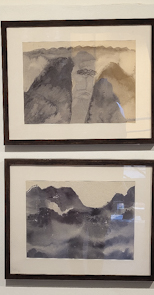
The three exhibits are all paintings by two Kutchi artists from Bhuj: Vadha and Lalmahad Juma. They were painted by 1884 at the latest. One of their creations hangs in Kedlestone Hall in Derbyshire, home of the Curzon family.

Sidi dancers

One of these three paintings in the museum depicts a folk dance being performed by Kutchi Sidis (people of Black African heritage living in India). The other two paintings depict Kutchi weddings.

What fascinated me was that these three paintings were exhibited outside Kutch: in Pune in 1888, and in London’s Wembley in 1925. They travelled over 5000 miles to Wembley to be exhibited in the British Empire Exhibition, which was held in the Empire Stadium between 9 May and 31 October 1925. The stadium later became England’s national football stadium. It was demolished by 2003, and replaced by a new one.

Interesting as this is, there are plenty of other exhibits to stimulate the admiration visitors to this wonderful museum ably curated by our friend Neeta Joshi. Undeservedly, this museum, which rivals many others I have seen in India, is not as well-known as other sights in Bhuj.

The Road Through (or To) Heaven in Kutch (Gujarat,  India)

THE FIRST TIME we drove from Bhuj to Dholavira,  home of Harappan ruins, the journey via Bhachau and Rapar took about six hours, not including stops for refreshments.  This route runs around the large Lake of The Rann of Kutch. We made this journey in January 2020. Since then, a new road has been built. It reduces the journey to less than three hours.


The new road, which runs roughly parallel to India’s border with Pakistan is part of a highway constructed to allow rapid movements of military vehicles. When India is under attack, or at risk from it, the thoroughfare is closed to non-military traffic. To call it a highway is a bit misleading. The new road, NH754K, consists of a single lane of tarmac, which is the width of a large lorry. The tarmac strip is flanked on each side by gravel carriageways that are wide enough for large trucks. When driving along the highway if two vehicles are approaching each other, one needs to swerve off the tarmac onto the gravel carriageway so that the two vehicles do not collide head to head. Many drivers, especially those in huge trucks and fancy SUVs expect cars approaching them to move off the tarmac and onto the gravel which is full of sharp rocks.


The new ‘highway’ traverses the Lake of The Rann of Kutch along a recently constructed causeway. This is about 30 km (18.6 miles) in length. It traverses a narrow island about half way along its length.


The Road To or Through Heaven

Known variously as ‘Way Through Heaven”, “Road to Heaven”, “Road through Heaven”, etc, the causeway is flanked on both sides by the waters of the vast lake through which it runs. Apart from the frequent swerving to make way for approaching vehicles, driving along the causeway is a magical experience. The shallow waters of the lake reflect the sun in varying ways. Far in the distance, beyond the lake, one can see hills silhouetted against the bright blue sky.


The water in the lake derives from the monsoon rains, and remains there until the end of the hot season just prior to the rains. Then, the lake dries out. When the lake is full, it attracts a variety of waterfowl. The most fascinating of these creatures are the huge number of pinkish flamingos. Because the lake is very shallow, many of the flamingos we saw were standing in the water rather than swimming.


Apart from its military purpose, the Road to Heaven has made it easier for tourists to visit the ruins at Dholavira. This has brought prosperity to the previously hardly visited island on which the archaeological site is located. On our recent visit in December 2025, we saw that Dholavira had become much more developed for tourism than it was back in 2020, when facilities in the area were rudimentary to say the least.

  For many people today, the journey to Dholavira is being made not primarily because of an interest in archaeology,  but to enjoy the heavenly sensations experienced while crossing the lake on the causeway.  And there is nothing wrong with that: the causeway provides visitors with a wonderfully memorable experience.

Don’t confuse bhunga in Kutch (Gujarat) with  bunga bunga in Italy

A RONDAVEL IS a traditional African hut found in South Africa.  It is cylindrical and has a conical thatched roof. I first became aware of these in about 1957 when my aunt and uncle took me for a short holiday at Winterton-on-Sea in Norfolk (UK). We stayed at a seaside resort named Hermanus, after the popular holiday spot Hermanus on the coast of the Western Cape of South Africa.  The accommodation at Norfolk’s Hermanus was a set of Rondavels built to resist the inclement North Sea climate. These rondavels continue to accommodate holiday makers today, as we discovered when we visited Winterton-on-Sea in mid-2025.


Later on that year, we visited the village of Veryan in Cornwall. This delightful  place has 5 round houses that look like large rondavels. They were constructed in the early nineteenth century.


Two bhunga huts in Kutch

In December 2025, we visited Kutch, formerly a kingdom in its own right, but now part of the Indian state of Gujarat.  As we drove through the countryside,  we saw round huts with conical, thatched roofs. They looked just like the rondavels in South Africa.  In Kutch, these rural dwellings are called ‘bhunga’. Like the rondavels in South Africa,  their walls are made with mud. Often colourfully decorated,  the bhungas were designed to withstand the region’s harsh climate and seismic activity. Many of the bhungas one can see house local country folk,  but, just as at Winterton-on-Sea,  bhungas have been built and furnished appropriately to provide picturesque accommodation for tourists.


As for their earthquake resistance, a website (www.kaarwan.com/) explained:

“Despite their humble appearance, Kutch Bhungas are remarkably resilient to seismic activity, thanks to their unique construction techniques. The circular shape and low height of the dwellings minimize the impact of earthquakes, while the flexible mud walls and thatched roofs absorb and dissipate vibrations, ensuring the safety of inhabitants during tremors.”

  The idea of building bhunga huts was established after a terrible earthquake hit Kutch in 1819. Thus, to add a note of triviality, the concept of bhunga antedates the so-called bunga bunga parties of which the former Italian leader Silvio Berlusconi was so fond.

Tied and dyed in Kutch (Gujarat)

BANDHANI IS A METHOD of tie-dyeing that is frequently used by textile workers in the Kutch (Kachchh) district of the Indian state of Gujarat. Knots are tied in the piece of material that is to be dyed, and then the knotted fabric is dipped into a vat of dye. The dye colours all of the material except the parts tied within the knots.


To go into a bit more detail,  let me try to explain the procedure.  Starting with the ‘raw’ cloth that is usually whitish in colour,  craftworkers gather small amounts of the material using their fingertips,  and tie these small bundles with thread. The bundles are tied according to a predetermined pattern drawn on the cloth.  The tied cloth is then dipped into a dye. When the dyeing is completed and dried, a new set of knots is tied on the already knotted cloth. The cloth is then dipped into a different  coloured dye. A new set of knots is sometimes then tied according to the kind of design that has been planned, and the cloth is then dipped into yet another colour dye.


This process of tying and dyeing can be repeated several times. After the several cycles of tying and dying are completed, the cloth is stretched, the knots undo, and a textile with a fascinatingly complex and beautiful pattern is revealed.


The bandhani process is complicated and very demanding. Consequently, the bandhani fabrics are quite highly priced.


On several visits to Mandvi in Kutch, we have stopped at an old shop where bandhani fabrics are made and sold. Its current owner, Mr Ashraf Katri, always remembers us when we stop at his shop. He told us that the business has been in existence for at least 150 years. That means the present generation of the family working in the establishment is the fourth or fifth since it first opened.


On a couple of occasions, Mr Katri has shown us some bandhani cloth that was made over 100 years ago. The patterning on this old cloth is far more intricate and finely detailed than any bandhani produced today. Mr Katri explained that it must have been made by someone with very tiny fingers, possibly a young child, because only someone with such small fingers would have been able to tie the minute knots needed to create such an exquisitely detailed pattern.


Although there are many organised tours offered to show tourists craftspeople at work, they are unnecessary if you are prepared to wander around the bazaar areas and small lanes in places like Mandvi and Bhuj.  By doing so you will spot numerous people creating traditional items in their shops, and most of them are happy to let you watch them at work.

An unusual novel by an author from Hungary

“WAR AND WAR” is a novel by the Hungarian writer Laszlo Krasznahorkai (born 1954). It was first published in 1999. It is one of the most unusual books I  have read. Not only is the subject matter often almost incomprehensible but also the style is peculiar.

The novel consists of many sections that vary in length from a few lines to several pages. Each section, apart from at the very end of the book, is one long sentence divided up into sub-sentences usually by commas, but sometimes by semi-colons.  At first, I found it difficult to read, but after a few pages, the unusual punctuation and the immensely long sentences ceased to bother me. The text flows along in a very readable way.

Essentially, the novel concerns a provincial librarian who has discovered a mysterious manuscript in the archives of a small town in Hungary. The contents of this document are often esoteric and obscure. Yet, the librarian feels that it is of such great importance that it should be made available to the world  and preserved for prosperity. To do this, the librarian leaves Hungary, and travels to New York City, where he buys a computer and transcribed the words of the document onto a website he has paid for.

So far so good. Things are not so simple as I have described. The novel describes the weird and often apparently meaningless contents of the documents and the effect that they have on the librarian and people he encounters in New York.

At times, I  found it almost impossible to follow the story. However, it has been written in such a clever way that one needs to continue reading because of the desire to know how the story will end, even if on the way there is difficult literary terrain to traverse.

If you decide to read this novel, you will need to be both patient and persistent. It is worth the effort.

Building boats by hand at a port in Kutch, (Gujarat, India)

THE SEAPORT MANDVI in the Kutch district of the Indian state of Gujarat was founded by Maharao Khengarji I, the ruler of the kingdom of Kutch, in 1580. It became an important, thriving centre of trade for several centuries. And for over 400 years it has been a place where dhows have been built. Today, these huge wooden ships can be seen in various stages of construction along the banks if the Rukmavati River on whose shore lies the town of Mandvi.


The dhows are constructed largely by hand as they have been done for over 400 years. They are built with timber, sal wood, imported from Malaysia. Today, the timber is landed at the port of Kandla in Kutch  a d brought by road to Mandvi.


According to an article in the The Hindu  newspaper dated April 2017:

“As maritime trade grew, traders—belonging to the seafaring Kharva community of both Hindus and Muslims—developed a new expertise: boat-making and repairing to add to their traditional navigational skills.”


Furthermore ,  the arti le related, the dhows:

“… built by hand by craftsmen who are barely literate and have no training in engineering, the ships come up expertly without so much as a sketch being referred to.”

I found this to be quite amazing.


The dhows take several year to be built. When they are completed,  they are usually  towed to the Persian Gulf where they are fitted with engines. Occasionally,  engines are fitted in Mandvi.


Having been fitted with engines in the Gulf, they return to Mandvi with a small crew. Back in Mandvi,  the dhows are loaded with cargo and a larger crew before sailing back to the Middle East.  About a year after they have been completed,  the dhows are sold in the Gulf or East Africa.


Whereas in the past, the dhows had a capacity of about 40 Tonnes, some of those being built today can carry up to 2000 Tonne.


Whenever we visit my wife’s cousins, who lives close to Mandvi, we take a walk along the road next to stretch of shore where the dhows are being made. The huge timber structures, upon which men are assembling the ship using hand held tools. The workmen appear to cling to the beams of timber as they worked on the ship. They do not wear safety harnesses.


The ‘embryonic’ dhows are surrounded by piles of uncut timber as well as the planks that have been cut prior to being attached to the ships being constructed.  Apart from the building  materials, the area contains numerous stray dogs and the occasional foraging cow.


Mandvi is about 250 miles northwest of Alang (in Saurashtra,  Gujarat),  which we have visited. It is in Alang that ships that have reached the end of their lives are broken up. I was interested to read in The Hindu article that in Mandvi:

“The boat-makers use old generators discarded from dismantled ships lying in Gujarat’s Alang ship-breaking yard. These are then modified by installing gear boxes in them and converted into boat engines.”


I have no idea for how much longer  the handmade dhows will continue to be built in Mandvi. So, if you are able, a visit to Mandvi to see this traditional boat building  is well worthwhile. It is handicraft on a huge scale.

The superfast express train from Ahmedabad to Bhuj

THE EXPRESS TRAIN, Indian Railways number 22903 (the Bhuj AC Superfast Express), runs between Bombay and Bhuj (in the Kutch district of Gujarat). On its way, it stops at Ahmedabad Junction Station at 630 am. To catch the train, we arrived at Ahmedabad Junction at about 530 am – I always prefer being early at the departure point of a train, aeroplane, bus,  etc.


It was dark as our autorickshaw drove speedily along the empty streets of central Ahmedabad. The sun only rises after 7 am in the west of India.


Ahmedabad Junction Station

The well-lit station platforms were covered with rows of people wrapped in blankets, sleeping on the floor. The sight of these sleepers reminded me of the images that Henry Moore made of people sleeping on the platforms in London’s deep Underground stations during WW2. Of course, the people sleeping in Ahmedabad’s Station were awaiting trains, not sheltering from bombs dropped by the German’s Luftwaffe.


These sleepers were not disturbed by the endless series of train announcements, each of them were made in three languages: Hindi, English,  and Gujarati. One of them that was repeated at regular intervals informed those who were listening that the Shalimar Superfast Express (it runs between Kolkata and Bombay) was running 12 hours and 50 minutes late. Fortunately, our train 22903, pulled into platform 3 almost exactly on time.


We had reserved places in the first class, air-conditioned carriage, and had a coupé (compartment) to ourselves. Although comfortable,  it was a rather spartan little cabin. I believe that first-class rail travel in India is aimed at those who wish to travel secluded from the ‘madding crowd’. Frankly, I prefer travelling in a carriage in which one can see and, sometimes,  interact with one’s fellow travellers and the endless stream of vendors, who move up and down the trains in India.


The six-hour journey from Ahmedabad to Bhuj is through terrain as flat as in the Netherlands,  but much dustier. All along the route we passed factories, both small and large, many with chimneys emitting smoke. For the first half of the journey,  we travelled past well-tended fields in which crops were growing. After crossing into Kutch, we passed numerous vast water features containg seawater that was being dried to produce salt. Every now and then, white, conical mounds of salt could be seen. The train runs for a long way parallel to a main highway in Kutch.  This connects Kutch and its important port Kandla with the rest of India. An endless stream of large trucks moves along this road.


At Gandidham in Kutch, the train’s engine was changed. We began moving in a different direction as we travelled along the stretch of rail track between Gandidham and Bhuj, where we disembarked.  Outside the station there was a sea of men offering to drive us in taxis, jeeps, and autorickshaws.


Eventually, our driver met us, and drove us through the hilly, almost arid hills between Bhuj and Kutch Mandvi, where we were going to stay with my wife’s cousins.


Even though train 22903 traverses terrain that few would regard as picturesque, I always enjoy long land (rather than air trips) journeys through  the countryside of India.

Woven by nature long before humans discovered weaving

HUMANS HAVE BEEN weaving textiles for many centuries, for at least 12000 years, if not longer.

Today, while walking in the extensive grounds of a country house in Kachchh (Kutch) in Gujarat, we noticed something interesting about the decaying fronds that had fallen from palm trees. The fronds have long tapering stems that support the photosynthesising leaves of the tree. The stems are widest where they attach to the tree and taper as the distance from the trunk increases. The tree discards mature fronds to make way for new ones.

Woven by nature: detail of a drying, fallen palm frond

What interested us was that the drying fronds that have fallen from the trees shed or lose part of their external cuticle to reveal lattices of fibres that resemble woven textile. These lattices of drying palm fibres look just like sheets of sacking cloth. Nature achieves this natural weaving without requiring looms.

Palm trees have been around since long before Homo sapiens. Therefore, this natural form of weaving antedates human weaving activities. I wonder whether when our ancestors saw what we noticed today that they conceived the idea of weaving.

A statue iņ Ahmedabad and a friend in Bangalore

I FIRST CAME ACROSS the name Indulal Yagnik when I was researching my book (“Indian Freedom Fighters in London:1905-1910”) about the less well-known Indian Freedom Fighter, Shyamji Krishnavarma (1857-1930). Indulal Yagnik (1892-1972), who was a writer and political activist, published a biography of Krishnavarma in 1950. Yagnik wrote many other things, amongst which were the first 30 chapters of Gandhi’s autobiography that were dictated to him by the Mahatma whilst they were both imprisoned in Yeravada jail.


Between 1915 and 1947,  Yagnik was active in the Indian struggle for freedom. Amongst his many activities,  he carried the first tricolour Indian flag from Germany to India. This flag had been designed by Madam Cama, a leading proponent of Indian independence, and had been displayed to the world (for the first time) at a meeting of socialists in Stuttgart (Germany). Yagnik was imprisoned by the British at least twice on account of his anti-British activities and publications.


After Independence, in 1956, Yagnik led the Mahagujarat Movement for a separate Gujarat state, which led to the separation of Gujarat from Maharahtra that occurred in 1960.


Close to the east end of the Nehru Bridge in Ahmedabad, the city in which Yagnik died, there is a small, well-maintained  park in  which there is a fine statue of Indulal Yagnik. It was created by the late Kantibai B Patel, who also made many other statues of well-known Gujarati people, including many of Mahatma Gandhi.  The statue of Yagnik depicts the man striding forward, his shirt pocket filled with a spectacles case and a pen.


I was keen to view the statue not only because I had read Yagnik’s biography of Krishnavarma  but also for another reason. His nephew,  who lives in Bangalore,  is a good friend, whom we got to know because his wife is related to members of my wife’s wider family.


Even if you do not have the sort of ‘connection’ we have with Indulal Yagnik’s nephew, the statue is worth seeing because it is a good piece of sculpture.