Do not lose it


I write a great deal on my computer. Although computers are generally reliable, they are prone to technical hiccups and even total failure. Therefore, I am in favour of following the generally accepted advice that it is a good idea, nay essential, that you save your work not only on the computer’s hard disc but also remotely from the computer.

I tend to back-up anything I don’t want to lose on USB memory sticks. However, being of a somewhat paranoid/neurotic nature, I do not place my trust in these alone. What if, for example, I lose one or one of them suddenly ceases to stop working as happened with a costly hard drive that contained almost five years of documents and photos and then suddenly ‘conked out’? To avoid this, I record everything on to two or more separate memory sticks. 

But, still I am not completely content. Although large companies like Gmail, Dropbox and Microsoft might possibly go ‘bust’ one day, this is far less likely than me losing my memory sticks or my computer giving up the ghost. So, I upload my work onto the hard-drives or ‘clouds’ of the large corporates using Dropbox, OneDrive, and various email accounts I have created, which are dedicated to storing my work.

Call me over-cautious if you like, but I don’t care. Re-writing an important letter or a several hundred page book that has been lost because it has not been securely saved is not a prospect I relish! And, nor should you!

Why I started to write

Cuneiform_240


Well over 10 years ago, I came across a website specialising in genealogy relevant to my background. I was curious about my ancestry, but knew very little about it. So, I registered with the site.

One of the sections of the website allowed members to insert surnames alongside towns with which the surnames were associated. So I put my mother’s maiden surname next to the name of a small town in South Africa, where she lived with her parents as a young child. I did the same with my father’s surname. The idea behind this particular section is fo researchers to see if any of the surnames that they are looking into match entries that other researchers had entered. For example, I might have entered ‘Goldberg’ alongside ‘Cape Town, South Africa’. If another person was interested in ‘Goldberg’ families either in Cape Town or South Africa searched this section of the website, they would find all of the Goldbergs in Cape Town or South Africa, which had been entered by other researchers, alongside a link for contacting the person who had entered the information.

So, I entered the two names as described earlier, expecting very little or nothing to happen. My skepticism mas ill-founded. Two days later, I received a message from someone, whose name I did not recognise. He had found my mother’s maiden surname alongside the small town where she lived in South Africa. My new correspondent had worked out that he and I are second cousins. Subsequently, he sent me a family tree for my mother’s father’s family. 

When I told my mother’s brother about this beginner’s luck, he added to it by giving me the family tree for another of my ancestors. One thing led to another, and soon I had compiled an enormous composite family tree. 

My wife commented that it was all very well collecting ever increasing numbers of names to add to my family tree, but that it was not particularly interesting. She suggested that what would be far more interesting would be to look into what the individuals on the tree did when they were alive. This proved to be fascinating, and was the reason that I began writing and publishing books and articles. I fell in love with writing. Regular readers of this blog will know by now that my interests are no longer confined to tales about my ancestors.


Picture shows Cuneiform writing at the British Museum

Breathing the past

CHARLIE


I always enjoy visiting places with interesting historical associations. For example, it gave me a thrill to enter the room in a house in Porbandar (Gujarat, India) where Mahatma Gandhi was born, and to stand in Sarajevo at the very spot where Gavrilo Princip shot the Austrian Archduke and his wife in 1914.

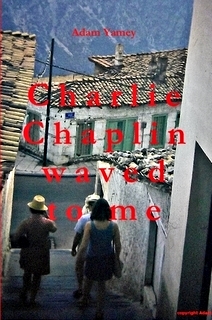
I hope that the following excerpt from my book “Charlie Chaplin waved to me” can begin to explain my fascination for visiting places with great historical significance either for me or the world in general:

To reach Oxford Circus, the starting point of our trips to the West End,
we used to take the Northern Line of the Underground to Tottenham
Court Station, and change there to the Central Line. In the 1960s, there
were signs that directed the passengers from the Northern line to the
Central, but these involved using a number of staircases and walking
quite a distance. My mother ignored the signs, and headed straight for a
passageway at one end of the southbound Northern Line platform. This
was clearly labelled ‘No Entry’. My mother knew better than to obey
this because she knew that it was a shortcut to the Central Line
platform. Today, it is the recommended route. Whenever I walk along
this once ‘forbidden’ passageway, I wonder whether amongst the
billions of molecules that make up the air in that circular passage there
is maybe at least one molecule of the carbon dioxide or nitrogen that
was once breathed out of my late mother’s lungs. And, do the echoes of
her footsteps still reverberate even ever so faintly in this busy
passageway?

It is the thought that I might be sharing even one molecule of the air breathed by the persons who gave a place the historic interest for me that gives me an irrational thrill. It is for this reason that I feel unable to visit places like Auschwitz and Dachau. I do not wish to breathe the air that might possibly have been around when the Nazis and their unfortunate victims occupied such places. 

This might seem a bit ridiculous as the chances of breathing the same molecules of air that say my mother or the Archduke of Austria inspired are extremely miniscule, but what is the joy of life if not full of quirkiness.


Charlie Chaplin waved to me” by Adam Yamey is available from:

Amazon, Lulu.com, and bookdepository.com, as well as on Kindle

MOTHER IN LAW

This story was related to me by a good friend. She suggested that I publish it on my blog because it illustrates certain attitudes still prevalent in India. I have changed the details for obvious reasons and will tell it in the first person.

This happened during my days as an undergraduate student in the early 1970s. Those days, we were all hippies, often high on dope. I had a fling with Raj. Nothing came of it.

Later and quite by chance, I found myself enrolled in the same postgraduate course as Raj. We got together again, and I became pregnant. Although we weren’t married, I wanted to keep the child, who was conceived out of love, not as a result of rape.

One day, Raj, without informing me where we were going, took me to his parent’s home. I was not dressed appropriately for such a visit, to meet a boyfriend’s parents. I was in shirt and jeans, wearing non matching socks and tatty sneakers.

When we arrived at his home, not only were Raj’s parents waiting to meet me, but also various of his uncles. Raj’s mother, let’s call her ‘Mom’, made me sit beside her and the men left the room.

“So, where did you do it?” Mom began, “was it in a hotel?”

“No, in my room at the hostel” I replied, wondering why she needed to know.

“Oh, in your room… very liberal,” she commented.

“And how many times did he do it?” Mom enquired.

Irritated, I replied:

“Too many times to remember.”

Then, the men returned to the room where we were sitting.

Raj’s father addressed me formally: “My son has been unjust to you. We will honour you by asking you to marry him.”

Raj and I were duly married. Just before our wedding, Mom took me to be examined by a gynaecologist. I was surprised as I had already consulted one before I was introduced to Raj’s parents.

Years later, it dawned on me why Mom had taken me for the gynaecological examination. She was probably checking that I really was pregnant, and not falsely claiming to be with child in order to entrap her son into matrimony.

To save face, Mom always told people that my child was born three months later than its true birthday.

Read what you wish into my friend’s story, but try not to be surprised by it. After all, deciding ones spouse by means other than by arrangement is still relatively uncommon in India.

A new skill

A progressive disease is one that keeps getting worse.

Waiters in restaurants used to confine themselves to serving food and drinks to customers.

With the advent of digital cameras and mobile telephones with built-in cameras, things have changed. Waiters need to become competent photographers, able to use any kind of image capturing device handed to them by customers seated around a table. Not only do these carriers of food need to be able to operate whatever camera is handed to them, but also they need to be good at composing photos, and many of them are.

When I first began practising dentistry back in 1982, dentists confined their activities in the surgery to dental matters. When I retired 35 years later, not only did we dentists still deal with dental matters but also with general lifestyle behavioural assessment and advice.

Like the waiters, our additional workload is rarely appreciated or adequately rewarded.

Is this progress?

My cat

I love cats. I have only ever ‘owned’ one. I named it Crumpet.

I was less than ten years old when Crumpet entered my life. I was lying in bed at home, recovering from a bout of tonsillitis, when my late mother brought Crumpet into my bedroom. She had only just bought the cat at a pet shop to cheer me up.

My mother, who was always nervous about me risking injury, would not allow me to open the tins of cat food that Crumpet enjoyed. She was concerned that I might cut myself on the sharp edges of the open tin lids. So, as my mother did not want to disturb my father, who did much of his academic work at home, she became responsible for feeding Crumpet.

Cats tend to be quite self oriented. They favour the people who feed them. In Crumpet’s case, it was my mother who received much of the cat’s attention. Our cat used to rub herself against my mother’s legs affectionately, especially when my mother was opening the cat food.

Now, here’s the rub. My self sacrifying mother could not bear cats. She put up with Crumpet for my sake.

Crumpet must have realised that my mother was not keen on her because after a few weeks our pussy abandoned our home for another about one hundred yards away from ours.

Since Crumpet deserted us, I have never kept another pet, but my fondness for cats has remained.

A writer’s confession

I studied for my O Level examinations at Highgate School in North London. These were important state exams taken at 16 years of age.

My English language teacher was more interested in discussing the poetry of Ted Hughes and Philip Larkin than in teaching us the basics of English Language as required for passing the O Level in that subject. I cannot blame him entirely for what happened when I sat the exam.

My poor ability in written English must have contributed to my failing the exam. The examiners must have been further annoyed by my essay on the subject “Is it fair that nurses get paid less than successful pop singers?”. I wrote that it is, because, I argued back in 1968, a pop singer gives pleasure at any one time to a greater number of people than a nurse.

Fortunately, I have forgotten the name of my of my English language teacher, but I still recall the teacher, Mr George Sellick, who helped me pass my O Level retake.

Sellick taught us advance level biology for the university entrance examinations. Every week we were required to write three essays. On Saturday mornings, we had a long lesson with Sellick. This session was dedicated to discussing the essays that the class had submitted. Our teacher used to read out to us the highlights and lowlights of the week’s essays. He pointed out what was good in essay writing and what was to be avoided. I found these sessions to be very useful.

I retook the English Language exam 6 months after my first attempt and passed quite well, albeit not excellently.

During the last decade or more, I have been writing and publishing a great deal. I now call myself ‘an author’. Whenever I think of myself as an author, I remember my disastrous first attempt at the English O Level, and feel that maybe it is a bit of chutzpah* to take up the same profession as truly great author’s such as Balzac and Dickens.

Although my written English has been gradually improving, I often get my wife, a retired barrister, to read through what I have composed. She is a reader rather than a writer (although she used to write much for her professional work). Unlike me, she got top grades in English Language at school, reads a great deal, and has a superb command of written English. I am enormously grateful to her.

*chutzpah is a Yiddish word implying barefaced cheek

Seen girl bring ring

Arranged marriages where parents choose the bride and groom are still very common in India. Often the girl and boy hardly know each other, or may have never met, before the wedding ceremony.

In India when a marriage is not ‘arranged’ except by Cupid’s arrow, it is called a ‘love marriage ‘. My wife and I had a love marriage. When our daughter was very young she must have learned about arranged marriages from someone or at school because one day she said to us, assuming that we had had an arranged marriage :

“When I grow up, I am going to marry whoever I like unlike you.” We told her that we had chosen each other.

I am not qualified to discuss the relative merits of love and arranged marriages but both of them can be quite successful. To westerners, arranged marriages might seem strange. The reverse is true for many Indians, for whom the idea of love marriages often seem alien.

Once, I was talking to some young men in a bookshop in Bangalore. When I told them that my wife is Indian, one of them asked me if we had had a love marriage. I said we did have one. They asked me how I felt about love marriage. I told them that I can recommend it.

My in-laws, both Indians, married in India in the late 1940s. In those days, the majority of marriages were arranged. My in-laws were very unusual for that era because they had a love marriage. My father in law and his bride came from different communities. At first, the marriage could not occur because the bride’s family did not want their daughter to marry out of her community. After some time, they softened their views and a very successful married life began.

My wife and I come from different continents, but no objection to us marrying came from any quarter.

Recently, we were chatting with an elderly Indian gentleman, whose story illustrates how little say the participants in an arranged marriage might have. He told us that he had married in the late 1940s. He said that he did not meet his bride until the day he got married. He was working away from his home town when he received a telegram from his mother. It contained the words:

“SEEN GIRL BRING RING”