Fading with time

SINCE THE IMPOSITION OF ‘LOCKDOWN’ in the UK, use of public transport has been discouraged, as has wandering too far from home when taking exercise. While not exactly ‘confined to barracks’, the distance that we have been allowed to move away from home has been limited, more or less to the amount of distance that we can manage to walk (or, not in my case, cycle) comfortably, without exhausting ourselves. This meant that for many weeks we have been walking around our local area. A friend of ours in Dublin told us, half-jokingly, that during the Irish lockdown, he felt that he had got to know every blade of grass in his neighbourhood. I understood what he was saying.  For me, greater familiarity with our immediate locality has not bred contempt for it, but the opposite. We have been walking along small streets we never knew existed and discovering interesting details in those thoroughfares that we thought we knew so well.

HORNTON 2 BLOG

I have been walking along Sheffield Terrace, which leads off Kensington Church Street, two or three times a week for the last 25 years, yet it was only yesterday that I noticed a small square metal plate on the wall of a house in that thoroughfare. It recorded the fact that the author GK Chesterton was born in that house on the 29th of May 1874. A few doors away on the same street, there is a much larger and far more obvious plaque commemorating that the founder of the Church Army, Prebendary Wilson Carlile (1847-1942) had lived there. I had often noticed this memorial, but I had never noticed the far more discreet memorial to Chesterton, which looks like a simple grey wall tile from a distance.

Sheffield Terrace leads to the northern end of Hornton Street, which is marked on 19th century Ordnance Survey maps as ‘Campden House Road’.  Hornton Street leads south and downhill towards High Street Kensington. Once again, this is a street along which I have walked several times a week over a period of at least 25 years. Various roads lead off Hornton Street. The short Pitt Street is one of these. On the corner of Pitt and Hornton Streets, there is a faded rectangular sign that I have always assumed carried the words ‘Hornton Street’. However, I had not looked at it closely enough until yesterday.

I do not know what made me examine the faded sign closely, but I am glad that I did. Some of the letters on it have disappeared. The following are just about visible, and even more so on enhanced digital photographs: H, O, R, N, …, D, G, E. The last three letters are not ‘E, E, T’, which you would expect to see if the sign had read ‘Hornton Street’. I wondered if the sign had originally read ‘Hornton Lodge’. I went home and searched for ‘“Hornton Lodge” Kensington’ on Google.

One of the most useful things that came up amongst the Google search results was an offer on eBay for two pages of the issue of “Country Life” magazine, dated 21st of March 1968. These pages contain an article about Hornton Lodge on Pitt Street. The article bore the title “Serene Vision of a Modern Interior”. It describes the interior of a house built in 1948 on a bomb site and owned by Mr and Mrs James Melvin. The house, a long rectangular building, was called Hornton Lodge. The fading sign is all that remains of the house described in the magazine. Currently, builders are erecting a new building on the part of the plot nearest to the corner where the sign can be found. This new construction is, according to a planning application submitted in December 2019 by Nash Baker Architects, to replace an:

“… early post war semi-detached property … constructed circa 1948-49, on the site of a former villa known as ‘Hornton Lodge’. The architect/owner, James Melvin, was a partner in major architectural firm: Gollins Melvin Ward Partnership. However, at the time it was constructed, the firm was in its infancy, and this project was a modest family home for a young architect and his family; designed with modernist intentions during a time of austerity.”

I found references to a ‘Red House’, also referred to in at least one item, maybe erroneously, as ‘Hornton Lodge’.  The Red House was built by Stephen Bird in 1835. It was also known as ‘Hornton Villa’. This was not the property on Pitt Street demolished by a bomb in WW2 because it stood across Hornton Street opposite the western end of Holland Street, which is south of Pitt Street. A future president of the USA, Herbert Hoover, lived at that address between 1907 and 1918. Hornton Villa, The Red House, was demolished in in the 1970s, and on its site stands the architecturally undistinguished Customer Service Centre of the Royal Borough of Kensington and Chelsea.

There is more evidence of a Hornton Lodge, quite distinct from the Hornton Villa, mentioned above. Joseph Foster’s “Men-at-the-bar : a biographical hand-list of the members of the various Inns of Court, including Her Majesty’s judges, etc.” (published in 1885) published the address of a barrister Richard E Webster (1842-1915; called to the Bar in 1868), Lord Alverstone, as “Hornton Lodge, Pitt Street, Kensington W”. He became Attorney General between 1885 and 1886.  Even earlier than that, “Allens West London Street Directory” (published in 1868) lists a Theodore Aston as living at Hornton Lodge.

Close examination of a sign that I have passed and seen many thousands of times, assuming it bore a simple faded street name, has revealed that I had never looked at it carefully enough before. The constriction of my field of activities to a small part of London has, to my surprise, heightened my powers of observation rather than blunted them, which could have easily happened when visiting the same locality repetitively.

Soon, the faded sign on the corner of Pitt Street will either be removed or become even more illegible. I am glad I noticed its clue to the past before either of those things happen.


A chance meeting

BRIDIE WAS OUR DAUGHTER’S babysitter for several years. She also collected her from school and looked after her until one of us returned from work. Although she was well over 80 when we first employed her, Bridie was a very sprightly, energetic woman.

LondonUnderground_GoldersGreenStation


She had been brought up in the wilds of western Ireland. Every day, she used to walk several miles over the hills to go to school. She moved to England as a very young lady. On arrival in Britain, she was at first given shelter by the Salvation Army. She had to promise them she would become teetotal. She kept this promise.

One day, Bridie told us an interesting story. When she was young before WW2, she worked as a maid for a Jewish family in north London’s Golders Green.  She wore uniform. There was one uniform for daytime and a different one for the evenings.

When Bridie was not working for us or ironing for our friends, the Wilsons who had introduced her to us, she used to roam around London taking advantage of her free bus pass (given to Londoners over 60 years old).

One day, Bridie visited Golders Green. When she was waiting for a bus to take her home, an elderly gentleman in the queue said to her:

“Excuse me, but are you Bridie?”

“I am,” she replied.

“Well, you looked after me when I was a child sixty years ago”

Bridie realised that the man was from the family, for whom she had worked in Golders Green before WW2.

A bus approached. The man asked her:

“Are you getting on?”

Bridie nodded, thinking he had asked a different question. The man jumped on the bus, leaving Bridie standing by the bus stop. Had she heard his question correctly,  he would have waited behind to reminisce with her: an opportunity lost for ever.

Ever since hearing about Bridie’s chance encounter, I have always considered her story as being rather sad.


Picture of Golders Green bus staion (Wikipedia)

A road through my childhood

IT IS BECOMING AN ADDICTION: I must write something every day. It is probably a harmless compulsion, but it gives me great pleasure. Today, I will write about a road that did not exist until 1835. It runs northwards from the centre of London. It was built to bypass the hills on which Hampstead perches. The old route to Finchley and Hendon from central London passed across these hills before Finchley Road, originally a toll road, was constructed. Part of Finchley Road connects the suburb of Golders Green with Swiss Cottage. For five long years I travelled along this stretch.

HALL BLOG

Swiss Cottage is named after a pub, Ye Olde Swiss Cottage, which still resembles many people’s idea of what a Swiss chalet should look like. The pub is a descendant of the Swiss Tavern, built like a Swiss chalet. Opened in 1804, it stood on the same spot as its most recent avatar. It stood on the site near one of the toll booths built for collecting money from people using Finchley Road in earlier times.

There was another toll collecting place at Childs Hill, between Golders Green and Swiss Cottage. This toll gate was next to the now demolished Castle pub. For five years, I passed through Childs Hill on my way to the Hall School near Swiss Cottage.

I attended The Hall between 1960 and 1965. The Hall, founded in 1889 (the year the Eiffel Tower was built) was a private school for boys preparing boys for entry into private secondary schools, misleadingly called ‘public schools’.

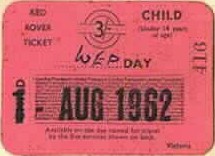
During my time at the Hall, several bus routes plied between Golders Green and Swiss Cottage: 2, 2a, 2b, and 13. The fare was five pence (less than 2.5p) for children. I used to say to the conductor: “five-penny half, please”.

The bus journey to and from The Hall was tedious and slow. This was because Finchley Road was being widened. The roadworks began before I entered The Hall and continued after I left it five years later. To widen the road, which was lined by houses and shops all the way between Childs Hill and Swiss Cottage, every garden by the roadside had to be cut short. There was a garden centre in a long greenhouse near Finchley Road Underground station opposite the present O2 Centre.  More than three quarters of its length was demolished to permit road widening. All in all, the long section of road being ‘improved’ caused the rush hour traffic to move sluggishly. After 5 years of enduring this, I used to be able to recite from memory and in the correct geographical order the names of all the shops along Finchley Road. Today, hardly any of them exist. Even the large, still extant department store John Barnes has changed its name to John Lewis. Gone is the remains of the garden centre and the Edwardian Swiss Cottage public swimming pool. During my time at The Hall, this place closed when the then new Swiss Cottage Library and swimming pools opened close to the swiss style pub. Another of many disappearances is that of Cosmo, a restaurant that used to be popular with refugees from Central Europe and later with my wife, who loved the Hungarian cherry soup served there.

The Camden Arts Centre stands at the corner of Arkwright Road and Finchley Road.  The arts centre faces across the main road the start of Lymington Road, which soon runs along the side of a large grassy open space. This is where Hall School boys played football and cricket. We used to walk two by two with one of our teachers from the school to and from the field, a distance of at least a mile.

The Hall School was an ‘elite’ establishment. Almost all the pupils had parents who were listed in “Who’s Who”, or royalty, or were extremely wealthy. Several of my fellow pupils were sons of Greek shipping magnates. One of these used to be driven from the school to Lymington Road in his chauffeur driven Bentley, which he pronounced ‘bantly’. Occasionally, he used to offer teachers a lift in his luxurious vehicle.

The sports field in Lymington Road was opposite a small newsagent-cum-sweetshop. We were not supposed to enter this during school hours, which included time at the sports field. And, because we walked back to school after a sporting session, there was little chance to explore it, but somehow, we managed. The shop was amazingly well-stocked with cheap sweets. I discovered that if I walked from Swiss Cottage to Lymington Road, the fare from there to Golders Green was two pennies (there were 240 old pennies in one Pound) cheaper than from Swiss Cottage. This gave me two pennies on top of what I was given daily to buy snacks (in my case, read ‘sweets’) on the way home.

At Swiss Cottage, there was one sweet shop near my bus stop. It was a branch of Maynard’s inside the subterranean foyer of the Underground station. The sweets it sold were poor value: there was nothing for under three (old) pennies. In contrast, the shop on Lymington Road was full of sweets costing less than one (old) penny. For example, one penny bought four ‘blackjacks’ or a large chewy item called a ‘refresher’. And, for three pence, a ‘Sherbet Fountain’ (still available on the internet for 132 [old] pence or 55p). This used to consist of a paper cylinder containing a fizzy lemon flavoured white powder into which there was a black cylindrical straw made of liquorice (used to suck up the powder). The thing looked just like an unexploded firework. In short, It was worth walking about a mile to save on the bus fare and then to spend it in a place where my money had much better buying power.

At the end of the day, I disembarked at Golders Green near the Underground Station. There used to be many children from other schools mingling there on their journeys home. One incident at this place remains in my mind, but before relating it, you need to know what we wore at The Hall. The colour that predominated in the school uniform was pink, which was considered rather strange for a boys’ school. Blazers and peaked school caps also contained black trimmings. One of these, which was prominently sewn on to our caps and the outer breast pocket of our pink blazers trimmed with black, was a black Maltese cross. The way that the school’s emblem was drawn was closer to the shape of the German Iron Cross than to the real Maltese cross. By the time I was attending The Hall, I had already become interested in the Holocaust (the Shoah). Golders Green had many Jewish people living there and several shelves of its public library were filled with books about the deeds of Hitler and his followers. I borrowed and read many of them. Therefore, I was horrified when I stepped off the bus at Golders Green one afternoon, and then some schoolboys from another school shouted at my friend and me:

“Look, the Nazis have arrived.”

Is it not strange what one cannot forget?


Picture from https://www.uniform4kids.com/ 

.

Eating out remembered

SEEING A PHOTO TAKEN  of La Cage Imaginaire, a restaurant in Hampstead has whet my appetite for writing about some memories of eating in this picturesque part of London long before the current restrictions on individuals’ movements and public gatherings.

COLIN BLOG

My parents used to like dining out at a ‘bistro’ in Church Row, a street lined with lovely old houses. The Cellier du Midi, as its name suggests was in a basement. Long before my mother died in 1980, they dined there often. My sister and I were never taken there. This made me curious about the place and for many years after they stopped going there, I thought it would be fun to try it out. It was only at the beginning of the 21st century that I did. My father’s teacher at the University of Cape Town, and later his colleague at the London School of Economics, Professor William Baxter (1906-2006) and his wife invited my wife and me to have dinner at the Cellier. It was Baxter, who in 1938 encouraged my father’s family to send him to England to continue his studies. I was excited about the prospect of eating in this restaurant at long last. Sadly, by the time we were invited there, the food was far from exceptional. It was far below the quality that would have been acceptable to my late mother, a discerning eater.

My parents ate Indian food occasionally. Their favourite Indian restaurant was the Shahbag in Rosslyn Hill, the continuation of Hampstead High Street. I ate enjoyably there once or twice with friends in the early 1970s but did not return for over 30 years. One evening, we drove up to Hampstead to attend a concert in a church on Rosslyn Hill. We arrived just before the performance was scheduled to start. I was driving. I dropped my wife and a friend at the venue, and then looked for somewhere to park. It took so long for me to find somewhere that I had to miss much of the concert. As the concert was near to the Shahbag and I was also hungry, I decided to miss the music and make a nostalgic trip to the Indian restaurant. I sat down and placed an order. Then, I waited and waited. While I was waiting, I looked at the food being delivered to customers on neighbouring tables. It did not look too appetising; by now, having visited India many times and eaten Indian food cooked in many Indians’ homes, I could distinguish between well and poorly prepared dishes. My appetite diminished. I looked at the time. It was nearly time to collect the rest of my party from the concert. I summoned the waiter and told him that as I was not prepared to wait any longer, he must cancel the order, which he did. I was disappointed that this experience had shattered my nostalgic illusions about this venerable establishment.

After my mother died, I began practising dentistry in a village near Gillingham in Kent. I lived down there during the week and visited my father most weekends. On Sundays, my father and I usually ate lunch out, often in Hampstead. One of our favoured places was the Cage Imaginaire, a tiny French restaurant at the end of Flask Walk furthest from Hampstead High Street. I always associate this restaurant’s name with that of a humorous film, “La Cage aux Folles”, which appeared in 1978. However, the restaurant was/still is a serious eating place. On one occasion when the waiter brought the cheese trolley to our table, I cheekily asked him to point out the cheese whose odour most resembled that of smelly socks. Without batting an eyelid or showing any disdain, he singled out a satisfyingly pungent French cheese.

Gradually, my father and I shifted our allegiance to an Italian restaurant, the Villa Bianca in Perrins Court. Although pricey, the food at this eatery never failed to satisfy. My father, whose mastery of the Italian language is good, enjoyed chatting with the Italian owner and his staff.

During my student days, all twelve years of them, I lived at my family home north of Hampstead, but visited it often. One place in which my parents would never have set foot but was popular with my friends and I was Maxwell’s on Heath Street.  This was Hampstead’s take on the American eating experience. Just up the street from the Pizza Express, Maxwell’s sold good hamburgers and milkshakes. Popular with more than one generation of northwest London’s younger set, this place opened in the 1970s and closed more than 40 years later. Incidentally, Maxwell’s pre-dated the arrival of McDonalds in London.

Almost across the road from Maxwell’s there was and still is a good Japanese restaurant, Jin Kichi, at which I ate several times more than 20 years ago. This was the first place I ever ate sukiyaki, a dish that involves cooking raw meat on a hot plate on the dining table.  Writing about this brings to mind another place, which was not strictly in Hampstead but close by in Swiss Cottage: Benihana.

I have only eaten at a Benihana restaurant once and that was long ago when the girl, who is now my wife, celebrated her birthday at the Swiss Cottage branch. We sat at counters surrounding an open space where our chef cooked, or rather performed, our meal. The chef would pick up a prawn, place it on a hot grill, and then toss it high up in the air, catch it, before placing it back on the grill. This performance of flinging food items up into the air and putting them on and off the grill was impressive in terms of juggling skills but disappointing as a gastronomic technique. By the time a much travelled, burnt, dead acrobatic prawn arrived on my plate, it had lost any appeal for me. However, a good time was had by all, except the prawns and other fragments of food we were served.

Returning to Hampstead proper, there is one restaurant that has been in existence since 1962. This is La Gaffe, which is on the same side of Heath Street as Jin Kichi, but higher up the hill. Although I have passed this place countless numbers of times, I have never entered it.

Heath Street leads down to Hampstead Underground Station and the start of Hampstead High Street. Despite vociferous objections from many of Hampstead’s ‘snobbish’ and ‘cultured’ residents, McDonalds managed to open a branch of their famous fast-food operation a few feet away from the station. It took the company twelve years to fight the objections to their opening.  Although I enjoy ‘haute cuisine’, I have the occasional yearning for a meal at Mcdonalds. The Hampstead branch was perfectly acceptable. However, after 20 years business in Hampstead, the company closed its branch there in 2013. It has been replaced by a branch of another chain, Le Pain Quotidien. I preferred its predecessor.

The Coffee Cup in Hampstead Heath Street is almost as old as I am. It first opened in 1954. Both externally and internally, this has not changed in appearance since my early childhood. When I was at school in the 1960s, this was the place to ‘hang out’. Oddly, I never did. In those days, the café had an exciting reputation. Maybe, I was not exciting enough to pay it a visit. Recently, I have ventured into this relic of the coffee bar era of Hampstead. I enjoyed a satisfactory, but not top class, espresso in its quaint interior, which looks as if it retains the original decor that it had when it first opened. I did not eat anything there, but I watched delicious looking pastries and English Breakfasts being served to other customers. Oozing with nostalgia, this place is as popular now as it was long ago.

Walk up either Perrins Court or Perrins Lane, and you will reach the southern part of Heath Street just before it continues to become Fitzjohns Avenue. On that short stretch of road, stands Louis Hungarian Patisserie. It was opened in 1963 by a Hungarian called Louis Permayer. Like the Coffee Cup, Louis has retained its original appearance. However, although it began as a place purveying Hungarian pastries and cakes, its current owners provide similar items, but not quite as tasty as what the former owner sold. That said, it is a quaint place to sit and chat over a hot beverage and a snack.

Louis has a special place in my memory. When I was an undergraduate in the early 1970s, I met one of my fellow students for a date one afternoon at Louis. My female friend liked the place and we have visited often since she became my wife some years after that afternoon. She recalls that in those long off days when we first met, Louis served coffee with a separate small bowl of whipped cream. Sadly, that tradition has disappeared and the charming Eastern European waitresses now working at the café look uncomprehendingly when you try to get a bowl of this with your coffee.

As soon as it is safe to roam around without risking one’s health excessively, we will head to Hampstead for a not brilliant but romantically nostalgic coffee at Louis, provided it has weathered the pandemic.


Photo of La Cage Imaginaire by Colin Hill


New End new beginning

HAMPS 23 Former New End Hospital BLOG


NEW END HOSPITAL in Hampstead village closed in 1986 and converted into luxury flats. It was opened in 1869 as a workhouse for impoverished folk and in 1931 it became a hospital specialising in endocrine diseases. In that year, a clinic devoted to treating thyroid disorders was established.

On Tuesday afternoons during the years 1968-1970, when I was preparing for university entrance examinations, I helped out in the thyroid department laboratories at New End Hospital.

The labs occupied the dank basement under the Victorian hospital. The outfit was directed by a formidably bright lady scientist. She was assisted by a small friendly team of scientists and technicians.

The first task assigned to me was to make the afternoon tea. I had never made tea before without using a tea bag and with the addition of milk (at home we drank tea without milk). What I served was universally abhorred. That first afternoon, I was given a lesson of how to prepare tea ‘properly’.

The lab I worked in was dedicated to diagnosing and treating thyroid patients with radioactive isotopes of Iodine. Patients were given radioactive iodine to ingest in the ward. Then, they were brought to what looked like a dental chair in our basement. A technician applied a Geiger counter probe to different parts of the patient’s body to determine the distribution of the iodine. From this, diagnostic information could be derived. Today, this manual technique has been replaced with automatic electronic body scanners.

After scanning, the by now radioactive patients were sent back to the ward. There, they waited for their radioactivity levels to drop to safe values or to await further administration of the isotope for therapeutic reasons. In both cases, these patients had to wait until they were no longer emitting harmful rays.

To assess the levels of radioactivity in the patients’ bodies, their urine was collected regularly and stored in brown glass Winchester bottles. These were brought down to be stored in the basement. Each bottle was regularly inserted into a lead covered cylindrical container containing Geiger counters. Apart from white lab coats, we wore no other protective garments.  Often, I helped with this activity. Thinking back, I doubt modern Health and Safety would have sanctioned our working practices in that basement.

At school, I was learning computer programming, and enjoying it. We learnt the principles of programming and how to use them in the recently designed Basic computer language. When the thyroid laboratory bought a programmable desktop Olivetti calculating/computing machine, I was the first person in the lab who knew how to make it work, to programme it.

The lab needed to communicate with the matron in charge of the thyroid ward, but everyone feared her. So, whenever possible if the lab needed to send something to her, they waited for me to arrive on Tuesday afternoons. By some kind of luck, the terrifying matron treated me kindly. I found her to be agreeable but realised that she needed to be treated with ‘kid gloves’.

My experiences at the laboratory under New End Hospital were both fascinating and enjoyable. They were also influential because they instilled in me an interest in physiology, and particularly endocrinology. I am certain that had it not been for those Tuesday afternoons at New End, I might not have gone on to making a new beginning at University College London, studying physiology.


Picture shows the former New End Hospital

Himalaya Palace

HIM 1 BLOG


THE HIMALAYA PALACE cinema in the London suburb of Southall, an area where many people of Punjabi descent live, showed only Bollywood films from India, usually the latest releases. Being keen on these films, we often made the long trip from our home to Southall to watch them. During our regular visits to India, always including Bangalore, we take time to see Bollywood films in the country where they are created.

We were in Bangalore in December 2001 when the blockbuster film “Kabhi Khushi Kabhie Gham” (ie ‘sometimes happy, sometimes sad’) was released all over India. We were staying with my in-laws,  and everyone decided that we had to see it.

We chose a cinema near the famous Mavalli Tiffin Rooms (MTR), a long established popular eatery in Bangalore. It was decided that we should have breakfast there before seeing a morning screening of the film. So popular is MTR, that queuing is always required before getting a table. It was my first visit to this highly esteemed place and I hope my last. Everything we were served was almost dripping with ghee, which is part of its attraction for its many fans.

The cinema was a few steps from MTR. After buying tickets, we had to wait in another queue. This one was to await one’s turn to have bags searched by security personnel. I thought this was to prevent weapons and bombs from entering the auditorium, but it was not. The security people were searching for food and drinks. So-called ‘outside food’ could not be brought into the cinema because it risked reducing the sales of overpriced snacks and drinks sold by the cinema.

When we reached our seats, my sister-in-law showed me her basket, lifted a shawl within it, and revealed the sandwiches and other snacks beneath.  So inefficient were the security people that they had not delved into the bag with any seriousness of purpose.

Before the film started, my sister-in-law offered me and the rest of the family rolls of compacted cotton wool rather like those that dentists stuff into patients’ cheeks to dry the mouth. She said we might need them because the volume of the soundtrack would be very high. I declined them, and enjoyed the full impact of the sound.

At the Himalaya in Southall before the start of any film, a sign would be projected. It said something like:

“Please do not talk during the performance.”

This was a pointless exhortation because at the Himalaya the soundtrack was played so loud that even if you screamed at your neighbour, they would not have heard you.

Sadly, the Himalaya Palace (built 1929) is no longer a cinema. It closed in 2010. When we last visited Southall a few years ago, the Chinese style front of the Himalaya, complete with dragons, still existed, but its interior had become a covered market.

Nowadays, well at least before the pandemic arrived,  we watch Bollywood films that are shown regularly (at least one per week) at a Vue cinema in London’s Shepherd Bush.

Providing you miss the Friday and Saturday screenings of the latest releases, the audiences are usually minute, often less than ten people in an auditorium that can seat well over 150 people. Even before the pandemic, social distancing  was the norm during the screenings because empty seats usually greatly outnumbered occupied ones.

Most Bollywood films are long, usually over two and a half hours. So, there is an interval during their screening. The point at which the interval occurs is chosen by the film maker to leave the audience at a point of high suspense in the story.

Once during an interval at a Bollywood screening at the Vue, we sat in the almost empty cinema and heard two ladies, sitting several rows in front of us, chatting in Italian. Out of curiosity,  we asked them in Italian why they had chosen to see a Bollywood film. Their reply surprised us.

The two women were members of an Akshay Kumar fan club in Calabria in the far south of Italy. They had only ever before seen films starring Akshay on video screens.  They were staying far away from Shepherds Bush in Dulwich when, to their delight, they discovered that the film we were watching, starring Akshay, was being screened in Shepherds Bush. They had come to see one of Akshay’s films on the ‘big screen’ for the first time.

Bollywood’s films have captured the hearts of people all over the world. They were even  popular in the former USSR. When we visited Albania in 2016, we discovered that they, as well as Indian TV soap operas, had captured a significantly large audience of Albanians. These films would not have been shown in Albania prior to the downfall of its Stalinist style regime in 1991.

Until it is safe to do so again, my wife and I will have to enjoy armchair screening of our Bollywood DVDs. Enjoyable as these are, they are an incomplete substitute for ‘in your face’ full blast performances in a cinema auditorium.

No refusal

UBER DRIVERS IN MADRAS are, so I have been told, unaware of a potential customer’s desired destination when they accept a job. It might be a short ride or even an out of town destination. We discovered a consequence of this when earlier this year we were advised that the most reasonable way to make the three hour journey from Madras to Pondicherry was to hire an Uber.

The first three drivers, who offered us rides, phoned us to ask where we wanted to go. When we told them, they cancelled our rides. On our fourth attempt, an Uber arrived. He was happy to drive us to Pondicherry because, as we found out three hours later, he had a friend he wanted to visit there.

In Bombay, the taxis are nicknamed ‘kali pili’, which refers to their black and yellow body paint colours. Most of the cabbies are argumentative and some if them seem reluctant to work, making complaints like “too much traffic” or “that’s too far”. Eventually, one finds a cab that is willing to carry out one’s wishes, often complaining all the way.

Further south in Bangalore, popular transport for those who avoid urban buses include Uber and Ola cabs as well as three-wheeled autorickshaws.

Bangalore Ubers and Olas are unreliable. Often they accept a ride and minutes before they are about to arrive at the pickup point, they cancel. I imagine that often they get stuck in the city’s slow moving or often static congested traffic and feel they are wasting their time trying to reach their passenger waiting beyond the traffic jam. Whatever the reason, these app connected car services are not nearly as reliable as they are in Bombay or London.

Autorickshaws are the best method for getting through the congested thoroughfares of Bangalore. Their plucky drivers are able to take risks with their small vehicles that larger cars are unable to attempt. These manoeuvres are daring and can be hair-raising for the passengers but they get you to your destination relatively quickly.

Hiring an autorickshaw in Bangalore is always an adventure. The vehicles are fitted with taximeters, which are supposed to determine the fair. They are used occasionally but not often. The driver will suggest an often outrageous fare, which is the starting point for haggling. Or, some drivers will agree to use the meter determined fare plus some extra Rupees in addition.

Some autorickshaw drivers without much to do will often foreigners something like:
“Come with me. I’ll take you anywhere for only 10 Rupees.”
Sounds tempting, does it not? Do not succumb to this unbelievable offer because if you do, you will soon discover the catch. The naive passenger will be invited to visit the driver’s friend’s/cousin’s/brother’s store, where if you buy something, the driver will be rewarded with something like: school books for his children, or a kilo of rice for his starving family, or a new shirt, or …

Some autorickshaw drivers will set off for a journey in Bangalore, and then after a few minutes, will ask the passenger whether, on the way, they want to do some shopping at a shop the driver recommends. A determined refusal is required to ensure that your journey will not include an unwanted detour for shopping.

On the whole, autorickshaws are a great way of getting around Bangalore.

Calcutta is filled with rugged but battered yellow Ambassador taxis. These are slowly being replaced by newer vehicles with blue and white body paint. One thing they share in common is the wording “No Refusal” printed on the exterior of their doors. The cab driver, who stop to pick up a passenger, are not supposed to refuse to take you wherever you want. Most of the drivers comply with this.

Taxi drivers in London and other places in the UK are, by law, required to take you anywhere within the area they are allowed to operate. Like the drivers in Calcutta, the British cabbie is supposed to adhere to the “No Refusal” concept, and often, cabbies, but by no means always, comply.

Interesting as all this is, present conditions during the current pandemic mean that not too many cabs are being hailed at the present.

Picture: Taxis in Calcutta

Ignorance is bliss

DURING MY UNDERGRADUATE student days in the very early 1970s, a good friend, who is now my wife, suggested that a group of us should visit one of the then very few Japanese restaurants in London. The one we chose was in St Christopher’s Place, close to Oxford Street.

We decided to order sashimi, raw fish. I chose to have a plate of tuna sashimi. I had never eaten raw fish before, but after my first bite I decided this was a very superior way of serving fish. The sashimi was more than delicious. I would have loved much more than the five neatly cut pieces of tuna, which was the portion size. However, I could not afford that luxury.

The five bite sized pieces of tuna cost £7. And, in the early 1970s that sum could pay for a lot of food or other goods. For example, a Penguin paperback book cost 12.5 or 17.5 pence and a gallon (4.5 litres) of petrol was well under £1.

I was left hungry after our visit to the Japanese restaurant, and had to assuage my appetite at a fast food outlet.

Today, the price of Japanese food in London has dropped relative to what it was almost 50 years ago. Outlets like Itsu can provide a satisfying Japanese set meal for little more than £7. Better quality Japanese restaurants are justifiably more expensive, but not usually way out of reach, as was my plate of sashimi in St Christopher’s Place.

We used to visit a lovely Japanese restaurant in Holland Park side street. It was run by an elderly couple from Japan. It closed when they retired. For a year or two, we did not eat Japanese food in London.

One Saturday evening, we were watching a play at the National Theatre. It was not satisfactory. So, we walked out after the first act. We decided to drive to Ali Baba, an Egyptian eatery near Baker Street.

On the way, I thought that if we were to see a Japanese restaurant, we would stop and eat there. I stopped the car outside a Japanese restaurant near Bloomsbury and suggested to my wife that we ate there. She agreed and we entered the small eatery.

We looked at the menu and then looked at each other across the table. By chance, we had walked into a very (no kidding) expensive place. We were on the point of walking out when I said to my wife:
“Let’s eat here. I will enjoy it if I don’t see the bill. You check it, and I will hand over the card.”
Ignorance is bliss, and so was the food.

Pictures taken at Harima restaurant in Bangalore, India