Bollywood in Albania

Films from India made in Bombay, the so-called Bollywood productions, are popular all over the world. When we visited post-Communist Albania in 2016, 31 years after the death of its long-time dictator Enver Hoxha, we encountered Albanian Bollywood fans in several places. The following three excerpts from my book “Rediscovering Albania” describe some incidences when we met local lovers of Bollywood.

In the northern town of Pukë:
ALBOLLY 3

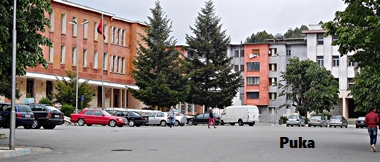
“Our shopping expedition continued in a tiny stationery/gift shop, where I bought a notebook. The sales lady wanted to know where we came from. When she learnt that Lopa came from India, she pointed at a small television set hidden under her counter. We saw that she was watching a Bollywood movie with Albanian subtitles. Every afternoon on Albanian television, there is an episode of a Bollywood TV soap opera. Those ‘in the know’ never ring ladies between certain hours in the afternoon so as not to disturb their enjoyment of this addictive show. The inter-continental cultural traffic is not one-way: in 2013, the Albanian actress Denisa Gokovi starred in a film (Phir Mulaquat Ho Na Ho) directed by the Indian Bobby Sheik.”

In the southern city of Korçë:

ALBOLLY 2

“Weary and hot, we tried to retrace our steps back into the centre. Quite by chance, we began walking along a road that led straight to the Mirahorit mosque, which was closed when we arrived. However, some men were gathering outside it, and soon the imam arrived to unlock it for afternoon namaaz (prayers). They were all friendly and welcoming. While we were waiting, we were joined by a German lady, who was keen to see this mosque that dates back to 1496. Restored by a Turkish organisation in 2014, it was worth waiting to enter it. The interior was decorated with attractive frescoes depicting various mosques and Muslim pilgrimage places including the Kaaba.  One of the men who was waiting with us to enter the mosque asked Lopa where she was from. When she said India, he exclaimed “Rye Kapur”, that being his pronunciation of Raj Kapoor, a well-known Bollywood film star. As we had already discovered in Pukë, Bollywood is popular in Albania.”

In the large seaport of Vlorë:
ALBOLLY 1

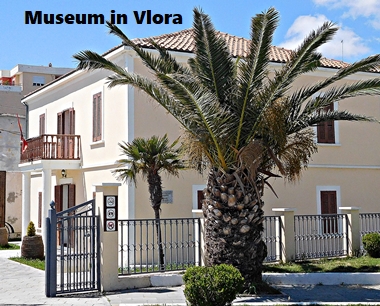
“This small building of great historic importance was dwarfed by huge cranes and ocean-going freighters in the nearby port area. Its windows had slatted wooden shutters, and there was a balcony projecting over its main entrance. It was from this balcony that Ismail Qemal read the declaration of Albania’s independence in 1912. Vlorë, which was invaded by the Italians in 1914, was the country’s first capital. In 1920, Tirana assumed this role.

We were guided around the museum, and shown photos, documents, and furniture, connected with the historic events that occurred around 1912. Driton kindly translated our lady guide’s interesting commentary into English. Sadly, we were not permitted to stand on the historic balcony because it has become too fragile. As we moved from room to room, I noticed that our guide was becoming more and more interested in Lopa, touching her occasionally. At the end of the tour, she told us that she loves watching the Bollywood films and soap-operas broadcast on Albanian television. It was a pity, she said, that Lopa had not been dressed in a sari. Lopa’s arrival in the museum had meant a great deal to her. It was as if one of the characters in the films, which she enjoyed watching, had stepped out of her television and into her museum. She said that Lopa was the first female Indian visitor to the museum since she began working there eleven years earlier.”  

Prior to 1991, Albanians would not have been able to watch Bollywood or even Hollywood productions. Under the dictatorship created by Enver Hoxha, which lasted from 1944 until late1990, the Albanian population was almost completely isolated from external influences. A few people watched Italian TV at their peril. If discovered, they would have risked dire punishment. Today, everything has changed; Albania is wide open to foreign culture.
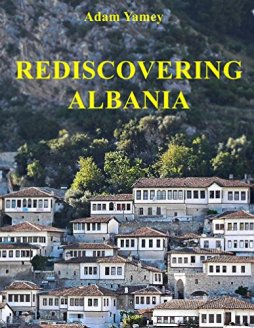
 

REDISC ALB cover

REDISCOVERING ALBANIA by Adam Yamey is available from:

Amazon, Bookdepository.com, lulu.com, Kindle,

and your local bookshop (will need to be ordered)

The Red Balloon

The first film (movie) that I remember seeing was “The Red Balloon”. Directed by Albert Lamorisse (1922-70), a French film-maker, it was released in France in 1956, and then worldwide a year later, by which time I was five years old. After seeing the film, I was given a book with the story, which was illustrated by stills from the production.

Thinking back on it, the plot (see: https://en.wikipedia.org/wiki/The_Red_Balloon), written for children, is a little bit  too sad for young children. Nevertheless, the short film won awards all over the world.


BALLOON 1


My parents were not frequent cinema-goers. However, they took me to see the film at the Everyman Cinema in Hampstead. This cinema, which still exists, was first a drill hall, then a theatre, and in 1933 it became a cinema. I saw many more films there in my childhood and adolescence. Every year, there used to be a festival of Marx Brothers films. I loved these. In those days, the cinema’s auditorium had a strange smell that strongly resembled gas.  Indeed, there were gas lamps attached to the walls of the auditorium, but I am certain that I never saw them working. The Everyman is located in Holly Bush Lane, which is close to Hampstead Underground Station and is, I am told, now a very luxurious place. The seats are comfortable and have tables beside them, at which waiting staff serve food and drinks. This is a far cry from what I can remember of the rather basic cinema in the 1960s. Back in those days, the Everyman, like the now long-gone Academy cinemas in Oxford Street, favoured screenings of ‘arty’ films rather than the more popular films that most cinemas showed. My parents, who tended to avoid popular culture, probably selected the “Red Balloon”, an arty French film, because it was a little more recherché than the much more popular Disney films that appeared in the late 1950s.

BALLOON 3

The “Red Balloon” kindled my love of cinema. For a long while I preferred ‘off-the-beaten-track films’ of the sort that were shown at the Everyman and on the three screens of the Academy. I used to enjoy slow-moving films like Eric Rohmer’s “Claire’s Knee”, Andrei Tarkovsky’s “Solaris”, and Wim Wender’s “Kings of the Road.” Now, my taste in film has changed dramatically.

The change began in mid-1993, shortly before marrying my wife, who is from India. She took me to meet an Indian couple, who lived in south London. After feeding us a great lunch, we watched the Bollywood film “Sholay”, which was released in 1975. After seeing this, I could not get enough of Bollywood films. Also, my love for slower-paced European and American films diminished.

BALLOON 2

What is it that attracts me to Bollywood films? First, they are colourful, lively, fast-paced, and filled with strong emotion, music and dancing: never a dull moment. They are also filled with meaning at various levels. There is the story, often complicated and ridiculously unlikely. Parts of the plot are often based on aspects of Hindu mythology. Then, the films often convey important moral or civic messages. For example, the 1977 film “Amar Akbar Anthony” is about inter-religious tolerance. More recently, the 2018 film “Padman” is about the importance of using disposable pads to promote women’s health.

I prefer to watch Bollywood films with subtitles, but great enjoyment can be gained without them. Many of the films have dialogue in Hindustani. However, many viewers in India have little or no understanding of this language. Therefore, the films are produced in such a way that much of the message of a film, maybe not the finer details, can be understood by people with no knowledge of Hindustani. In fact, Bollywood films are not only popular in India, but in many other countries of the world. Once some years ago, some Uzbek neighbours invited us for dinner. After serving us  a national dish, plov (like pilaff), they sat us in front of a television and played a DVD with a Bollywood film. They told us that this kind of film is very popular in Uzbekistan and, also, in most parts of the former Soviet Union.

Although I have come to love Bollywood films, I am not sure that they would have been to my parents’ taste. They never took me to see Disney films when I was too young to go alone. Had there been more ‘sophisticated’ children’s films like “The Red Balloon”, maybe I would have been taken to the cinema more often in my earliest years.


Image source: YouTube

Thank you, Queen Victoria

From worlds far apart,

Two folk come together:

Cupid’s bow does its job


When our daughter was a little girl in junior school, the members of her class were asked to name the greatest Briton in history. She nominated Queen Victoria. Her choice was based on the following facts: her mother’s parents were born in India and my parents were born in South Africa. When Queen Victoria reigned, she argued, both countries were part of the British Empire. This, she felt, made it more likely that both her parents would study in England and meet. Without Victoria, she concluded, my wife Lopa and I might never have met, and she would not have existed. Well, maybe she was right. I believe that the reason we met was due to two men who gave us career’s advice: Professor Lewis Wolpert in London and Major General SL Bhatia in Bangalore.

As I approached the time when I had to choose a university undergraduate course, I had no idea which subject to select. I was interested in biology, physics, and chemistry, but had no interest in studying medicine, or even dentistry, which I studied many years later. Careers advice at my secondary school was not helpful.

My South African-born parents knew many South Africans living in London. One of these was my father’s close friend, the late Cyril Sofer, a sociologist. It was through the Sofer family that we met Lewis Wolpert, who was born in South Africa. First, he trained to become a civil engineer. By the time I first met him, he had become an eminent biologist, specialising in cell and developmental biology.

Wolpert, on learning that I was having difficulties choosing a course of study, kindly invited me to his office in Middlesex Hospital in central London. He spent about an hour with me, listening to what I had found interesting in the science subjects I had studied at school. Having heard me out, he suggested that I study physiology at university. This subject would, he thought, encompass all that interested me so far. He told me that the best places to study physiology were Cambridge and University College London (‘UCL’). Of these, he considered the physiology department at UCL to be the best. I was pleased to hear this.

About five years before meeting Wolpert, my father and I had visited UCL because a friend of the family, the art-historian Leopold Ettlinger, worked there. All that I can remember of this visit was walking across the lawns in UCL’s elegant Front Quadrangle and thinking how beautiful it seemed. So, when Lewis Wolpert suggested that I apply for admission to UCL, I was happy about that.

At about the time I was discussing my academic future with Wolpert in London, a young lady, my future wife Lopa, was discussing the same thing with another eminent scientist 5000 miles away in Bangalore. The scientist, Major General SL Bhatia (1891-1982), had known Lopa’s mother’s father from when he studied medicine in Bombay. The two medics became close friends. When Lopa’s mother Chandra was born, Bhatia became the equivalent of Chandra’s god-father.

Chandra’s father died young having succumbed to blood poisoning while treating one of his patients. His friend Bhatia had a glittering career in science, medicine and the Indian Army. It was during his retirement that Lopa met him at his beautiful old-fashioned bungalow in Bangalore. Bhatia had studied medicine not only in India but also at St Thomas’s Hospital in London during the second decade of the 20th century. While in London, he had conducted research with leading physiologists. Like Wolpert had done for me in London, Bhatia recommended that Lopa, who was not keen on studying medicine at that time, pursue a course of physiology at UCL, because he knew it to have a fine reputation in that subject.

One morning in October 1970, I arrived at the Physiology Department at UCL, having travelled from my home in north-west London. I was one of nine students who had been accepted for the course. Lopa was one of the others. She had travelled over 5000 miles to join the department. We were greeted by the department in the Starling Room, named after a famous physiologist who had worked at UCL. This common room is where I met the young lady who was eventually to marry me.

SL BHATIA 3

In the bar at the Bangalore Club

Our wedding reception in Bangalore was held in 1994 at the Bangalore Club, a prestigious ex-colonial institution in the heart of Bangalore. Although he could not attend, Major SL Bhatia was the first Indian President of that elite club. Before that, all the Presidents had been British. Bhatia’s widow was at the wedding. She claimed, not without some reason, that it was she and her late husband, who were responsible for getting Lopa and me together.

The late queen_800

Just as our daughter is eternally grateful to Queen Victoria for bringing Lopa and me together, I am equally thankful to Professor Wolpert and Major General Bhatia for getting our paths to cross. I cannot acknowledge them for what was to follow; Cupid and his arrows are to be thanked for that.

Picture sources: semanticscholar.org (Bhatia) & retractionwatch.com (Wolpert)

A fateful Friday

If you were alive then, what were YOU doing on Friday, the twenty-second of November in the year 1963 ???

My father was a visiting academic in the Economics Department at the University of Chicago during the last three months of 1963. Between September and December of that year, we lived in a flat in a two-storey house with a wooden fire escape near the university. Our address was 5608 South Blackstone Avenue. My sister and I (aged 11) attended the nearby University of Chicago Laboratory Schools (the ‘Lab School’).

I was excited to discover that our rented flat had a television, albeit one which was defective. The image it produced was double. One could see what was being broadcast but everything had a shadow, which made the image seem out of focus. Whichever way one fiddled with the indoor aerial, the image never improved. None of this mattered much to me because in London, where we lived usually, we had no television at all.

In addition to attending the Lab School, I had to keep up with the work that I was missing because I was not at school in London. Soon after returning from the USA, I had important examinations to sit. So, getting time to watch TV was difficult. I decided that the only way I could get a decent long session in front of the TV was to be sufficiently unwell for my parents to allow me to miss school.

I bought a copy of the weekly voluminous TV Guide for the Chicago area. It was the issue that covered Friday 22nd November 1963. I do not remember how I persuaded my parents that I was too unwell for school that day, but I did. My sister, aged 7, was deposited at the Lab School by my father on his way to the university. Much later that morning, my mother, a sculptress, set off for the studio where she worked during the day. I was left at home alone, ready to spend several hours watching the TV programmes I had selected from the TV Guide.

JFK

You can imagine my disappointment when the TV set had warmed up after I had switched it on. Instead of the TV programmes that I was looking forward to watching, there were non-stop news programmes on every channel. President John F Kennedy (‘JFK’) had just been shot in Dallas, Texas. Not only had one of America’s most charismatic presidents been assassinated, but also my day of uninterrupted TV viewing had been wrecked.

My sister returned from school in the mid-afternoon. She told us that her class had been led out of the classroom to the school’s assembly room. There, they saluted the US flag before being told of the tragedy in Dallas.

On the Saturday morning, while I was struggling with my Latin assignment from London, my sister and some guests who were staying with us, the art historian Leo Ettlinger and his wife, were watching our TV in another room. Suddenly, my sister came running into the room where I was trying to study, and my mother was doing something domestic. She announced that while she was watching TV, she saw Jack Ruby shooting dead the prime assassination suspect Lee Harvey Oswald. My mother and I rushed to the TV. We were just in time to see the footage of Oswald’s murder being replayed.

Although, as an 11-year-old, I had negligible interest in politics or news in general, JFK’s demise made me feel depressed. I am not sure why. Maybe, it was because his death had significantly dampened the mood of Americans in general.

Years later in the mid-1970s I visited some American friends, fellow graduate students, who lived in Pill, a suburb of Bristol in Somerset. One evening, we went to a theatre in the centre of the city. I do not recall the name of the play, but I can remember what it was about. The people on stage, actors, related what the characters, who they were portraying, recounted about what they were doing at the moment they learnt of JFK’s assassination.

Now, you, dear reader, know what I was doing on that fateful day.

[Image source: wikipedia]

The road to Hogsback

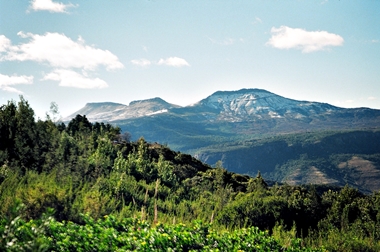
In August 2003, the middle of winter in South Africa, we made a long tour around the Cape Province, visiting small places that figured in the history of my family’s sojourn (beginning 1849) in South Africa. Here is an account of our journey to Hogsback in the Eastern Cape. The writer JRR Tolkien is supposed to have been inspired by the landscape near Hogsback, but not all are agreed on this. The author was born in South Africa (in Bloemfontein), but left the country aged less than three years.

HOG 0

Between Barkly East and Dordrecht

We sped on from Barkly East to Dordrecht. It was at Dordrecht in 1884 that my great grand uncle Sigmund Seligmann with his partner, another Jewish gentleman, Moss Vallentine opened their first business, a retail store. Later, he opened a general store in Barkly East, where his nephew, my mother’s father, became the town’s only Jewish Mayor.

HOG 1

Dordrecht Museum

Dordrecht, a smallish place, still has several nineteenth century buildings including one with an elegant arcade supported by cast-iron pillars that serves as a museum. Andre Coetzee, the museum’s curator, pointed out an old shop opposite the museum that he believed had originally been Seligmann’s.  He seemed very certain that this was the building, but he could not show me any evidence to confirm this.

The rain and snow continued to shoot past us, propelled by a fierce wind. Between Dordrecht and Queenstown, we crossed a plain that was quite different to anywhere we had been so far. The plain was quite literally dotted with thousands of ‘black’ peoples’ dwellings, some with rondavels as out-houses. There were few fences. People and animals wandered across the road. The countryside was much less manicured than any other inhabited places we had so far visited in the Cape. Derelict cars were frequently seen. We were in Chris Hani District that includes the town of Queenstown and was under the Apartheid regime part of one of the so-called ‘Homelands’. 

Queenstown is not an attractive town but has a lively buzz and good shops. A sign in the town centre advised motorists to pay for parking at a “mobile parking meter”. This meter turned out to be a person who hangs around the parking area carrying a machine on which he or she records your arrival and departure times and based on these determines how large a parking fee needed to be collected. We found a wonderful spice shop run by a Pakistani man. He had a special table on which he can make spice mixtures to order and, also, had ready-made mixtures including one, very strong in flavour apparently, called “Mother-in-law Masala”. We visited a large branch of Woolworths as many people had commended this chain store to us. We were disappointed: it was like Marks and Spencer’s used to be in the UK many years ago.

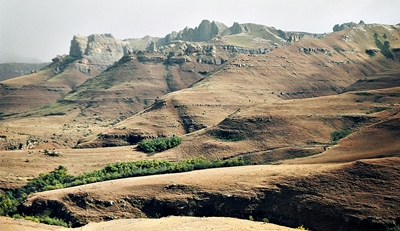
We drove via Whittlesea to the tiny village of Seymour. A road marked incorrectly on our map as “narrow but with tarmac, not for four-wheel drive vehicles alone”, led from Seymour up the side of a mountain to Hogsback. This road proved to be the worst surface that I have ever driven on. Compared to it, Joubert’s Pass (near Lady Grey), was a motorway. It got progressively worse as we painfully slowly approached Hogsback.

The road had everything against it and us. There were potholes, and deep furrows where streams of water had eroded the gravel. Bare rock showed through the road and made steps that had to be carefully negotiated. Worst of all were large rounded boulders, which were difficult to drive around as the narrow road was bounded either by ditches or by walls of rock. We were lucky that we neither capsized the car nor grounded it, nor damaged the sump or some other vulnerable part of its under surface. Navigating around or across some of these dangerous obstacles reminded me of performing a particularly difficult surgical dental extraction. Just as I had to take care not to damage a hidden nerve or blood vessel during an extraction, I had to drive to avoid injuring some important part beneath the car. Had we broken down on this deserted, barely frequented road, we would have been in big trouble. There was no mobile ‘phone coverage in the area. Hair raising to say the least: I still shudder when I remember this journey. Later, a cousin in Cape Town told me that when he had used this road, he had grounded his vehicle and thereby damaged its fuel line. Things improved at the end of the road. We were amused to see a road sign at the Hogsback end of this road that advised “Road not recommended for caravans.”

HOG 2

A view from Hogsback

We found our accommodation: a collection of cottages called The Edge. The name refers to the position of the cottages which is at the very edge of the summit of the Hogsback ridge over which can be seen a view of the coastal plain over a thousand feet below. Our cottage was large but unheated except for a small, inadequate fireplace poorly located in one corner of the cottage remote from the bedrooms. We ate an excellent curry made by Dion and Shane who own a restaurant near our cottage. All night the snow fell, and the wind howled.

HOG 3

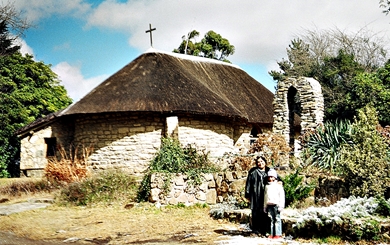
A church in Hogsback

Tact

nehru

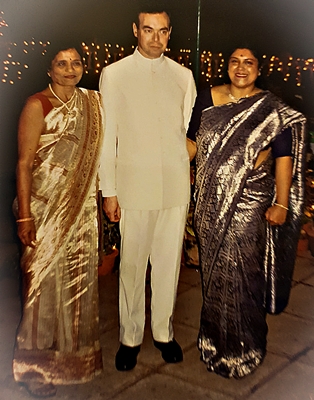
I married in Bangalore in January 1995. A week or so before the marriage, I was introduced to Mr Krishnan, a tailor who worked in his home near to Cunningham Road in the heart of Bangalore. He was an elderly, dignified gentleman, and a good craftsman.

Mr Krishnan made me a suit for the wedding ceremony, a white Nehru suit with a high collar. a bandh gala. This kind of garment pre-dates India’s post-independence leader Jawaharlal Nehru; it derives from the Mughal years. The one that Mr Krishnan made me was precision fitting. I could breath in it, but it would not tolerate even the slightest increase in my girth. The same was true for a western style suit that he made for me at the same time.

A year later, we returned to Bangalore. Happiness in marriage and over-indulgence at meals had resulted in a change in my dimensions, notably an increase in my girth. We returned to Mr Krishnan with the suits he had made, which no longer fitted me. Fortunately, being a skilful tailor, Mr Krishnan had left plenty of material in the seams of the clothes in order to enlarge them.

Mr Krishnan measured me carefully, noting down my dimensions in a large book. When he had finished my wife asked him:

“Out of interest, how much has my husband increased in size?”

Mr Krishnan replied:

“Madam, I can not tell you that because I have lost your husband’s original measurements.”

Not only was Mr Krishnan a great tailor but also, he was a master of tact.

They made Kalashnikovs here…

This  extract from “REDISCOVERING ALBANIA” by Adam Yamey describes a part of Albania where much weaponry was manufactured during the Communist era (1944-91).

OSUMI 2

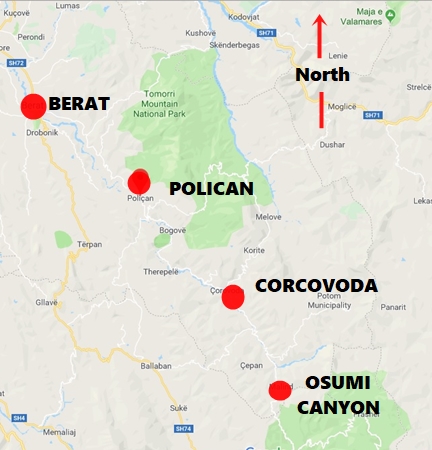
“We followed the River Osumi upstream [from Berat], passing an isolated working military camp with camouflaged concrete buildings. The road wound up the valley crossing numerous tributaries of the Osumi. Next to many of these small bridges there were construction sites, which were associated with the building of the Trans Adriatic Pipeline. This will carry gas from Kipoi (just east of the Greek city of Alexandropolis) to Seman (a few kilometres north of Vlorë on the Adriatic). From there, it will go under the sea and resurface at the southern Italian coast south east of Lecce. This gas-carrying modern ‘Via Egnatia’ (or maybe it should be called ‘Via Igniter’) will follow the valley of the Osumi, then curve around Berat, before heading westwards towards the sea. It is part of a huge project to transport gas from Azerbaijan to western Europe.

The town of Poliçan was a pleasant surprise. We were expecting to find a drab place because of its industrial heritage. Far from it: Poliçan was a cheerful, vibrant place. We parked at the top end of the sloping triangular piazza named after the large mountain (Tomorr: 2,416 metres), which dominates the area around Berat and Poliçan.  The piazza, is a right-angled triangle in plan. Its two shorter sides were lined with well-restored, freshly painted Communist-era buildings with shops and cafés.  We joined the crowds drinking under colourful umbrellas outside cafés on the Rruga Miqesia, which runs off the piazza towards the town’s cultural centre and Bashkia (both built in the Communist period). It was about 11 am on a working day. There seemed to be many people with sufficient time for sitting leisurely in cafés or just strolling up and down the street. A girl, who ran a mobile ‘phone shop (on her own), sat with friends at a table in a café near to the shop, and only left them if a customer entered her showroom. A long out of date poster on a building advertised a meeting in Tirana for adherents of the Bektashi sect.

Near the upper end of the triangular piazza, there was a new marble monument commemorating Riza Cerova (1896-1935). He was born just south of Poliçan, and became a leading protagonist in the ‘June Revolution’ of 1924, when supporters of Fan Noli forced Ahmed Zogu to flee from Albania. For a brief time, Noli became Albania’s Prime Minister. However, at the end of 1924, aided by the Yugoslavs and Greeks, Zogu made a counter-coup, and then assumed control the country. Soon after this, he had himself crowned ‘King Zog’. Following Noli’s defeat, Cerova joined the German Communist Party, and later returned to Albania where he led anti-Zogist fighters. He died during an encounter with Zog’s forces.

OSUMI 4

Poliçan was important during the Communist period. It was home to an enormous arms and ammunition factory, the KM Poliçan, which was opened in 1962. This produced its own versions (the ASH-72 and ASH-82 series) of the Kalashnikov gun as well as other munitions.  The factory lies amidst cultivated terraced fields on the slopes of a natural amphitheatre away from, and beneath, the southern edge of the town. Workers used to approach the factory from the town by a long staircase. We counted at least twenty-five industrial buildings in the complex, many of them with broken or missing windows. None of the numerous rusting ventilators on these edifices were emitting smoke, and there were no signs of life. The slopes surrounding the factory below were dotted with concrete and metal entrances to underground stores and tunnels. During the unrest of 1997, KM Poliçan was temporarily taken over by criminal gangs while the city was in ‘rebel’ hands. The factory is still used, but mainly to de-activate out-of-date Albanian weaponry. It was difficult to imagine that the peaceful scene, which we observed from a track overlooking it, had such an explosive history.

We travelled southwards through cultivated countryside and past occasional forests, always following the sinuous course of the Osumi. At the edge of Çorovodë, the administrative capital of the Skrapar District, we saw a tourist information poster beside a squat hemispherical Hoxha-era concrete bunker. It portrayed an Ottoman era bridge, which we hoped to see later. In the town’s main square, there was a socialist-realism style monument: a pillar topped by a carved group: one woman with three men. One of them was holding a belt of machine gun ammunition. The base of the monument had ‘1942’ carved in large numerals. On the 5th of September 1942, Skrapar became the first district in Albania to be liberated from the occupying fascist forces. There was a bronze statue of Rizo Cerova in a small park next to the square. Elegantly dressed in a jacket with waistcoat, he is shown holding a rifle in his left hand. His face looked left but his tie was depicted as if it were being swept by wind over his right shoulder.

We ate a satisfying lunch in a large restaurant next to the park, the Hotel Osumi. It backed onto a fast-flowing tributary of the Osumi. After eating, we entered a café a little way upstream to ask for directions to the Ottoman bridge that we had seen on the tourist poster. We were surprised to discover a ‘black’ man at a table, chatting with several Albanians. He spoke perfect English, which was not surprising because he was born in Tennessee (USA). He was teaching English in Çorovodë under the auspices of the Peace Corps.  With pencil and paper to hand, he was compiling his own map of the town. When we told his companions that we were trying to find the old bridge, they advised us that it was only accessible with a rugged four-wheel drive vehicle.

Driving further southwards, we reached the spectacular Canyon of the Osumi (Kanioni i Osumit, in Albanian). It is about twenty-six kilometres long, deep, and narrow. At places where the road came close to the edge of the canyon, we obtained good views. From above, it looked as if the cultivated rolling fields and pastureland had been cracked open. The crack’s walls were steep sided, with dramatic striations of whitish rock. Far beneath us at the bottom of this fissure, the River Osumi flowed around its many bends. Standing at the canyon’s precipitous edge, we could only hear birdsong and water rustling over the river’s stony bed far below us.

OSUMI 3

Retracing our steps to Berat, we passed an abandoned building with a fading circular coloured sign painted on it. It depicted a grey cow standing between a woman in a white dress, who was writing on a clipboard, and a man in a white coat such as doctors wear. In the background, a man in an overcoat holding a shepherd’s crook, was leading a flock of sheep towards the grey animal and its attendants. Around the edge of the picture, we read the words ‘Stacioni Zooteknise’, which literally translates as ‘zoo technical station’. The building with its peeling plaster and patches of exposed brickwork had once been an animal husbandry centre.”

OSUMI 1

Adam Yamey’s book REDISCOVERING ALBANIA is available from Amazon, bookdepository.com, lulu.com, and is on Kindle

I thought it was a bean

Is fear of the needle 

worse than fear of the mask?

Without them, we suffer

business care clean clinic

Photo by Pixabay on Pexels.com

Many of my adult patients remembered going to the dentist when they were children and having to be put asleep under a black face-mask. This memory instilled in them a life-long fear of visiting dentists.

The day after the 17th of March 1982, when I qualified as a dentist, I was legally allowed to administer general anaesthetics for dental procedures without an anaesthetist being present. General anaesthesia is hazardous enough but without the assistance of an anaesthetist, the risks of problems multiply. I could have accidentally killed a patient on my first day in practice. For the record, I have never ever administered general anaesthetics with or without an anaesthetist.

For a brief while, a few months in the 1990s, I worked in a practice that specialised in treating dental patients while they were under general anaesthesia. The anaesthetics were administered by a visiting hospital anaesthetist, who was assisted by a fully trained anaesthetics technician. The patients, when unconscious, were intubated to maintain their breathing and all the right things were done to ensure their safety. When the patients were ‘under’, I worked on their teeth, as quickly as I could because the anaesthetist wanted to keep the patients ‘under’ for as short a time as possible.

Children were given gaseous anaesthesia through a face mask. Once, I sniffed the gas briefly. It was terrible stuff. It felt as if a knife were shooting up my nose. Most children were, quite naturally, terrified at the prospect of anything that was happening in our clinic. Getting them to accept the black mask with its attached rubber tube was often difficult. The anaesthetist was a friendly man from the Middle East. He would say to the children things like:

“This smells of peppermint.”

The child might reply:

“I don’t like peppermint.”

The doctor would then say:

“I’ve got strawberry flavour.”

“I don’t like strawberry.”

“How about some lovely banana?”

And so, it went on.

One mother impressed me. She said to her child that if he allowed the mask to be put on by the count of three, he could have a treat at McDonalds later. She counted “one”, and the child refused. And, then “two”, but the child still resisted. Then, I wondered how different it would be when she got to “three.”

I was impressed when she said:

“Two and a quarter,” and then “Two and a third”, and so on without ever reaching “three”. Eventually, her child cooperated.


I must to admit that although we got a lot of work done on fully anaesthetised patients, I did not enjoy working under these conditions. However, I enjoyed my weekly encounters with the friendly anaesthetist, ‘Dr A’. He was extremely fond of fiery chillies, which he consumed during our lunch breaks. He was always seeking hotter chillies. This was probably because his taste-buds had become partially damaged by his excessive consumption of these almost corrosive chillies.

One lunchtime, Dr A and I were sitting in the staff room with a male anaesthetic technician from an agency. Wickedly, Dr A passed him a long, thin fresh green chilli, saying:

“Try this.”

The young man put the whole green chilli in his mouth and started chewing it. Soon, his face went bright red, and he rushed to the sink to fill a glass of water. When he recovered, he turned to Dr A, and said:

“I thought it was a bean.”

PS: Nowadays, general anaesthetics for dentistry cannot be administered anywhere in the UK except in a fully-equipped hospital.

Albania’s got talent…

ALBTAL 1

The Albanian community in the UK has been in the country long enough for some of their children to have been born in the country. It would be easy for the first generation born in the UK, who have to attend British schools and mix with non-Albanians, to begin to forget their cultural heritage. However, thanks to various organizations that some of the children of Albanian heritage attend, Albanian language and cultural traditions are being kept alive in the UK. On the 27th of October 2018, I was invited to attend the finals of the, which was held in a school hall in London’s Chalk Farm.

The Albanian Ambassador to the UK, Mr Qirjako Qirko, was one of several well-known personalities who introduced the show in Albanian. He ended his speech with a few words in English. The gist of what he said was as follows. He thanked the Queen and her Government for allowing Albanians to maintain their traditions and language, which is not the case in every other country. The show which followed the speeches certainly demonstrated that despite being far from their traditional homes and many years away from them, the Albanian community is encouraging their children to keep alive the traditions of their forefathers.

ALBTAL 2

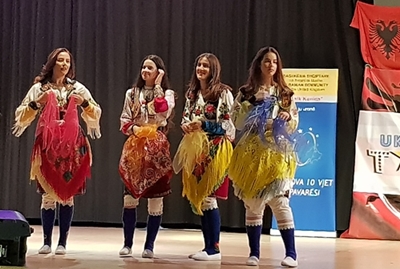
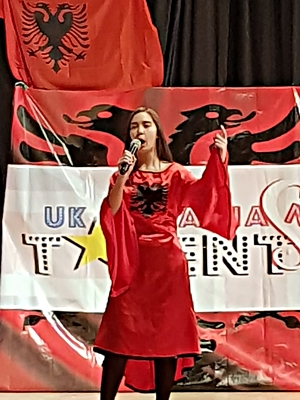
The show consisted of a series of performances by young people whose parents came from Albania or Kosovo. There were songs (traditional and contemporary Albanian as well as renderings of current and not so current popular songs in English). Small troupes of youngsters in traditional Albanian garb performed traditional Albanian dances. Others danced routines that they had choreographed themselves. Several youngsters declaimed poetry in Albanian. Naturally, the quality of performance was not uniform. Some of the young people were dazzlingly competent, the rest were not bad. None of the performers was shy or overtly lacking in confidence. Each of them performed with an enthusiasm that was refreshing to observe. The large audience around me encouraged each of the contestants as they performed on stage, cheering and clapping to the rhythm of the music. The five judges praised and gave friendly encouragement (in Albanian) to each of the performers when their act was over. Three of the judges were for singing, one for poetry recital, and one for dancing. The atmosphere in the hall was joyful and friendly. Everyone who passed my wife and me, greeted us warmly even if they had no idea who we are. It was great to discover that the famed hospitality of the Albanian people has been preserved in its British diaspora.

ALB TAL 3

Many, if not all, of the performers, who sung or recited in Albanian or who dressed up in traditional costumes and performed the dances of their ancestors, use English in their day to day life. They have given up parts of their precious spare time to learn Albanian and to help Albanian cultural traditions remain vital and vibrant. They set an example that many children of British ancestry might profitably follow.

Through the tongue

During my three and a half decades working as a dentist, I have been assisted by numerous ladies varying in age from sixteen to over seventy years. ‘Carly’ was one of them. When she joined me in a practice west of London, it was the first time she had worked in a dental practice. She was a quick learner, but far from discreet.

CARLY

When we had a new patient, we recorded the person’s details on the outside of a record card. One day, a smart-looking woman sat down in my dental chair, a new patient, and I asked her for her personal details: name, date of birth, address, and so on. Carly entered the information on the record card. When we had finished, Carly asked the patient:

“Are you M.R.S. or M.I.S.S?”

The lady replied:

“Miss.”

Quick as a flash, Carly said:

“I can’t see why you ain’t married. You ain’t ugly or anythink.”

The lady took this quite well. She could see that Carly meant no harm.

One Monday morning, Carly arrived and said to me:

“Ere, look at this”

She stuck out her tongue, which had a shiny silver-coloured metal stud pierced through it. I was lost for words for a moment, and then asked her if it was uncomfortable.

“No, it ain’t,” she replied, “It makes eating spaghetti difficult, though. It gets caught up on it.”

All morning, whenever a patient sat in my dental chair, she would tap the patient’s shoulder, and then say: “Wht d’ya think?” before sticking her tongue out to display her stud to the person in the chair. Most of the patients were either politely complimentary of just smiled. By now, my regular patients had got used to Carly and her friendly but cheeky manners.

Another day, Carly arrived at work. Very excitedly, she told me:

“You’ll never guess how much I paid for a large pack of prawns at Tesco’s.”

“Four pounds?” I guessed.

“No, just a quid.”

“That’s a good bargain,” I said.

“What me and me boyfriend do,” Carly explained, “is we swap the labels on the packets in the chiller so that we get the special offer prices instead.”

“Be careful,” I advised.

On yet another occasion, Carly arrived at work looking distressed. I asked her what was wrong.

“I crashed me boyfriend’s car.”

“But you haven’t got a license have you, Carly?”

“No, but I was drunk. I got in his car and drove it backwards into a lamppost.”

I am sure that the boyfriend was not pleased because throughout the day Carly was rung up by him on her mobile ‘phone. She would go out into the corridor, but because she was screaming at her chap so loudly, everyone could hear her.

During one appointment, I was beginning to scale (remove the dental tartar or calculus) a lady’s teeth. After a few minutes, while I changed instruments the lady, a well-dressed woman with airs and graces, asked me:

“Excuse me, Mr Yamey, but what exactly are you doing to my teeth?”

Before I could answer, Carly replied quickly:

“E’s cleaning the crap off yer teeth.”

The patient seemed quite happy with this simple summary.

Despite Carly’s occasional rather undignified comments, she was an excellent assistant. Patients appreciated her unpretentious, friendly, open approach and the fact that she was rarely silent. After a few months, when she had gained some experience, Carly left our practice to take up a better paid position in another dental practice. Some weeks after she had been working there, she dropped into our surgery to say ‘hallo’. I asked her how she was getting on in her new job. She replied:

“It’s ok, but they have told me not to open my mouth during the day.”

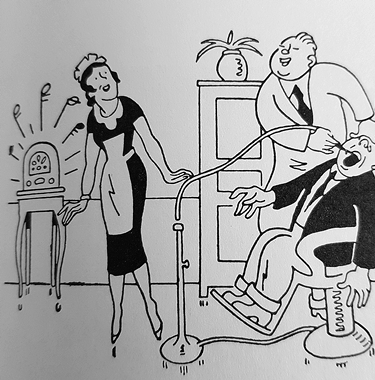
Picture source: “Der Zahnarzt in der Karikatur” by E Hinrich (1963)