Unknown's avatar

About yamey

Active author and retired dentist. You can discover my books by visiting my website www.adamyamey.co.uk .

Hindu burials

Death is a morbid but fascinating topic, as is disposal of the dead. Many people living outside India, including myself, believe that the corpses of Hindus are only cremated. At least, I believed this until about 15 years ago, when I visited a Hindu burial ground in Bangalore.

In a Hindu Burial Ground in Bangalore

I have visited two Hindu cemeteries in Bangalore, one of them being next door to a major electric crematorium in the city centre. When I have asked about Hindu burials, I have been told that some sects of Hindus favour burial rather than cremation.

Recently, I read an article about Hindu burials (in Calcutta) by A Acharya and S Sanyal in the “Mint” newspaper (Bangalore), dated 24 Nov 2018. Here is a brief digest of the points contained within it.

1. Certain groups of Hindus are traditionally immersed or buried.

2. These groups include:

A. Saddhus or ascetics who perform their own mortuary rites when they become saddhus, and are considered to be dead to the social world, living ghosts one might say.

B. Some young children, especially those who have not yet developed visible teeth. Also, some parents prefer to bury their dead offspring, rather than watching them being cremated.

C. Lepers. It used to be feared that a leper’s body might release an infectious vapour during cremation.

D. Some members of the following communities prefer to bury their dead to avoid the dominating behaviour of the Hinduism of the Brahmins: dalits, Vaishnav, Hela, and Kaburpanthi.

3. Sometimes, burial is cheaper than cremation. In Calcutta, burial can cost half of the charge of cremation.

4. Burial of Marwaris and Vaishnavites is more costly than for others because these two groups bury their dead with lots of salt, which they believe speeds disolving the flesh off the bones.

This newspaper piece has helped me to understand the existence of cemeteries where Hindus are buried. I assume that at least some of what has been written about Calcutta also applies to Bangalore.

On a parting note, I used to believe that the traditional method of corpse disposal amongst the Parsis was to feed their dead to the vultures. A Parsi friend of ours died in Bangalore, which has Towers of Silence for the corpses of Parsis, was buried in a Parsi cemetery in Bangalore. I have visited that cemetery, which is located in the district if Malleswaram and is for Parsis only.

All of this goes to show that making generalisations about India is inadvisable. So, before you assert that Hindus do not eat beef, hold your tongue! Some sects of Hindus have eaten beef since time immemorial. If the present government in India bans the consumption of beef, it will not be only Christians and Muslims who will be affected, but also several million Hindus.

The whole tooth

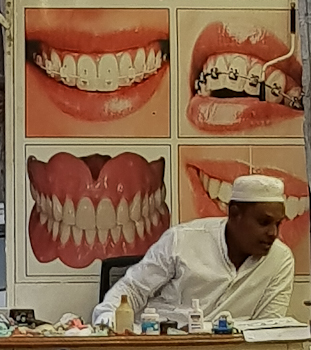
I often wonder why dentists all over the world advertise their practices with a whole tooth, crown and roots.

Most people, apart from some with knowledge of anatomy, are aware of teeth being more than what can be seen in the mouth: the crowns of the teeth, which are covered with off-white enamel. Unless they have a tooth extracted, the majority of people never see the roots which help to keep the teeth on the mouth.

A more appropriate symbol for alerting people’s attention to a dental practice is a row of tooth crowns arranged as a smile.

Although the whole tooth might be the truth, a row of teeth as seen in the mouth should make more sense to someone seeking a dentist.

Photos taken in Hyderabad, India

Two professions

We made several visits to Central Europe in our car during the mid-1990s.

CZECH

Twice during those years, we drove to the Czech Republic, entering it from the eastern edge of what had formerly been prosperous West Germany. The Western part of the Czech Republic, which had been the largely German-populated Sudetenland before 1945 is thickly forested with tall dark pine trees. We were dismayed to discover that for the first ten or so kilometres beyond the border, the roads through the Czech forests were lined with ‘gentleman’s’ clubs and prostitutes.

When we were in the middle of one forest, the rain began pouring down. At the corner of a road junction in the middle of the wood, we saw a young lady dressed in a shiny red jacket with matching short hot pants. Our three-year old child saw the woman, took pity on her, and said:

“Shouldn’t we offer her a lift.”

The innocence of our child was touching.

Hungary is south of the Czech Republic. In the late 1990s, we drove into it from Austria. For the first few kilometres of Hungarian territory, we saw no prostitutes, but numerous dental surgeries with signs both in Hungarian and German. Often the dental surgery was in a little compound that included a restaurant and a food shop. The presence of so many dentists offering their services so close to the border with Austria suggested that dentistry in Hungary was good value compared with that in Austria. And, while a member of an Austrian family is having his or her teeth repaired, the rest of the family could enjoy a good Hungarian meal and buy some tasty souvenirs to take back home.

Dental tourism is still popular in Hungary. English newspapers frequently contain adverts encouraging people to obtain supposedly cheaper dental treatment in Budapest.

The proximity of Bohemian prostitutes to the Czech border and Magyar dentists equally close the Hungarian border made me consider a possible uncomfortable comparison. I wondered whether people ever see some similarity between the two professions. I hoped not!

Never judge a book by its cover: a dental tale

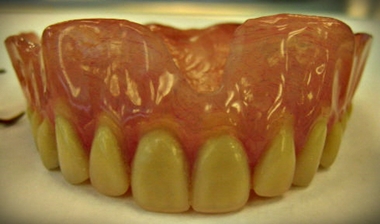
During my last few years in dental practice, I entered my seventh decade of life; I passed the age of sixty. In a way it was creepy: I had become older than my mother was when she passed away, having suffered painfully during the last few months of her life.

DENTURE

[from Wikipedia]

As a dentist, I knew the age of all my patients. Their dates of birth were recorded on their record cards. I used to look at people of my age, and either think that I was looking good compared to them, or that they were doing better than me. Generally, everyone looked young in my eyes, even those who were my senior. Those, who were younger than me usually, but not always, looked young. Interestingly, those, whom I knew to be much older than me did not look as old to me as I might have thought when I was younger. For example, patients in their seventies and eighties would have seemed ‘ancient’ to me when I was in my thirties and forties, but having reached my sixties, they no longer looked so old from my vantage point.

When I was in a dental practice in Kent during my thirties, I worked with a young girl, ‘T’, a first-class dental surgery assistant. She must have been in her late teens or very early twenties at the time. In that practice, we received the record cards of new patients before they entered the surgery. One day, T handed me the record card for a new patient, ‘Mrs M’. As she did so, she said:

“Look, she’s eighty-nine. What can she possibly want at her age? Surely not new teeth – she won’t be wearing them for long.”

Mrs M strode into the surgery and looked around.

“What lovely linoleum flooring,” she said, “where can I get some of that? It would suit my new kitchen.”

“I’ll find out for you. Please sit down. Make yourself comfy,” I said, “how did you get here?”

“I took a taxi, dear, but now that I know where you are, I’ll drive myself next time.”

I carried out the preliminary dental examination, and agreed a treatment plan with Mrs M.

“It will take four or five visits to make your dentures,” I explained.

“That’s alright, dear, I’ll fit them in around my work.”

“What is that you do?” I enquired.

“I do the accounts for my son’s business, dear. Keeps me occupied,” she said, getting up to leave.

When the patient had left the room, I looked at T and said:

“Never judge a book by its cover, or a patient by her age.”


Fools Crusade: war in the Balkans

REVIEW OF “FOOLS CRUSADE” 

by

DIANA JOHNSTONE


When the Berlin Wall was destroyed in 1989 and the USSR ceased to be a world power opposing the West and the USA, Yugoslavia, which had been considered a bulwark between the West and the Soviet Empire, ceased to be of importance to the West (by which I mean the USA and its NATO allies). Furthermore, the ending of the Soviet Empire removed the chief obstacle to the expansion of the USA’s global imperial ambitions.


FOOL 1

This excellent book by Diane Johnstone describes how the West was both misled by irredentist nationalistic groups in the former Yugoslavia, and how it allowed itself to deliberately misinterpret facts which did not suit its own aims. The aim of the West was to demonise Serbia for a multitude of reasons, some of which were self-serving. Western military and financial aid was given to anti-Serbian factions for ‘humanitarian’ reasons, to counter the atrocities allegedly perpetrated by the Serbs against, for example, the Catholic Croats, the Bosnian Moslems and the Kosovar Albanians. In each of these examples, there were undoubtedly atrocities perpetrated by both sides: Serbs killing Albanians or Bosnians AND vice-versa. However, much of the Western media only chose to recognise killings carried out by the Serbs, or those that might have been carried out by them but were never proven.


Sad to relate, but the Serbs have long had a poor reputation regarding what would now be called ‘genocide’.  In 1912 the renowned future colleague of VI Lenin, Leon Trotsky, who was then reporting as a journalist for Kievskaya Mysl, a paper published in Kiev, wrote (excerpts chosen by me):

During the war, I had an opportunity – whether it was a good one or a bad one is hard to say – to visit Skopje (Üsküb) a few days after the Battle of Kumanovo. In view of the nervousness caused in Belgrade by my request for a laissez-passer and the artificial obstacles put in my way at the War Ministry, I began to suspect that those in charge of military events did not have a clear conscience and that things were probably happening down there that were hardly in keeping with the official truths released in government communiqués…

…The atrocities began as soon as we crossed the old Serbian border. We were approaching Kumanovo at about five PM…

…Whole Albanian villages had been transformed into columns of flames – in the distance, nearby, and even right along the railway line. This was my first, real, authentic view of war, of the merciless mutual slaughter of human beings. Homes were burning. People’s possessions handed down to them by their fathers, grandfathers and great-grandfathers were going up in smoke. The bonfires repeated themselves monotonously all the way to Skopje…

…Four soldiers held their bayonets in readiness and in their midst stood two young Albanians with their white felt caps on their heads. A drunken sergeant – a komitadji – was holding a kama (a Macedonian dagger) in one hand and a bottle of cognac in the other. The sergeant ordered: ‘On your knees!’ (The petrified Albanians fell to their knees. ‘To your feet!’ They stood up. This was repeated several times. Then the sergeant, threatening and cursing, put the dagger to the necks and chests of his victims and forced them to drink some cognac, and then… he kissed them. Drunk with power, cognac and blood, he was having fun, playing with them as a cat would with mice. The same gestures and the same psychology behind them. The other three soldiers, who were not drunk, stood by and took care that the Albanians did not escape or try to resist, so that the sergeant could enjoy his moment of rapture. ‘They’re Albanians,’ said one of the soldiers to me dispassionately. ‘Hell soon put them out of their misery.’ ” [from: http://www.albanianhistory.net/1912_Trotsky/index.html,%5D

And so it went on back in 1912. In those days, the Serbs were not the only people involved in atrocities such as Trotsky described; the Turks, Bulgarians, and Macedonians, and others were far from innocent.

Before, international ‘humanitarian’ assistance in the form of NATO troops could be provided to the so-called oppressed minorities in Yugoslavia in the 1990s, it was necessary to encourage the break-up of the federation into smaller nation states such as Bosnia, Croatia, and Slovenia. This way, conflicts that should have correctly have been considered as civil wars within Yugoslavia suddenly became international disputes in which it was deemed suitable to provide international military aid.

The break up of Yugoslavia was aided and abetted by the West, for example by Germany. Germany during WW2 championed the formation of an independent Croatia and an enlarged Albania that included large parts of Kosovo. In the 1980s and 1990s, Germany, no longer led by the Nazis but instead by social minded liberals including the Green Party, encouraged the re-formation of what had been achieved in the early 1940s. The (mainly Roman Catholic) Croats and Slovenians were considered by the Germans and others in the West as being ‘civilised’ Europeans, whereas the (mainly Orthodox) Serbs were considered as uncivilised barbarians. Even worse, the Serbs, thanks to their poor public relations compared to those of the Bosnians, Croats, and Albanians, became considered as the new ‘Nazis’ of Europe – purveyors of ‘genocide’ and a new ‘holocaust’. Undoubtedly, the Serbs were responsible for some inexcusable murderous activities in Kosovo during the late 1990s

Johnstone goes to great pains to demonstrate that not only has the word ‘humanitarian’ become corrupted in its usage, but also the far more emotive words ‘genocide’ and ‘holocaust’. In the famous and horrible Serbian ‘massacre’ at Srebrenica, not only were the Bosnian women and children spared by the Serbs, but also wounded men. This does not happen in true genocide. Furthermore, in the case of this particular unfortunate incident, it seems, she wrote, that the Serbian massacre of the Bosnians might well have been engineered by the leader of the Bosnian Moslems in order to gain further ‘humanitarian’ (i.e military and financial) aid from the West.

What was in it for the West? Why was the bombing of Serbia so important or even necessary? Had Yugoslavia been allowed to continue as an independent multi-cultural country as it had been prior to the downfall of the USSR, it might not have been amenable to the expansionist, power hungry designs of the West, for which you should read ‘USA’. One of these designs was the construction of an oil pipe-line from the Black Sea to the Albanian port of Vlora on the Adriatic coast. This would allow oil from the Caspian to avoid travelling along the already congested Bosphorus, and also to use the larger tankers which the port of Vlora would easily accommodate. It is therefore not surprising the the USA have built Camp Bondsteel near to Uroševac in Kosovo, conveniently located to guard the proposed pipe-line.

Even if only 5% of what Johnstone claims in her meticulously annotated text is true, then what she writes should send shivers down the spine of anyone who values the true, old-fashioned meanings of words such as ‘freedom’, ‘independence’, ‘humanitarian’, and that favourite American word ‘liberty’ as well as ‘genocide’ and ‘holocaust’. Johnstone successfully demonstrates how the citizens of the West were duped into believing a simplistic version of events in the Balkan peninsular, and were then bamboozled into thinking that aiding forces hostile to the West (eg Croatian fascists and Islamic mujahidin in Bosnia) and bombing Serbia would somehow resolve the problem. Instead of resulting in a humanitarian victory, the West wittingly and unwittingly magnified the suffering of the ordinary person, Serb and otherwise, in the former Yugoslav territories.

This is a book that is a must-read if you are interested in Balkan matters and/or the growing malevolent influence of the USA on world affairs. The author writes well, and apart from achieving her main aims, gives a remarkably lucid view of the complex history of the country that was once known as ‘Yugoslavia’.

Adam Yamey is the author of SCRABBLE WITH SLIVOVITZ, a nostalgic look at life in Yugoslavia before its break-up began in 1991. His book is available (paperback and Kindle) on Amazon and bookdepository.com, and also directly from the publisher by clicking HERE

Learning from experience

Experience is one thing you can’t get for nothing

[Oscar Wilde]

 Science, my lad, is made up of mistakes, but they are mistakes which it is useful to make, because they lead little by little to the truth.

[Jules Verne]

The only real mistake is the one from which we learn nothing

[Henry Ford]


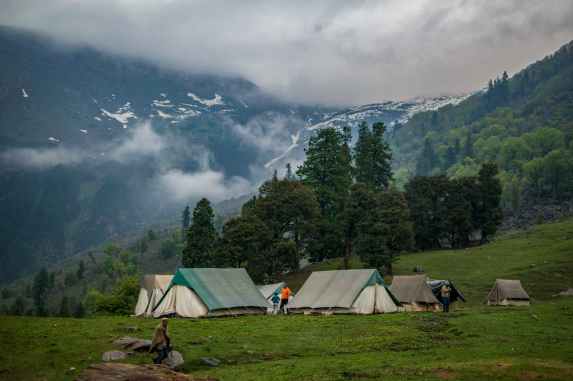
green and white tents near trees

Photo by ajay bhargav GUDURU on Pexels.com

In 1971, I spent about a fortnight driving around France with several friends including the now well-known journalist Matthew Parris. He was our driver, and we travelled in the car that he had driven through Africa and Europe from South Africa to England a year or two earlier.  We camped ‘wild’ wherever possible, avoiding official campsites.

The first night was a disaster for me. We had a canvas tent with an inner room, which had its own built-in groundsheet. The outer room was without its own one. I helped lay out the groundsheet for the outer room and decided (for no good reason at all) to leave its edges protruding beyond the outer wall of that part of the tent. I was one of those assigned to sleep in the outer part of the tent.

I laid out my sleeping bag on the ground sheet, and then crawled into it. To my surprise and horror, I could feel every pebble and stone beneath me. When I had bought the sleeping bag, I had naively believed that it lived up to its name; that it would help me to sleep. Nobody had advised me to buy a Li-Lo, an inflatable mattress which would have cushioned me from the ground beneath me and the misfortune that was about to befall me. 

During the night, there was a thunder storm. The rain came down heavily and before long, my sleeping bag was soaked; the water had crept into the tent via the groundsheet. Although I had a miserable sleepless night, I was not put off the idea of camping. Next day, we tied my soaking sleeping bag onto the roof rack above our car and it dried in the wind as we drove along. We also stopped in the aptly named town of Tonnerre (‘thunder’ in French) in France, where I purchased a Li-Lo. The rest of the holiday went swimmingly so to speak.

Claim your steak

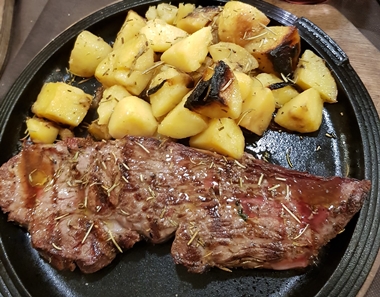
STEAK

When I was much younger, my parents often took my sister and me to eat dinner in restaurants.

Before we looked at the menu, my late mother used to examine the plates and cutlery on our table. If there was a blemish on the cutlery or a crack or chip in the porcelain, the waiter would be summoned to replace the defective item(s). Often this delayed the arrival of any food. If we looked reproachfully at my mother, she would say:

“You can eat off cracked plates if you like, but I am not paying good money to eat off bad plates.”

She said this in such a way that meant that really there was no way that any of us could eat off damaged crockery, even if we wanted to.

As the years went by, I used to look at my plate and cutlery carefully as soon as we sat down. If I spotted a defect, I used to casually lay my hand on it so that my mother would not see it. I was always hungry before a meal and wanted to get on with it rather than having to wait for perfect eating utensils to be fetched. Once any defective cutlery/crockery was replaced, the meal could be ordered.

My mother was fond of beef steak. Rather unfashionably for London in the 1960s, she preferred her steak rare, almost what the French call ‘bleu’. This simple request was the real test for a restaurant. Frequently, the rare steak would arrive cold. My mother would then summon the waiter or maitre d’hote.

“My steak is cold.”

“Madame, I will ask the kitchen to heat it for you.”

The steak would then be returned, and my mother would begin cutting it. Soon the waiter would be called again.

“My steak is no longer rare; it is overcooked. Take it away and bring me another one cooked rare and warm.”

Any restaurant that could get this right without fuss, won my mother’s custom. She would then return there frequently.

Today, rare steak is the ‘in thing’. Most good chefs and discerning diners prefer the insides of steaks to be red, if not bloody.

Writing of steaks reminded me of Monty Modlyn (1921-94), a radio presenter and journalist. Occasionally he would speak on the early morning Today programme on the BBC Home Service (now ‘Radio 4’). He would report on steaks and other meat he had eaten. He had a metal ball that he would drop onto pieces of meat. The depth of the indentation made by the ball’s impact was his measure of the meat’s quality. It all sounded a bit mad to me when I listened to him when I was a young boy. Apparently, what he was doing was quite sound. The quality of raw meat can be judged by indenting it with a finger tip and then watching how quickly the indentation disappears. If the meat recovers quickly, then the quality is likely to be lower than if it recovers slowly.

Harrods department store

POLO


In the early 1960s, my parents installed a Permutit water softening unit in our family home. I have no idea why they did this. Maybe it was to save soap and the furring up of pipework. I am not sure that they would have done it had they known of the research that shows that heart disease is reduced as the hardness of drinking water increases.

The apparatus consisted of two cream coloured cylinders, each about five feet high, which stood next to each other in our garage by the side of the house. One of the cylinders was sealed shut and surmounted by a circular metal control wheel. Its neighbour could be opened by lifting a lid. Once a week, my father had to refresh the ion-exchange resin in the sealed container. This was done by adding salt in large quantities to the other cylinder, having removed its lid. By turning the control wheel at intervals dictated by an instruction manual, the refreshing cycle was completed over a period of about two hours. When the procedure was completed, my father used to test the softness of the water in our taps by mixing it with a soap solution supplied by Permutit. If a stable foam was produced, this indicated that the refreshment cycle had been completed successfully.

A special salt, called dendritic salt, was required for the weekly process described already. There was only one store that would both supply sacks of dendritic salt and, also, deliver it to our home. That store was the world-renowned Harrods in Knightsbridge, which brought us the salt in their silent electrically-powered delivery vehicles.  In order to get these regular deliveries, my parents had to open a Harrod’s account.

Harrods has never been a store that one would enter hoping to find a bargain. In the sixties, they provided their customers with very attractive carrier bags. My late mother liked these, but she was not particularly interested in buying anything from the store in Knightsbridge. So, she used to enter Harrods and buy a packet of Polo mints, one of the least costly things on sale, and have the payment of them put on the family account. This low-cost purchase allowed her to get what she really wanted: a Harrods’ carrier bag.