


From worlds far apart,
Two folk come together:
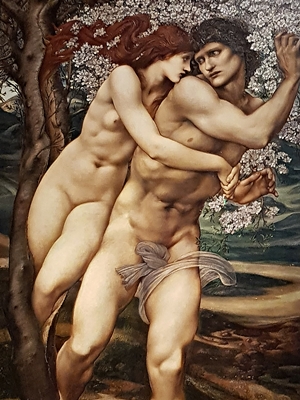
Cupid’s bow does its job
When our daughter was a little girl in junior school, the members of her class were asked to name the greatest Briton in history. She nominated Queen Victoria. Her choice was based on the following facts: her mother’s parents were born in India and my parents were born in South Africa. When Queen Victoria reigned, she argued, both countries were part of the British Empire. This, she felt, made it more likely that both her parents would study in England and meet. Without Victoria, she concluded, my wife Lopa and I might never have met, and she would not have existed. Well, maybe she was right. I believe that the reason we met was due to two men who gave us career’s advice: Professor Lewis Wolpert in London and Major General SL Bhatia in Bangalore.
As I approached the time when I had to choose a university undergraduate course, I had no idea which subject to select. I was interested in biology, physics, and chemistry, but had no interest in studying medicine, or even dentistry, which I studied many years later. Careers advice at my secondary school was not helpful.
My South African-born parents knew many South Africans living in London. One of these was my father’s close friend, the late Cyril Sofer, a sociologist. It was through the Sofer family that we met Lewis Wolpert, who was born in South Africa. First, he trained to become a civil engineer. By the time I first met him, he had become an eminent biologist, specialising in cell and developmental biology.
Wolpert, on learning that I was having difficulties choosing a course of study, kindly invited me to his office in Middlesex Hospital in central London. He spent about an hour with me, listening to what I had found interesting in the science subjects I had studied at school. Having heard me out, he suggested that I study physiology at university. This subject would, he thought, encompass all that interested me so far. He told me that the best places to study physiology were Cambridge and University College London (‘UCL’). Of these, he considered the physiology department at UCL to be the best. I was pleased to hear this.
About five years before meeting Wolpert, my father and I had visited UCL because a friend of the family, the art-historian Leopold Ettlinger, worked there. All that I can remember of this visit was walking across the lawns in UCL’s elegant Front Quadrangle and thinking how beautiful it seemed. So, when Lewis Wolpert suggested that I apply for admission to UCL, I was happy about that.
At about the time I was discussing my academic future with Wolpert in London, a young lady, my future wife Lopa, was discussing the same thing with another eminent scientist 5000 miles away in Bangalore. The scientist, Major General SL Bhatia (1891-1982), had known Lopa’s mother’s father from when he studied medicine in Bombay. The two medics became close friends. When Lopa’s mother Chandra was born, Bhatia became the equivalent of Chandra’s god-father.
Chandra’s father died young having succumbed to blood poisoning while treating one of his patients. His friend Bhatia had a glittering career in science, medicine and the Indian Army. It was during his retirement that Lopa met him at his beautiful old-fashioned bungalow in Bangalore. Bhatia had studied medicine not only in India but also at St Thomas’s Hospital in London during the second decade of the 20th century. While in London, he had conducted research with leading physiologists. Like Wolpert had done for me in London, Bhatia recommended that Lopa, who was not keen on studying medicine at that time, pursue a course of physiology at UCL, because he knew it to have a fine reputation in that subject.
One morning in October 1970, I arrived at the Physiology Department at UCL, having travelled from my home in north-west London. I was one of nine students who had been accepted for the course. Lopa was one of the others. She had travelled over 5000 miles to join the department. We were greeted by the department in the Starling Room, named after a famous physiologist who had worked at UCL. This common room is where I met the young lady who was eventually to marry me.

In the bar at the Bangalore Club
Our wedding reception in Bangalore was held in 1994 at the Bangalore Club, a prestigious ex-colonial institution in the heart of Bangalore. Although he could not attend, Major SL Bhatia was the first Indian President of that elite club. Before that, all the Presidents had been British. Bhatia’s widow was at the wedding. She claimed, not without some reason, that it was she and her late husband, who were responsible for getting Lopa and me together.

Just as our daughter is eternally grateful to Queen Victoria for bringing Lopa and me together, I am equally thankful to Professor Wolpert and Major General Bhatia for getting our paths to cross. I cannot acknowledge them for what was to follow; Cupid and his arrows are to be thanked for that.
Picture sources: semanticscholar.org (Bhatia) & retractionwatch.com (Wolpert)




 yamey
yamey 