
Paws on a shiny bonnet
Leave no marks:
There is but a fine shadow

Paws on a shiny bonnet
Leave no marks:
There is but a fine shadow
All over India you can see variations in the spelling of English words. Here are some examples I saw today in Bangalore.
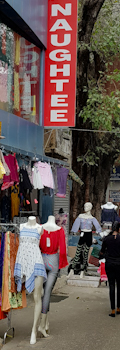
Here the word ‘naughty’ has been spelled semi-phonetically.

Here, b and P have been mixed up. The consonants B and P are formed similarly when spoken.
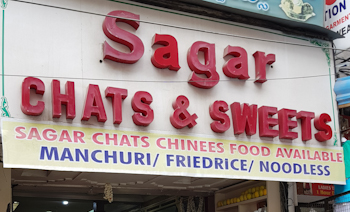
This shop sign demonstrates a variety of different kinds of spelling errors. (By the way, ‘chats’ are slightly cooked vegetables or raw fruits dressed with spicy powders.)
Remember that although English is one of India’s national languages, for many shop owners it is a foreign language. Hence, the diversity of spellings of common English words.
In about 1977, I travelled to Greece overland with my PhD supervisor (‘Prof) and his wife (‘Wink’). Every year they towed a caravan across Europe to their favourite camping spot near Platamon on the coast of northern Greece. They were averse to camping overnight in campsites. They preferred to camp ‘wild’ at spots of their own choosing. Their journey involved three nights in the former Yugoslavia, a country where camping outside official campsites was against the law. However, over the years they had found several places in Yugoslavia where they could camp ‘wild’. Prof and Wink were always anxious when they travelled through that country, constantly worrying that their illegal camping activities would get them into trouble. Let’s join them on the last few hours before leaving southern Yugoslavia (in what is now Macedonia) and an official campsite, where circumstances forced us to stay one night. Here are two extracts from a book, which I have not yet published.

Picnic north of Ohrid in Macedonia, 1977. The author is standing
“After lunch, we drove onwards towards the town of Ohrid that lies on the eastern shore of the lake bearing the same name. As the sun began to set, we faced a problem. Prof and Wink had never travelled to Ohrid before and knew of no places where we could camp ‘wild’. Driving along, we could see nowhere suitable to do so. Cautiously, I recommended the town’s campsite. I had stayed there a few years earlier with my friend Hugh. It was a lovely spot next to the lake shore. Reluctantly, Prof agreed that this would have to be where we should spend the night. At the entrance of the camping grounds, we had to surrender our passports in order that the camp could register our presence to the police. Prof was reluctant to let go of his passport, but when the officials assured him that they did not need it for long, he gave in.
While supper was being prepared, I took a stroll around the campsite. An elderly employee of the campsite approached me and greeted me like an old friend. When I shook his outstretched hand, I remembered who he was. I had met him the first time I camped in Ohrid for a week in the late 1960s. On that visit, I used to walk from the campsite to the town in order to do sightseeing or to catch buses from it to other places in the area. At the end of each day, I used to walk back to the campsite, where Hugh had sunbathed all day. On one of these return journeys, this man, who greeted me so many years later, had seen me on the road and had invited me into his home to meet his family. I was touched that he recognised me…”

Ohrid in 1973
“… we continued our journey towards Greece on the following morning. We left Ohrid and drove across the mountains east of Lake Ohrid to Resen, where we did not stop. Had we not been in so much of a hurry to leave Yugoslavia – Wink and Prof always felt more than a little uneasy being there – I would loved to have visited the nearby Lake Prespa, which, like Lake Ohrid, shares its waters between Yugoslavia (now Macedonia or FYROM or Northern Macedonia) and Albania. Unlike the bigger Ohrid, Prespa also shares its water with Greece. In fact, the frontiers of the three Balkan countries meet in the middle of the lake. We crossed another mountain pass after leaving Resen, and then descended into the plain in which the town of Bitola stands.
We parked near a large mosque in Bitola, and then began wandering around an open market. Prof stopped by a stall selling green grapes. There were flies crawling all over them. He took out a notebook and pencil, and then pointed at a fly on one of the grapes. He was hoping to learn the local word for that particular kind of fly; he was always trying to improve his vocabulary in the languages that he encountered en-route. He even carried a miniature tape recorder in which he recorded people pronouncing words in, usually, Modern Greek. He used to listen to these recordings and try to repeat them in order to improve his pronunciation. The seller of the grapes, seeing Robert’s interest in his wares, was hoping to make a sale but could not understand what the foreigner was asking. Both parties were left unsatisfied.

The road from Bitola to Medzhitilija on the Yugoslav side of the Greek border in 1977
After leaving Bitola we drove southwards across a flat cultivated plain until we reached the Yugoslav customs post at Medzhitilija. We waited in a queue of vehicles until we drove under the wooden canopy over the roadway adjacent to the border officers’ cabin. Before handing our documents to the official waiting alongside the car, Prof looked up into the eaves of the steeply pitched roof and began pointing at something. The customs officer looked up and then at Prof, who was frantically leafing through a small well-worn Serbo-Croatian pocket dictionary.
“I wonder what the Yugos call a house-martin’s nest,” Prof kept muttering.
The officer looked him, puzzled rather than impatient.
“For heaven’s sake, let’s get on,” Wink shouted at her husband from her perch behind us.
She, even more than Prof, was keen to leave the communist country where, on previous trips, they had had minor though worrying brushes with authority.
Minutes later, we were driving south along a Greek road …”

Face of white stone
Frozen fierc’ly now:
A statue from eastern climes.
I was just nineteen when I took my first driving lesson. I was staying in Harlow (Essex) doing my first holiday job (at Beecham’s pharmaceutical research laboratories). I used to have the lessons after work during the early evenings when there was little or no traffic on the roads.

Driving in Bavaria: my car in 1986
I found it very difficult to coordinate hands and feet, so that gear changing presented me with quite a challenge. I drove slowly, especially when approaching traffic signals when they were turning red. I could not face the palaver of foot brake, handbrake, clutch, and gear synchronisation that was needed when stopping at a red signal. Occasionally I drove so slowly that the car almost stopped moving. After about six lessons, the instructor said to me:
“You are my first pupil whom I have had to ask to drive faster.”
A couple of lessons later, he told me sadly:
“You are going to take much longer to learn to drive than most other young people.”
I knew he was right, and we agreed not to have any more lessons.
Twelve years after my summer job in Harlow, I began practising dentistry in the Medway Towns (in north Kent). I took up the job there in April 1982. I was still unable to drive. I rented ‘digs’ near the practice. In the evenings after work, there was little in the way of public transport in the area apart from the railway that connects the three main centres of the Medway Towns. I decided that life in this part of the world would be very dull if I did not learn to drive.
One of the dental nurses in the practice recommended a driving instructor, Mr B. I decided to take an intensive course of driving lessons, paying for three or four hours a week. Mr B’s method of instruction suited me well. I learnt in a car with dual controls. My instructor, who sat in the passenger seat beside me, had a clutch and brake pedal that he could operate if necessary. Occasionally, he would operate them, and I would say to him:
“I was just about to brake when you operated your controls.”
Mr B would reply:
“If I need to use the dual controls, then I feel that you did not make the right decision in time.”
After about six weeks, Mr B considered that I was ready to take the Driving Test, which I booked. The test was scheduled for ten o’clock one weekday morning. The Test involved driving the examiner along local roads. During the drive, the candidate is asked to perform several prescribed procedures, such as: reversing around a corner; a hill start; an emergency stop; and parking the car. At the time of day when I took the Test in Gillingham, one of the Medway Towns, there was almost no other traffic on the roads. This made things easier for me. Also, I was able to anticipate when the examiner was going to ask me to perform this or that prescribed manoeuvre. I passed the Test, the last important exam I have ever taken. I attribute my success to two factors. One of them was Mr B’s superb tuition. The other was dentistry. Let me explain.
During the five years prior to my Driving Test, I studied dentistry. Many of the clinical procedures I learnt involved using the dental handpiece (drill). The speed at which the bur (drill bit) rotates is controlled by a foot pedal. Where and how the drill cuts is controlled by hand movements. I had learnt to drive a dental drill. Driving a car, with the feet/hand coordination it involves, became simple for me after my dental training.
Soon after getting my Driving Licence, I bought a second-hand car. On the first day, a Thursday, I drove it to and from the Savacentre, the local supermarket, three miles from my flat. On the Friday evening, I drove through the countryside to Faversham, which was twenty miles from where I lived. On the Saturday, after finishing my morning clinic, I set off for north London, sixty miles away. It was the first time I had driven on a motorway. That was not too bad but driving across the metropolis of London felt like a bad dream. I had never driven in heavy traffic before. By the time I had crossed south London and the River Thames, I had developed a severe headache. When I reached a major, congested traffic intersection in Camden Town, I felt like getting out of the car and abandoning it. Things reached rock bottom, when the driver of a car near to mine leant out of his window and yelled at me:
“Bloody Sunday driver.”
Late on the Sunday night, I set off to drive back to Kent. Being late, there was less traffic than there had been in London on the Saturday afternoon. I had planned to cross the river using the Blackwall Tunnel. However, I missed the turning for it and found myself on a dual-carriageway that led inexorably eastwards away from London. Every now and then the road crossed intersections on steeply humped fly-over bridges. I knew that eventually I would reach the Dartford Tunnel that passes beneath the Thames, but I was getting cold and lonely as I drove through a darkened industrial landscape and then through countryside that seemed featureless late at night.
I drove through the long tunnel beneath the Thames. When I reached the toll-booth on the Kent shore, I paid the toll to a man sitting in a lighted booth and thanked him. It was a relief to be able to talk to someone, even for a few seconds, after the lonely journey I had just made.
The next few journeys I made to London always resulted in me getting a headache, but eventually I began to enjoy driving. I enjoyed it so much that later on I drove several times from England to Hungary and farther afield to the former Yugoslavia, often on my own and enjoyed every minute of the journeys.

This picture of the moon was taken with a Nikon coolpix S 7000.

Light filters through
the colour’d glass window
for spiritual delight
Window in Farm Street Curch, Mayfair, London
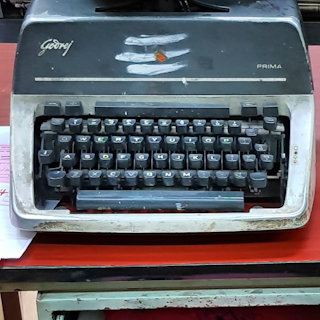
This typewriter in Bangalore is still in daily use. It has been given three white stripes and a red dot for religious reasons related to Hinduism.
I lived and practised dentistry in the Medway Towns (Chatham, Gillingham, and Rochester) for eleven years beginning in 1982. These towns in north Kent coalesce with each other to form a straggling urban belt along the right bank of the River Medway. When I lived in the area, there were many restaurants serving what was described as “Indian food”. Before reaching the area, Indian friends had helped me to appreciate what good Indian food should taste like. None of the many restaurants I tried in the Medway Towns ever provided Indian food that could be described as good. However, as there was not much else to do in the area when I first arrived there, before making friends locally, I sampled many of the eateries that served Indian food.

One autumn evening, I entered a small establishment in Gillingham. I was its only customer for the duration of my meal. The restaurant was literally freezing cold, unheated. It was so cold that I ate my meal without removing my fleece filled anorak. Before the food arrived, the waiter placed a candle-powered plate warmer in the middle of the table to keep my dishes warm and another one in front of me to keep my plate warm while I was eating. The items, which I ordered, had the names of Indian dishes that I had tasted before. Sadly, none of them had any taste at all.
In another Indian restaurant that I visited one evening, I was not the only customer. There was a couple at another table within earshot. While I was eating, I could listen to my neighbours’ conversation. I remember nothing of the food I ate, but I do recall one small snatch of the other customers’ chatting. One of them said:
“… well, of course, you know, Gillingham is the armpit of Kent…”
having recently moved to the town, I was not happy to hear that.
There was an Indian restaurant close to the synagogue in Rochester. This place was slightly superior to the other Indian eateries in the area. One evening, while I was eating there, I was intrigued by the music being played through the establishment’s speaker system. Although I knew nothing about it then, I now realise that they were playing a soundtrack from a Bollywood film. I asked the waiter about the music. He answered:
“It is Indian music”
“I like it,” I told him, “where can you buy it?”
“We borrow the records from the public library, sir.”
Some months later, on a cold winter’s evening, I visited the restaurant near the synagogue with a female cousin and a male friend. We ordered a large meal and were served by only one Asian (Indian or of another sub-continental origin) waiter throughout. We were the only diners that evening. No one else entered the restaurant, even for take-away food. At the end of the meal, my friend went to the toilet. My cousin and I put on our winter coats and waited for him by the entrance door. Within a few seconds of reaching the door, the waiter, who had been serving us all night, came up to us and said:
“Table for two, is it?”
Either the waiter had not looked at us all evening, or all Europeans looked the same to him.
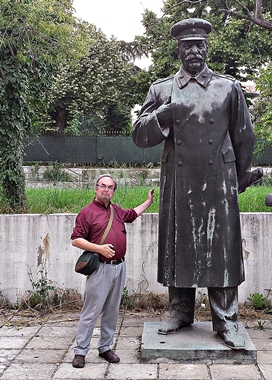
Standing by Stalin,
albeit in bronze:
odd memories evoked
This statue of Stalin, now in Tirana, was cast during Albania’s Communist era (1944-91). Albania was the only country to continue revering Stalin after his death.
 yamey
yamey 