Unknown's avatar

About yamey

Active author and retired dentist. You can discover my books by visiting my website www.adamyamey.co.uk .

Calm sea and Prosperous voyage

Digital_500


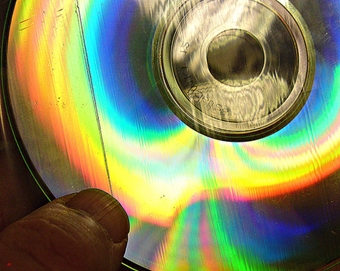
A few years before my mother died, I persuaded my parents to invest in a stereo hi-fi system. My mother would only have such a system if it looked nice. So, they settled on a Bang and Olufsen system. Unfortunately, the aesthetically pleasing speakers sounded awful and we replaced them with something less pleasing to look at but which sounded good. When CD’s (compact discs) became available, I added a CD player to the system. By then, my mother was dead and the appearance of the player no longer mattered.

After my mother died, I was living in Kent. I used to visit my father on Sundays. We used to have lunch together in various restaurants in Hampstead village in north-west London. Always, after we had eaten, we used to viit the Waterstones bookshop and the Our Price music shop nearby.  Often, I would purchase a CD to add to my father’s small collection. On one occasion, I bought a CD with some orchestral music by Beethoven.

Some weeks later, I asked my father if he had enjoyed that CD. He said:

“There is something wrong with it. There is complete silence for the first few minutes.”

I said that I would look into this. When I reached his house, our family home, I turned on the hi-fi system and inserted the problematic CD. My father was right. For the first few minutes, there was nothing to be heard.  Then, I looked at the volume adjustment slider which was marked at equally spaced intervals from 0 to 10. I discovered that my father had been using the system with the volume slider set between 0 and 1. 

The first track on the CD was Beethoven’s Opus 12: Calm Sea and Prosperous Voyage. The first few minutes of this piece are very quiet, which is why setting the volume so low made it sound silent. My father’s penchant for barely audible low volume background music was the reason for doubting the integrity of the CD, which I had given him.


You can listen to the music mentioned above by clickingH E R E

A tingle down my spine


I enjoy exploring historical places. Well, I know that everywhere has a history, but what I mean is places which contain tangible remnants of their history like the Regency buildings designed by John Nash, built at the beginning of the 19th century around Regents Park in London. They were built when the future George IV was Regent.

Well, there is nothing surprising about these beautiful buildings. That is what I thought until my wife spotted the street lamp posts next to some of the buildings. Each of their bases has a symbol for King George IV. Seeing such mundane objects that must have been in daily use since so long ago sent a tingle down my spine.

The same thing happened to me once when I was driving along a ring road around Munich and I passed a direction sign pointing to Dachau.

Would you trust them with your money?

Back in the early 1970s, I had dinner at a cheap and cheerful Chinese restaurant (Lido, which still exists in Gerrard Street) with about 7 friends. 5 of them were studying to be chartered accountants, I was completing my PhD thesis, and ‘J’ had only the most basic of educational qualifications.

The bill arrived. It was £24 for all that we had eaten. That seemed about right. The bill, consisting of three pages stapled together, was examined by all of us.

When J looked at it, she said it was twice what it should have been. This was because the waiter had added the sub totals at the bottom of each page to the individual prices which added together were equal to the sub totals.

We ended up sharing a corrected bill of £12.

What concerned me was that 5 people who were about to become chartered accountants missed the error in the bill which they had perused. Would you have trusted them with your money?

Incidentally, J went on to become a very successful business woman, probably more prosperous than anyone else sitting around that table in Lido.

A few words


For the past few months I have been working on the manuscript of my latest book. I am not telling you what is going to be about. You will have to wait to find out!

I was reasonably happy about the way it was going, but a little worried that I was including too much about matters distant to the topic on which I was planning to focus. Some of the less relevant material might easily have been considered controversial and possibly hurt the sentiments of some of my potential readers. This worried me somewhat.

A couple of days ago, an old friend, whom we had not seen for a few months, came to dinner at our home. During the meal, I told him what I was writing about. Immediately, he reacted that what I feared was controversial might easily get me into trouble if my text was read by a certain type of person. 

For a couple of hours, I was downcast. I thought that maybe I should just abandon the project, which has taken up so much of my spare time during the last few months.

Next morning, I woke early, feeling inspired. I turned on the computer and removed the ptentially ofensive material from my draft text. Then, I read through what was left of it, and realised that by trimming it down, my text was far better than it had been before. It had become tighter and more focussed on the subject I want to portray.

I am always amazed how important a very few words of advice can be.

Travelling on a budget

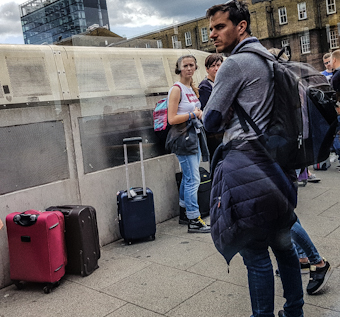
Suitcases that become trollies.

Trollies that run over the feet of others.

Wheelies that fit overhead lockers.

Hand baggage that is too big for a hand.

Waiting in long queues.

Cases filled to the brim to avoid paying for baggage in the hold.

Seats that cannot be reclined

Baggage for flights that often run late

To airports far from where you actually want to go.

Suitcases to avoid waiting at the baggage claim.

The joys of ‘budget’ airlines.

No outside food


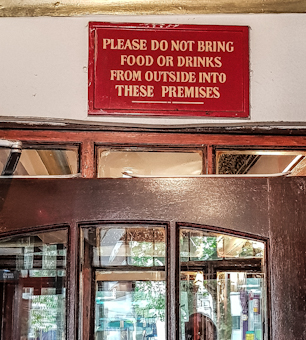
The Coffee Cup café in London’s Hampstead has been in business since 1953, and has been very popular since I first remembered it in the early 1960s. I have visited it several times, but never before noticed the sign at its entrance, which reads: “Please do not bring food or drinks from outside into these premises.” This instruction is not seen frequently in restaurants and cafés in the UK. Seeing this sign reminded me of what is very common in eateries in India, namely, signs reading: “Outside food not allowed.” Customers are forbidden to bring into the estblishment food or drink they have obtained elsewhere. That is fair enough, I suppose.

Cinemas in India, like in many other countries, try to sell food and drink to their customers, often at outrageously high prices. Apparently, watching a film is for many people more enjoyable if you are stuffing popcorn into your mouth at the same time as spilling it on the floor in the dark.

Back in 2001, my family, my in-laws, and my wife’s brothers family went to watch the recently released Bollywood blockbuster Kabhi Khushi Kabhie Gham at a large cinema in Bangalore (India). After purchasing the tickets, we had to wait in a queue before all of our baggage, shopping baskets, handbags etc., were searched by uniformed security personnel. I wondered what these officials were looking for. Was it guns or explosives, I asked my sister-in-law after we had reached the auditorium. No, it was not that, she replied. They were looking for food and drinks brought from outside the cinema. She told me that outside food was not allowed into the cinema, and then showed me inside her shopping basket, All I could see was a shawl (some cinemas are too cool because of air-conditioning). She moved the shawl aside to reveal that her bag was filled with sufficient drinks and snacks to easily satisfy all eight of us during the three and a half hour film. So much for the security check! Had we been carrying anything more dangerous than ‘outside food’, this would have also been missed by the not so vigilant security people.

It is odd how a chance sighting of something like the sign in the Coffee Cup can bring back distant memories.

It was not all bad in East Germany


For those of you who are too young to remember, Germany was divided into two separate countries, West Germany and East Germany (‘DDR’), between the end of World War 2 (‘WW2’) and 1990 (when the two countries were united into one). The DDR was a socialist republic overshadowed by the USSR.

Many years after the re-unification of Germany, our German-built Bosch dish-washing machine broke down. The engineer who came to mend it, fixed it in a couple of minutes, but remained talking to us for half an hour. He had been brought up in the DDR. He wanted to explain to us that contrary to all that we might have heard about the evils of the DDR and the difficulties its citizens faced, it was not all bad. He told us that, for example, education was good, there was little or no unemployment, and there had been a great sense of camaraderie. It was very important for our engineer that we should not think ill of the former DDR.

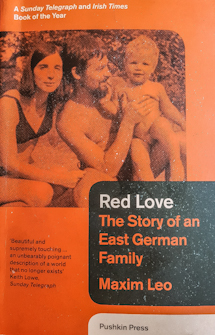
Recently, I finished reading an excellent book about the DDR, Red Love written by Maxim Leo and published in English in 2013. Leo was born in 1970, and like our Bosch engineer, does not damn the DDR, but takes care to point out that living in that former country was not at all easy or straightforward. For anyone curious about life in the DDR, this book is very illuminating. However, there is much more to this short book than describing the DDR.

What is most fascinating in Leo’s book is his stories about his two grandfathers, both of whom lived in the DDR. One of them remembered life being reasonable during the Nazi regime. Despite his grandson’s questioning, it is not clear what he did during those terrible times. The other grandfather led an exciting and dangerous life as a member of the French resistance during WW2. His story is gripping. 

Leo’s parents are also interestingly described. They were both in favour of, or atleast not completely against, the regime in the DDR. Each of them expressed their didfferent critical views of the political system, but neither of them did so strongly that they fell out of favour with it.

The book is a very readable translation of the original German translation. It provides a fascinating insight into life in the DDR and the period that preceded it. It was a book that I found difficult to put down, a real ‘page-turner’. Some of what I read in it chimes well with what our dish washing machine engineer told us.

A puff of smoke

Three students


My father gave up smoking when I was about eight years old. As far as I know, my mother never smoked. I had an aunt who smoked, and entertained us by creating smoke rings with exhaled cigarette smoke. Visitors to our home smoked, so I was not completely isolated from cigarettes and so on during my earliest years. 

I was about 13 or 14 when I went on a field trip with other boys from my class. On that outing, I was shocked to see many of my fellow pupils lighting up cigarettes when we were out of sight of our teachers. I did not realise until that moment thay young children smoked.

In those early years, and possibly still today, I was a contrarian. Being that sort of person and seeing my peers smoking made me decide never to even try smoking, and  this situation remains unchanged tosay, so many decades later. It was not for health reasons nor because of economic problems that I have never taken up smoking. I simply did not want to be one of the crowd.

I often wonder if the situation had been reversed whether I would have become a smoker. If no one else had been smoking, would I have lit up just to be different? I doubt it because as a child I was far from adventurous.

The Wall

DDR


The Berlin Wall ceased to be a barrier between capitalist West Germany and socialist East Germany in late 1989. It marked the ending of the ‘Cold War’ and the recent collapse of the former USSR. 

At that time, my father made an interesting observation, which I want to sahre with you. He is a retired academic at the world famous London School of Economics (‘LSE’). The LSE had a large number of academics with an expert interest in politics. He told me that the end of the Cold War had come as a complete surprise to his colleagues, who professed to be experts on the subject. Not one of them had predicted either the downfall of the USSR or the ending of the Cold War. I was staggered by this information, and my faith in ‘experts’ reduced a bit.

So, now when I listen to ‘expert’ after ‘expert’ giving opinions on the outcome of ‘Brexit’ and the future of politics in the UK (or elsewhere), I take what they say with the proverbial ‘pinch of salt’.


Picture: The emblem of the DDR, sourced from Wikipedia