Unknown's avatar

About yamey

Active author and retired dentist. You can discover my books by visiting my website www.adamyamey.co.uk .

Smoking prohibited

No smoking_640


A few years ago, it became illegal to smoke in any public place in the UK, be it a place of work or a place of leisure. Other countries have the same prohibitions on smoking.

We spent a holiday in Istanbul in 2010 and noticed that all bars, cafés, and restaurants were places where smoking was forbidden. Yet in one tea house on the Asian side of the Bosphorous, we saw everyone was puffing away on cigarettes, even those who were sitting close to the ‘no smoking’ signs. The picture attached to this blog article was taken in Bangalore, India. It shows how much notice is taken of a ‘no smoking’ sign.

A couple of years ago, we were staying in Goa’s capital Panjim. Our host told us that smoking is forbidden in all public places including on the streets. How seriously this is policed, I do not know.

One of the objects of anti-smoking policies is to reduce the chances of secondary smoking, which is inhalation of exhaled cigarette smoke by people near to a smoker but not smoking themselves. This is a worthy and sensible reason for banning smoking in public places. 

The prohibition of smoking makes pubs far more pleasant, but I have a reservation about restaurants. Having been brought up eating in restaurants where some diners are smoking, I feel that the current absencse of smoking in these places detracts from their ambience ever so slightly.
Whether it will rain or not


Whether the weather be fine
Or whether the weather be not,
Whether the weather be cold
Or whether the weather be hot,
We’ll weather the weather
Whatever the weather,
Whether we like it or not. 

[anonymous]


One of the best ways to engage a stranger in conversation in the UK is to begin talking about the weather. Because of its unpredictability in the British Isles, there is always much to discuss.

There is at least one explanation of why it is so difficult to forecast British weather reliably. I read about it in a book about chaos theory some years ago, so please forgive me if my explanation is not totally clear. As I understand it, weather forecasting is done using mathematical models involving a complex set of  interlinked equations. The forecaster feeds multiple parameters into the equations, and a result is obtained that allows the weather to be predicted reasonably accurately. This model is quite reliable in many parts of the world, but not here in the UK. The problem is that when the parameters for the region containing the British Isles, whose weather system is affected by far more complex and many more influences than in other places (I do not know why), are fed into this set of equations, instead of one solution, several appear because the parameters introduce a large degree of instability into the forecasting model. Hence, the uncertainty in British forecasting that occurs. 

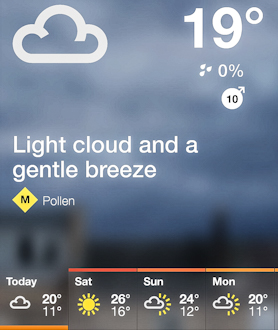
Nowadays, I use a popular weather forecasting app on my mobile ‘phone. It provides several predictions of what the weather will be like during different times of the day and several days following it. Potentially useful are the rainfall predictions which are expressed as a percentage, 0% being ‘rain completely unlikely’ and 100% being ‘rain inevitable’. So far, so good.

If the app predicts rainfall of less than about 5%, I do not bother to take an umbrella or rain coat, otherwise I do. Things can go wrong. Suddenly, out of the blue, rain falls heavily. I look at my app. Suddenly, what had been a prediction of, say, 3% becomes a prediction of, say, 78%. The app appears to be responding to the weather (or recording it), rather than predicting it.

Moral of the story: take an umbrella.


Poem from: https://www.poemhunter.com/poems/weather/page-1/22212436/#content

Chopsticks


My earliest recollection of eating Chinese food was in a restaurant called ‘Tung Hsing’ in Golders Green almost opposite the old Hippodrome Theatre. It opened in the 1960s and was one of the first restaurants in London to serve Pekinese food, rather than the then usual Cantonese cuisine. The restaurant was owned by a retired ambassador from Chiang Kai-shek’s nationalist China and his wife, whom I believe was responsible for the very excellent food served. 

Although I am sure they were available, I am not sure whether I used chopsticks when eating at the Tung Hsing. Maybe, I learned to use them there, but I really cannot remember. Whatever the case, I have been eating Chinese food with chopsticks for many decades. I would not say that I am 100 percent proficient with them, but I feel that using them to eat Chinese food satisfies me.

Chinese-style food is very popular in India. Most Indians eat in Chinese restaurants using western utensils such as plate, fork and spoon. If you ask for chopsticks, they are usually available, but they are not supplied as default table settings.

Some years ago, early this century, a new Chinese restaurant opened in Museum Road in Bangalore. We visited soon after its inauguration. It was a lovely restaurant and the food was good by Indian Chinese restaurant standards. As usual, we asked for bowls and chopsticks. The waiter disappeared for a while, and then returned empty-handed.

“There are no chopsticks,” he told us.

“Why not?” we asked.

“I will ask the manager.”

The Manager came over, and explained:

“We have been so busy since we opened, and many of the guests have taken them home as souvenirs. So, we have run out of them”


Going without …


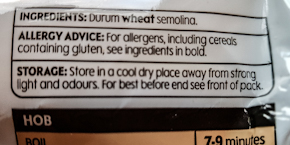
It’s estimated that 8.5 million people in the UK have now gone “gluten free” and it’s a very fast-growing section of the supermarket with an expanding (and expensive) range of gluten-free alternative foods on sale.” (https://www.bbc.co.uk/news/magazine-37292174)

Food intolerances can very debilitating to those who suffer from them. Take gluten intolerance, for example. It can cause a variety of uncomfortable and sometimes dangerous symptoms. The incidence of gluten-related medical problems is uncertain. It may be as high as 1 in a 100 people according to one source (https://glutenintoleranceschool.com/gluten-intolerance-statistics/#2), or, possibly not nearly so high. A study published in 2015 (Digestion, 2015;92(1):8-13) found that 86% of patients complaining that they had non-coeliac gluten sensitivity were found to have neither Non Coeliac Gluten Sensitivity, nor Coeliac Disease, nor Wheat Allergy. Whatever the actual figures may be, it is estimated that the incidence of Coeliac Disease in the UK is 1 in 100.

To summarise, the greater majority of people in the UK are unlikely to be intolerant to gluten. You may wonder why I am ‘going on’ about gluten intolerance in this blog. Well here is the reason.

Recently, I visited the superb William Morris Gallery in Walthamstow in north London. It has a beautiful cafeteria overlooking the extensive gardens behind the lovely house where William Morris once lived. I was looking forward to having a hot beverage with a cake or pastry. When I looked at what was on offer, I was surprised. All of the cakes and pastries were labelled as being ‘gluten free’ The only gluten containing item on offer was an unexciting looking scone. I tried a gluten free orange polenta cake, which was just about acceptable.

Afterwards, I wondered why the majority of the baked goods on offer were gluten free when most of the public in the UK are not gluten intolerant. Is there an abnormally high incidence of gluten intolerance in Walthamstow, or does this lovely place attract a large number of visitors who believe themselves to be gluten intolerant without having taken the trouble to have medical tests to confirm or dispel their beliefs?

Good lasters


My fiancé and I were walking through a shopping mall in Gillingham (Kent) in about 1993 when we spotted a flowers seller. We stopped to look at what he had on offer and spotted a kind of flower that we had never seen before.

Later, I discovered that they were bunches of alstroemeria flowers. Also known as ‘Peruvian lilies’ and ‘lily of the Incas’, they were named ‘alstroemeria’ by Carl Linnaeus in honour of his friend Clas Alströmer (1736–1794), a Swedish baron.

We bought a bunch from the florist. As we paid, he said:

“They’re good lasters. Should last you a week or two.”

And, so they were. Now, over 25 years since we married, whenever we see alstroemeria on sale, we buy them not only for their longevity, but also because they are very attractive.


Ten places to breathe and relax

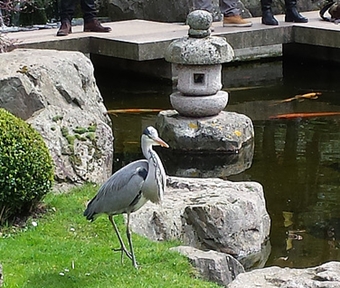
Heron_500


Another list for you, now that the weather is improving.

Here are ten open public spaces in London north of the River Thames. These are places, which I particularly enjoy. They are listed in no particular order:

1 Golders Hill Park

2 Kenwood

3 Kensington Gardens

4 Regents Park

5 St James Park

6 Holland Park

7 Hampstead Heath

8 Thames Barrier Park

9 Postmans Park

10 Soho Square


Picture taken in the Kyoto Garden at Holland Park

Running


On my first day at my secondary school, Highgate School in north London, I was asked to choose which sports I would like to participate in. As the only one on the list that I had heard of was football (soccer), I chose that. On the following day, I had to join the other new boys in a trial game. I was horrified by how rough everyone was during this match.

The day after the match, two senior boys came to speak to me. They regretfully announced that I was not considered good enough to play football at Highgate. That did not surprise me, but what did was how solemnly they announced the news to me. The two school officials told me that I could select another sporting activity. I chose ‘cross-country running’, a sport that I had never heard of. I was told that I had chosen well. And, so I had.

Cross-country running was almost completely unsupervised. We were trusted to get changed into running clothes and then to trot around a route through the grounds of nearby Kenwood House. Being unsupervised, I saw no reason to run or to get tired. 

My system on games’ days was to get changed, visit the school ‘tuck shop’, buy some snacks or confectionary, and then to take a leisurely stroll through the beautiful grounds of Kenwood.

Once a term, we were accompanied by our house-master on a run. He tended to lead us through rough ground and marshy areas. On one occasion, he stopped me and said:

“You don’t look muddy, Yamey”

I replied:

“Well, Mr Bowles, I thought that the object of the run was to get exercise rather than to collect mud.”

Much to Mr Bowles’ credit, he accepted my explanation, which was not the whole truth. Actually, I wanted to avoid getting dirty so that I would not need to waste time having a shower at the end of the afternoon,   which would have delayed my departure for home.

The months of May are ending

197px-Theresa_May_portrait

Cameron has gone,

May will be ending,

Can Brexit now be resolv’d?


Image source: https://www.gov.uk/government/uploads/system/uploads/attachment_data/file/588948/The_United_Kingdoms_exit_from_and_partnership_with_the_EU_Web.pdf

A guilty secret

I was lucky enough to be invited by a friend to the annual Chelsea Flower Show. It would not be exaggerating to say that the displays of plants are all quite wonderful.

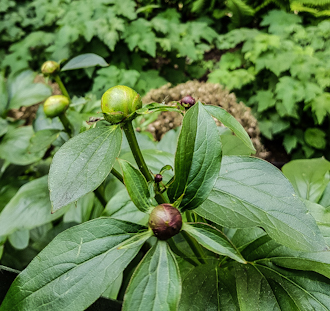
Among the show gardens, I spotted some fine examples of peonies, some in bud and others flowering. Seeing these brought back memories of my childhood when we lived in a house with a fine garden in north-west London. At one end of the garden, there were several peony bushes. At the appropriate time of the year, these plants produced almost spherical buds.

My sister and I were attracted to these buds and used to pull them off before they could flower. My late mother used to get very upset by our horticultural vandalism, and told us off so severely that I still recall our midemeanours on the rare occasions that I think of peonies, which is not all that often.

You will be pleased to read that I resisted the temptation to pluck any of the peony buds I saw at the Chelsea Flower Show!

And, here is an interesting fact: Peony is the name of a novel by Pearl S Buck. The story is set in China and features a Chinese Jewish family.