A tingle down my spine


I enjoy exploring historical places. Well, I know that everywhere has a history, but what I mean is places which contain tangible remnants of their history like the Regency buildings designed by John Nash, built at the beginning of the 19th century around Regents Park in London. They were built when the future George IV was Regent.

Well, there is nothing surprising about these beautiful buildings. That is what I thought until my wife spotted the street lamp posts next to some of the buildings. Each of their bases has a symbol for King George IV. Seeing such mundane objects that must have been in daily use since so long ago sent a tingle down my spine.

The same thing happened to me once when I was driving along a ring road around Munich and I passed a direction sign pointing to Dachau.

Would you trust them with your money?

Back in the early 1970s, I had dinner at a cheap and cheerful Chinese restaurant (Lido, which still exists in Gerrard Street) with about 7 friends. 5 of them were studying to be chartered accountants, I was completing my PhD thesis, and ‘J’ had only the most basic of educational qualifications.

The bill arrived. It was £24 for all that we had eaten. That seemed about right. The bill, consisting of three pages stapled together, was examined by all of us.

When J looked at it, she said it was twice what it should have been. This was because the waiter had added the sub totals at the bottom of each page to the individual prices which added together were equal to the sub totals.

We ended up sharing a corrected bill of £12.

What concerned me was that 5 people who were about to become chartered accountants missed the error in the bill which they had perused. Would you have trusted them with your money?

Incidentally, J went on to become a very successful business woman, probably more prosperous than anyone else sitting around that table in Lido.

A few words


For the past few months I have been working on the manuscript of my latest book. I am not telling you what is going to be about. You will have to wait to find out!

I was reasonably happy about the way it was going, but a little worried that I was including too much about matters distant to the topic on which I was planning to focus. Some of the less relevant material might easily have been considered controversial and possibly hurt the sentiments of some of my potential readers. This worried me somewhat.

A couple of days ago, an old friend, whom we had not seen for a few months, came to dinner at our home. During the meal, I told him what I was writing about. Immediately, he reacted that what I feared was controversial might easily get me into trouble if my text was read by a certain type of person. 

For a couple of hours, I was downcast. I thought that maybe I should just abandon the project, which has taken up so much of my spare time during the last few months.

Next morning, I woke early, feeling inspired. I turned on the computer and removed the ptentially ofensive material from my draft text. Then, I read through what was left of it, and realised that by trimming it down, my text was far better than it had been before. It had become tighter and more focussed on the subject I want to portray.

I am always amazed how important a very few words of advice can be.

No outside food


The Coffee Cup café in London’s Hampstead has been in business since 1953, and has been very popular since I first remembered it in the early 1960s. I have visited it several times, but never before noticed the sign at its entrance, which reads: “Please do not bring food or drinks from outside into these premises.” This instruction is not seen frequently in restaurants and cafés in the UK. Seeing this sign reminded me of what is very common in eateries in India, namely, signs reading: “Outside food not allowed.” Customers are forbidden to bring into the estblishment food or drink they have obtained elsewhere. That is fair enough, I suppose.

Cinemas in India, like in many other countries, try to sell food and drink to their customers, often at outrageously high prices. Apparently, watching a film is for many people more enjoyable if you are stuffing popcorn into your mouth at the same time as spilling it on the floor in the dark.

Back in 2001, my family, my in-laws, and my wife’s brothers family went to watch the recently released Bollywood blockbuster Kabhi Khushi Kabhie Gham at a large cinema in Bangalore (India). After purchasing the tickets, we had to wait in a queue before all of our baggage, shopping baskets, handbags etc., were searched by uniformed security personnel. I wondered what these officials were looking for. Was it guns or explosives, I asked my sister-in-law after we had reached the auditorium. No, it was not that, she replied. They were looking for food and drinks brought from outside the cinema. She told me that outside food was not allowed into the cinema, and then showed me inside her shopping basket, All I could see was a shawl (some cinemas are too cool because of air-conditioning). She moved the shawl aside to reveal that her bag was filled with sufficient drinks and snacks to easily satisfy all eight of us during the three and a half hour film. So much for the security check! Had we been carrying anything more dangerous than ‘outside food’, this would have also been missed by the not so vigilant security people.

It is odd how a chance sighting of something like the sign in the Coffee Cup can bring back distant memories.

Chopsticks


My earliest recollection of eating Chinese food was in a restaurant called ‘Tung Hsing’ in Golders Green almost opposite the old Hippodrome Theatre. It opened in the 1960s and was one of the first restaurants in London to serve Pekinese food, rather than the then usual Cantonese cuisine. The restaurant was owned by a retired ambassador from Chiang Kai-shek’s nationalist China and his wife, whom I believe was responsible for the very excellent food served. 

Although I am sure they were available, I am not sure whether I used chopsticks when eating at the Tung Hsing. Maybe, I learned to use them there, but I really cannot remember. Whatever the case, I have been eating Chinese food with chopsticks for many decades. I would not say that I am 100 percent proficient with them, but I feel that using them to eat Chinese food satisfies me.

Chinese-style food is very popular in India. Most Indians eat in Chinese restaurants using western utensils such as plate, fork and spoon. If you ask for chopsticks, they are usually available, but they are not supplied as default table settings.

Some years ago, early this century, a new Chinese restaurant opened in Museum Road in Bangalore. We visited soon after its inauguration. It was a lovely restaurant and the food was good by Indian Chinese restaurant standards. As usual, we asked for bowls and chopsticks. The waiter disappeared for a while, and then returned empty-handed.

“There are no chopsticks,” he told us.

“Why not?” we asked.

“I will ask the manager.”

The Manager came over, and explained:

“We have been so busy since we opened, and many of the guests have taken them home as souvenirs. So, we have run out of them”


Going without …


It’s estimated that 8.5 million people in the UK have now gone “gluten free” and it’s a very fast-growing section of the supermarket with an expanding (and expensive) range of gluten-free alternative foods on sale.” (https://www.bbc.co.uk/news/magazine-37292174)

Food intolerances can very debilitating to those who suffer from them. Take gluten intolerance, for example. It can cause a variety of uncomfortable and sometimes dangerous symptoms. The incidence of gluten-related medical problems is uncertain. It may be as high as 1 in a 100 people according to one source (https://glutenintoleranceschool.com/gluten-intolerance-statistics/#2), or, possibly not nearly so high. A study published in 2015 (Digestion, 2015;92(1):8-13) found that 86% of patients complaining that they had non-coeliac gluten sensitivity were found to have neither Non Coeliac Gluten Sensitivity, nor Coeliac Disease, nor Wheat Allergy. Whatever the actual figures may be, it is estimated that the incidence of Coeliac Disease in the UK is 1 in 100.

To summarise, the greater majority of people in the UK are unlikely to be intolerant to gluten. You may wonder why I am ‘going on’ about gluten intolerance in this blog. Well here is the reason.

Recently, I visited the superb William Morris Gallery in Walthamstow in north London. It has a beautiful cafeteria overlooking the extensive gardens behind the lovely house where William Morris once lived. I was looking forward to having a hot beverage with a cake or pastry. When I looked at what was on offer, I was surprised. All of the cakes and pastries were labelled as being ‘gluten free’ The only gluten containing item on offer was an unexciting looking scone. I tried a gluten free orange polenta cake, which was just about acceptable.

Afterwards, I wondered why the majority of the baked goods on offer were gluten free when most of the public in the UK are not gluten intolerant. Is there an abnormally high incidence of gluten intolerance in Walthamstow, or does this lovely place attract a large number of visitors who believe themselves to be gluten intolerant without having taken the trouble to have medical tests to confirm or dispel their beliefs?

Ten places to breathe and relax

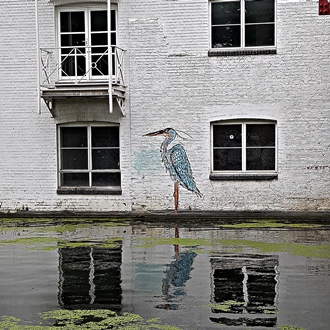
Heron_500


Another list for you, now that the weather is improving.

Here are ten open public spaces in London north of the River Thames. These are places, which I particularly enjoy. They are listed in no particular order:

1 Golders Hill Park

2 Kenwood

3 Kensington Gardens

4 Regents Park

5 St James Park

6 Holland Park

7 Hampstead Heath

8 Thames Barrier Park

9 Postmans Park

10 Soho Square


Picture taken in the Kyoto Garden at Holland Park

A guilty secret

I was lucky enough to be invited by a friend to the annual Chelsea Flower Show. It would not be exaggerating to say that the displays of plants are all quite wonderful.

Among the show gardens, I spotted some fine examples of peonies, some in bud and others flowering. Seeing these brought back memories of my childhood when we lived in a house with a fine garden in north-west London. At one end of the garden, there were several peony bushes. At the appropriate time of the year, these plants produced almost spherical buds.

My sister and I were attracted to these buds and used to pull them off before they could flower. My late mother used to get very upset by our horticultural vandalism, and told us off so severely that I still recall our midemeanours on the rare occasions that I think of peonies, which is not all that often.

You will be pleased to read that I resisted the temptation to pluck any of the peony buds I saw at the Chelsea Flower Show!

And, here is an interesting fact: Peony is the name of a novel by Pearl S Buck. The story is set in China and features a Chinese Jewish family.

Ten places…

Big Ben_240


The Internet is full of sites listing places you must see before you die, and so on. There are also some lists of places worth missing.  All of these listings are usually subjective, as is my current list (in no particular order) of 10 or so places worth avoiding in London north of the River Thames:

1 CAMDEN TOWN

2 BRENT CROSS

3 KILBURN HIGH ROAD

4 OXFORD STREET

5 WESTFIELD AT SHEPHERDS BUSH

6 CAMDEN LOCK MARKET (OR BOROUGH MARKET)

7 PORTOBELLO ROAD ON SATURDAYS

8 COVENT GARDEN

9 KENTISH TOWN

10 WEST KENSINGTON (or KENTON)

I will not explain why any of these is on my list, and I do not expect that all of you will agree with me, but I hope that no one is offended by any of my dislikes!

Just in case this all sounds a bit negative, here is my current list (in  no particular order) of 10 or so places worth visiting in London  north of the River Thames:

1 KENWOOD HOUSE AND GARDENS

2 THE SOANE MUSEUM IN LINCOLNS INN FIELDS

3 THE VICTORIA AND ALBERT MUSEUM

4 THE BRIDGE THEATRE

5 TEMPLE CHURCH (OR ST BRIDES CHURCH)

6 LEIGHTON HOUSE

7 BRICK LANE

8 KINGS CROSS STATION CONCOURSE

9 TATE BRITAIN (but avoid eating there)

10 HIGHGATE CEMETERY (or BUNHILL FIELDS)