
artist, paints, and wall,
ideas and ability:
go make a mural

artist, paints, and wall,
ideas and ability:
go make a mural
Experience learn’d
damages suffer’d
must consider safety first
My late mother was involved in a motor car accident near Cape Town in South Africa when she was a young girl in the 1930s.
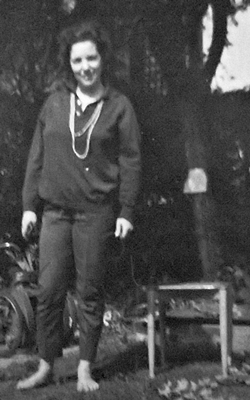
“Our family dentist, at least the first one who ever looked after me (during the 1950s and early 1960s), was Dr Samuels, an elderly Jewish refugee from Nazi Germany. This kindly man, who must have been in his late 60s or early 70s when he treated me, told my mother how he had to smuggle gold out of Germany. When he, and for that matter any other Jew, was fleeing from Germany in the 1930s, it was not permitted to carry anything of financial value out of the country. His resourceful wife prepared sandwiches for his journey. Instead of filling them with lettuce leaves, she filled them with sheets of gold leaf – a material that used to be used a great deal in dentistry. Thus, if he had encountered inquisitive Nazi officials on the train, he could have concealed the gold he was carrying by munching his precious sandwiches. I am not sure when he retired, but I remember him telling my mother that he would not cease practising until the last of his patients abandoned him. I do not know when this was, but I do know that he helped to conceal from us the fact that my mother was missing some teeth.
In all the 28 years that I knew her, I had no inkling that my mother had two missing front teeth. I knew that she had missing teeth because she often reminded us about the accident that she had suffered, but it was not until she was dead that I discovered, almost by chance, that it was two of her front teeth that she lost.
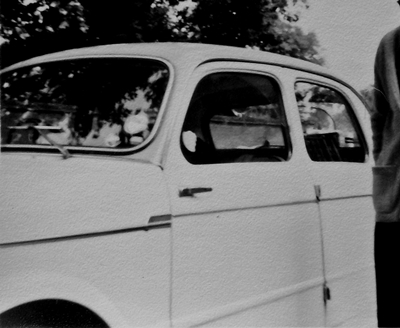
I am sure that it was having been involved in this accident that led to my mother having seat-belts installed in our Fiat Millecento. She arranged for this to be done at least 20 years before they became mandatory in the UK. I have no idea how and from where she got the idea of installing car seat-belts in 1960, but she did. And, with a little persistence she found somewhere where these items, which were almost unknown in cars, could be installed in our Fiat.
Seat-belts were not routinely fitted into cars before the 1980s, with the exception of some Swedish cars such as Saab and Volvo. There were very few of these on British roads in the early 1960s. Therefore, my mother’s idea of installing them into our Millecento in 1960 was little short of revolutionary. The two front seats of the car were fitted with complex harnesses. A strap went over each of the wearer’s shoulders and these were connected together by a waist strap. The people in the front ended up wearing what looked like the sort of safety harness worn by a jet pilot. These complicated straps were extremely difficult to adjust properly.
The rear of the car was fitted with two lap straps such as are found in aircraft passenger seats. My sister and I used one each except when there was a third person in the back. In this case, my sister and I had to share one strap. To avoid fighting, my mother separated us in the strapby placing a pillow between us.”
The passage written above is an extract from a book, “Charlie Chaplin Waved to Me”. It does not mention the extra locks my mother had fitted in the rear doors of our car. These were to prevent my sister and me from opening the doors while were diving. Had we been in an accident, it would have made it very difficult for rescuers to open these doors as the keys were attched to the ring with the car keys.
I only learnt about my mother’s missing fron teeth when after her tragic demise, I found her partial denture lying around in our house.
“Charlie Chaplin Waved to Me” is available by clicking : HERE
Also available on Kindle
High up in the sky,
a compartmented tray,
consuming airline food

Since I was a little boy (many decades ago), I have been travelling on aeroplanes, usually to and from holiday destinations. The food served during flights has always intrigued me. As a child, I used to collect the miniature containers of salt and pepper that appeared on the compartmented food trays. I can remember these better than the far from memorable food served with them.
In 1963, we took an overnight flight from New York to London. When the breakfast tray arrived, I remember that there was a hot, foil-wrapped item on the tray. Cautiously, I unwrapped it to reveal a long spindle of something yellow and rubbery. I hit it with a knife. The knife bounced off it. My mother told me that what I had revealed was an omelette. To this day, omelettes on ‘planes have repelled me. I love freshly made omelettes, but one made several hours earlier and reheated has no appeal for me.
The best food I have eaten in the air was on Air Lanka ‘planes in the mid-1990s when we were travelling between London and Colombo. The food was served in large foil containers, rather than in in tiny neat plastic dishes. Delicious Sri Lankan curries were served. They tasted as if they had been lovingly prepared in someone’s home rather than in an industrial kitchen. My wife recalls eating whole steaks and caviar on an Aeroflot flight between Moscow and New Delhi in the late 1980’s. The burly stewardesses served the food on real porcelain plates.
More recently, I have been travelling regularly to India. There is a direct flight between London and Bangalore operated by British Airways (‘BA’), on which we used to travel. The staff on these flights were coolly efficient. The meals were not so good. For some years I had a dental patient, a friendly fellow, who worked for BA as a cabin crew member. When I told him that I was not keen on what was served on BA, he suggested that I pre-order the seafood meals. These turned out to be better than the regular meals, and we ordered these on several successive flights. Then, on one BA flight I was seated next to a very devout Muslim couple, who did a lot of praying during the ten-hour flight. When their meals arrived, a delicious aroma spread from their trays. When they removed the foil from their hot dishes, I saw that they had been served with what looked like really nice curries and biryanis.
After seeing these halal meals, that is what I pre-ordered on all our subsequent bookings with BA. We were not disappointed. BA used a good quality halal caterer. Many people who order halal food are teetotal. The BA crew did not raise an eyebrow when we ordered gin and tonic or bloody Mary cocktails with our so-called ‘Muslim meals’.

Before BA operated the direct flights between London and Bangalore, we had to make the journey with one change of ‘plane. The German airline, Lufthansa, ran a convenient flight from Frankfurt (Main) to Bangalore. On one occasion, we were served two meals on the flight. The first meal included some meat. Several hours later, the second meal arrived. It was a selection of vegetarian food items. Now, I have nothing against vegetarians and vegetarian food, but I like a bit of meat or fish with my veg. I called the stewardess and asked if there was a non-vegetarian option as there had been during the earlier meal.
“No,” she said abruptly.
“Why?” I asked.
“In Germany,” she explained, “we only eat meat once a day.”
What nonsense, I thought. Whenever I have visited Germany, I have seen people eating meat at breakfast, lunch, dinner, and in between these repasts. I was not going to put up with her inaccurate reasoning.
“Well,” I replied, feeling a little bit hypoglycaemic, “I shall be ill if I eat this vegetarian offering. You must find me some meat.”
“One moment, please.”
She disappeared out of our cabin. Maybe, she was worried that I might eat her. After some minutes, she returned with a tray containing some very tasty pieces of fish.
Apparently, Germans who travel business class eat non-vegetarian food more than once a day.
POSTSCRIPT:
I cannot understand why airlines feel that they have to serve hot dishes mid-air. Most of these dishes are shoddy versions of the descriptions given to them on the tiny menus handed out to fool you into thinking that the airline will treat you to ‘fine dining’. I believe that many people would be happy with a selection of tubs of what the Greeks call ‘meze’. These could include things like hummus, taramosalata, tzatziki, olives, cole-slaw, nuts, mutabel, guacamole, salsa, etc. No cooking required, and fun to eat.
we don’t see ev’rything
that we consume:
might be germs with any bite
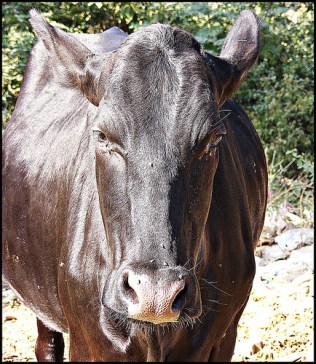
From time to time, the United Kingdom is subject to agricultural diseases that need to be accompanied by nation-wide restrictions to limit spreading. A frequently occurring example of this is so-called foot-and-mouth disease. During such epidemics, those not involved in agricultural activities, such as hikers and tourists, are confined to roads, told to keep out of fields where traces of the disease may be lying.
During one outbreak of foot-and-mouth, we were spending a holiday in Wales. Wherever we went, we saw signs and barriers that prevented free movement across the countryside. What with the incessant rain, it made our trip rather dreary. We stopped for lunch in an ugly little town in central Wales. The most attractive looking eatery was a dowdy pub, devoid of any architectural merit. We sat down in its ageing dining room, trying to avert our eyes from the peeling wallpaper and a horrible worn carpet that badly needed to be replaced. Things looked up when the inn-keeper arrived to take our food order. We were attracted to beef steaks. There was a bewildering range of options for this on the menu. Our host patiently explained the differences between the different types of beefsteak, explaining how the tastiness of the meat itself was related to its fat content and distribution within the cut. Fillet steak, for example, has little fat, not much taste without sauces, but wonderful texture. He recommended rib-eye as being the cut with just the right amount and distribution of fat to be tasty on its own. He was quite right, we discovered in that unattractive dining room in rainy Wales.

Some years later, Mad Cow disease (Bovine spongiform encephalopathy) became a concern in the UK. One evening, when we were going to a theatre near St Martins Lane in London, there were large headlines about the disease on the front page of the latest issue of the Evening Standard newspaper. Before the performance, we entered a branch of McDonalds for a quick snack. Almost everyone in the café was eating beef burgers, despite the headlines on the newspapers that some of the customers were reading!
Shortly after this, we went on a driving trip through France. In one small town, we walked passed a small restaurant with a sign hanging in its glass-fronted door. It read (in French): “We might be mad, but our beef is not.”
While the Mad Cow scare was at its height, we were invited to stay with some friends in Belgium. We had stayed with them often before. We asked them what they would like us to bring from London. They said they would love a home-made curry, enough for about twelve people. Although I am married to an Indian, it is I who makes the meat curries in our family. I prepared and cooked a huge lamb curry. As it is only a few hours’ drive between London and Belgium and the curry would have to be re-heated before being served, we thought it safe to transport the casserole containing it without refrigeration.
There were more security checks than usual at the English end of the Channel Tunnel. After our car had been examined, and the engine checked for hidden items including explosives, we were asked if we were carrying any meat products across the English Channel. We mentioned that we were transporting a casserole of cooked lamb curry. The security officials looked puzzled, told us not to move, and then walked away towards an office. One of them returned, and asked:
“It’s lamb, not beef is it?”
We confirmed that it was not beef.
“And thoroughly cooked?”
“Yes.”
“Well, what with all those spices, we’ll let you take it through the tunnel.”
Nobody asked us about meat when we arrived in France. We drove through a bath containing disinfected, and then headed for our destination.
Over the airwaves,
messages of faith are heard,
evangelising
‘Mark’, the owner of the first dental practice where I worked after qualifying, told me that it is important to have a good relationship with the dental nurse with whom you work. He pointed out that on working days, the dentist often spends more of his or her waking hours with the nurse than with his or her spouse. During the 35 years I practised as a dentist, I encountered very few dental nurses with whom I could not get on amicably. Let me tell you about ‘Maria’, who was kind, resourceful, and remarkable.
Maria fled to the UK after having had what sounded like a horrendous childhood and adolescence in a troubled part of the world. She worked with me for several years. Sometimes, when needed, she worked as a dental receptionist in our practice. When, as they often did, patients came storming up to the desk, impolitely demanding an appointment without even saying “please”, Maria would calmly reply: “Good morning, Mr X. How are you? And how is your family?” Her polite questioning in a soothing voice quickly ‘civilised’ the patient’s approach.
Once, I was running very late, and the patient I had kept waiting had only 15 minutes left out of the 60 minute appointment I had planned for him. I said to this patient: “I have run so late that I really don’t have enough time to do what we planned.” Before the patient could answer, Maria said to me: “Don’t be silly, Mr Yamey, you can do it in time. I know it.” And she was right. I could not have done a decent job so fast if Maria had not been my assistant. When it came to the time to prepare the dental impression (mould) for the crown (cap) I was preparing, she mixed the two elements – the firm base and the low-viscosity material that picks up fine detail – simultaneously. Ambidextrously, she mixed one constituent with one hand and the other with her other hand. We finished the job to my clinical satisfaction in a quarter of the time I usually needed. “See, you can do it,” she said, “I have faith in you.”
You might wonder why I did not speed up after that when working with Maria. During that curtailed appointment, fortunately everything went smoothly without hitches. I preferred longer appointments so that I would have sufficient time to deal with unexpected problems and to relax the often-anxious patients.
Maria was very practical. In the practice where we worked, equipment often broke down. When this happened, a repair man, ‘H’, would be called to do just enough to get the heavily-used, well-worn piece of equipment to work again. On one occasion, an essential piece of kit stopped working. I told Maria to ring H. She said: “He’s not needed.” I asked her why. “I watched what H did last time the drill broke down. Let me try.” Maria fiddled with the equipment for a few minutes, and successfully repaired it.
Maria was a devout Christian. She kept a small volume of the New Testament in a drawer in the surgery. Some of the words in it were printed in red. I asked her why, and she explained that the words that Jesus spoke were printed in red. Every now and then, she used to say to me: “All you need to do, Mr Yamey, is to accept Jesus in your heart, and your soul will be saved.” Out of politeness, not wishing to offend her by questioning her great faith, I would say: “I need more time to think about it.”
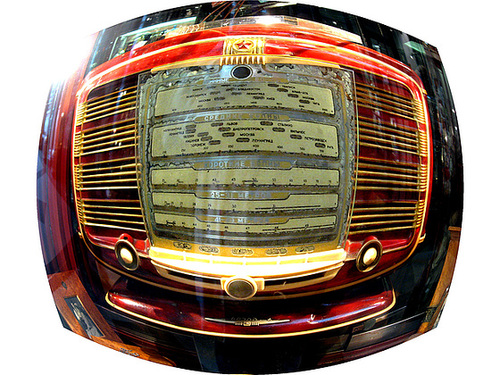
We had a radio playing continuously in the surgery. Maria had tuned it to a non-stop evangelical Christian station. Various people speaking with strong North American accents spent hours describing how they had discovered Jesus. Like quite a few of my patients at that practice, many of the speakers on the radio had been locked up in prison. During their long incarceration, the radio personalities had had time to contemplate life, and during this contemplation they had discovered Our Lord and taken Him into their hearts. I found this radio station quite fascinating and listened to it avidly in gaps between appointments. Maria seemed less interested in the broadcasts. She wandered in and out of the surgery when she was not needed to help with a patient’s treatment.
Mr ‘C’ was a regular attender. He had a barely discernible North American accent. On one occasion, just as I was about to begin treating his teeth, he raised a hand, and said: “There are two things I can’t stand. One is coming to the dentist. The other is having religion stuffed down my throat. Maria, please switch off the radio.”
Maria turned it off without argument – she never argued. From that moment onwards, Maria never ever tuned the radio to that evangelical station. She was not only a wonderful assistant, but also sensitive and thoughtful.
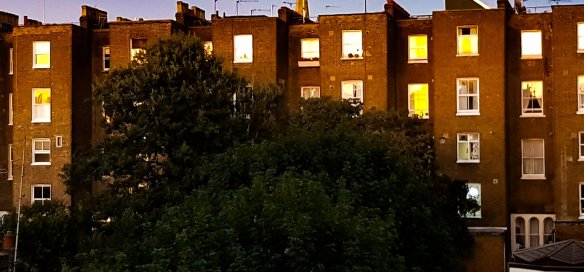
west facing windows
reflecting the sun-
its slowly dying embers
mobile phone stolen
contacts imag-es vanish:
modern tragedy
For several years I worked in a west London practice near Portobello Road . My patients came from families that had originated in many parts of the world. Almost all of them had lively characters. They were not your average quiet provincial types, who respect professionals – a bit too much in my opinion. They were unpredictable in their punctuality and behaviour. This made every one of my working days exciting, sometimes a bit too much so.
‘J’ was a frequent attender with many dental concerns. Although he made appointments, I could be sure that the appointment times were those that he was least likely to appear at the surgery. His timing was erratic to say the least.
When J arrived, he ignored the reception desk and would come straight into my surgery even if I was already treating a patient. If I was in the midst of treating someone, he would respect my asking him to wait until I was free. He would then hover around outside my surgery, and if the wait was too long for him he would disappear, only to reappear unannounced and unexpectedly a few days or weeks later.
One afternoon when I was free, J, who was not a nervous patient, ran into my surgery. He was too agitated to sit down in my dental chair. Instead, he leant against one of the walls of my small room.
“What’s the matter?” I asked.
“It’s bad, man.”
“Can you tell me about it? Do you want to talk?” I asked.
“My mobile ‘phone has been nicked.”
“Sorry to hear that.”
“I know who took it.”
“Really,” I said, “then, can’t you get it back?”
“I don’t know, man. But, I know who nicked it, and I am going to get the boys from South London to put him six feet under.”
Having said those worrying words, he settled into my dental chair.
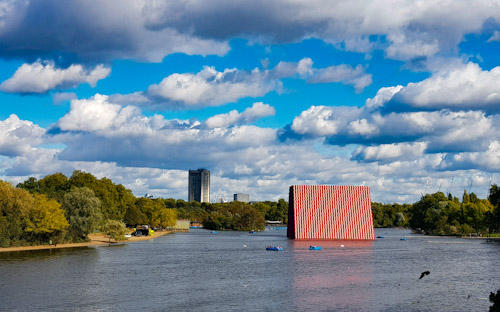
Clouds hover
Over the serene Serpentine:
Hyde park on a Sunday
When I worked in a dental practice near Portobello Road in west London, I met a lot of ‘colourful’ characters, many of whom I might have avoided had I saw them approaching me by chance in the street. One fellow, Ted, a large patient whose nose had been broken at least once and been badly fixed, said to me once: “If anyone ever causes you trouble in the street, just say you’re a friend of Ted. That’ll warn them.”
One day while I was standing in a queue at a takeaway counter waiting to order lunch, someone standing near me, a patient of mine, said: “Need a motor, doc?” I answered that I did not need a car at that point of time. “No problem, Doc,” he replied, “when you need one, just tell me what you want, whatever colour and make, and I’ll get it for you.” Not willing to sound ungrateful, I thought that when he said “get”, he really meant “steal.”
I had many patients who had been in and out of trouble with the law. Often, I would be told: “Look what the prison dentist did to this tooth, doc. Bleeding butcher, he was. Ought to be put behind bars.” I never asked why my patients had spent time ‘inside’. I felt it would be better not to know.
The last patient before one lunchtime was an aggressive young man. He was accompanied by his friend, a slightly older man. Before I had time to ask the young fellow what was wrong, he told me. Pointing to a lower left premolar tooth, he said: “Get it out. It’s f…..g killing me.” I looked at the chap. His mouth did not seem to close properly. “Don’t just stand there. Get it out, man”. I looked at the tooth. It looked alright. It was neither decayed, nor wobbly, nor tender. That strange mandibular posture bothered me.
“You’ve broken your jaw,” I said. “Don’t give me that crap. Just take it out.” I said: “If I take it out, you will still be in pain. You need to go to a hospital to fix your jaw.” This only angered the patient more, and I began to fear for the integrity of my jaw. “I’m not leaving until you take it out.” “Then,” I replied, “I’ll ring for an ambulance.” The patient’s friend said: “Come on, mate, let’s go.” Reluctantly, the patient allowed his friend to drag him out into the street. I locked the practice for the lunch break, relieved to see them leave.
Some days later, I met the patient’s friend in the street. I asked him whether the young man had been to hospital. He did not answer my question. Instead he said: “He’s gone away.” “On holiday?” I queried innocently. “Yes, on holiday.” “Long holiday?” I asked, beginning to understand what he meant by ‘holiday’. “Yes, very long holiday”.

 yamey
yamey 