Conducted by an Albanian

OLSI 1


The Victorian gothic St Stephens Church in Gloucester Road has great acoustics for orchestral music. On the evening of the 15th of June 2019, we attended a wonderful concert of “Symphonic Dances” performed by the London City Philharmonic Orchestra. I have been to several other concerts where this ensemble has played. This time the orchestra had been enlarged so considerably that it only just fitted into the space available for them at the east end of the church. This magnificent collection of first-class musicians was masterfully and sensitively conducted by the Albanian conductor Olsi Qinami, who studied at the Academy of Arts in Tirana and then at the Ecole Normale de Musique in Paris.

The ambitious programme consisted of three symphonic dance pieces, all composed in the USA. Variations on a Shaker Theme by Aaron Copeland (1900-90), son of Jewish immigrants from Lithuania, got the concert off to a tuneful start. This was followed by a memorably good rendering of the vibrant Symphonic Dances by Leonard Bernstein (1918-1990), son of Ukranian Jewish parents. This exciting piece contains familiar tunes from Bernstein’s musical drama West Side Story. After an interval, there was a piece, Symphonic Dances, composed late in the life of Sergei Rachmaninoff (1873-1943), who emigrated to the USA from Russia in 1918.

The three pieces were all by composers, whose families had ‘roots’ in the former Russian Empire, but each of them was completely different. All three were highly enjoyable. Olsi Qinami seemed to be able to get the best out of the orchestra seemingly effortlessly. He stood on his podium calmly without any dramatic gestures and achieved wonders with his large well-disciplined orchestra, which according to the programme notes contains players from all over the world including two with Albanian names (Pranvera Govori, violinist, and Idlir Shytu, cellist).

In summary, I am truly pleased that I did not miss this concert. It was pure joy throughout. Although Olsi’s previous concerts have all been outstanding, “Symphonic Dances” was his best so far. I look forward to the next, which will be in St Stephens Church on Saturday, 5th of October 2019.
Flying rats

pigeons


My late mother was awfully concerned about avoiding germs. For example, every can of food had to be washed before opening it just in case rats or mice had scampered across it in a warehouse.  Also, when we visited toilets in public places in the 1960s, we were told to put toilet paper on the seats so that we would not pick up germs that other users had left behind. Interestingly, in many public toilets nowadays, notably on aeroplanes, disposable toilet seat covers are provided. Mum would have approved of this development.

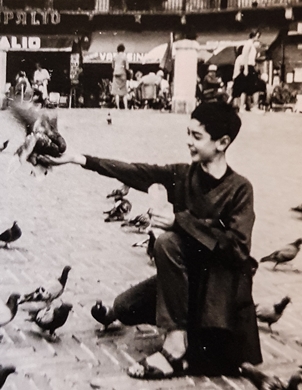
Recently while rummaging through some old photographs, I came across one of me, aged about 10, in Siena, Italy. I was kneeling on the floor feeding pigeons that had flown on to my hand. As a child, I loved doing this. My parents would buy me a paper cone filled with corn seeds. I would fill my palm with some of these, and then pigeons used to perch on my finger tips and pick up bits of corn with their beaks. I remember that the pigeon’s ‘feet’ felt quite soft. Feeding these creatures was a real treat.

Well, I was not unusual. Many people enjoy feeding birds from their hands. Today, in London’s Kensington Gardens there are flocks of green parakeets that happily feed from visitors’ hands.

The surprising thing was that my germ conscious mother permitted my sister and me to feed pigeons as described already. In New York, pigeons are known as ‘flying rats’. Pigeons are are actually less hygienic than rats and they carry mites, which irritate human skin. I cannot believe that pigeons in Italian cities in the 1960s were any cleaner than those flying about today. Had my mother been aware of the pigeons’ unsavoury lack of hygiene, feeding these creatures would have been totally forbidden to my sister and I. I am pleased that she did not realise that the dear flying rats are so filthy!

It pays to be honest

Mug shot_640


A long time ago, a friend asked me to read a short story that he had written. He was hoping to submit it as an entry to a short story competition. I agreed to read it for him.

Fortunately, it was short enough for me to read it fairly quickly. Unfortunately, I did not feel that its quality was up to much.

When I saw my friend a few days later, he was eager to know what I had thought of his story. I was not sure what to say. I wondered whether I should be polite, and say that I quite liked it, and would wish him luck. Or, should I risk hurting his feelings by being frank about my opinion of his work? I made up my mind to do the latter. Trying to be as tactful as possible, I told him that I thought his story was not bad, but that there was not much chance of his story winning the competition.

My friend was surprisingly pleased by my opinion. He said:

Thank you, Adam. Thank you very much. You are the first of my friends to say what you really think about my story. All of the others have tried to be polite and say they like it.”

I was relieved by his reaction to my honest but adverse comment. It paid to have been honest. It usually does!

Cycles and branches

bike


There are plans to make a cycle super highway through west London. This might make cycling more attractive to people living in the areas it passes through as well as making it safer for cyclists by separating them from other road users. All very well, so far.

In order to creat this cycle thoroughfare, quite a number of well-established old trees will have to be cut down and removed. While cycling no doubt reduces the amount of toxic gases emitted by vehicles, removing the trees cannot be so beneficial to the climate of the future, about which so many people have become concerned.

The authorities have said that the felled trees will be replaced by new trees nearby. That is good, but many trees take a long time to reach the size and ecological efficiency of the trees that will get the chop. A large number of people have protested about the proposed  sacrifice of trees for the cyclists, so we wait with baited breath to see whether the trees will survive or the new cycle route will come to fruition. Being Britain, there will probably be a compromise!


Picture by Natalia Goncharova in an exhibition at the Tate Modern, London

So near, but so far

WRITING


I have been working on the manuscript of my latest book, about whose subject I will write sooner or later.

I have reached a stage at which I keep reading through the whole text, trying to put myself in the place of a potential reader, and from that position I make modifications, which I hope will improve the quality of the book. Each time I look at it, I make more changes, many corrections, some additions, and many more deletions to eliminate my natural tendency towards verbosity. So, my book is nearing completion, but has far to go before publishing it.

Soon, I will be ready to show my manuscript to some kind volunteers to get their candid (I hope) opinions, comments, and criticisms on what I have produced so far.  If I do not do this, I will become self-satisfied and the book might begin to suffer. Also, I need to know whether what I have written is, in priciple, likely to be worth reading! Then, it will be back to the ‘drawing board’ to modify my work in the light of what my test readers tell me.

Finally, I will need to proof-read my book, format it properly, and add a few illustrations before publishing my ‘oeuvre’. From conceiving an idea to finishing a book based on it is a long process, frustrating at times but largely enjoyable.

Calm sea and Prosperous voyage

Digital_500


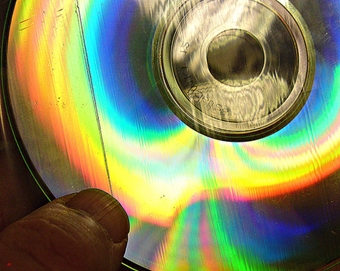
A few years before my mother died, I persuaded my parents to invest in a stereo hi-fi system. My mother would only have such a system if it looked nice. So, they settled on a Bang and Olufsen system. Unfortunately, the aesthetically pleasing speakers sounded awful and we replaced them with something less pleasing to look at but which sounded good. When CD’s (compact discs) became available, I added a CD player to the system. By then, my mother was dead and the appearance of the player no longer mattered.

After my mother died, I was living in Kent. I used to visit my father on Sundays. We used to have lunch together in various restaurants in Hampstead village in north-west London. Always, after we had eaten, we used to viit the Waterstones bookshop and the Our Price music shop nearby.  Often, I would purchase a CD to add to my father’s small collection. On one occasion, I bought a CD with some orchestral music by Beethoven.

Some weeks later, I asked my father if he had enjoyed that CD. He said:

“There is something wrong with it. There is complete silence for the first few minutes.”

I said that I would look into this. When I reached his house, our family home, I turned on the hi-fi system and inserted the problematic CD. My father was right. For the first few minutes, there was nothing to be heard.  Then, I looked at the volume adjustment slider which was marked at equally spaced intervals from 0 to 10. I discovered that my father had been using the system with the volume slider set between 0 and 1. 

The first track on the CD was Beethoven’s Opus 12: Calm Sea and Prosperous Voyage. The first few minutes of this piece are very quiet, which is why setting the volume so low made it sound silent. My father’s penchant for barely audible low volume background music was the reason for doubting the integrity of the CD, which I had given him.


You can listen to the music mentioned above by clickingH E R E

A tingle down my spine


I enjoy exploring historical places. Well, I know that everywhere has a history, but what I mean is places which contain tangible remnants of their history like the Regency buildings designed by John Nash, built at the beginning of the 19th century around Regents Park in London. They were built when the future George IV was Regent.

Well, there is nothing surprising about these beautiful buildings. That is what I thought until my wife spotted the street lamp posts next to some of the buildings. Each of their bases has a symbol for King George IV. Seeing such mundane objects that must have been in daily use since so long ago sent a tingle down my spine.

The same thing happened to me once when I was driving along a ring road around Munich and I passed a direction sign pointing to Dachau.

Would you trust them with your money?

Back in the early 1970s, I had dinner at a cheap and cheerful Chinese restaurant (Lido, which still exists in Gerrard Street) with about 7 friends. 5 of them were studying to be chartered accountants, I was completing my PhD thesis, and ‘J’ had only the most basic of educational qualifications.

The bill arrived. It was £24 for all that we had eaten. That seemed about right. The bill, consisting of three pages stapled together, was examined by all of us.

When J looked at it, she said it was twice what it should have been. This was because the waiter had added the sub totals at the bottom of each page to the individual prices which added together were equal to the sub totals.

We ended up sharing a corrected bill of £12.

What concerned me was that 5 people who were about to become chartered accountants missed the error in the bill which they had perused. Would you have trusted them with your money?

Incidentally, J went on to become a very successful business woman, probably more prosperous than anyone else sitting around that table in Lido.

A few words


For the past few months I have been working on the manuscript of my latest book. I am not telling you what is going to be about. You will have to wait to find out!

I was reasonably happy about the way it was going, but a little worried that I was including too much about matters distant to the topic on which I was planning to focus. Some of the less relevant material might easily have been considered controversial and possibly hurt the sentiments of some of my potential readers. This worried me somewhat.

A couple of days ago, an old friend, whom we had not seen for a few months, came to dinner at our home. During the meal, I told him what I was writing about. Immediately, he reacted that what I feared was controversial might easily get me into trouble if my text was read by a certain type of person. 

For a couple of hours, I was downcast. I thought that maybe I should just abandon the project, which has taken up so much of my spare time during the last few months.

Next morning, I woke early, feeling inspired. I turned on the computer and removed the ptentially ofensive material from my draft text. Then, I read through what was left of it, and realised that by trimming it down, my text was far better than it had been before. It had become tighter and more focussed on the subject I want to portray.

I am always amazed how important a very few words of advice can be.