
Oh what a pleasure it is
To open a new book
And enjoy it

Oh what a pleasure it is
To open a new book
And enjoy it

I cannot remember the name of the person who taught us dental pathology back in 1981 at University College Hospital Dental School, but one thing he told us made a deep impression on me. He said that it was unlikely that we would see oral cancers frequently in general dental practice, but when we did see one we would feel a certain ‘jizz’ (our teacher’s word), a feeling that we were looking at something unusual and worrying.
One day when I was in practice, a delightful late middle-aged woman visited my surgery as a new patient. She said there was something on her tongue that had been bothering her for several weeks and was making eating and speech difficult. She had been to her doctor (medical), who told her that she had had a bee sting on her tongue. She told me that she had been taking antibiotics prescribed for it for quite a time and the condition was only getting worse.
I had never encountered anyone with a bee sting on their tongue. The lady’s story and her doctor’s diagnosis sounded strange. She showed me her tongue. As soon as I saw the huge ulcer on the side of it and its peculiar border, I felt that ‘jizz’, which our pathology teacher had mentioned. I knew that the poor lady had, almost without a doubt, a carcinoma on her tongue. I told her my suspicions, and she looked relieved, and was grateful. Clearly, she had not believed her doctor’s story. I phoned the local oral surgery department, and they admitted her promptly.
About a year later, the lady reappeared. During the surgical treatment of her cancer, she had lost several teeth and wanted a denture to replace them. Sadly, her mouth was by now so distorted that making a prosthesis was beyond my competence. I referred her to a prosthetic specialist. Unfortunately, she did not live long enough for his work to be completed.
Whether earlier intervention would have saved her life, or at least prolonged it, is a question than cannot be answered.
In my 35 years in dental practice, I only ever saw two patients with obvious oral cancers. However, I did refer many patients to have unusual looking lesions seen by oral surgical specialists. None of these gave me that ‘jizz’ nor turned out to be cancerous.
Here is something to whet your appetite!
Indian freedom fighters in Edwardian London
Inside a house on a quiet tree-lined residential street in north London’s Highgate, a young Indian held a revolver in one hand and repeated a solemn oath promising to give liberating India from the British greater importance than his own life…
Pandit Shyamji Krishnavarma (1857-1930) was born in Mandvi in Kutch. He earned his title of ‘Pandit’ because of his very great knowledge of Sanskrit. In the 1880s, he travelled to England where he became an assistant to Professor Monier Williams at the University of Oxford. Krishnavarma’s studies of Sanskrit at Oxford earned him great fame amongst the Indologists all over the world. He also became a barrister. On hisreturn to India, Krishnavarma served as ‘Diwan’ in various princely states, before returning to England in 1897.

By 1905, Krishnavarma had become deeply involved in the movement to free India from the grips of the British Empire. That year, he purchased a house in the north London suburb of Highgate. He named it ‘India House’ and it served as both a hostel for Indian students and a centre for plotting the liberation of India from the British.
Between 1905 and 1910, when India House was closed and sold, this place became known as a ‘centre of sedition’ and the ‘most dangerous organisation in the British Empire’. I have almost finished writing a book, to be called “IDEAS, BOMBS, and BULLETS” about Highgate’s India House and the people associated with it.
Here is a brief introduction to my forthcoming book:
“This is about a little known part of the history of India’s struggle for independence. It concerns events centred on a house in Edwardian London. It is a tale of bombs, guns, lawyers, patriots, philosophers, revolutionaries, and scholars.
A large Victorian house stands in a residential street in the north London suburb of Highgate. Between 1905 and 1910, it was known as ‘India House’, and was a meeting place and hostel for Indian students, many of whom wished to help liberate India from centuries of British domination.
In the 19th and 20th centuries before India’s independence, many young Indians came to England to be educated. This is the story of a few of them, who came to Britain in the early 20th century, and then risked sacrificing their freedom, prospects, and lives by becoming involved in India’s freedom struggle.
This book describes the true adventurous exploits of members of Highgate’s India House (including VD Savarkar, Madan Lal Dhingra, and VVS Aiyar) and its history.“
I will give you more news about my book soon, I hope!
People are naturally quite exacting about the appearance of their front teeth. Apart from self-esteem, people judge others by the state of the teeth in their smiles and while speaking. As a dentist, I was often challenged by my patients’ desires to have a smile which looked good.

On one occasion, a young girl in her teens came to me with a loose denture, which she wore to replace a missing upper incisor. I suggested to her that she could get rid of the cumbersome dental prosthesis if I replaced her missing tooth with a barely invasive adhesive bridge attached to a tooth neighbouring the gap. She agreed, and the bridge was prepared. I fitted the new replacement tooth, which looked very realistic to me. Repeatedly, I asked the young girl whether she wanted have a look in a mirror to see the new tooth in place . Repeatedly, she refused, saying:
“I’ll look at it when I get home.”
I never heard from her again. So, I can only assume that either she loved the bridge or she was so disappointed that she visited another dentist. I have come across this behaviour several times since then especially with patients who have been supplied with a denture bearing a complete set of teeth. However, most patients prefer to see what they are getting.
Many years later, I prepared two crowns (‘caps’) to restore a lady’s two upper central incisors, the most noticeable teeth in most people’s smiles. When the crowns arrived back from the laboratory, I removed the temporary crowns that had been protecting the prepared teeth. Then, without using cement (‘dental adhesive’) I placed the new crowns on the patient’s teeth so that she could say whether or not she approved of their shape and appearance. I noticed that the pocelain on the crowns had a pale greenish tinge. I looked up at my dental nurse. From her expression, I realised that she had also noticed the less than desirable dicolouration. I was fully prepared to sent the crowns back to the laboratory to have their colour improved when the patient exclaimed:
“Oooh! These are lovely. They’re so beautiful. Oh, thank you, doctor!“
Hearing this, and seeing the smile on her face, I felt that it would be foolish to have the crowns remade. So, I cemented them. She was a regular patient and never made any adverse comments about these crowns on subsequent visits to my surgery.
This only goes to show that there is no accounting for taste.
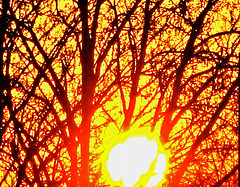
Stuck to the chair,
Hands and fingers sweaty:
A sultry London heatwave
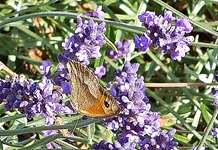
I was given my first camera, a Kodak Brownie’, when I was about 7 years old. Since that time I have owned a variety of cameras and camera ‘phones and I have taken many thousands of pictures.
In the early days, I used to have prints made from negatives. Later, I became converted to colour slide (‘diapositive’) film and produced many colour slides. With the arrival of computers and the Internet into my life, I reverted to film that produced prints and when it became available, I had digital images of my photographs put on compact discs. Nowadays, I hardly ever have prints made from my digital images.
Ever since I first began taking photos, I have enjoyed showing them to other people: relatives, friends, colleagues, and whoever else showed even the tiniest bit of interest. However, when you present people with an album full of photographs or arrange a slide projection session, most folk begin to lose interest fairly fast. Many of them have agreed to look at someone’s pictures mainly out of politeness, rather than genuine interest.
All of that has changed with the advent of social media and Internet sites for displaying photographs. People need only look at pictures when they are interested and for as long as they want without risking offence to the photographer. Often, if they want to, viewers can express their approval and/or make comments. What is more, the viewers need no longer be confined to the friends and acquaintances of the creator of the images. It is possible to make images available to everyone, who uses the Internet. Some may not be happy with that, but I am. My desire to ‘show off’ my pictures to as many people as possible has been fulfilled!
I find that apart from sites like Facebook, the website ipernity.com is a superb place to post pictures. Other users of the site are often both appreciative and helpful with their comments and suggestions. My Ipernity page is http://www.ipernity.com/home/adam
PLEASE TAKE A LOOK!

Once for grinding grain
Water rush-es fast
Beneath a disus’d mill wheel
The water wheel at the Watermill Theatre near Newbury in West Berkshire, UK
My latest book, whose subject I will not yet reveal, is almost but not quite ready for publishing.
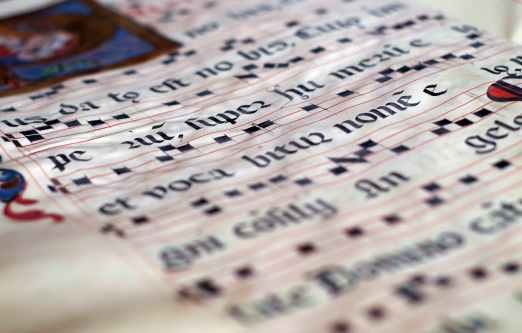
I have reached the stage with my latest book where I am looking out for things like: putting commas where full stops ought to be and vice versa; checking spelling; replacing a word or phrase with a more suitable one; making sure that names start with upper-case letters; and so on. In other words, I am trying to edit my text prior to publishing it. I read my manuscript over and over again, hoping to spot errors. However, frequent perusals of a familiar text can cause errors to be missed. So, I will ask someone else to proof-read my work. Even then, one cannot be sure that all ‘blemishes’ have been identified, but two sets of eyes are better than one when it comes to spotting ‘typos’ and other mistakes.
Even when it has been proof-read, there is still much to do before the book can be published. I will need to choose some illustrations and decide where to place them. I will also have to re-format my text so that it conforms to the publisher’s requirements. And then, when the book has been published, the really hard part begins: marketing my work!
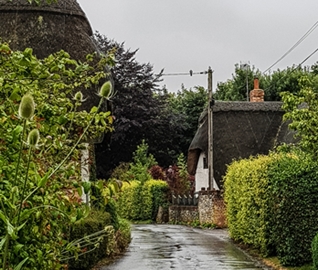
Thatch’d roofs and gentle rain
Puddles under foot
A typical English summer
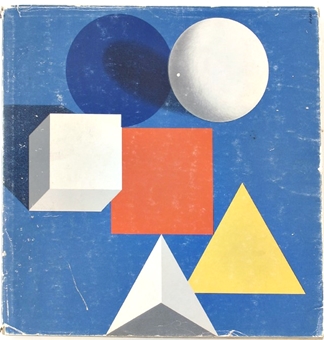
National museums in the UK do not charge entrance fees to view their permanent exhibits. However, they do charge, often quite high, fees to view special temporary exhibitions. This is nothing new. In 1968, I saw superb exhibition at the Royal Academy about the Bauhaus school, founded in pre-WW2 Germany. It was so excellent that I visited it on three separate occasions. Likewise, with a wonderful exhibition about Tutankhamen, also held at the Royal Academy.
Now, several decades later, the museums and galleries have caught on to the idea of ‘blockbuster’ exhibitions. These try to attract vast numbers of visitors, who would not nomally visit the institution where they are being held. They often succeed in drawing the crowds, but by slightly devious means. For example, recently the Royal Academy held an exhibition called: “RUBENS AND HIS LEGACY. Van Dyck to Cezanne”. I thought, as I am sure many other visitors believed, that this was primarily an exhibition of works by Rubens. Well, it was not. There were a few paintings by this great master diluted by a far larger number of works by other artists. It would have been more honest, but less ‘sexy’ and attractive to the public, to have called this exhibition something like “THE LEGACY OF RUBENS”.
My wife visited the current exhibition at the Tate Britain, a real crowd-puller called “VAN GOGH AND BRITAIN”. Who cannot resist seeing pictures by Van Gogh? Few, judging by the crowds of people jammed into the rooms where the exhibition is being held. And, how many paintings and other works by the man who cut off his own ear were on show. There were only a few. The rest of the show was of paintings by other artists, who were definitely not of interest to the bulk of the visitors, who had paid £18 a head to see a Van Gogh show. Clearly the name of the exhibition draws in the ‘punters’.
As with the Van Gogh exhibition, the recent Leonardo da Vinci exhibition at the National Gallery was also disappointing. A few works by the great Italian master were vastly outnumbered by works produced by inferior artists, in whom most visitors were uninterested. And, most of the ‘fillers’ in the exhibition had only tenuous connections with Leonardo.
Of course, not all blockbuster exhibitions fail to live up to their promise. Apparently, the Alexander McQueen exhibition at the Victoria and Albert Museum was a brilliant show that concentrated on the subject promised by the exhibition’s name. Another really good temporary exhibition, which attracted an entry fee, was one dedicated to Roy Lichtenstein at the Tate Modern.
Given the absence of entrance fees and the constant insufficiency of public funds, our national museums and galleries need to raise as much money as possible. The blockbuster exhibitions must be a good way of doing this. It would be better if their naming was a little more related to what the visitor is likely to see.
 yamey
yamey 