The Turk’s Head

WE DROVE TO CORNWALL along the A3, a main road that connects London with Cornwall. Soon after it leaves the capital, the road passes close to Royal Holloway College (at Egham in Surrey), a part of the University of London. The campus at Egham was founded in 1879 and officially opened by Queen Victoria in 1886. The college at Egham was founded by a philanthropist named Thomas Holloway (1800-1883).

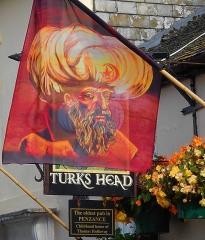
Holloway was born in Devonport (near Plymouth in Devon). His family moved to Penzance in the 1820s. There, they ran a public house (‘pub’) called ‘The Turk’s Head Inn’. He became a manufacturer and seller of patent medicines. He was highly successful at promoting his business by advertising in newspapers. Between 1837 and 1842, he had spent more than £5000 on advertising, and as he neared the end of his life, he was spending over £50,000 per year on promoting his products. The advertising paid off. He became one of the richest men in Britain during his life. His products were clinically of dubious value, but they sold well. After his death, some of his products were taken over by Beechams Pills.

Holloway was generous with his wealth. He is best remembered for funding and building the Holloway Sanatorium near Virginia Water (Surrey) and the Royal Holloway College. The college was opened for women only. It was not until the 1960s, that it began admitting male students. It had links with Bedford College in London, where my wife’s grandmother studied in the 1920s, having sailed over from India.

Today, we visited Penzance and walked past the Turks Head Inn, which is one of the oldest (if not the oldest) pubs in the town. It is thought that this pub was first established in 1233, following the Turkish (probably Moorish) pirates attacking Penzance during the Crusades (www.picturepenzance.com/pages/Penzance-History). The pub claims to be the first in England to be named The Turks Head. The building was damaged by fire during the 16th century. What we see today is a modification of what was built after the fire.

We had travelled almost 280 miles from Egham to Penzance, mainly along the A30 (a road about which I hope to write more). Thomas Holloway must have covered this distance many a time in the past. It was fascinating to stumble across his childhood home in Penzance and thereby discover why The Royal Holloway College, which I have known of for ages, came into existence.

Between Mortimer Market and Iraq

MANY LONDONERS WILL HAVE walked past Mortimer Market without knowing it exists. Yet, I used to visit it every working day for about five years. It played an important role in my life and greatly affected my career. How it did, I will reveal later.

Mortimer Market lies a few feet east of Tottenham Court Road (‘TCR’) between Capper and University Streets. Immediately to its east, runs Huntley Street that is parallel to TCR. I used to enter Mortimer Market through a short, covered passageway leading off TCR. Vehicles can enter the Market via Capper Street.

Mortimer Market before 1949
Mortimer Market before 1949 when this photo was published

Until 1886, Capper Street was known as ‘Pancras Street’. This street has existed for over 300 years. Its history is outlined in some detail on an interesting website (https://regencyredingote.wordpress.com/). Before it was laid out, the land on which it runs was part of Capper Farm, which was in existence by 1693. The farmer, Christopher Capper, whose widow died in 1739, kept cattle. Members of his family, his daughters, kept the farm going until at least 1768. After his death, the family moved to crop growing in preference to rearing cattle. In 1756, the Duke of Grafton constructed the Euston Road that ran along the northern boundary of the Capper’s farm. At first, the Capper sisters raised an objection to it, saying that the dust raised by traffic along the new road would spoil their crops. The Duke and the sisters eventually came to some agreement. By 1770, the Capper sisters gave up their farm. It was then bought by Hans Winthrop Mortimer (1734-1807), who merits an entry in Wikipedia and on the History of Parliament website (www.historyofparliamentonline.org/volume/1754-1790/member/mortimer-hans-winthrop-1734-1807 ).

Mortimer was a property speculator and a Member of Parliament between 1775 and 1790. In the 1774 General Election, he was defeated by Sir Thomas Rumbold (1736-1791), who served as British Governor of Madras between 1777 and 1780. Rumbold became well-known for being corrupt. His misdeeds included what was effectively the theft of a precious ring from the Nawab of Arcot (Muhammad Ali Khan Wallajah, who reigned 1749-1795). Rumbold’s corruption preceded his stay in India. This involved, amongst other things, bribery during the election he contested against Mortimer. After a court case against Rumbold, Mortimer was awarded £11,000 in damages in 1776 and also gained the parliamentary seat that Rumbold had tried to win by cheating (bribery). It is a sign of the East India Company’s wobbly ethics that a man as corrupt as Rumbold was appointed the Governor of Madras so soon after losing his case of corruption.

Mortimer spent a great deal of money acquiring property in Shaftesbury, his constituency and also in London.  

The land, which Mortimer bought that had been the Capper’s farm, became known as ‘The Mortimer Estate’. Some of this estate was later sold and became the site of University College (‘UC’) London, which established in 1826. Mortimer Market began to be built on the western part of the estate in 1795. Old maps of the area show that in the 19th century Mortimer Market was like a piazza containing two parallel rows of small shops. This can be seen in a photograph published in 1949 and reproduced on a British history website ( www.british-history.ac.uk/survey-london/vol21/pt3/plate-27).

By 1963, the shops in Mortimer Market had been demolished. In that year, a purpose-built structure standing where the rows of shops had once stood was opened as University College Hospital Dental School (‘UCHDS’). It was this architecturally undistinguished building that I used to visit during the clinical years (1977-1982) of my studies of dentistry. The building is so non-descript that it does not get even a tiny mention in Pevsner’s detailed guide to the buildings of north London.  Prior to 1914, what was to become UCHDS was known as the National Dental Hospital, founded in 1861 and located at 187-191 Great Portland Street (see: https://ezitis.myzen.co.uk/uchdental.html). In 1894, the establishment relocated to 59 Devonshire Street. Twenty years later, it amalgamated with University College Hospital. From 1963 until its closure in 1991, 9 years after I qualified as a dentist, UCHDS was housed in Mortimer Market.  The former dental school building still stands and looks very much like I remember it, but now it houses a centre for the treatment of sexually transmitted diseases.

As mentioned earlier, I used to reach the entrance of the dental school by way of the passageway from Tottenham Court Road. However, the hospital could be reached via the network of underground passageways that linked various building of the hospital both with each other and UCL itself. To the right of the passageway if you face it from TCR, there used to be the premises of the Iraqi Cultural Centre. I went in there several times. On one occasion, I mentioned to one of the friendly men who worked in their shopfront office that I am fascinated by folk music from all over the world. He told me to wait and within a few minutes he returned and presented me with an album containing two LPs of recordings of Iraqi folk music. For years after this, I enjoyed listening to them.

During several of my brief lunchtime visits to the Iraqi Cultural Centre near Mortimer Market, I noticed something strange in it. Men would suddenly appear from what seemed like nowhere, maybe from doors hidden in the shop’s internal walls. When Saddam Hussein’s regime (1979-2003) began to attract western military attention, I remembered these curious appearances, and wondered whether there was something other that cultural promotion going on in this place so near my dental school. My suspicions have been confirmed: according to the writer Said K Aburish (born in Palestine in 1935), writing in 2004:

“Years ago Saddam Hussein used the Iraqi cultural centre in Tottenham Court Road to conduct intelligence against dissident Iraqis and to eliminate political opponents.”

Also, The Guardian newspaper noted on the 30th of April 2002:

“The Iraqi government also used some of the students on its scholarships as spies, and set up a London surveillance network based at a “cultural centre” on Tottenham Court Road. There were sporadic assassination attempts against dissidents: in 1995 Latif Yahia, a defector previously employed by the Iraqi government as the official double of Saddam’s brother, alleged that he had been attacked with knives by five men speaking Arabic while stuck in traffic on the capital’s Edgware Road.”

My time studying in Mortimer was quite exciting but not as much as what must have been going on nearby in the cultural centre.  Thinking back to my years of study, we had some lectures given us by a young Iraqi dentist, who was working on his PhD – something to do with denture fixatives. He seemed very pleasant, but now I wonder… 

While I was studying at UCHDS, I had wanted to write about the history of Mortimer Market. In those days before the Internet, although I looked at several books in UCL’s very well-stocked library, I did not find anything about the story behind this little-known part of London. So, what you have just read is what I was hoping to write more than 38 years ago.

Examining the past

ON 13th AUGUST 2020, MANY YOUNGSTERS in England received the results of the state’s university admission examinations. This year of plague and social distancing, 2020, the results have not been determined by the students themselves writing examination papers but by a clumsy, somewhat arbitrary, algorithm that takes various factors other than a student’s own ability into account. Things were quite different last year and back in 1970 when I sat the A-Level examinations required for admission to university.

BLOG EXAM

Back then, as now, universities offered places to potential students subject to achieving or exceeding certain grades at A-Level. The place that was my first choice amongst the six universities I chose was University College London (‘UCL’). In ‘my time’, UCL invited potential students for extensive interviewing. I was invited to spend a whole day at the Physiology Department. During that day, I was interviewed at least three times by different people and met both members of the academic staff as well as students already embarked on their courses of study.

Several days later, I received a letter from UCL offering me a place on the BSc course providing I achieved three E grades at A-Level. The top grade at A-Level was A, the lowest pass grade was E. At first, I was not sure whether to be pleased that all I needed was just to pass my three A-Level examinations. Was that the best that they thought I could manage? No, it was not. In those days, if UCL liked a candidate at interview, they took the strain off the candidate by not expecting high grades. Thee Es was normal for most subjects except medicine and dentistry when 3 Cs were required.  These days, candidates to places like UCL would be expected to get 3 A grades or something awfully close to this. Well, having been offered a place subject to my attaining at least 3 E grades and being neurotic by nature, I began to worry. What if I could not manage the three Es?

I became obsessed by examination papers to such an extent that I used to use my father’s typewriter to compose examination questions that I hoped would never appear in front of me in the examination hall. Whether or not composing these impossible questions was a kind of self-therapy or simply an opportunity to enjoy using the typewriter, I cannot tell, but it did me no harm. At the very least, It gave me short breaks in what for me was long hours trying to understand what I was studying.

My three A-Level subjects were Biology, Physical Science (a mixture of chemistry and physics), and mathematics. I found that all of them were most interesting and not too taxing. When I was at school, it was possible to opt to attempt supplementary papers in the subjects chosen for A-Level. These papers were known as ‘S-Levels’ and were designed to test a candidate’s deeper understanding of a subject. I chose to do S-Level papers in biology and mathematics. The biology S-Level paper was enjoyable. I was able to show off what I had learnt from reading around the subject. One of the questions was something to do with discussing the origins of life on earth. Well, in addition to various then current theories I decided to include what is described in the first chapter of the Old Testament. I passed that S-Level. The mathematics S-Level paper was a quite different ‘cup of tea’. Even though I had attended special classes to learn the mathematics that was required, I was stumped. For the first 30 minutes of the three-hour paper, I just stared at the questions. There was not one that I could even begin to tackle. So, after 20 minutes, I walked out of the examination room, leaving a blank script on my desk.

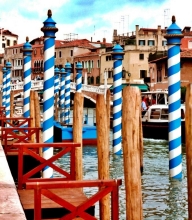
I can remember where I was when I received the A-Level results in August 1970. I was in Italy with my parents and sister on one of our annual visits to that country. We were in Venice, staying, as we always did, at the Pensione La Calcina, where many decades earlier the eminent John Ruskin(1819-1900) used to reside when visiting the island. The establishment’s façade is on the Fondamente Zattere across the water (of the Giudecca Canal) from the famous Santissimo Redentore church (completed 1592) designed by the architect Andrea Palladio.

We had just eaten lunch at the pensione and were taking the air on the waterfront prior to retiring indoors for a siesta when Signorina Steiner, the manageress, came rushing up to us with a telegram. My parents opened it to discover that my aunt in London had sent my A-Level results, which to my great relief were way in excess of the minimum required to gain admission to UCL.

If I had not managed to attain even 3 E grades, I would certainly not have expected to be admitted to any university. I would have had to accept the result and might well have decided to re-sit the examinations a few months later. As far as I am aware, in my day, there was no appealing to have papers re-marked as has become normal in the last twenty or thirty years. During recent times, it is not unusual for someone who is not satisfied with a grade to have his or her examination papers re-marked. Often, the revised grade is higher than the original, but things can go less favourably for the candidate.

This year, when young people have not been able to attend school since March and have not been awarded A-Level grades based on final papers written under strict examination  conditions, they have been awarded grades based largely on statistics (generated by what appears to be a poorly conceived algorithm) rather than individual ability. Many students have been awarded grades well below what they and their teachers expected. Thank heavens that there are appeal procedures in place.

I remember how much of a nail-biting experience it was waiting for my A-Level results back in 1970. This year, it was far worse for candidates. Not only did they not know on what basis their grades would be estimated, but also many of them will have to remain anxious for even longer whilst their appeals are being considered.

A SPECIAL TEA

I met the lady who was later to become my wife on the first day of the undergraduate course that we were both studying at University of London. We were enrolled in the same department.

I lived at home with my parents, who were very sociable and hospitable. They were happy to host friends whom I had met at the university. My future wife was a frequent visitor to our home. Often when she arrived, she used to present my mother with special leaf tea from India, where her family lived. This tea was her mother’s favourite, Lopchu.

Lopchu is a district through which runs the very steep, winding road that connects Dargeeling in West Bengal with Rangpo on the border of Sikkim. Recently, we were driving up this road towards Darjeeling when we spotted a side road leading to the Lopchu Tea Estate. We asked our driver to drive us down what proved to be a narrow road with barely any undamaged surfaces. It was full of treacherous pot holes.

We drove past tea gardens that resembled many others we have seen. However, because of the special connections between Lopchu tea and our two late mothers, we were pleased to have made a special effort to see the source of the tea that might possibly have contributed at least a little bit towards the development of the relationship between me and my future spouse.

A light bulb moment: sudden enlightenment

bulb


After I had completed my first (Bachelor’s) degree, I decided that I would like to apply to become a doctoral (PhD) student. In order to do this in the UK (and elsewhere) it is necessary to enlist a supervisor, an academic who guides you through the process of researching and writing a doctoral thesis.

I knew roughly in which field I wished to pursue my further studies. Someone in Cambridge was looking for a PhD student to work on something that sounded interesting to me. So, I visited the academic in Cambridge. First of all, I was not particularly keen on the man’s personality (albeit having only met him once) and also the project he was offering seemed far too difficult for me, way beyond my ability. 

After the Cambridge episode, I discovered that the Imperial Cancer research institute was offering amazingly generous scholarships for PhD stuents working in their laboratories. I applied, choosing two of the projects that seemed to be in harmony with my interests, and received an offer of interviews at the institute in Lincolns Inn Fields.

At the first interview, I was introduced to the eight or so members of the team i was applying to join. They sat around whilst the senior members of the team interviewed me. It did not take me long to feel uneasy about my future colleagues, and as the questioning continued I could not wait for it to end. Near the end of the session I was asked if I was interested in cancer. In an attempt to cut short the proceedings, I answered that I was uninterested in that subject. 

After an equally unpromising interview with another of the research groups that I had applied to join, I left the building and began walking across Lincolns Inn Fields, feeling relieved that the interviewing ordeal was over. It was then that an important tought entered my head.

A PhD takes about (or at least) three years to complete. During that time, I would have to work in a laboratory with the rest of a research team and in regular contact with my supervisor. I realised while walking in Lincolns Inn Fields that it would be important for me that I enjoyed the people with whom I would be working. A pleasant environment was more important for me than the precise nature of the research topic.

I returned to University College, having made the decision to ask Professor Robert Harkness, whom I liked and whose research interests attracted me, whether he would take me on as a PhD student. To my great delight, he accepted me. As one of his doctoral students, I spent a very happy three and a bit years working in his laboratory with his other researchers, all of whom were friendly and helpful.

Since that day in Lincolns Inn Fields and my ‘light bulb moment’, which happened there, I have attended other interviews (for positions in various dental practices). At each occasion, I have asked myself: would I feel happy working five days a week with the person(s) interviewing me? If I have not felt the right ‘vibes’ at the interview, I have always turned down the job however attractive it seemed. On only one occasion, I have been mistaken with that approach, which I was fortunate to have been able to take when looking for work.

Tram number 28

Tram


We had only been in Lisbon (Lisboa) for about three hours when we boarded the picturesque old-fashioned tram on the number 28 route, which winds its way uphill to the old Alfama quarter of the city.

The tram was quite crowded and I stood in the small entrance hallway at the rear of the vehicle. I looked up and noticed a sign in three languages (including English) that advised passengers to be wary of pickpocket thieves. I was just about to take a photograph of this sign when the tram reached the stop we wanted.  Getting off the tram was somewhat difficult becauses three men tried to disembark at the very same moment as me. 

When I reached the pavement, I noticed that my overfilled wallet had gone missing. I had been pickpocketed. The thieves got a good haul: several credit cards, my driving licence, and a large sum of cash. I was stunned for a moment. Then, we used our mobile telephones to cancel our cards. Our enthusiasm for Lisbon fell to an all-time low.

We were directed to the local police station, where we began relating our sad story. Before we had managed to say a very few words, one of the policemen said:

“Tram number 28?”

We were then asked to visit the Tourist Police in the centre of Lisbon. We walked there feeling very downhearted and wishing that we had never come to Portugal. The Tourist Police could not have been nicer. Between them, they spoke every language you could think of. They helped us contact various banks and assured us that whoever had stolen from my pocket could not possibly have been Portuguese. After spending about an hour with the sympathetic Tourist, we left feeling much better about Portugal despite our recent loss.

With my driving licence stolen, the rented car that I had hired from the UK was no longer feasible. To our great surprise, the car hire company, learning of our disaster, cancelled our booking without charging us anything – we paid nothing for the car we were not able to use.

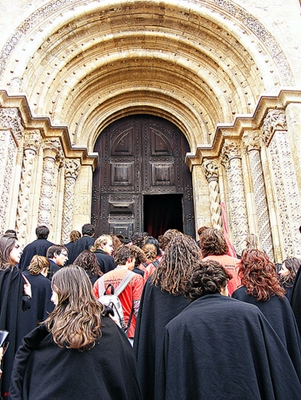
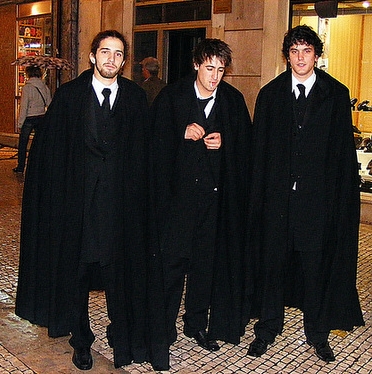
Without the car, we had to change our travel plans within Portugal. One of the places we visited, which we would not have seen had we had the car, was the university city of Coimbra. We spent several days in that delightful city during the period that the academic year begn. The city was full of groups of cheerful students wearing archaic black capes. Had it not been for our ill-fated trip on the 28, we might well have missed this. As they say, ‘every cloud has a silver lining’.

MOTHER IN LAW

This story was related to me by a good friend. She suggested that I publish it on my blog because it illustrates certain attitudes still prevalent in India. I have changed the details for obvious reasons and will tell it in the first person.

This happened during my days as an undergraduate student in the early 1970s. Those days, we were all hippies, often high on dope. I had a fling with Raj. Nothing came of it.

Later and quite by chance, I found myself enrolled in the same postgraduate course as Raj. We got together again, and I became pregnant. Although we weren’t married, I wanted to keep the child, who was conceived out of love, not as a result of rape.

One day, Raj, without informing me where we were going, took me to his parent’s home. I was not dressed appropriately for such a visit, to meet a boyfriend’s parents. I was in shirt and jeans, wearing non matching socks and tatty sneakers.

When we arrived at his home, not only were Raj’s parents waiting to meet me, but also various of his uncles. Raj’s mother, let’s call her ‘Mom’, made me sit beside her and the men left the room.

“So, where did you do it?” Mom began, “was it in a hotel?”

“No, in my room at the hostel” I replied, wondering why she needed to know.

“Oh, in your room… very liberal,” she commented.

“And how many times did he do it?” Mom enquired.

Irritated, I replied:

“Too many times to remember.”

Then, the men returned to the room where we were sitting.

Raj’s father addressed me formally: “My son has been unjust to you. We will honour you by asking you to marry him.”

Raj and I were duly married. Just before our wedding, Mom took me to be examined by a gynaecologist. I was surprised as I had already consulted one before I was introduced to Raj’s parents.

Years later, it dawned on me why Mom had taken me for the gynaecological examination. She was probably checking that I really was pregnant, and not falsely claiming to be with child in order to entrap her son into matrimony.

To save face, Mom always told people that my child was born three months later than its true birthday.

Read what you wish into my friend’s story, but try not to be surprised by it. After all, deciding ones spouse by means other than by arrangement is still relatively uncommon in India.

Thank you, Queen Victoria

From worlds far apart,

Two folk come together:

Cupid’s bow does its job


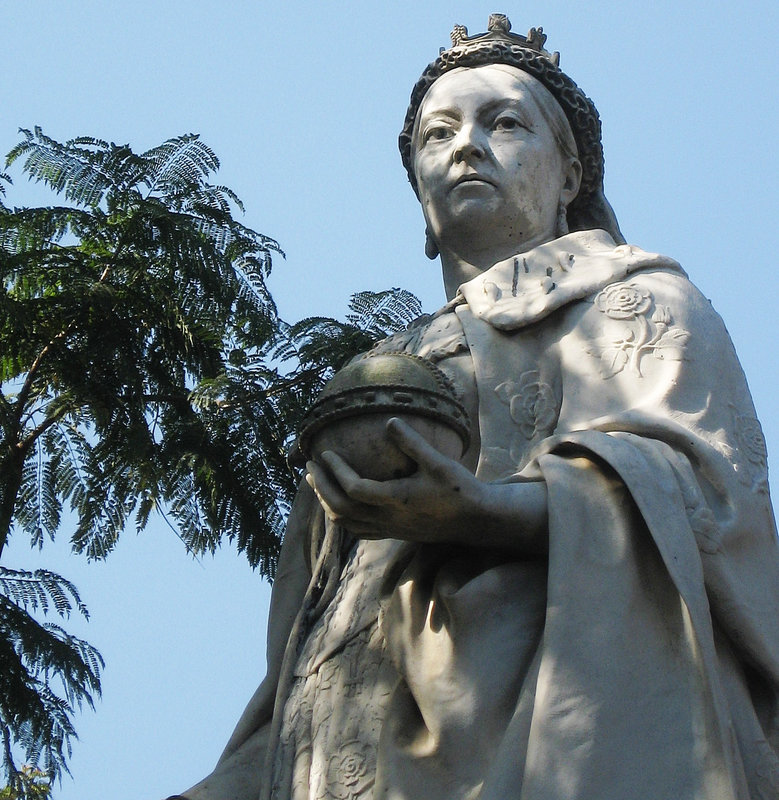
When our daughter was a little girl in junior school, the members of her class were asked to name the greatest Briton in history. She nominated Queen Victoria. Her choice was based on the following facts: her mother’s parents were born in India and my parents were born in South Africa. When Queen Victoria reigned, she argued, both countries were part of the British Empire. This, she felt, made it more likely that both her parents would study in England and meet. Without Victoria, she concluded, my wife Lopa and I might never have met, and she would not have existed. Well, maybe she was right. I believe that the reason we met was due to two men who gave us career’s advice: Professor Lewis Wolpert in London and Major General SL Bhatia in Bangalore.

As I approached the time when I had to choose a university undergraduate course, I had no idea which subject to select. I was interested in biology, physics, and chemistry, but had no interest in studying medicine, or even dentistry, which I studied many years later. Careers advice at my secondary school was not helpful.

My South African-born parents knew many South Africans living in London. One of these was my father’s close friend, the late Cyril Sofer, a sociologist. It was through the Sofer family that we met Lewis Wolpert, who was born in South Africa. First, he trained to become a civil engineer. By the time I first met him, he had become an eminent biologist, specialising in cell and developmental biology.

Wolpert, on learning that I was having difficulties choosing a course of study, kindly invited me to his office in Middlesex Hospital in central London. He spent about an hour with me, listening to what I had found interesting in the science subjects I had studied at school. Having heard me out, he suggested that I study physiology at university. This subject would, he thought, encompass all that interested me so far. He told me that the best places to study physiology were Cambridge and University College London (‘UCL’). Of these, he considered the physiology department at UCL to be the best. I was pleased to hear this.

About five years before meeting Wolpert, my father and I had visited UCL because a friend of the family, the art-historian Leopold Ettlinger, worked there. All that I can remember of this visit was walking across the lawns in UCL’s elegant Front Quadrangle and thinking how beautiful it seemed. So, when Lewis Wolpert suggested that I apply for admission to UCL, I was happy about that.

At about the time I was discussing my academic future with Wolpert in London, a young lady, my future wife Lopa, was discussing the same thing with another eminent scientist 5000 miles away in Bangalore. The scientist, Major General SL Bhatia (1891-1982), had known Lopa’s mother’s father from when he studied medicine in Bombay. The two medics became close friends. When Lopa’s mother Chandra was born, Bhatia became the equivalent of Chandra’s god-father.

Chandra’s father died young having succumbed to blood poisoning while treating one of his patients. His friend Bhatia had a glittering career in science, medicine and the Indian Army. It was during his retirement that Lopa met him at his beautiful old-fashioned bungalow in Bangalore. Bhatia had studied medicine not only in India but also at St Thomas’s Hospital in London during the second decade of the 20th century. While in London, he had conducted research with leading physiologists. Like Wolpert had done for me in London, Bhatia recommended that Lopa, who was not keen on studying medicine at that time, pursue a course of physiology at UCL, because he knew it to have a fine reputation in that subject.

One morning in October 1970, I arrived at the Physiology Department at UCL, having travelled from my home in north-west London. I was one of nine students who had been accepted for the course. Lopa was one of the others. She had travelled over 5000 miles to join the department. We were greeted by the department in the Starling Room, named after a famous physiologist who had worked at UCL. This common room is where I met the young lady who was eventually to marry me.

SL BHATIA 3

In the bar at the Bangalore Club

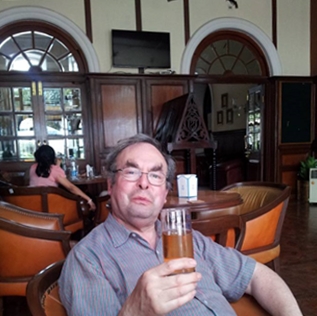
Our wedding reception in Bangalore was held in 1994 at the Bangalore Club, a prestigious ex-colonial institution in the heart of Bangalore. Although he could not attend, Major SL Bhatia was the first Indian President of that elite club. Before that, all the Presidents had been British. Bhatia’s widow was at the wedding. She claimed, not without some reason, that it was she and her late husband, who were responsible for getting Lopa and me together.

The late queen_800

Just as our daughter is eternally grateful to Queen Victoria for bringing Lopa and me together, I am equally thankful to Professor Wolpert and Major General Bhatia for getting our paths to cross. I cannot acknowledge them for what was to follow; Cupid and his arrows are to be thanked for that.

Picture sources: semanticscholar.org (Bhatia) & retractionwatch.com (Wolpert)

Back to BASIC

computer

During the last two years (1968-69) at my secondary school, Highgate School in north London, we were taught about computing. The teacher in charge was one of the pioneers of the computer programming language called BASIC (an acronym for Beginner’s All-purpose Symbolic Instruction Code). The first version of BASIC, which was considerably simpler to use than FORTRAN or COBOL, was released in 1964. So, our teacher was advanced in introducing it to us. We learned about creating flow diagrams and then converting them into BASIC.

When I learnt BASIC back in the late sixties, the only computers available were huge main-frame machines that occupied large rooms. PCs and lap-tops were not yet available, or hardly even imagined. The school did not possess a main-frame computer. But, it did possess a keyboard attached to a telephone line. By dialling a number, the keyboard could be connected to a remote computer. It was not possible to type directly into the computer. First the programme that we concocted had to be typed on the keyboard, which converted the programme into a series of holes on a long ribbon of paper. When the programme had been transferred into the punched holes, the remoter computer was dialled, and then the long strip had to be fed into a slot on the keyboard console. Then, the author of the programme had to hold his breath. For, it would be some time before the computer sent back a message that was typed by the console onto its paper-feed. More often than not, the message would convey the sad news that the programme had an error. Then, it was back to the ‘drawing board’ to determine where we had gone wrong.

When the programme was correct, the results were exciting. Some people used the computer to do statistical work, or to generate answers to mathematical problems. I discovered how to make the computer write random poetry. I submitted some of what I produced to the school’s magazine, but it was turned down.

Several of my fellow pupils and I became obsessed with programming. We could not get enough of experimenting with programming. The console was kept locked in a wooden cabinet, which could only be opened by our teacher. Somehow or other one of us managed to get a copy of the key, and, more importantly noticed the number that our teacher dialled to access the computer. From then onwards, we had far greater access to the machine.

The IBM company lent the school a prototype of a table top computer. This could only be programmed using machine language, which is the coding that underlies languages such as BASIC, FORTRAN, and COBOL. Using machine language is real programming, and quite difficult. It was to difficult for me to master even at a very simple level.

When I went for my interview at the Physiology Department at University College London (‘UCL’), the other candidates and I were shown the room containing a large computer, which the Department possessed. The staff were very proud of these advance machines that were able to process experimental data in “real time”. Information from the measuring instruments employed in the experiments was converted into numerical data that could then be processed statistically by the computer, and then displayed to the experimenters while the experiment was proceeding.

A week or two after my interview at UCL, I went for another interview, this time at the Physiolgy Department of Chelsea College (now long since closed). After I had been several questions by the Prof and some of his colleagues, they allowed me to ask any questions I had. Having been impressed by what I had seen at UCL, I asked:

“Do you use computers in your department here at Chelsea?”

“Of course, we do, all the time” answered the Prof immediately.

After a short pause, one of his colleagues said:

“Well … actually… we don’t have any computers in this college.”

Then the Prof said something, which I found rather pathetic:

“I can understand that your first choice is UCL. However, we would be happy to offer you a place in our department providing you will promise to accept our offer if UCL does not give you one.”

Fortunately, UCL did offer me a place on their course.

I gained admission to UCL, my first choice amongst the six universities to which I applied. During our first year, we had to take a course in physics. Once a week, we spent an afternoon in the laboratory carrying out practical work. One day, we were asked to write computer programmes to solve a chosen problem. I was the only person (in our class of fifty students), who could complete the task. No one else had a clue as to how to do it. They had attended good secondary schools all over the country, but only mine had offered teaching in computer science.

After that class in the physics laboratory in 1970, I did not touch a computer until about 1997. We bought a PC, because my wife needed one for her studies. When she was not using it, I experimented with it. It operated with one of the Windows programmes. I was flummoxed. It seemed quite different to what I experienced in the late sixties. How was I going to programme it? After a short while, I realised that things had moved on a long way since I learnt BASIC.


Image source: www.quora.com

Do exams maketh man?

STUDY 0

Today, getting a place to study a clinical subject (medicine, dentistry, and veterinary science) requires the candidate to achieve very high grades in the state university entrance exams (the ‘A Levels’). Grades lower than A or A* (the highest) greatly reduce a candidate’s chances of obtaining a place on a course to study for any of these three professions.

Note: in the A Levels, the top grade is A or A*, the lowest is E. Thus, A is better than B, and B beter than C … and so on

In 1969, I applied to study physiology at University College London (‘UCL’). In those days, most departments at the college required applicants to attend an interview session before they gave the candidate an offer conditional on the person achieving specified A Level grades. The Physiology Department invited prospective students to spend a whole day at the college. I turned up, not knowing what to expect.

During my day at the department, I was interviewed one-to-one by two different sets of staff members. They did not ask straightforward questions that could be answered if you had learnt the A Level syllabus by rote. For example, I was asked: “What would limit the size of the largest insect?” This is not something covered by the A Level syllabus. To answer this, I had to think ‘out of the box’, using my knowledge of insect anatomy and physiology. Another interviewer asked me about my hobbies. One of them was, and still is, collecting maps. “How interesting,” the questioner answered a bit dubiously, “It is also my hobby. What exactly interests you about maps?” I cannot remember my answer, but it seemed to satisfy him.

In addition to these intimate interviews, there were group sessions, during which small groups of candidates discussed topics with some of the academic staff. We were also given coffee, lunch, and tea. At each of these refreshment breaks, we mingled with students and academic staff, all of whom engaged each of us in conversation. By the end of the day, the members of the department must have gained a fairly detailed impression of the candidates they had met.

After a few days, I received a letter (there was no email in 1969) offering me a place conditional on my achieving at least three E grades (lowest grade of pass) at A Level. The Physiology Department and others at UCL made this kind of ridiculously low offer if they wanted a candidate. They knew from the extensive interview process what kind of student they were going to get and did not want him or her to have to worry about achieving high grades. Of course, they preferred their students to obtain high grades at A Level, and we all did. They would have accepted us with lower grades, but this was rarely necessary. Most of the graduates of the Physiology Department eventually moved on to completing higher degrees (masters and doctorates).

Until the early 1980s, candidates wishing to study dentistry or medicine were interviewed and offered places providing they achieved a minimum of C grades in their A Levels.

During the 1970s, I became friendly with someone who used to interview prospective dental students at UCL. She sat on an interviewing panel with the then Dental Dean, Mr Prophet, and another senior dental clinical academic. Each candidate was asked about aspects of his or her life, anything to get them talking. Each candidate was also asked whether they either played a musical instrument or did some kind of handicraft (for example sewing or model-making). Anyone who did either of these things was likely to be sufficiently dextrous to be able to practise dentistry. After the candidate left the room, the interviewers asked themselves only one question, providing the youngster they had just seen had satisfied them that he or she was dextrous. The question they asked themselves was: “Would we be comfortable being treated by him or her?”

Candidates, who had satisfied the interviewing panel, were offered places on the dental course conditional on them achieving mid-range grades at A Level: three grade Cs. The admissions panel were quite lenient. If someone they wanted under-achieved at A Level, say they only manged to get two Cs and one D, they admitted the candidate. It is worth noting that of all the dental schools in London at that time, that at UCL produced a higher proportion of dentists who went on to become dental academics than any of the other dental schools, all of which asked for students to achieve grades higher than Cs for admission.

I qualified as a dentist in March 1982. A couple of years later, I re-connected with ‘Mr G’, the technical tutor, who taught me the art and science of removable prosthetics (i.e. making dentures). I used to see him regularly because he carried out some prosthetic laboratory work for my patients.

In the mid-1980s, things had changed at UCL. To gain admission into the dental course, candidates were required to achieve top grades (all As) at A Level. The first year of the dental course was then, as it had been in my time, not clinical: it was taught in departments other than those in the Dental School. The subjects studied were academic (rather than clinical): biochemistry, general anatomy, physiology, and special dental anatomy. In the second year, the students moved into the Dental School, where they began clinical their studies on patients without teeth – in the Prosthetics Department, which is where I first met Mr G.

During the second year, we burnt our fingers and got covered with plaster of Paris while making dentures for our toothless patients. We also studied dental materials, both practically in the lab and theoretically in the lecture theatre. The materials course involved some essay writing, as did most of the other courses we had to take. Nobody in my class year struggled over these. We might have resented spending time on them, but we managed.

One day in the mid-eighties, by which time all the students in the second year of the dental course had achieved high grades at A Level, Mr G told me something that surprised me. He said that many of the students entering the second year, were incapable of writing essays. So much so, that the Prosthetics Department had to put on a course of essay-writing to teach these high achievers how to write. Worse than that, when the students were told to look up things in the library, they turned around to Mr G and said things like: “Why should we? You do it. You’re paid to teach us.”

With such an arrogant attitude, how were these people going to handle the often-nervous patients in their dental chair?
STUDY 1

When our daughter and her class-mates applied for (non-clinical) undergraduate studies, the criterion for getting considered at all, was predicted A Level grades. If the predicted grades were low, universities would not even begin to consider a candidate. If they were high enough, then the chances of being given a conditional offer increased. Few universities bothered to interview candidates. They tended to rely on grade predictions, teachers’ reports, and ‘personal statements’ written by the candidates. It is said that a picture is worth a thousand words. I would say that a face-to-face interview  far more  valuable than any grade predictions or ‘personal statements’ as a means of selecting people seeking admission to a university, or even a job.

Photographs of students in Coimbra (Portugal), taken by Adam Yamey