A railway station far below the surface at Hampstead

HAMPSTEAD UNDERGROUND STATION, which was designed by Leslie W Green (1875-1908), was opened for passengers in June 1907. Green was responsible for the use of blood red, glazed terracotta tiling on many of London’s Underground stations. The station facades and interiors which he designed, including those at Hampstead, feature many aspects of the British Art Nouveau style. Examples of this style can be seen on Hampstead’s facade, interior tiling, and the ticket office counters.

While I was researching my latest book, “Golders Green & Hampstead Garden Suburb: Visions of Arcadia” (available from Amazon), I came across an interesting diagram in a book by FC Howkins (published in 1923). It shows how the Northern Line tracks rise gradually from several feet below sea level at Embankment (formerly Charing Cross) station to 192 feet above sea level at Hampstead station. However, Hampstead station’s ticket office is about 360 feet above sea level, which is 168 feet above the tracks and platforms (Wikipedia stated that the platforms are 192 feet below the surface). High speed lifts convey passengers between the platform entrances and the ticket office. Originally, these were slow lifts which were entered though brown sliding wooden doors with Art Nouveau inspired cut-outs for ventilation purposes. These old lifts still existed when I was at school in the 1960s, but the newer high-speed lifts with metal concertina doors were the main method of moving between the surface and the trains. Currently, newer lifts have replaced those which were in use between the 1960s (or maybe earlier) and 2014.

If you have a long wait before your train arrives at Hampstead, it is worth wandering to the end of the platform, where you will find the station’s original name, ‘Heath Street’, still on the wall. Today, I disembarked at Warren Street, and noticed that its old name ‘Euston Road’, is still clearly visible at the end of the southbound platform next to its exit.

By 1907, the Northern Line had been extended northward to Golders Green, whose station was opened for passenger use in 1907. It is a long journey between Hampstead and Golders Green stations. An intermediate station near the Bull and Bush pub (on North End Road) was planned. Although the platforms were constructed, they have never been used by passengers, and there is only a small hut on the surface (on Hampstead Way), which contains the entrance to shafts leading down them. Opposition by the founders of Hampstead Garden Suburb and later its residents ensured that the planned ‘North End’ station was never completed.

The Art Nouveau ticket counters at Hampstead station are no longer in use, but they have been beautifully preserved. In each of them, there are information panels detailing the aspects of the station’s history. Other decorative features have been maintained but much of the space in the ticket hall is occupied by the automatic ticket-checking entrance and exit portals. Perched at the top of the High Street, at the point where it meets Heath Street, Hampstead station is an important meeting point and a hard to miss landmark.

Remembering an old friend in London’s Marylebone

MY FRIEND MICHAEL Jacobs (1952-2014) studied history of art at A Level (university entrance examinations) and then later at university. Later, he became a prolific author. When we were in our late teens, we used to visit Hampstead’s second-hand bookshops together. A few days ago (early September 2022), I was walking along Marylebone’s New Cavendish Street when I spotted something that reminded me of one of our bookshop visits in the late 1960s.

There is a building on the northeast corner of New Cavendish Street and Wimpole Street, which caught my eye. As I passed it, I spotted a small plaque giving the architect’s details. It reads: “BANISTER FLETCHER & SONS ARCHITECTS AD 1912” Sir Banister Flight Fletcher (1866-1953) trained at London’s Kings College, University College, the Royal College of Art, the Architectural Association, and Paris’s École des Beaux-Arts. In 1889, he became a partner in the architectural firm founded by his father: Banister Fletcher & Sons. In addition to designing buildings, Banister Fletcher (and his father) wrote a book of great importance.

The book, “A History of Architecture on the Comparative Method”, which was first published in 1896, was republished several times during the 20th century. It was the standard reference work in English on the history of architecture.

Seeing the name Banister Fletcher on the building in Marylebone reminded me of an afternoon in Hampstead during the late 1960s. We were rummaging around the somewhat disorderly collection of books in Francis Norman’s bookshop in Perrins Lane when Michael discovered a copy of Banister Fletcher’s history of architecture, a book that was well-suited for the bookshelf of a student of the history of art. Michael bought it at an extremely reasonable price.

Until I spotted the building on New Cavendish, I had always associated the name Banister Fletcher with that afternoon with Michael in Hampstead. The building I saw is the first example of a structure that I have been able to associate with the author of the history purchased by my late friend.

The underground artist

THE BRITISH SCULPTOR Henry Moore (1898-1968) moved to London’s Hampstead district in 1929. Between that year and 1940 he lived in Parkhill Road, close to the Mall Studios, where the great sculptor Barbara Hepworth had her home and workshop. Many of Moore’s other close neighbours were in the forefront of the modern art world of the years between the two world wars. Not far away, the designer Jack Pritchard (1899-1992) and his family lived in Belsize Park Gardens, having moved there from Hampstead’s Platts Lane.

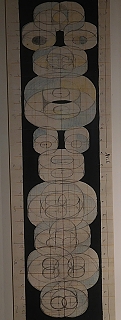
By Henry Moore, 1941

Quoting from my book “Beneath a Wide Sky: Hampstead and its Environs”:

“In 1929, he [Pritchard] and the Canadian architect Wells Coates (1895-1958) formed the company, Isokon, whose aim was to build Modernist style residential accommodation. Pritchard and his wife, a psychiatrist, Molly (1900-1985), commissioned Coates to build a block of flats in Lawn Road on a site that they owned. Its design was to be based on the then revolutionary new communal housing projects that they had visited in Germany, including at the influential Bauhaus in Dessau.”

The modernist building, now known as the Isokon, still stands on Lawn Road, which is close to Parkhill Road. It is still used as a block of flats. Completed in 1934, the building included communal areas including a restaurant and a bar called The Isobar where (to quote from my book again):

“… exhibitions were held in the Isobar and, according to an on-line article in ‘The Modern House Journal’ these were attended by artists including Adrian Stokes, Henry Moore, Barbara Hepworth, Ben Nicholson and Naum Gabo. The article also noted that this refreshment area was frequented by modernist architects such as Erich Mendelsohn, Serge Chermayeff and, Wells Coates, as well as by left-wing politicians.”

The Lawn Road Flats (the Isokon) was an early British example of a ferro-concrete building with a steel frame. This made it far more resistant to being damaged by bombs than its many brick-built neighbours. In fact, the only damage it suffered during WW2 was a few broken windowpanes. Various people, including the author Agatha Christie, moved into the Isokon to seek protection from the Blitz. Another person doing the same was Henry Moore, who moved there in 1941.

Many people, who were not lucky enough to be able to live in a relatively bomb-proof edifice, sought shelter from the bombs by spending nights on the platforms of Underground stations such as Belsize Park and Hampstead, all of which are far beneath the ground. Henry Moore created a series of dramatic drawing of the people taking shelter on Underground station platforms. It is quite possible that while living in Hampstead, he visited the stations mentioned above to find subjects for his drawings, which provide a vivid record of the terrible times when London was under attack from the air.

Recently, whilst visiting the Tate Britain art gallery, which houses a great deal of British art, I saw two of Moore’s Underground drawings, both dated 1941, and several of his sculptures. The drawings are not accurate depictions of what the artist saw, but they illustrate his reactions to what he witnessed, and as such they emphasise the atmosphere of those fearful times.  Although there is no doubt that Moore was a great artist, on the whole I prefer the works of his contemporary and sometime neighbour in Hampstead: Barbara Hepworth.

Painting in the Mall

BETWEEN HAMPSTEAD AND Belsize Park, there is a narrow footpath running north from Tasker Road. One side of it is lined with a terrace of low buildings known as Mall Studios. Built in 1872 by Thomas Battersby, they were designed as artists’ studios. Each of them contained small waiting rooms; costume rooms; and a lobby. Each studio had three skylights and large north facing windows to capture the kind of light favoured by many artists. Following the advice of the artist Walter Sickert, who had lived there, the artist John Cecil Stephenson (1889-1965) settled into number 6, Mall Studios in March 1919.  It was to remain his home until he died. In 1927, Barbara Hepworth became his neighbour in number 7, and at around that time, the influential art critic and writer Herbert Read moved into number 3. Nearby, Parkhill Road became home (for various lengths of time) to other artists including Henry Moore, Ben Nicholson, Naum Gabo, Piet Mondrian, Hans Erni, and other artists who have since become famous.

By John Cecil Stephenson

Whether it was the proximity of his artistic neighbours, who were pioneers of 20th century modernist art, or something else in his artistic evolution, Stephenson departed from his previous ‘straightforward’ portraiture and landscape painting and created works characteristic of what is now known as the ‘Modernist’ style. Although some of his works created after the late 1920s are to some extent figurative, most of his output was mainly abstract and constructivist. During WW1, Stephenson left London’s Slade School of Art temporarily to work in munition factories in Bishop Auckland (County Durham), the town where he was born. His experiences of working with industrial machinery and observing the efficiency and speed of the mechanised production processes is reflected in some of the paintings he produced later.

Stephenson, son of a grocer, was less well known than his neighbours. He produced art that bears favourable comparison to the works produced by them. Until the 18th of September 2022, there is a wonderful small exhibition of his works in a gallery within Hampstead’s charming Burgh House. The catalogue, edited by Sacha Llewellyn, Paul Liss, and George Richards, not only contains a fine collection of photographs of the exhibits but also provides a superb introduction – better than others I have seen – to the story of the pioneering role of Hampstead in the evolution of modern art in England. Burgh House, which contains several rooms comprising a museum of the history of Hampstead, also hosts excellent exhibitions such as the current survey of Stephenson’s works. Its well illuminated Peggy Jay Gallery provides a space for contemporary artists, many of them local, to display their works. Beneath the two storeys of cultural experiences, the basement of Burgh House is home to a pleasant café where anything from a cup of coffee to a wholesome meal can be obtained. And amongst the interesting range of books in the small bookshop, you can find copies of my book “Beneath a Wide Sky: Hampstead and its Environs” on sale (if they have run out, tell them to ask me for more, and then get your copy from Amazon).

A Soviet in Hampstead: Maxim Litvinov in north London

Here is an excerpt from my new book about Hampstead in north London:

For many centuries, Hampstead has been the haunt of people involved in creative pursuits. So, it was no surprise that the former Express Dairy opposite Louis (patisserie) had at least one interesting cultural connection. In February 1916, the Bolshevik revolutionary Maxim Litvinov (1856-1951) proposed to his future wife Ivy Low in the café inside that branch of Express Dairy. Ivy, a novelist, was born, please note, in 1889 (she died in 1977). At the time he became acquainted with Ivy, Litvinov was with Lenin in London. Ivy did occasional typing for Maxim, and it was not long before they were attracted to one another. Passionate about cinema, he took her to watch films with him and one day he ‘popped the question’ in the Express Dairy. After they married, they lived in Hampstead until the outbreak of the Russian Revolution in October 1917. They did not return to Russia immediately because in January 1918 Maxim Litvinoff was made First Proletarian Envoy to the Court of St. James’s.

According to Zinovy Sheinis in his biography of Maxim first published in 1988, Maxim often went to Hampstead to meet his friends the Klyshkos, who lived on Hampstead High Street. Nikolai Klyshko (1880-1937) was a Bolshevik revolutionary of Polish parentage, who had settled in London and was a fluent Russian speaker.  For a brief period, Litvinov lived in Hampstead with Klyshko and his English wife. Sheinis wrote about Maxim’s meeting with Ivy:

“They had met at a friend’s house. Then at a gathering of the Fabian Society. Litvinov was impressed by her knowledge of Tolstoy and Chekhov. Putting on weight, red-haired, of average height, well-mannered, and not very talkative, he made a big impression on the young writer. Her mother, the daughter of a colonel in the British Army, naturally wanted a different match for her daughter and certainly did not want to see her married to an insecure emigre from Russia. As for his religious background, Ivy Lowe simply never gave it a thought. She was herself from a family of Hungarian Jews who had taken part in the Kossuth uprising; in her girlhood she had been a Protestant, then had been converted to Catholicism. The choice of religion was her private affair and concerned no one else.”

After their marriage, they lived in a house, owned by Belgian refugees, in Hampstead’s South Hill Park (number 86). While there, Sheinis related:

“Friends sometimes gathered there in the evenings to discuss the political news; then an argument would flare up, developing into a fierce squabble. It always seemed to Ivy that her husband and his guests would any moment start flinging chairs at one another. At the very height of the dispute, when it was almost at boiling-point, she would leave the kitchen, go into the room, and announce that tea or coffee was ready. The disputants would calm down and drink their tea in peace.”

He also wrote that Ivy:

“… was not interested in and did not understand the political activities of her husband and his friends. To her, it was an alien world. In London, after the October Revolution, she asked her husband if he knew Lenin. Maxim replied that he had known Lenin for a long time. But she had no idea that letters from Lenin were coming to their house and that her flat was the headquarters of Bolshevik emigres.”

Later, they lived in a tiny house in West Hampstead. After that, Litvinov, having become a Soviet diplomat, moved from Hampstead. Despite not being officially accredited by the British, Sheinis   noted:

“The Litvinovs were even invited to receptions. Though Soviet Russia was not yet recognised, its powerful influence reached standoffish London, Ivy Litvinova recollected.”

By 1921, the Litvinovs with their two young children, at least one of whom was born in Hampstead, settled in Moscow. Although Litvinov held high governmental posts in the Soviet Union and outside it (as a Soviet diplomat), he and Ivy, like so many other citizens in Stalin’s Russia, were constantly in fear of being arrested and/or killed.

My book about Hampstead, “BENEATH A WIDE SKY: HAMPSTEAD AND ITS ENVIRONS” is available from Amazon: https://www.amazon.co.uk/dp/B09R2WRK92

My childhood home in north London

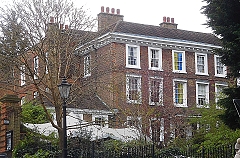
I LIVED IN A detached house (see the picture) in north London’s Hampstead Garden Suburb during the first three decades of my life. My bedroom window was that on the first floor facing the street, Hampstead Way. Externally it looks much as it did when I lived there. This is not surprising because the houses in the Suburb are all subject to strict preservation orders,which forbid alterations of the appearances of the exteriors of the Suburb’s buildings.

Although I was privileged to have lived in this part of London, it was never my favourite area of the city because during my youth, it was a dull place to be a child or even an adolescent.

By the way, although the name ‘Hampstead ‘ is part of the suburb’s name, the area is completely different from Hampstead proper: it lacks the vibrancy and vitality of old Hampstead village (or town, if you prefer). As a youngster, and still today, I have always enjoyed my visits to Hampstead Village

Holes in a brick wall

WALKING PAST UNIVERSITY College School (‘UCS’) in Hampstead’s Frognal, I spotted something that reminded me of my schooldays, both at the Hall School (in Swiss Cottage) and Highgate School (…in Highgate!).

A part of the brick wall enclosing the grounds of UCS is inscribed with initials. Some of the bricks also have circular depressions. Those which have not been filled in have interiors which are parts of spheres. The bricks on the walls of the schools I attended used to be spotted liberally with similar circular, spherical concavities.

The concavities, which are never more than about 1.5 inches in diameter, were created using the edges of coins. If the edge of a coin is placed firmly against a brick and the twisted left and right repeatedly, the sharp coin gradually wears away the brick and creates a concavity as described.

In the days long before mobile telephones were even the stuff of dreams, mining out brickwork and inscribing one’s initials provided a perfect way for school kids to pass a few idle moments and to leave one’s mark.

Read more about Frognal and the rest of Hampstead in my new book available from https://www.amazon.co.uk/dp/B09R2WRK92

Rudyard Kipling, Hampstead, and Cambridgeshire

WIMPOLE HALL IN Cambridgeshire is according to the architectural historian Nikolaus Pevsner:

“Without doubt the most spectacular country mansion in Cambridgeshire…”

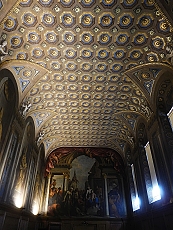
Chapel at Wimpole Hall, Cambridgeshire

Much of the mainly red brick building dates from the 17th century, although more was built in the 1740s. It contains many splendid rooms including a large library; a chapel decorated in 1724 by the painter James Thornhill (c1675-1734), who decorated the Painted Hall in Greenwich; and a large ‘salon’ created by Sir John Soane. These are a few of the wonders that can be viewed within the house, now maintained by the National Trust. The grounds of Wimpole are also superb and include a magnificent walled garden and a ‘Gothick’ folly.

Despite the visual attractions of Wimpole Hall, I was fascinated by its last owners: George and Elsie Bambridge. George Louis St Clair Bambridge (1892-1943) was a British diplomat and a soldier. In October 1924, he married Elsie Kipling (1896-1976), the second daughter of the famous writer Rudyard Kipling (1865-1936).

After living in several places outside the UK, George and Elsie came to London. Between 1933 and 1937, they lived in Hampstead. Their home in that lovely district of north London was the elegant Burgh House, which was built in 1704. In an epilogue to a biography of her father by Charles Carrington, Elsie wrote of Burgh House:

“In 1933 we returned to England, and our life in the delightful old house which we rented in Hampstead was a source of happiness to him to the end of his life.”

The person to which she was referring (i.e,, “him”) was her father, Rudyard Kipling.  

On the 12th of January 1936, Rudyard and his wife (Carrie) visited George Bambridge, who was in bed at Burgh House, suffering from bronchitis. It was to be Rudyard’s last outing because on the following day he was admitted to Middlesex Hospital where he underwent hazardous surgery for a haemorrhage. He died in hospital on the 18th of January.

The Bambridges moved from Hampstead to Cambridgeshire in 1937. They rented Wimpole Hall between 1937 and 1942, when they purchased to property. George died in 1943, and his widow, Elsie, continued living in Wimpole Hall until her death. When they moved in, the place was empty of contents. They bought pictures and furniture, much of which can be seen today. After her husband’s death, Elsie used the substantial royalties from her father’s books to refurbish the house. On her death, she bequeathed the house and its vast estate to the National Trust. It is well worth visiting if you are anywhere near Royston or Cambridge and it is no more than one hour’s drive from central London.

A house where music has been played for many centuries

Burgh House, Hampstead, London

Burgh House stands high above the southwest end of Well Walk in north London’s historic village of Hampstead. Here is a little bit about it, an extract from my new book about Hampstead:

“… Burgh House is entered from a steep side street called New End Square. The house, built in 1704, is close to the Hampstead Well Spa (see below). According to Bohm and Norrie, the House is named after its 10th owner, The Reverend Allatson Burgh (1769-1856), who was the vicar of St Lawrence Jewry in the City of London. Burgh, who was keener on music than looking after his parishioners, neglected both them and his house. Thomas Barratt wrote:

“Mr. Burgh was a rector in the city, and the composer of a work on church music, published by Longmans. Burgh House is depicted on five pieces of the Wedgwood service, made in 1774, for Catherine II., Empress of Russia.”

Between 1858 and 1884, Burgh House became the headquarters of the Royal East Middlesex Militia. After having been put to a variety of uses, the house became used as a cultural centre in 1979. It now contains a small art gallery, a café, a shop, and a Hampstead Museum. The Reverend Burgh would have been pleased to know that today his former home also hosts many fine concerts of classical music.

From the bottom of the garden of Burgh House, the ‘Wells Tavern’ pub can be seen dominating the view along the gently inclined Well Walk. Known as ‘The Green Man’ until 1850, when it was rebuilt and renamed the ‘Wells Tavern’, a pub has stood on his spot since at least 1762. The pub’s name reflects one of the reasons that Hampstead became popular in the 17th century.  Apart from enjoying clean air, people were attracted to the mineral water springs issuing chalybeate (iron-rich) water that were beginning to be exploited in Hampstead at that time…”

My book is called

“BENEATH A WIDE SKY: HAMPSTEAD AND ITS ENVIRONS”

YOU CAN BUY the paperback or ebook (Kindle) from Amazon:

https://www.amazon.co.uk/dp/B09R2WRK92

A Sunday afternoon in Hampstead and a bit of marketing

FROM CAMDEN TOWN, home of the busy Camden Lock and other popular markets, the 24-bus route more or less follows course of the now buried River Fleet, and ends at Hampstead’s South End Green. We disembarked at the Lawn Road bus stop on Fleet Road and walked the short distance to the Lawn Road Flats, also known as The Isokon. This building, inspired by the avant-garde housing projects in pre-WW2 Germany pioneered by the Bauhaus and similar institutions, was completed in 1934. A relatively bomb-proof structure, it was home to many people involved with cultural activities, including the author Agatha Christie (1890-1976), who wrote several of her novels whilst living there. The modernist block of flats still houses tenants. On Saturdays and Sundays, a small museum illustrating the history of this amazing edifice is open to the public. It contains photographs, information panels, and historical furniture items, all connected with the Isokon and its illustrious tenants. There is also a small, but well-stocked bookshop. It was here that I left several copies of my new book about Hampstead to be available for sale to visitors.

Bust of Agatha Christie at the Isokon Gallery in Hampstead

From the Isokon, we walked past South End Green and up Willow Road, which ascends ever more steeply as it approaches its northern end just near to Flask Walk and our next port of call, Burgh House. The house was constructed at the beginning of the 18th century. Here, we viewed the latest temporary exhibition, “John Cecil Stephenson: A Modernist in Hampstead”, which started at the beginning of April 2022. I will write more about this in a separate piece. Burgh House is home to a museum of the history of Hampstead and to a pleasant and popular café, which serves drinks and both hot and cold foods. The house also contains a small bookshop, well-stocked with a variety of books about Hampstead and artists associated with the place. I left several copies of my book about Hampstead to be sold there.

After spending a relaxing time in the Burgh House café, we wandered along Flask Walk, passing Keith Fawkes antiquarian bookshop, where copies of my book are on sale. Then, we walked onwards along the High Street and Perrins Court, where my father and I used to eat lunches at the Villa Bianca Italian restaurant. Reaching Heath Street, we passed the The Village Newsagent, which stocks my book (can you spot the theme emerging here?), and then entered Church Row. Halfway along it stands St John’s Parish Church.

The neo-classical church was completed in 1747. Twenty-three years before this, the “St Johns Passion” by Johann Sebastian Bach (1685-1750) was first performed in the Church of St Nicholas in Leipzig. At 5pm on Sunday the 3rd of April (2022), we listened to a good performance of this wonderful piece of religious music in the Church of St John in Church Row. With a small choir, a competent orchestra, and excellent soloists, the acoustics were excellent. Very thoughtfully, foam rubber cushions are provided for improving the comfort of the seating in the wooden pews. I was pleased to note that the current (April) issue of the parish newsletter includes a note about my new book.

After watching a colourful sunset, we took a bus to Paddington, where we enjoyed a tasty meal at the Malaysian Tuk Din restaurant not far from the station.

My book “Beneath a Wide Sky: Hampstead and its Environs” is available in Hampstead at the following locations:

THE CAMDEN ART CENTRE (Arkwright Road)

KEITH FAWKES (Flask Walk)

ISOKON GALLERY (Lawn Road)

THE VILLAGE NEWSAGENT (Heath Street)

BURGH HOUSE (New End Square, near Flask Walk)

The book (and Kindle) is also available from Amazon (https://www.amazon.co.uk/dp/B09R2WRK92)