Chikkamma Tours (Pvt.) Ltd: a detective story set in Bangalore

THIS BOOK WAS RECOMMENDED to me by a bookseller in Bangalore, at Bookworm, because she said that the shop is mentioned in the book. In the novel, Chikkamma Tours is a small travel company located beneath a bookshop run by Jagat Desai. One night, he is murdered. His body is found the next morning by one of the ladies who work in the office beneath the bookshop. The police are informed, but the three women who work at Chikkamma Tours decide to make their own investigation of the murder. What they discovered about themselves and the crime are the subjects of this ‘whodunnit’ novel.

Although I enjoyed reading it, this book is not a great work of literature. However, it was fun and I liked it because it captures many aspects of life in a city I visit frequently: Bangalore. As I proceeded through it, I recognised many things I know about the city and, especially, its bookshops.

Would I recommend this book? I would to Bangaloreans and to people who know the city well. However, I am uncertain that it would appeal to those who have little or no connection with the city. That said, I am pleased that the lady at Bookworm suggested I should read it.

Pasternak, Mandelstam, and Stalin: was the pen mightier than the sword?

LIFE IN STALIN’S Russia was extremely precarious for writers. One small mistake could lead to imprisonment and/or assassination. This was also the case in Enver Hoxha’s Albania, as the country’s famous author Ismail Kadare (1936-2024) knew only too well.

In 1934, the author Boris Pasternak (1890-1960) is widely believed to have received an unexpected telephone call from no lesser person than Russia’s dictator Joseph Stalin. What Stalin said to Pasternak and how Pasternak replied is the subject of a novel, “A Dictator Calls”, published in 2022 and written by Ismail Kadare. The author convincingly demonstrates that nobody can recall what was said during this brief but significant telephone conversation that occurred in 1934. Kadare provides 13 versions of what might have happened during this three-minute telephone call. At one point, he questions whether the call ever happened, but I felt after reading the book that it was likely to have happened.

A common theme amongst the 13 recollections of this telephone call is that Stalin was calling to find out Pasternak’s views on the poet Osip Mandelstam (1891-1938).  At the time of the call, Mandelstam, who had recently written a poem critical of Stalin, was in prison. It seems from what Kadare has written in his novel, which is based on facts (such as they are), that Stalin might have been hoping the Pasternak would say something that might help save his fellow author, the poet Mandelstam. In this fascinating novel, I felt that Kadare was questioning whether omnipotent dictators like Stalin and Hoxha feared, possibly secretly, the power of critics such as the poet Mandelstam, or in the case of Albania, Kadare. As with so many of Kadare’s novels, this relatively new one gives the reader some insight into the nature of secrecy, the contortion of truth, and uncertainty, which prevailed in regimes such as Stalin’s Russia and Hoxha’s Albania. Although difficult to understand in places, “A Dictator Calls” is a fascinating novel, which kept me intrigued all the way through it.

Kadare’s novel has been translated from Albanian into English by John Hodgson. I feel that a good translation should read in such a way that one cannot realise that it is a translation. It should read as if it were originally written in the language into which it was translated. Hodgson has achieved this very successfully.

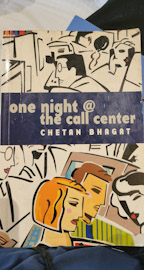
One Night at the Call Center and its author

THE AUTHOR CHETAN Bhagat was born in 1974 in New Delhi. He was educated at two prestigious institutions: Indian Institute of Technology (Delhi) and the Indian Institute of Management (Ahmedabad). After graduating he had various jobs including working at the Hong Kong office of the bankers Goldman Sachs. There, he was unhappy with his boss, whom, according to Wikipedia, he:
“ … characterized the villain in his second novel One Night @ the Call Center.”

The novel about the call centre was first published in 2005. The villain is Bakshi, the head of a department of a call centre that services customers in the USA. As its title suggests, the book is about one night at the call centre and its main characters are five young people working under Bakshi. I will not give the plot away, but I can tell you that the story is both entertaining and, in parts, profound. All that I will reveal is that the problems that the five workers are experiencing and described in the novel become insignificant after they receive a telephobe call … from God. But, do not worry: the book is not a religious tract. The book deals with many things, including the perception that some young Indians have: that their country is inferior to the USA.

Chetan Bhagat is a highly creative and imaginative story teller. His plots are rich in unexpected twists and turns. He has a great eye for detail and a good understanding of the minds of young Indians and they way they perceive today’s world.

Recently, a couple of people suggested that Bhagat’s humour is inadvertent rather than intentional. I completely disagree with this point of view. He concocts humorous situations in his novels with great care and expertise, and inserts them in his stories skilfully. Like Chinese sweet and sour dishes, Bhagat’s novels contain a harmonious blend of humour and seriousness, both complementing each other intelligently.

What I particularly enjoy about Bhagat’s writing – and by now I have read four of his novels – is his easy-going narrative style. As I read his books, I felt as if he was a good friend sitting and chatting with me in a bar or cafe. His books are easy to read yet full of profound observations about life, expressed effectively but with a light touch.

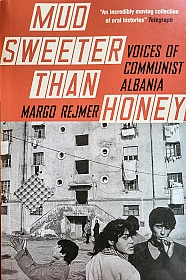
Mud sweeter than honey: Albania under Enver Hoxha

IN MAY 1984, I visited Albania, which was then still under the rule of its Stalinist dictator Enver Hoxha (1908-1985). The year before, I had spent a fortnight in Bulgaria. My impression was that Bulgaria was much less vibrant than Albania. In Albania, which had to be visited in an organised group tour, we were treated well, shown a great deal, and were fed well. I knew that by 1984, Albania was far more sealed off from the rest of the world than North Korea is today. Several things were curious about our visit. First, we were not allowed to converse with any Albanians apart from our three official guides or ‘minders’, and other Albanians were unable to converse with, or even approach, us. Secondly, we were watched carefully, even followed by plainclothes agents. Thirdly, and most strangely, whenever we ate a meal, we were kept out of sight of Albanian onlookers. Either we dined in a private room, or our tables were surrounded by curtains or screens, which separated us from other diners and staff in hotels or restaurants.

Our Albanian hosts successfully showed us some of their country’s beautiful towns, countryside, and other attractions. Their aim was to show us westerners what an ideal country Enver Hoxha and his regime had created. And to some extent, I was fooled by what I saw. Many years later, I visited the country (in 2016), and met people who told me that what I had seen was carefully stage managed – a sort of Potemkin village on a grand scale. One person told me that three days before visitors (foreign or state officials) visited the village to which he had been exiled, the town would be cleaned up, the usually empty shops would be stocked, and other things would be arranged to give the place the appearance of prosperity. And as soon as the visitors had passed through, everything would be returned to its normal depressing condition.

After returning from my second trip to Albania, I read a biography of Enver Hoxha written by Blendi Fevziu, and published in 2016. In it, I discovered something that really shocked me. He wrote that by 1984, when I was being wined and dined royally by our Albanian hosts, most Albanians were starving because of a man-made famine that had begun a couple of years earlier. It was no wonder that whenever we ate, we and our food was kept out of sight of all but the most trusted waiters and staff.  

Even when I was in Albania in 1984, I was aware that Hoxha’s regime, like many others run by dictators, was home to prison camps for those who were alleged to have upset the dictator and his paranoid security services. As Margo Rejmer shows in her excellent book “Mud Sweeter Than Honey”, it did not take much to land up in one of Hoxha’s hellish prison camps, and many people suffered this fate.

Rejmer interviewed many people who had lived during Hoxha’s long reign. She successfully demonstrated that every Albanian from the humblest peasant to the highest state official lived in a constant state of fear. Up to one in three people were employed as informers for Hoxha’s secret police – the Sigurimi. It was even dangerous to express one’s thoughts to close members of one’s family. The paranoid dictator ruled, as did Stalin, by endlessly imprisoning or killing anyone that could even slightly be considered a threat to him. Rejmer’s book illustrates this very well and also describes the unbelievable cruelty that prisoners had to suffer in the camps, where they were made to do unpleasant unpaid work, especially in mines.

I am very glad that Rejmer’s book had not yet been written in 1984, because had I read it then, I am certain I would never have set foot in Albania. It is a highly readable, compelling book about the horrific era during which most Albanians had to suffer. My only criticism of it is that she tends to concentrate on people who suffered badly under the regime. However, I suppose it was difficult for her to find anyone who honestly thought that Hoxha had created the paradise, the existence of which our tour guides hoped to persuade us in 1984.

PS My memories of the 1984 visit to Albania are recorded in my book “Albania on My Mind” (https://www.amazon.co.uk/Albania-My-Mind-Adam-Yamey/dp/1291111476/)

In the Shadow of Freedom: Indians in Nazi Germany

Subhas Chandra Bose (1897-1945) is probably the most famous Indian to have spent time in Nazi Germany. Less well-known is Ayi Ganpat Tendulkar (1904-1975), who spent much longer in Germany than his illustrious compatriot. While studying in Paris, he married Sasha Alexandra Passini in about 1924. Soon after this, the marriage ended, and Tendulkar began studying in Berlin. He married one of his professor’s daughters – Eva Schubring. In 1933, after Hitler had come to power and Tendulkar had divorced again, he began a close relationship with the screenwriter Thea Von Harbou (1888-1954). Thea had just divorced her second husband, the great film director Fritz Lang (1890-1976) – one of my favourite film directors.  The relationship between Tendulkar and Von Harbou was very close, and had Hitler’s racial laws (against marriages between ‘Aryans’ and others) not been enacted, there is a good chance that they would have married.

Tendulkar returned to India just as WW2 broke out. There, he met and fell in love with Indumati Gunaji (died 2006). From the start, her family were against the relationship, and Indumati ran away from home to live with Tendulkar. Both were followers of Mahatma Gandhi – she more than he. Soon, Tendulkar, who had published anti-British articles in Berlin and elsewhere and was under suspicion because of his long stay in Germany, was imprisoned by the British. Meanwhile, Indumathi helped the villagers where she lived. Her life was not easy, and she missed Tendulkar greatly.

Eventually, Indumathi and her family, who were concerned about her and her romantic attachment to Tendulkar, became reconciled to some extent. Her father, a Gandhian, suggested that they ask Mahatma Gandhi what he thought of the relationship. His reactions to the situation were far from simple, as is revealed in the pages of “In the Shadow of Freedom” by Laxmi Tendulkar Dhaul – the daughter of Indumathi and Tendulkar.

Ms Dhaul’s well-researched book is a fascinating read. It covers the extraordinary lives and relationships between Tendulkar, Indumathi, and Thea Von Harbou, both in Germany and in India – before and after independence. Despite some unfortunate errors missed by the proofreader, this is an un-put-downable book. It opened my eyes to the interesting subject of Indians living in Nazi Germany as well as Gandhi’s rather intriguing views on the purpose of marriage.

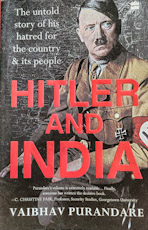
Hitler and India

MANY BOOKSHOPS IN INDIA carry copies of “Mein Kampf” by Adolf Hitler, translated into English. They are not hidden away from view but are displayed openly in bookshelves alongside books with less offensive texts. The books are not old and tatty, but look brand new, suggesting that they are bought frequently and replaced by new stock. Why this book should still be on the shelves in India so many decades after it was first published has always puzzled me. So, when I saw a book “Hitler and India” published by the historian Vaibhav Purandare in 2021, I bought a copy. I was hoping that it might help me understand the prevalence of “Mein Kampf” in Indian bookshops.

Purandare’s book is an easy read and quite interesting. He points out very effectively that Hitler had no love for Indians. Furthermore, he felt that it was right that the British rather the Indians than should rule India. And, in his opinion, he felt that should Germany ever rule India, the Indians would yearn for the return of what he considered to be the too lenient rule of the British. Hitler wrote that: “I would, despite everything, still far rather see India under English than under some other rule …”
Hitler had no desire to support those fighting for the freedom of India because, believe it or not, prior to WW2 he hoped that Britain and Germany might eventually become allies. Purandare also details how Indians in Germany suffered at the hands of the Nazis and their security forces. It was only after Britain and the Soviet Union became enemies of Germany that he entertained the idea of providing limited assistance to those, like Subhas Chandra Bose, who were fighting to free India from the British. Even then, the assistance he authorised was very limited. He did ship Bose out to Japan, but there was little more to his help than that. It must be remembered that he only did this as a way to undermine the British war effort; he did not believe that an independent India was either feasible or desirable. All of the foregoing is well described in the book.

Unfortunately, what the book failed to do is what I hoped when I purchased it. It brings me no closer to understanding why “Mein Kampf” appears in so many Indian bookshops, and evidently sells. What Purandare does make clear is that Hitler’s book contains passages that are insulting to Indians. As for its appeal to Indian bookshop browsers, his book has not brought me any closer to understanding it.

India’s history rediscovered?

RUPA GUPTA AND Gautam Gupta have written a fascinating book with an intriguing title: “Forgotten Civilisations. The Rediscovery of India’s Lost History”. It describes 15 British men, who came to India during the British colonial era, which ended on the 15th of August 1947 and explored the Subcontinent’s early history.

The authors have written short biographies of these interesting men, highlighting the contributions they made to documenting India’s long history. The book seems to be making the case that before the arrival of these men, filled with a great enthusiasm for unearthing the past, India’s history prior to the Mughals had been largely forgotten.

Now, I am not qualified to comment on whether or not Indians had forgotten about their early ancestors, but wonder whether this history had really been lost before the arrival of the men described in the book. In many cases, these men were reliant on help from pandits who could read ancient scripts such as Sanskrit. Understanding these texts was the key to many of the ‘discoveries’ made by the subjects of the book. The existence of these texts suggests that long before the arrival of the British, early Indian history had been preserved, but maybe not as systematically as modern European historians would have preferred.

Despite my reservations about whether India had really lost or forgotten its ancient past, the book by the Guptas is fascinating (even though I have some reservations about its rather repetitive formulaic style).

Suggesting that a country had forgotten its own history might pander to readers who still harbour patronising or colonialist ideas about India. Although I have not yet seen this book on sale in British bookshops, I suspect it would might well appeal to readers, who seem to have forgotten that Britannia no longer rules the waves. I doubt that it was the Gupta’s intention that their interesting text might possibly appeal to readers who still believe that Britain is superior to other nations.

Military disasters

IT IS ALWAYS PLEASING to read about a subject that is new to me. A friend gave me a copy of “Fall of the Double Eagle” by John Schindler. It deals with the conflict between Austria Hungary (‘AH’) and its enemies Russia and Serbia at the beginning of WW1.

BLOG book

Schindler’s book is clearly written and engaging. It reveals a tale of truly lethal incompetence, that of the military leaders of AH during their pointless attacks on Galicia and Serbia. These were confrontations whose aim appeared to be to satisfy the egos of the arrogant leaders of AH’s military.

With the exception of skilful use of radio interception of Russian signals, everything else that the leaders of AH’s military laid their hands on led to the unnecessary deaths and injuries of a horrendously large number of brave and loyal soldiers. These soldiers, drawn from all of the numerous ethnic groups in the AH Empire, were united in their loyalty to their Habsburg rulers and very brave in battle. However, the incompetence of their superiors rendered their bravery pointless and in most cases their actions resembled those of lemmings running towards a lethal ending.

Despite knowledge of recent examples of modern warfare, the Anglo-Boer War, the Russo-Japanese War, the Balkan Wars, the AH high command made little or no attempt to update military equipment and tactics/strategies. Schindler describes this well, and also the unwillingness of the AH government to invest money on bringing the military up to date. Consequently, when the AH armies came into conflict with the Russians and Serbians, courage and bravery were futile in the face of superior artillery and tactics.

What Schindler describes brilliantly in his book is a tragic epic of incompetence. The military leaders of AH should have had, but did not appear to have had, very bad consciences in the light of the number of fatalities caused by their negligence.

Reading Schindler’s fascinating compendium of official arrogance, refusing to learn from experience, and lack of foresight, during the first years of WW1, made me have worrying thoughts about what is going on around us today during the current pandemic.

I recommend Schindler’s book to anyone interested in WW1 and/or the importance of competent planning by governments.

PS: The inclusion of some maps might have been helpful to assist the reader in following the exciting descriptions of some of the campaigns described.

A flight of pigeons

I FOUND MY COPY of “A Flight of Pigeons”, a short novel by Ruskin Bond (born 1934), amongst a collection of books about birds in the gift shop at Sanjay Gandhi National Park just north of Bombay. The book has little or nothing that would be of interest to ornithologists and other nature lovers.

The novel is about some English ladies during the First War of Indian Independence (‘Indian Mutiny’; 1857-58). They are some of the only survivors of an attack by Pathan forces on the town of Shahjahanpur.

The ladies are first given refuge by a Kayasth family, and then by various Pathan families. Having some Indian ancestry and a knowledge of Urdu, these English refugees were more or less successfully accepted into the Muslim Pathan families.

The young daughter, Ruth, becomes the object of the amorous intentions of one of the Pathans, who wants to marry her. Ruth’s mother has to try to prevent this from happening. I will not reveal what happens because I do not want to spoil the enjoyment of the reader of this simply told, compelling short book.

This is the first book I have read by Ruskin Bond. If it is typical of his writing, then I want to read more. Like the Albanian novelist Ismail Kadare, Bond skilfully manages to pack much into his book with great economy of words.

AN INDIAN HERO: Savarkar

WHILE I WAS WRITING my book about Indian freedom fighters in Edwardian London, “Ideas, Bombs, and Bullets”, I was aware that Vikram Sampath was preparing to publish a book about one of those freedom fighters, Vinayak Damodar Savarkar (1883-1966). Until I attended the Bangalore Litfest in November 2019, I had no idea that Vaibhav Purandare had also recently published a biography of Savarkar. I have just finished reading this interesting survey of the life of Savarkar, a controversial figure in the history of twentieth century India. What made Savarkar controversial is well elucidated in the very readable book by Purandare.

Savarkar, a father, or maybe THE father, of Hindu Nationalism and the author of an influential book on the concept of ‘Hindutva’, led a vividly colourful life, much of it behind prison bars.

Purandare describes Savarkar’s life as a law student and ‘revolutionary’ in London between 1906 and 1910 in some detail. I must take issue on one fact, namely that the house in London where he carried out much anti-British activity was number 65, not 63, Cromwell Avenue. This is only a minor criticism of an otherwise good book. Whether or not Savarkar was involved in various bombings and assassinations in India and the murder of Sir Curzon Wyllie in London was never proved, yet suspicions that he was led to his arrest in London and subsequent imprisonment in the horrendous Cellular Jail in the Andaman Islands.

Mr Purandare details Savarkar’s years of incarceration interestingly at some length. That a barrister trained in London could endure the torments that Savarkar underwent is a measure of his impressive character. The author deals with the prisoner’s appeals for clemency fairly. Many of Savarkar’s critics still accuse him of cowardice, but Purandare makes it clear, over and over again, that many other well known and obscure political prisoners made attempts to gain early release from the living hell that was the Cellular Jail.

After being released from the Cellular Jail, Savarkar, by now an Indian national hero, was confined to the district of Ratnagiri on condition that he did not carry out any political activity. To some extent, he conformed to this condition, but not as much as the British would have preferred.

By the time his period of confinement to Ratnagiri was over, much had changed in India and Europe. The Muslims, who were gradually adopting Jinnah as their leader, were demanding ever more political representation and then political autonomy within or separate from the rest of India. The Indian National Congress was far from free of internal conflict. Other forces including the Hindu Mahasabha, which Savarkar led for some years, all had their own ideas on how India’s future should be. Purandare skilfully guides his readers through this tangled time.

As India approached independence and Savarkar aged and became increasingly unhealthy, his influence on India’s political struggles decreased.

Savarkar was associated with exciting developments both during his student days in both India and then London and also in his old age. Following the assassination of Gandhi in 1948, Savarkar, who was very unhappy with the Partition of India in 1947, was arrested, being charged with conspiracy to kill the Mahatma. Purandare deals fairly and quite objectively with the controversy about Savarkar’s possible involvement in a plot to assassinate Gandhi. In connection with this, he mentions Vallabhai Patel, who suggested that although Savarkar might have been morally culpable, he was not necessarily criminally culpable.

Purandare presents Savarkar as an honourable and brave man but does not hesitate to point out his failings and weaknesses. His biography is a worthwhile and compelling introduction to the life of one of India’s most intriguing freedom fighters.

Now I am looking forward to reading how Vikram Sampath deals with the life of Savarkar in the first volume of his large biography, which deals with Savarkar’s life only up to 1924.