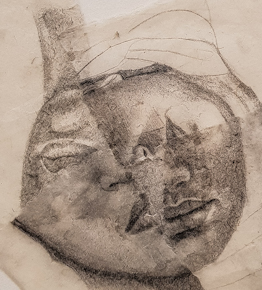
Is it ego that
Plac-es art apart from
Other human pursuits?

Is it ego that
Plac-es art apart from
Other human pursuits?

The Kochi Muziris Art Bienniale is back again. We have attended two of the three previous biennales, those in 2014 and 2016.
The biennales run from mid December to the end of the following March. A joy of this biannual exhibition is that artworks are displayed in many heritage buildings that are not normally accessible to the public. Visitors get a chance to view many fascinating buildings that form part of the history of the port of Cochin.
Today, we visited the main base of the Biennale, which is housed in the buildings of the former Aspinwall company compound.
Works by many artists are on display in the various spaces within the extensive compound. This year most of the works on display are either video installations and/or conceptual art. There are a few works that are otherwise. I was disappointed by this year’s showing as compared with what I saw in previous years’ biennales. The selection of artworks seems unexciting, tired.
However, one work in this year’s show at Aspinwall stands out way ahead of the rest. It is “More Sweetly Play the Dance” made in 2015 by the South African artist William Kentridge.
Moving images are projected onto eight large screens. These images are both drawn (as in cartoons) and photographic. A procession of figures, both drawn and photographed, move from one screen to the next, travelling through a drawn landscape that changes continuously in subtle ways. The motion projected on the screen is accompanied by a brilliant musical soundtrack that is inspired by African music. The result is a spectacular audio visual experience that is both joyous and slightly sinister. I felt that the ‘white’ Kentridge was portraying the experiences of South African Black people, both their joys and their tragedies. His work, on display in a large warehouse with a tiled ceiling at Aspinwall, is truly artistic at all levels of appeal, from the sensual and emotional to the intellectual. It is a positive contrast to much of the other art on display at Aspinwall, which requires explanation before it might possibly be enjoyed.
I look forward to visiting many of the other places connected with the Bienniale. I hope that I will be seeing art that grabs me emotionally as well as intellectually.
PS Since writing this, I have visited many other parts of the Biennale. Some of these, especially the places housing the works of current art students (The Students Biennale) and the artworks in the TKM Warehouse, are outstandingly good. If you are in Cochin for a limited time, skip Aspinwall and head for Mattancherry where the most exciting works are on display.

Bangalore in south India is not blessed with many tourist attractions. I will describe one of them, which gives me great pleasure.
Almost 10 years ago, a branch of the National Gallery of Modern Art (NGMA) opened in Bangalore. Even if you have little interest in modern art this place is worth seeing. Part of the collection, which changes regularly, is housed in the former Manikyavelu Palace, a 19th century edifice which has been superbly restored.
The palace is linked to an elegantly simple contemporary building in which some of the permanent collection is displayed. The collection includes works mainly by Indian artists but there are also a few by European artists. Most of the artworks were created in the 20th and 21st centuries. There is a good selection of paintings by Bengali artists.
The new building also houses well curated temporary exhibitions. Currently, there is a wonderful exhibition of paintings and drawings by the artist Khanderao, who was born in Gulbarga. His early works were beautifully executed topographical scenes. He is also a superp portraitist. Like other great modern artists, for example Picasso, Khanderao has moved into abstraction, which he deals with beautifully.
A water feature separates the palace and its modern extension from another contemporary complex. This includes an auditorium, a library, a café, and a gallery shop.
The verdant gardens of the NGMA contain several modern sculptures.
The NGMA is, in my opinion, one of the loveliest attractions that Bangalore offers visitors and residents alike.

This wonderfully coloured fish was swimming about in a fish tank in the lobby of a hotel in Gulbarga on Karnataka (India). It illustrates the immense variety of the natural colourings of animal life, which rivals the many attempts of artists to produce original creations
A creature of God’s making
Colourful:
Nature’s original art

Abstract in concept
A sculpture in metal
Created by Caro
Until 24th February 2019, there is an excellent exhibition of the works of the Pre-Raphaelite artist Edward Burne-Jones (1833-98) at London’s Tate Britain.
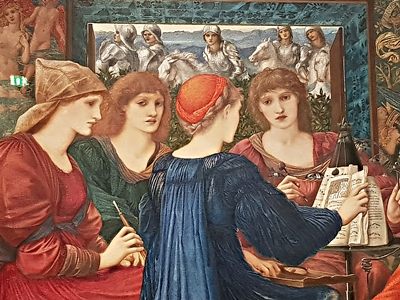
For Victorian art
looking back to the past
Burne-Jones does excel
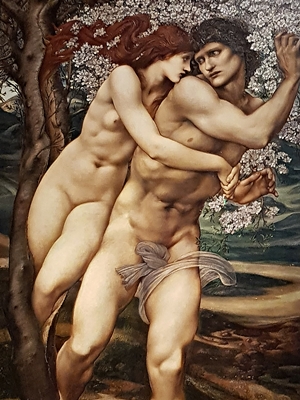
What makes for a great work of art? Well, people differ on the answer to this question. Seeing one special painting in the Galleria Regionale della Sicilia in Palermo (Sicily) helped me formulate my answer.
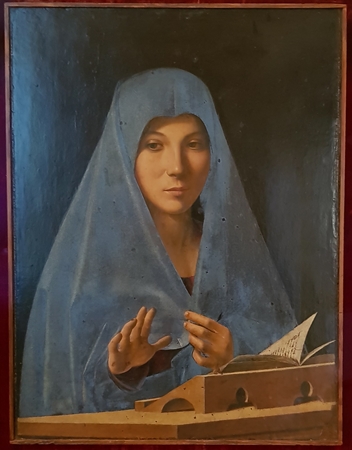
The painting that literally caught my eye and grabbed my full attention is “The Virgin Annunciate”. It was painted sometime between 1474 and ’77 by the Sicilian artist Antonello da Messina (c. 1430-79). It depicts a woman in a blue veil seated at a small wooden desk on which there is an open book. The fingers of her right hand spread forwards towards the viewer. Her left hand holds her veil closed. She appears to be gazing towards her right. Simple, really, if described like this, but it is not.
The painting grabbed my attention long before my brain had time to analyse what was reaching my eyes’ retinas. It was an intense visceral attraction to the image that made me stop and look at it carefully, an attraction that few other works of art have had for me.
When I had recovered from the initial pleasurable shock of seeing such beauty, I began to notice its subject matter, and with the help of an explanatory note next to the painting, I learnt some of the artist’s deeper intentions.
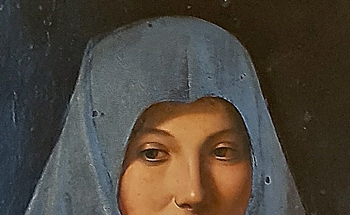
For example, there is a sharp crease in the cloth of the veil just above the mid-point of the lady’s forehead. This tells the informed viewer that the Virgin is wearing a special treasured, rarely worn, veil that is usually kept neatly folded in a closet or wardrobe. No doubt, art historians would be able to point out many other meaningful details that the artist has depicted. Despite these aspects of symbolic meaning, despite its subject matter and context, this picture is primarily an object of enormous beauty and graciousness that appeals greatly to something in the deep recesses of my subconscious.
For me, a work of art must first seize the seat, the very source of my emotions in a positive way. If it can do that, then whether or not the artist has imbued it with layers of meaning, the work is in my view a great one. Lest you think that it is only the works of long dead masters that fall into my definition of ‘great art’, let me refer to someone who created more recently, Constantin Brâncuși (1856-1957). Some of his sculptures depict birds or humans as simple, almost abstract, forms, almost devoid of detail. These works evoke the same deep sensations of visceral attraction as the painting by Da Messina, yet they could hardly be more different in all respects from that.
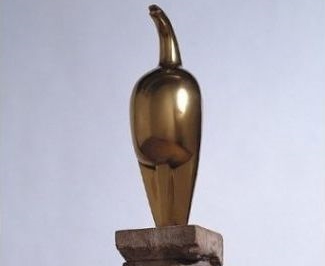
A work by Brancusi [Source: bookdepository.com]
I am unable to formulate why the Da Messina and Brancusi works chime (and even some extremely abstract works such as those by Modriaan or Sean Scully) with my deepest emotional chords, when others, undoubtedly masterful in many ways like the works of Caravaggio and Barbara Hepworth, do not. I suppose this is what folk call ‘taste’. And, tastes differ greatly.

Sean Scully
For me, a great work of art must first appeal to me emotionally, viscerally if you like, rather than intellectually. If I can only begin to appreciate a work of art after it has been explained, as is the case with much so-called ‘conceptual art’, then, for me, it is not ‘great art’.
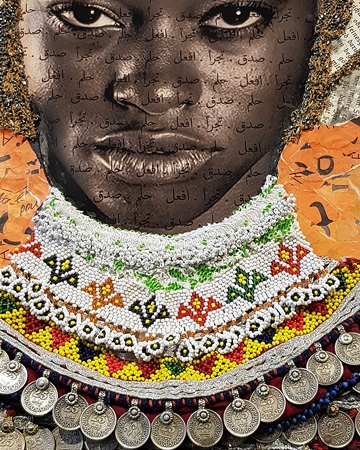
“The Contemporary African Art Fair (1 – 54)” is held annually at London’s Somerset House. This year it was a very exciting show full of vibrant, creative artworks mainly, but not exclusively, created by Africans with little or no European ancestry.
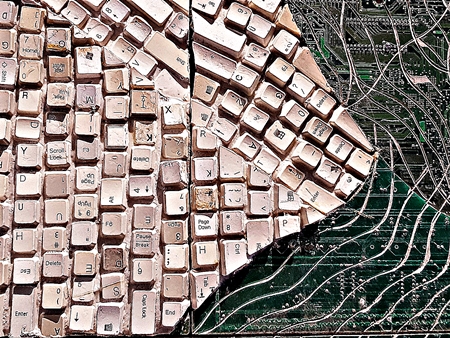
Many of the works use recycled waste materials such as bits of paper, engine parts, spent bullets and retired armaments, electronic components, and so on. Almost every art work is a fine aesthetic object when seen as a whole. Looking into any of these works in detail is like beginning to explore Africa, its troubled past and challenging present.

Africa is beginning to emerge from its colonial past. Africans are taking control of their destinies. Yet, at this exhibition, which is where a series of galleries display thier wares, mot of the dealers, who earn considerable commissions are ‘White’ Europeans. Maybe colonialism is not quite dead yet!
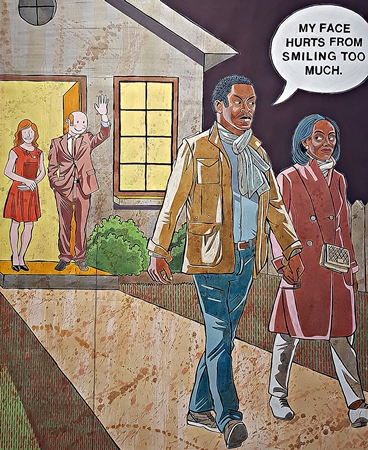
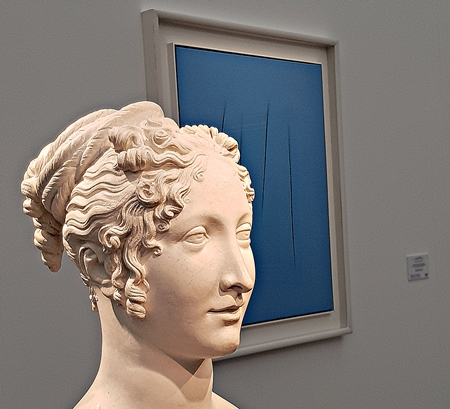
Is it fair to juxtapose works of modern or contemporary art with great masterpieces, which have stood the test of time?
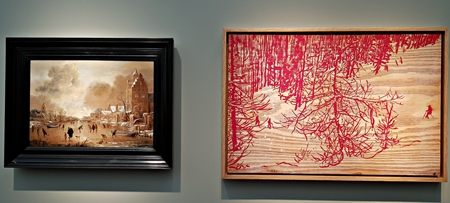
We were fortunate to have been given (by our daughter) complimentary tickets to the 2018 Frieze Masters exhibition held in Regents Park. It is part of a larger art fair, Frieze, held in London annually.
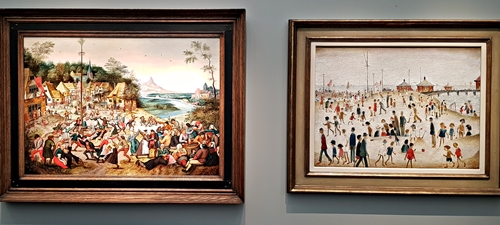
The Frieze Masters show contains stalls set up by art dealers, displaying only works made no later than the year 2000 AD. I must admit that I was expecting to see works of art only made during the 19th and 20th centuries. To my great delight, the artworks on display were made anytime between ancient times (several centuries BC) and 2000 AD.

Although the more recently made (i.e. 20th century) artworks are of the highest quality, they are often on display close to artworks made many centuries earlier. Some of the gallery stalls contain a mix of modern art and much older works. Placing some 20th century works (e.g. Calder) near to older classical works (e.g. Brueghel and Cranach) is not fair to the newer works.

The older artworks, which have stood the test of time and satisfied the tastes of many generations of viewers, make the nearby contemporary works seem weak in comparison. This is not always the case. Some small sculptures by Barbara Hepworth seemed very comfortable next to their far more venerable neighbours. Also, to my surprise some ancient classical carvings stood harmoniously close to some abstract art works made in the second half of the 20th century.
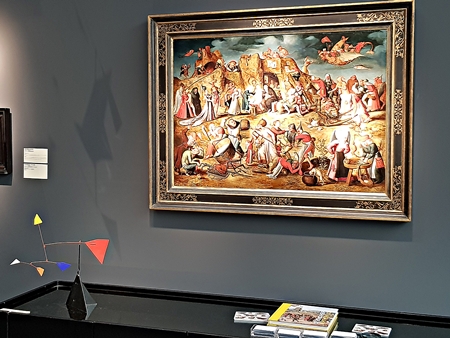
The older works of art on display have been treasured for many centuries. Probably, what we see today is the best of what was produced long ago. Even at the time when they were made, their excellence must have been obvious when seen beside other works, now lost and long-forgotten, which were created at the same time.
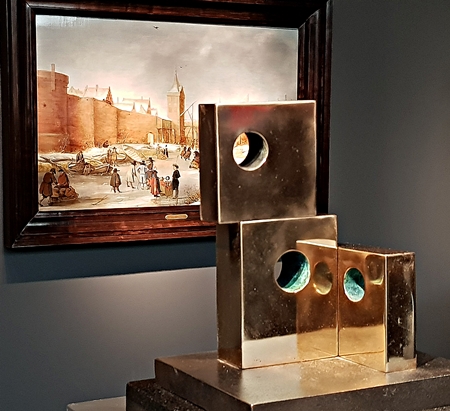
I question how many of the more recent (19th and, especially, 20th century) works of art, which I saw at Frieze Masters, will still attract both interest and high prices in, say, fifty or a hundred years’ time. And, I also ask myself how many of the newer works will be able to evoke the feelings of aesthetic wonder that, say, a Brueghel or a Cycladic sculpture have been able to do for so many centuries.

Inspired by a wax sculpture, “Dasha”, by Urs Fischer

Like a candle, an idea
burns through her brain
burrowing still deeper

 yamey
yamey 