Your comments about this introduction to a new book about India would be very welcome

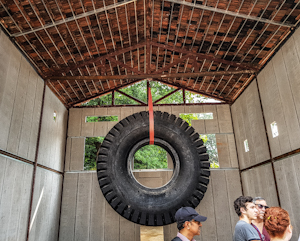
I am at present writing a book about my recent travels in India. I would be most grateful if you would read through this draft of my opening paragraph, and send me your observations about it. Would you want to read further? The paragraph is beneath this photograph taken in Jaipur.

Early one morning in February 2025, our British Airways Boeing 777 jet began moving away from the oddly designed, apparently ‘eco-friendly’, Terminal Two at Bangalore’s International Airport. As the aeroplane taxied smoothly towards the runway, I watched the parched airport terrain and its assortment of buildings, some painted with red and white checkerboard patterns, slipping past. Then with a certain suddenness heralded by an increase in the noise of our jet engines, we accelerated along the runway. Soon, we became detached from the soil of India. As the aircraft rose higher and higher, random memories flashed through my mind. These included eating laal maas on a rooftop in Jaisalmer; a distraught restaurant owner in Jodhpur; a Dutch cemetery on the Coromandel Coast; hawkers wandering up and down a railway carriage in West Bengal; riding through Bangalore in a Jesus autorickshaw; blessing a newly married couple in Pondicherry; tasting homemade nolen gur in Murshidabad; attending an aarti on the Ganges; eating ravioli in Auroville; the ghost of Tipu Sultan; and much more. After flying over the west coast of India, all these experiences and a whole host of others that we had enjoyed during our 88 day stay in India (between November 2024 and February 2025) became, like the Indian coastline over which we flew, distant memories which I hope will remain etched permanently in my mind. In the pages of this book, I will revive these and a whole host of other reminiscences and explore them in detail. I want my readers to enjoy and understand what we experienced during our almost three month long stay in India.

A book about the Gujaratis by Salil Tripathi

WITH ABOUT SIX hundred and forty pages of text, this book published in 2024 covers a lot of ground. Much of what Tripathi writes about Gujarat and the Gujaratis is fascinating. However, the author’s definition of who is a Gujarati may differ from that of many others. His definition of a Gujarati is anyone whose mother tongue is Gujarati. Thus, he includes groups such as the Parsis, the Bohras, and the Khojas. None of those groups, all of whom have Gujarati as their mother tongue, would usually describe themselves as Gujaratis, even if they reside in Gujarat. Although Kachchhis generally speak Kachchhi amongst themselves, most speak Gujarati as well, but most of them would disagree with Tripathi’s calling them ‘Gujaratis’. By using his definition of a Gujarati, the author was able to include many people, who would not have described themselves as Gujarati, in his book.


The book is a mine of information about people that the author describes as being Gujaratis. Much of this information is fascinating, but there were occasional passages that I  felt should have been shortened or omitted. Although Tripathi deals a lot with some of the sadder aspects of life in Gujarat, he also injects humour into his text. However,  he notes that Gujaratis are proud of Mahatma Gandhi, a Gujarati, but in recent years, they seem to be forgetting what he stood for.


I am glad that I read this book, but would advise those planning to read it that it is more of an encyclopaedia than a portrait of the Gujaratis. Tripathi covers a great deal, but I felt that at the end of it, my understanding of the soul of Gujarat and its people had only increased by a small amount.

It is always gratifying if any of my books are reviewed

IN EARLY OCTOBER 2022. I published a book about London’s Golders Green and its neighbour Hampstead Garden Suburb. It was the part of northwest London where I spent my childhood and early adult life.  I wrote about areas’ past and present, and my memories of living there. The book sells reasonably well by my modest standards, but was not reviewed until early September 2023. Then someone in Germany awarded the book 5 stars (out of 5 stars), and reviewed it on Amazon as follows:

“A very informative and often funny book! I immensely enjoyed reading it.”

Brief as it is, this reviewer encapsulated what I was aiming to do when writing my book. That was, to write something that was both elucidating and amusing.

I am always happy when someone takes the trouble to review one of my books. Naturally, I would prefer a favourable review, but a critical one is also welcome. That a reader bothers to post a review shows that he or she has read the book and reflected on its contents. I find that very gratifying.

The book about which I have been writing is called “GOLDERS GREEN & HAMPSTEAD GARDEN SUBURB: VISIONS OF ARCADIA” and is available as both a paperback and a Kindle from Amazon websites, such as:

Renaissance

COVER SMALL


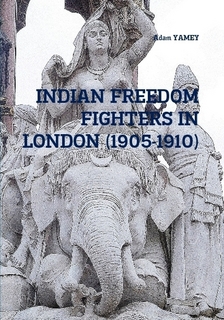
Last year, I published a book about an almost forgotten but important aspect of Indian history that began to interest me after visiting an almost completely unknown memorial in western India (Kutch, to be more precise). 

Since then, I have shown the book to various knowledgeable readers and also revisited the memorial. 

Those who have read the book have made valuable suggestions on how to improve it, including changing the title so that its subject matter is far more obvious to a potential reader, adding a preface and a time-line, and re-ordering the subject matter.

When I re-visited the memorial in Kutch, I met people, who showed me things I had not seen or even been aware of on my first visit. They also gave me new information. In addition, I have done further reading of source material, some of which I had not known about earlier. In addition, I have obtained photographic images that I did not possess before.

I felt that since I published my original text, a new expanded and, I hope, much improved version was necessary. My ideas needed a renaissance, so to speak.

I am now awaiting a proof of my new book, and will keep you informed of developments.


Critics: can we trust them?

Many of us have great faith in reviews of artistic events such as film, theatre, and other performances.  Can one trust professional critics and reviewers? Do their tastes match yours? If they do not and you follow their reccommendation, you must be prepared for an anti-climax.


Auditorium_500


A rave five star review

Great expectation

Sometimes disappointment

It pays to be honest

Mug shot_640


A long time ago, a friend asked me to read a short story that he had written. He was hoping to submit it as an entry to a short story competition. I agreed to read it for him.

Fortunately, it was short enough for me to read it fairly quickly. Unfortunately, I did not feel that its quality was up to much.

When I saw my friend a few days later, he was eager to know what I had thought of his story. I was not sure what to say. I wondered whether I should be polite, and say that I quite liked it, and would wish him luck. Or, should I risk hurting his feelings by being frank about my opinion of his work? I made up my mind to do the latter. Trying to be as tactful as possible, I told him that I thought his story was not bad, but that there was not much chance of his story winning the competition.

My friend was surprisingly pleased by my opinion. He said:

Thank you, Adam. Thank you very much. You are the first of my friends to say what you really think about my story. All of the others have tried to be polite and say they like it.”

I was relieved by his reaction to my honest but adverse comment. It paid to have been honest. It usually does!

So near, but so far

WRITING


I have been working on the manuscript of my latest book, about whose subject I will write sooner or later.

I have reached a stage at which I keep reading through the whole text, trying to put myself in the place of a potential reader, and from that position I make modifications, which I hope will improve the quality of the book. Each time I look at it, I make more changes, many corrections, some additions, and many more deletions to eliminate my natural tendency towards verbosity. So, my book is nearing completion, but has far to go before publishing it.

Soon, I will be ready to show my manuscript to some kind volunteers to get their candid (I hope) opinions, comments, and criticisms on what I have produced so far.  If I do not do this, I will become self-satisfied and the book might begin to suffer. Also, I need to know whether what I have written is, in priciple, likely to be worth reading! Then, it will be back to the ‘drawing board’ to modify my work in the light of what my test readers tell me.

Finally, I will need to proof-read my book, format it properly, and add a few illustrations before publishing my ‘oeuvre’. From conceiving an idea to finishing a book based on it is a long process, frustrating at times but largely enjoyable.

Tired

The Kochi Muziris Art Bienniale is back again. We have attended two of the three previous biennales, those in 2014 and 2016.

The biennales run from mid December to the end of the following March. A joy of this biannual exhibition is that artworks are displayed in many heritage buildings that are not normally accessible to the public. Visitors get a chance to view many fascinating buildings that form part of the history of the port of Cochin.

Today, we visited the main base of the Biennale, which is housed in the buildings of the former Aspinwall company compound.

Works by many artists are on display in the various spaces within the extensive compound. This year most of the works on display are either video installations and/or conceptual art. There are a few works that are otherwise. I was disappointed by this year’s showing as compared with what I saw in previous years’ biennales. The selection of artworks seems unexciting, tired.

However, one work in this year’s show at Aspinwall stands out way ahead of the rest. It is “More Sweetly Play the Dance” made in 2015 by the South African artist William Kentridge.

Moving images are projected onto eight large screens. These images are both drawn (as in cartoons) and photographic. A procession of figures, both drawn and photographed, move from one screen to the next, travelling through a drawn landscape that changes continuously in subtle ways. The motion projected on the screen is accompanied by a brilliant musical soundtrack that is inspired by African music. The result is a spectacular audio visual experience that is both joyous and slightly sinister. I felt that the ‘white’ Kentridge was portraying the experiences of South African Black people, both their joys and their tragedies. His work, on display in a large warehouse with a tiled ceiling at Aspinwall, is truly artistic at all levels of appeal, from the sensual and emotional to the intellectual. It is a positive contrast to much of the other art on display at Aspinwall, which requires explanation before it might possibly be enjoyed.

I look forward to visiting many of the other places connected with the Bienniale. I hope that I will be seeing art that grabs me emotionally as well as intellectually.

PS Since writing this, I have visited many other parts of the Biennale. Some of these, especially the places housing the works of current art students (The Students Biennale) and the artworks in the TKM Warehouse, are outstandingly good. If you are in Cochin for a limited time, skip Aspinwall and head for Mattancherry where the most exciting works are on display.