Republic Day

AFTER OUR HONEYMOON in the south of India, we returned to Bangalore, where we disembarked from an overnight bus from Ernakulam (in Kerala) at about 4 am on the 26th of January 1994. Several hours later and incredibly bleary-eyed, we joined many other residents at a gathering in a courtyard of the apartment block in the city’s southern suburb of Koramangala. Mr Zafar Futehally (1920-2013), a noted naturalist and one of the senior tenants, stood by a flagpole and made a brief speech. Then, the flag of India was raised, and everyone dispersed.  It was Republic Day, the significance of which was unknown to me back in 1994, when I made my first visit to India.
Ambedkar in Bangalore

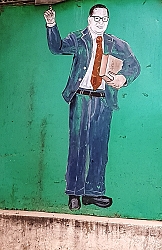
Now, I know that on the 26th of January 1950, two and a half years after India became independent, the Constitution of India came into effect and India became a republic, having briefly been a Dominion since the 15th of August 1947. The Constitution was drafted by a committee that was led by Dr Bhimrao Ramji Ambedkar (1891-1956). After leaving school, he was educated at the University of Bombay, then at Columbia University in NYC, and then at the London School of Economics (‘LSE’). While in London, he qualified as a barrister as a member of Gray’s Inn.

Long after 1994, I learned that Ambedkar had lived in a part of London with which I am familiar. He resided in a house near Primrose Hill and Chalk Farm, where the Roundhouse is located. In my recently published book “Beneath a Wide Sky: Hampstead and its Environs”, I wrote:

“Another reformer and patriot lived near Regents Park Road. He was Dr Bhimrao Ramji Ambedkar (1891-1956), who championed India’s Dalits (‘untouchables’) and formulated the Constitution of India. Between 1920 and 1922 while he was studying at the London School of Economics and for the Bar, Ambedkar lived in a house at 10 King Henrys Road near Regents Park Road. In 2015, the house was bought by the Government of Maharashtra and was then converted into a memorial to Ambedkar. It is open to the public. Visitors can learn about Ambedkar from the well-captioned photographs on the walls of the rooms that they can wander through. The upper floor contains a re-construction of Ambedkar’s bedroom including a four-poster bed, some of the great man’s books, and an old pair of spectacles, which might have belonged to him. Other rooms contain shelves of books and various memorials to Ambedkar. There is also a commemorative plaque to India’s present Prime Minister Narendra Modi, who inaugurated the memorial house in November 2015. The garden contains statue of Ambedkar clutching a book (the Constitution) in his left hand. A few years ago, neighbours of the Ambedkar house complained about it, concerned that it would attract swarms of tourists.”

Although he could never have met him, Ambedkar’s home in King Henry’s Road was not far from the house in which Friedrich Engels (1820-1895) lived for several years.

The statue portraying Ambedkar statue in the garden of his former London home is typical of those found all over India. Apart from helping to give birth to India’s Constitution, Ambedkar campaigned for the rights of the Dalits (the ‘Untouchables’), as mentioned in the quote above. The Dalits were excluded from the four caste Varna system of Hinduism and considered by many Hindus as the lowest of the low, fit only for menial tasks that members of other castes would not deign to consider doing. Ambedkar, born into a Dalit caste, campaigned actively for the ending of social discrimination against this class of people. Mochis (cobblers/shoe repairers), who handle leather, are often Dalits. The best place to find a mochi is on the pavement beside a road. Sometimes, they sit on the ground surrounded by their tools and footwear awaiting repair. In other cases, they work from little stalls that can be locked up when they are not at work. These stalls often bear images of Ambedkar in honour of the man who did much to help the Dalits. What with the huge numbers of statues of him and of portraits on the stalls of mochis, Ambedkar must rival Gandhi as being one of the most frequently portrayed politicians of modern India.  

So, every Republic Day, it is appropriate to celebrate the birth of the republic and the adoption of the Constitution, but we should not forget to raise our hats and flags to Ambedkar, the brilliant man who did far more than father the Constitution.
Letting off gas

THIS IS AN UNSAVOURY subject. So, you have been warned.

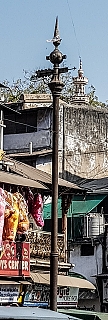
On our first visit to Baroda (Vadodara) in the western Indian state of Gujarat a few years ago, I noticed several tall cast-iron structures resembling lamp posts, except that they were topped with curious objects. Each of these tall streetside poles is topped with spheres, each with four cylindrical projections. Beneath each sphere, there is an arrow. I was puzzled by these objects. So, I posted pictures on Facebook and asked if any of my friends knew what purpose these things serve or used to serve. I received several ingenious suggestions, none of which turned out to be correct.

Baroda (Vadodara)

Having seen these items in Baroda (and also in Bombay and Ahmedabad), I began noticing similar structures in London. None of the examples in London are topped with the sphere and arrow, but in other respects they are not particularly different from those I saw in India. Eventually, I learned that they are all examples of ‘stink pipes’. There are many fine specimens, disused I believe, dotted around London. Recently, I was reminded of those I saw in India when I saw a couple near Chiswick Mall in west London.

It was not until after about 1858 that sewage began being channelled through enclosed sewers in London, an improvement instigated by London Metropolitan Board of Work’s Chief Engineer Joseph Bazalgette (1819-1891). Sewage is waste matter, which tends to decompose. The products of decomposition include noxious gases such as for example hydrogen sulphide, carbon monoxide, ammonia, and methane. Some of them are highly inflammable and all of them increase in pressure as the sewage flows through the sewers. The stink pipes serve(d) as vents through which the gasses building up could escape from the sewers. They tend to be tall so that the gases blow off high above ground level where there are more likely to be breezes that can disperse the gases. Without adequate venting, the gaseous vapours can become dangerously explosive. Returning to Baroda, where the stink pipes are topped with spheres. The gases escape through the conical projections and, I have learned, the arrows indicate the direction of the sewer running beneath them and which way the sewage is flowing.

The admiral and the antiques shop

THE BATTLE OF Portobello was fought between the British Navy and the Spanish in November 1739. It was an event during the War of the Austrian Succession. The battle’s aim was to capture the port of Portobello in Panama from the Spanish. The British were victorious.

I have been walking along Portobello Road frequently for over a quarter a century. Each time, I have passed a series of neighbouring shops collectively known as Admiral Vernon Antique Market. I thought it was an odd name until today when I noticed that it is close to an alley called Vernon Yard. Then, the penny dropped, and I began thinking about the choice of the shop’s name – an admiral on Portobello Road.

Admiral Edward Vernon (1684-1757) was born in London. He joined the Royal Navy in 1700, aged 12, and rose through the ranks. One of his many achievements was the creation of the name ‘grog’ for the commonly consumed drink consisting of rum diluted with water. Also, he made improvements to the methods of naval manoeuvres and the welfare of sailors. Another of his claims to fame was that along with Lieutenant-General Thomas Wentworth (c1693–1747) he led the British forces that captured Portobello.

Knowing this makes sense of the name of the antique shop and the name Vernon Yard. The shop and the dreary little alley are not the most magnificent of memorials to Edward Vernon. There is a more elegant one in Westminster Abbey. The most impressive item commemorating the admiral is the estate of Mount Vernon in Virginia (USA), which was once owned by George Washington’s family. It was named after Edward Vernon because one of Washington’s brothers, Lawrence (died 1752), had been under Vernon’s command during the capture of Portobello.

A NEW book about Hampstead in north London

AVAILABLE FROM AMAZON WEBSITES:

e.g.: https://www.amazon.co.uk/dp/B09R2WRK92

Hampstead is one of the highest places in London. There, the heavens are vast
and wide. Beneath this expanse of sky is an area with an eventful past and a
vibrant present. This book takes a fresh look at the locality and shows that
Hampstead is richly imbued with historical memories and has been home to a
multitude of fascinating and noteworthy people. Many books have been written
about Hampstead. Doubtless, there will be more. This one is different. It looks
at Hampstead from unusual as well as familiar viewpoints and gives the reader
a richer appreciation of what makes the place both delightful and intriguing.
This volume explores a wide variety of subjects, familiar and obscure, as well as
some which have never been described in other books about the locality. Here
is a fresh and at times quirky look at this place on a hill, one of London’s
treasures: a district, which is familiar to many people, yet full of surprises.
Although the bulk of this book is about Hampstead, there are also sections
describing some of its environs.

By reading this book, you can find out why John Constable, Samuel Johnson, Boy George, Mohammed Ali Jinnah, Mahatma Gandhi, Peter Sellers, Henry Moore, Maxim Litvinov, General de Gaulle, Stanley Spencer, Thomas Masaryk, Lee Miller, Agatha Christie, Jim Henson, Ian Flemming, Ernő Goldfinger, and many others, both famous and familiar, were all connected with Hampstead.

The book has several sections:
1. a brief survey of Hampstead’s general history and geography.
2. an introduction to Hampstead’s main thoroughfares with some
reminiscences of the area as it was during my youth.
3. the largest section of the book is a collection of chapters about
various aspects of Hampstead’s past and present. Recently, a friend of mine
bemoaned the fact that Hampstead High Street and Heath Street are lined with
branches of shops and cafés that can be found all over London. He is right. So,
if you wish to capture the true character of Hampstead, you need to stray into
the side streets and explore, which is what I hope this book will stimulate you to
do.
4. The last few sections of the book deal with some places of interest near to
Hampstead: Primrose Hill, North End, Go
lders Green, and Highgate.

TABLE OF CONTENTS

PREFACE … 7
INTRODUCTION: OH NO, NOT IN HAMPSTEAD … 7
SOME GEOGRAPHY AND HISTORY … 13
HEATH AND HIGH STREETS WITH SOME MEMORIES … 25
SATURDAY STROLLS … 25
PERRINS LANE, THE EVERYMAN, AND LOUIS … 34
DISCOVERING HAMPSTEAD … 41
A HOUSE ON HEATH STREET AND THE KIT CAT CLUB … 41
A CHURCH ON HEATH STREET … 45
FLASK WALK AND THE HAMPSTEAD SPA … 46
MORE ABOUT THE SPA … 56
THE VALE OF HEALTH … 60
POETS AND THE VALE OF HEALTH … 70
FRENCH CONNECTIONS AND ST MARYS ON HOLLY WALK … 76
ARTISTS IN HAMPSTEAD: ROMNEY, CONSTABLE, AND OTHERS 84
MODERN ARTISTS AND THE ISOKON … 95
BOLSHEVISM AND HEATH STREET … 109
A SINGER AND A PHILOSOPHER ON BRANCH HILL … 114
JUDGES WALK … 118
WHITESTONE POND … 122
EAST HEATH ROAD AND SOUTH END GREEN … 126
SIR HARRY AND ROSSLYN HILL … 137
PILGRIMS LANE AND MORE ON ROSSLYN HILL … 143
NEW END, CHOLERA, AND GROVE PLACE … 150
FITZJOHNS AVENUE AND SWISS COTTAGE … 155
SHEPHERDS WELL … 171
CHURCH ROW … 174
GRACIE FIELDS, FROGNAL WAY, AND FROGNAL … 179
WEST HEATH ROAD AND PLATTS LANE … 187
WEST HAMPSTEAD … 193
SHOOT UP HILL … 198
PRIMROSE HILL … 201
NORTH END AND GOLDERS GREEN … 211
NORTH END AND GOLDERS HILL PARK … 211
POETS AND GOLDERS GREEN … 228
LIFE AND DEATH ON HOOP LANE … 232
HIGHGATE … 241
CODA … 273
SOME BOOKS CONSULTED … 275
ACKNOWLEDGEMENTS … 278
INDEX … 279

Coiffure at the Club

I HAVE NEVER LEFT a barber’s shop without leaving a tip. This is a habit that was instilled in me by my mother during my childhood. Whether the cut was good or bad, I have always left my hairdresser with a gratuity.

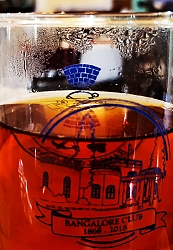
In January 1994, I first visited the Bangalore Club in southern India. A few days before my wedding to a member, my in-laws decided that my hair needed a trim. Back in those days, the Club barber shop was located in a hut behind the Men’s Bar, which until a few years ago did not allow the entry of women and girls. Now renamed, this former bastion of maleness permits all drinkers regardless of their genders.

My haircut was at the very least satisfactory and cost all of 20 Indian Rupees, which was debited to my wife’s club account. In those days one pound Sterling was, if I recall correctly, about 40 Rupees. So, my haircut was remarkably good value compared with what I would have paid for it in London.

At the end of my session with the barber, I fumbled in my pocket to find some money for the tip. All I  could find was a 50 Rupees note, which I handed to the man who had looked after my coiffure.

When I related my experience to my wife-to-be, she was horrified that I had tipped more than twice the fee. I suspect that the barber was delighted.

Buried no longer

THE ITALIAN WRITER and patriot, Ugo Foscolo (1778-1827) was born on Zakynthos when it was part of the Venetian Republic. He became a political activist in what is now Italy and came to London in 1816. In London, he was regarded as a literary celebrity, but this did not always keep him out of trouble. For example, in about 1813 he faced Mr Graham, the editor of the “Literary Museum” in a duel at Primrose Hill. The dispute that led to this was about his ‘Three Graces’.  These three ladies were sisters working in Foscolo’s home near Regents Park. Two of them turned out to be prostitutes, and one of them ran off with his former translator. This led to a duel, whether in Regent’s Park or Primrose Hill is not clear; fortunately, no blood was shed.

Foscolo’s monument in Chiswick

Foscolo lived another few years until 1817, when he died in Turnham Green in west London. He was buried in the lovely churchyard next to the Chiswick church of St Nicholas, where the artist William Hogarth was also interred. The cemetery contains Foscolo’s elegant, well-maintained grave, which is surrounded by a cast-iron railing.

However, Foscolo’s remains are no longer in the old cemetery at Chiswick.

In June 1871, ten years after the Unification of Italy, Foscolo’s remains were dug up and transported to Florence (Firenze). There, they were reburied but within the church of Santa Croce. This is all recorded by words carved on the monument in the Old Chiswick Cemetery.

Great exhibition at Kew Gardens

Well worth seeing: a visually and philosophically fascinating exhibition by Zadok Ben-David at Kew Gardens until 27th of March 2022. See more at:

https://www.kew.org/kew-gardens/whats-on/zadok-ben-david-natural-reserve.

The artist uses delicate models of the natural world to illustrate that life simultaneously has its dark and light aspects. This innovative exhibition has to be seen to be believed. It makes for an intriguing accompaniment to the lovely botanical gardens.

Little green huts

SOUTH OF KENSINGTON Gardens, just west of the Royal Garden Hotel, there is a small green hut with a pitched roof beside Kensington Road. It is one of the thirteen remaining cabmen’s shelters dotted around central London, which were established by the Cabmen’s Shelter Fund (‘CSF’) in 1875 and are still maintained by this organisation. Back in those days, cab drivers could not leave a cab stand whilst they were parked there. This made it difficult for cab drivers to obtain food and drink whilst on duty.

The solution to this problem was devised by the newspaper editor George Armstrong (1836–1907) and Anthony Ashley-Cooper, 7th Earl of Shaftesbury (1801-1885). They conceived the idea of the shelters to provide cabdrivers with refreshment. By law, the shelters had to be no larger a horse and cart, which explains their small size. That way, they did not encroach on the carriageway too much. In the past, these shelters confined themselves to serving cabmen. More recently, members of the public can buy snacks and drinks at these huts, whose attendants are supposed to make a living from their shelters.  Cabmen can eat within a shelter, but others can only use them for take-away refreshments.

Recently, when passing the shelter on Kensington Road, I noticed that there were a couple of menus attached to it. Next to them was a small blackboard on which the following was written in chalk:

“Till Rolls 3 for 2.50 Receipt pads 4 for 2£”

This is stationery for the exclusive use of taxicab drivers. I was pleased to see this because it means that although they are open to the public, they are still of special use to cabdrivers.

I have never sampled anything at a cabmen’s shelter, so have no idea of the quality provided. Years ago, when I was practising dentistry, one of my patients was a taxicab driver. He was a ‘foodie’ and  told me that he knew great quality, reasonably-priced eating places all over London. I cannot recall that amongst the many places he told me about that there were any cabmen’s shelters.