
Banana palm leaves make ideal plates for eating food. They are used a lot in India. They have several ecological advantages. The leaves need no washing-up. They are large. And, they are biodegradable. There you have it!


Banana palm leaves make ideal plates for eating food. They are used a lot in India. They have several ecological advantages. The leaves need no washing-up. They are large. And, they are biodegradable. There you have it!
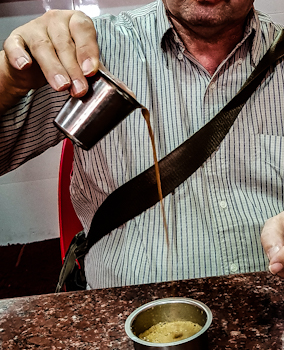
South Indian filter coffee is wonderful. Here is how it is prepared. First coffee powder is placed in the upper chamber of a cylindrical metal vessel with a finely perforated base. Hot water is poured on it. Then, the water slowly filters through the powder to produce an intensely strong, undrinkable filtrate, known as ‘decoction’. This filtration takes many hours.
The coffee-maker ladles some decoction into a vessel, often a stainless steel beaker. Then, he or she fills the rest of the beaker with freshly boiled milk (With or without sugar).
If you want your coffee without sugar, ask for “sugarless”.
The coffee cup comes with a deep saucer. To cool the coffee, you pour the coffee from the beaker to the saucer and vice versa.
Then, ENJOY!
Early in November 2018, I saw the opening performance of a new production of “Love Lies Bleeding” by Don de Lillo, which was premiered in 2005, at the Print Room in London’s Notting Hill Gate. The play deals with the question of euthanasia in a situation of a person with persistent vegetative state. The playwright deals with moral and other questions relating to this in a sensitive way. As with most Print Room productions I have seen, the acting was superb, at times gripping.

The Print Room theatre began its life in 2010 in a converted printers’ warehouse in Hereford Road, close to Westbourne Grove. We attended several excellent performances there, seated on not very comfortable chairs. In summer the warehouse, which was poorly ventilated, could become very hot. I remember watching “The Kingdom of the Earth” by Tennessee Williams one hot May evening. The heat in the theatre complimented the seediness of the characters. A year or two ago, the Print Room shifted to the Coronet in Notting Hill Gate.
When I began living near this place, the Coronet was a cinema. It was the last cinema in London to permit smoking in the auditorium. Smokers had to sit in the balcony seats, not in the stalls below them. The cinema had two screens, the larger of which was in what looked like an Edwardian theatre. Indeed, the Coronet started life as a theatre when it was opened in late 1898 (see: http://www.arthurlloyd.co.uk/CoronetTheatreNottingHillGate.htm). It was designed by a theatre architect WGR Sprague (1863-1933). Eighteen years later, the theatre began to be used as a cinema. Many of its original features were retained. By 1923 it became a full-time cinema.
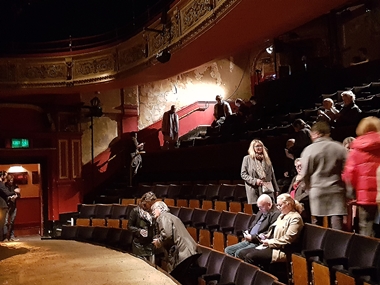
In 1972, the Coronet was threatened with demolition. It was saved and made subject to conservation regulations following local residents’ successful protests. In 1993, when I first came to live close to the Coronet, the cinema looked run down but romantically picturesque. The local Kensington Temple Church bought the Coronet in 2004, planning to use it as a place of worship (as has happened with so many former cinemas in London). As a digression, it is interesting to note that cinemas in London have been converted to churches, whereas in Communist Albania the reverse was true during its period of official atheism.

The Kensington Temple spruced up and restored the Coronet, but kept it running as a cinema. They used it occasionally as a place where their congregation could listen to preachers. Once on a Sunday morning I passed the Coronet, whose doors were open, and looked into the auditorium where a very enthusiastic clergyman was rousing his lively audience.
The Coronet cinema closed in 2014. It had been bought by the Print Room, which had shifted from Hereford Road. Thus, the Coronet became a theatre once more. The Print room have preserved many of the decorative features of the original theatre but have made some major internal modifications. A new stage has been built to cover the space where the original lower level stalls were once. This stage extends to the lower level of the raked seating that had formerly been the original theatre’s Dress Circle. The seats in this Circle have become the new auditorium. Although much has been done to preserve original features, the theatre has been decorated to give its walls a fashionable distressed appearance. The place reminds me a little of what I remember of the Theatre des Bouffes du Nord in Paris when I saw it in the 1970s soon after the British director Peter Brook re-opened it.

Although the theatre and its productions are wonderful, the bar must not be missed. It is located beneath the new stage in the space where once the stalls were located. Its concave floor reflects the raking of the seats that were once affixed to it. A grand piano serves as the bar where drinks are sold. The dimly lit bar is decorated quirkily with all manner of bric-a-brac, largely chosen by the staff and, no doubt, sourced from the nearby Portobello and Golborne markets. The bar is open an hour before and an hour after a performance. It is closed during performances because its ceiling is the theatre stage. Even if you cannot manage a play, a visit to the Coronet’s bar is a treat.

Hidden below a seat
Waiting for what?
Feline seeking company?
I passed my Driving Test in 1982. Naturally, I wanted a car after that. A good friend, a dental colleague who was keen on motor cars, suggested quite sensibly that it would be best if my first car was not brand new. He felt that as I was an inexperienced driver, I was more likely to damage it. With his assistance, I chose a second-hand Austin Allegro, which looked in good condition and had not done a huge mileage. Neither he nor I would have guessed what a challenge this vehicle would prove to be.

Austin Allegro [source: Wikipedia]
All went well at first. After a few weeks, I was driving along a motorway between the Medway Towns, where I worked, and London when suddenly the car lost power. I managed to steer the Allegro to the hard shoulder. The engine was not working. I turned the ignition key and the engine sprung back into life. I continued to London uneventfully.
The problem, the engine’s spontaneous and unexpected switching off, occurred on a number of other motorways and main roads, sometimes at night. I returned to the garage where I had bought the car, and their mechanics checked the car thoroughly (so they said). They could find nothing wrong. Reassured, I continued using it, but the same problem recurred regularly. I got to a point where I used to drive along the motorway with my hand holding the ignition key in the start position, so that the motor could not turn off.
After a few months in rented accommodation, I decided to buy a house when I discovered that the monthly mortgage repayments were the same as my monthly rental payments. After looking at about nine properties, I chose one. Before moving in, I used to visit its soon to be former owners in order to settle details of the house sale. On one visit, I parked my Allegro in front of the driveway where two of the occupants’ cars were parked. When I was ready to leave, the Allegro would not start. The owner’s son, a man in his twenties, came out to look at the car. Within minutes, he discovered what the garage mechanics had missed. The lock into which the ignition key fitted was loose: it did not engage firmly in the ‘on’ position. So, when the car vibrated, the key could be thrown out of the ‘on’ position into an ‘off’ position.
When the boy’s father, who was taking an interest in the proceedings, saw what his son had discovered, he fetched a wire, and touched its two ends to a couple of places in the engine. Suddenly, there was a blue flash followed by a strange smell and some white smoke.
“Aw, now look what you’ve gawn and done, Dad,” said the son, “I reckon you’ve blown a fuse.”
Almost as quick as a flash, the young man said that he would run up the road to buy a new fuse, which he did. He inserted it, and then carefully started my car.
I continued using the car for a while. Soon after the fuse incident, the car began belching black smoke instead of the normal exhaust. Once again, I returned to the dealer, who had sold me the car. After I told him what was wrong, he said:
“Sounds like you’ll need a new engine, my friend.”
“But,” I protested, “I’ve only had the car for four months.”
“Such is life, young man.”
I took the car to another repair shop. This was run by a wizened old man. He looked at the engine, and said:
“I can do something about that smoke, but it won’t last long. My advice to you is to sell it as soon as I’ve mended it and before the problem returns and the engine burns out.”
I took this wise man’s advice. The local Volkswagen dealership were happy to take my Allegro as part payment for my brand-new Polo vehicle.
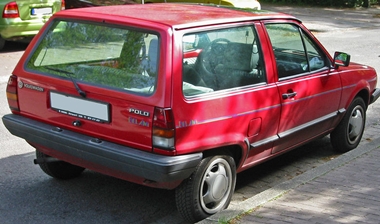
Volkswagen Polo [source: Wikipedia]
Soon after taking possession of the Polo, I visited my aunt and uncle in London. Their reaction to my new car gave away something of what they had secretly thought about me in the thirty years they had known me. After spending a few hours with them, they accompanied me to the road. I had not told them about my purchase. When they saw me unlocking my pristine Polo, my aunt said:
“Is that yours, Adam?”
“Yes.”
Then my uncle said:
“I never imagined you would have ever bought a new car. It’s the first normal thing you have ever done.”
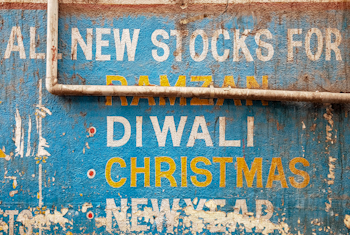
India is a country with many religions. This sign advertises a store that gets in new stock for Ramzan ( Muslim ), Christmas ( Christian ), Diwali ( Hindu ) and New Year ( which one is not specified ).
Sadly, inter-religious tolerance is being challenged in today’s India.

Arms and the man,
The hunting is over,
Only a dry skull remains
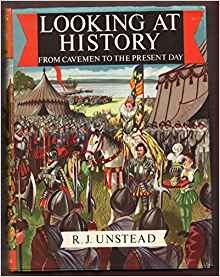
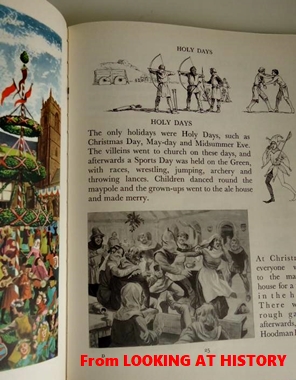
My interest in history began when I was about six years old. I could read well by that age. My parents gave me a book called “Looking at History”. It was a simply written thoroughly informative book with many line drawings illustrating everyday life in the British Isles from earliest times to the twentieth century. The book, published in 1955, was one of my treasures. I loved leafing through it. It was created by the historian RJ Unstead (1915-88). This book kindled my life-long interest in history. One birthday, my parents gave me another book by Unstead, “People in History: Caractacus to Alexander Fleming”. Published in 1959, it contains a series of simple but informative biographies of important British historical personalities.” This was another book that I read over and over again.
In 1960, I entered The Hall School, a prestigious educational establishment in London’s Swiss Cottage area. This school’s main aim was to educate boys sufficiently well so that they could enter the best private secondary schools. To enter these schools, an examination called ‘Common Entrance’ had to be passed with high marks. One of the papers in this test was history. At The Hall, history was taught with only one goal: passing the Common Entrance. Year after year, our history teachers guided us from Julius Caesar’s arrival in Kent to the end of Queen Victoria’s reign. What seemed to be important was knowing the dates of events rather than the significance of these happenings. History was reduced to monotonous chronology.

Things did not improve when I entered my secondary school Highgate (founded 1565). History was compulsory in the first year. It was taught by a well-known historian AW Palmer, who has published many books. For some unaccountable reason we had to study the history of the USA. Palmer managed to make it both incomprehensible and uninteresting. This was one of the many reasons that I gave up history in favour of the school’s alternative to it: physics. In fairness to Palmer, his “A Dictionary of Modern History, 1789-1945” (published in 1964) fascinated me. It covered a period of history that was poorly covered at The Hall and had fascinated me from an early age. I believe that my interest in what Palmer termed as “Modern History” began when I was about twelve. It was then I began looking at the adults’ section of Golders Green’s public library and discovered books about Nazi Germany and the Holocaust.
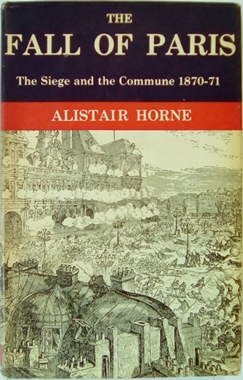
Gwyneth Klappholtz, who was married to Kurt – one of my father’s colleagues at the London School of Economics, taught history at a state school. I used to visit the Klappholtz home regularly in my teens. Gwyneth picked up on my interest in history and recommended me an author whom I feel can write history superbly. The historian Alistair Horne (1925-2017) has written over twenty-six books. I have read several of those. My favourite is “The Fall of Paris: The Siege and the Commune 1870-71” (published 1967, during the time when I used to visit the Klappholz family regularly). Horne writes history as if he were a really good novelist, yet everything he wrote was based on solid, reliable historical research. His books are a joy to read. This is something that the other writers of history, whom I am about to mention, share: an ability to present, often complicated historical situations, in a clear, easily readable form.

At about the time I discovered Horne, I found an exciting book amongst my father’s library of mostly erudite books on economics. It was called “The Golden Trade of the Moors”. Written by Edward William Bovill (1892-1966), it describes how the Moors crossed the Sahara with salt to exchange for gold in sub-Saharan Africa, where salt was scarce, and worth its weight in gold. Although I enjoyed this book, I have not read anything else by this author.
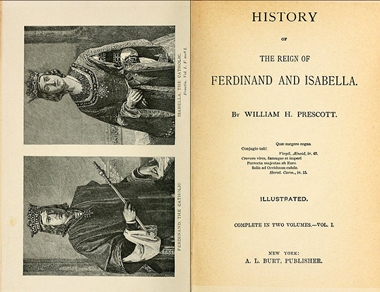
My PhD supervisor, a medical doctor and physiologist, introduced me to another very readable historian, the American William Hickling Prescott (1796-1859). This remarkable historian had very poor eyesight. Often, whist he was doing historical research an assistant was required to read documents and other literature to him. He had a phenomenally good memory, which must have been a great help if he had to perform most of his research through the eyes of another. He wrote mainly about aspects of Spanish and Spanish-American history.
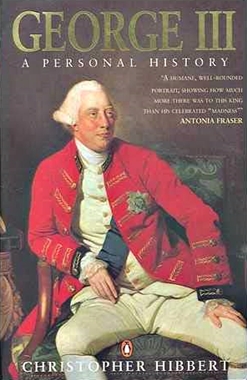
Christopher Hibbert (1924-2008) is another very readable historian. He has written over fifty books, many of which are historical biographies. I have particularly enjoyed his accounts of the lives of King George III and his son King George IV. Like the other historians I have been describing he combines erudition with literary skill. In 1983, he edited the magisterial, splendid “The London Encylopaedia” with Ben Weinreb.
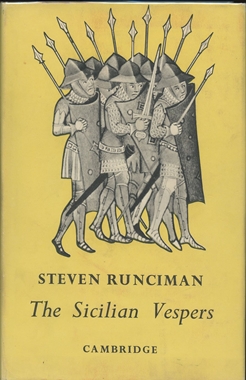
About four years ago just before my first trip to Sicily, I read “The Sicilian Vespers.” This deals with a complex series of events leading up to a revolt of the Sicilians against their French occupiers in 1282. Although the author Steven Runciman (1903-2000) does not make the story appear simple, he skilfully navigates the reader through the complicated intertwining strands of history leading up to the event. Some decades before visiting city, I read Runciman’s “The Fall of Constantinople 1453”, another captivating but historically accurate account of an important turning point in the history of Europe.
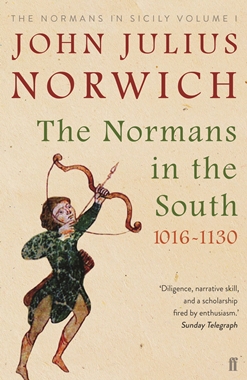
In October 2018, I made another visit to Sicily, mainly Palermo. That city and nearby Cefalu contain buildings erected while the Normans occupied Sicily. They took over the island several years before invading Britain. The Normans in Sicily built fine churches and palaces. Often these buildings contain elements of Arabic architecture. I was intrigued and wanted to know more. The leading account of the Normans in Sicily (and southern Italy) was written by the prolific John Julius Norwich (1929-2018). Although he claimed to be no expert on the subject, his two-volume history of the Normans in Sicily is both scholarly and very readable. As with the works of the other authors mentioned, reading this history is both informative and pleasurable. In addition, Norwich injects humour at appropriate places. I am looking forward to reading other books by him including his highly-rated history of Venice.

Paws on a shiny bonnet
Leave no marks:
There is but a fine shadow
All over India you can see variations in the spelling of English words. Here are some examples I saw today in Bangalore.
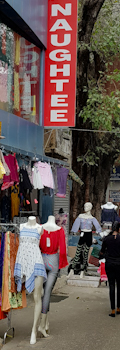
Here the word ‘naughty’ has been spelled semi-phonetically.

Here, b and P have been mixed up. The consonants B and P are formed similarly when spoken.
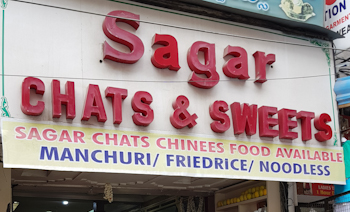
This shop sign demonstrates a variety of different kinds of spelling errors. (By the way, ‘chats’ are slightly cooked vegetables or raw fruits dressed with spicy powders.)
Remember that although English is one of India’s national languages, for many shop owners it is a foreign language. Hence, the diversity of spellings of common English words.
 yamey
yamey 