
Arch-es of brickwork,
Tracks beneath and air above:
London’s old Circle Line
Bayswater station

Arch-es of brickwork,
Tracks beneath and air above:
London’s old Circle Line
Bayswater station

Lamps, articulat-ed,
Shine variously
On diverse writers’ desks
Photo taken at Design Museum in Kensington, London

Stone vessels stand ornamentally
Beside a pool:
Call them urns, please
Photo taken in London near Lancaster Gate at the northern end of the Serpentine Lake
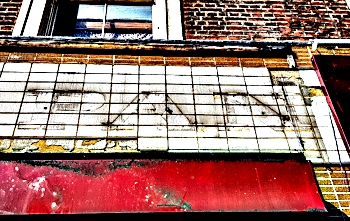
“… and set off after the cab. He dismissed it by Panzer’s Delicatessen on Bayswater Road…”
So, wrote Frederick Forsyth in his novel The Fourth Protocol.
If you look for Panzers today, you will not find it in Bayswater. There is a Panzer’s delicatessen in St Johns Wood, but it is not the same firm.
The shop was on Bayswater, facing the Czech Embassy, between Linden Gardensand Claricarde Gardens. Panzers was still in business in 1985. It closed sometime after that (before 1993).
A couple of days ago, I noticed that the shop front of a recently closed branch of the wine retailer Oddbins was being renovated. The sign board above the display window had been removed, revealing some old tiling. Barely discernable on the tiling were three letters ‘PAN’, these being the first three letters of ‘Panzers’. For a brief time, the remains of the now long-gone delicatessen mentioned by Frederick Forsyth may be seen by passers by. Soon, it will either be removed or covered up.
This long lost shop also appears in another well-known novel, 84 Charing Cross Road by Helene Hanff. She wrote:
“She painted until one and then drove me down to Kensington for lunch …
… She took me to a little Italian place for lunch, down near where she and Leo live, called Panzer’s Pasta and Pizza …”
A photograph taken in the 1970s shows that there were two Panzers close to each other in Bayswater (see: https://rbkclocalstudies.wordpress.com/2018/09/20/notting-hill-gate-the-other-high-street/). I have posted a detail from it. The branch, whose sign was partially revealed recently is marked with a red arrow. The other branch, which I suspect was the one in Helene Hanff’s book, is marked with a yellow arrow:


A branching shadow
On a grassy green patch:
A tall tree stands nearby
Kensington Gardens on a warm spring afternoon, the first proper sunshine for quite a few days

Back in March 2017, I was flicking idly through the London Evening Standard. So idly was I flicking that I looked at the sports pages, which I usually ignore. There was a large photograph of football players in orange shirts. Absent-mindedly, I stared at them, and then suddenly I noticed that their shirts had black double-headed birds printed on them. Knowing that the national symbol of Albania is a double-headed eagle, I wondered whether this was an Albanian team. It was not. It was AFC Wimbledon, a team based in the southwest suburb of London, Wimbledon.
Soon, I discovered that Wimbledon’s municipal coat of arms bears a double-headed eagle. A trip to Wimbledon Library did not prove useful in my quest to discover why this two-headed bird should appear on the Borough’s crest. Various Internet websites suggested that it was there as a reminder that Julius Caesar had camped somewhere in what is now Wimbledon.
It is believed that the Ancient Romans used the eagle as a heraldic symbol, but it was usually the single-headed variety. It is unlikely that they used the double-headed variety, which dates back to Ancient Babylon and maybe before. It is likely that it was first used in a ‘Roman’ empire context after the fall of the Ancient Roman Empire, by the Byzantine Empire, a successor to that earlier Roman Empire, in the 12th century AD when it was adopted by Isaac I Komnenos (c. 1007 – c. 1060). His family originated in Paphlagonia (now ‘Paflagonya’ in Turkey) in Anatolia. Double-headed eagles were associated with the Hittites, who had lived in the area, notably in the city of Gangra (now ‘Çankırı’ in Turkey). A plausible theory, but probably unprovable, is that the double-headed bird migrated from the Hittites into Byzantine usage.
This brings us back to Wimbledon. From the little evidence that I have presented, the connection with Julius Caesar and the London borough’s crest seems weak. Whatever the real story, the crest is not an ancient one. It was designed and granted as late as 1906.
Part of an image from http://www.sportinglife.com
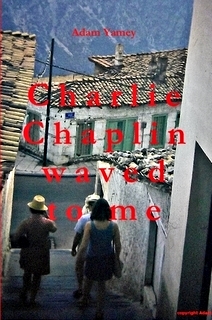
I always enjoy visiting places with interesting historical associations. For example, it gave me a thrill to enter the room in a house in Porbandar (Gujarat, India) where Mahatma Gandhi was born, and to stand in Sarajevo at the very spot where Gavrilo Princip shot the Austrian Archduke and his wife in 1914.
I hope that the following excerpt from my book “Charlie Chaplin waved to me” can begin to explain my fascination for visiting places with great historical significance either for me or the world in general:
“To reach Oxford Circus, the starting point of our trips to the West End,
we used to take the Northern Line of the Underground to Tottenham
Court Station, and change there to the Central Line. In the 1960s, there
were signs that directed the passengers from the Northern line to the
Central, but these involved using a number of staircases and walking
quite a distance. My mother ignored the signs, and headed straight for a
passageway at one end of the southbound Northern Line platform. This
was clearly labelled ‘No Entry’. My mother knew better than to obey
this because she knew that it was a shortcut to the Central Line
platform. Today, it is the recommended route. Whenever I walk along
this once ‘forbidden’ passageway, I wonder whether amongst the
billions of molecules that make up the air in that circular passage there
is maybe at least one molecule of the carbon dioxide or nitrogen that
was once breathed out of my late mother’s lungs. And, do the echoes of
her footsteps still reverberate even ever so faintly in this busy
passageway?“
It is the thought that I might be sharing even one molecule of the air breathed by the persons who gave a place the historic interest for me that gives me an irrational thrill. It is for this reason that I feel unable to visit places like Auschwitz and Dachau. I do not wish to breathe the air that might possibly have been around when the Nazis and their unfortunate victims occupied such places.
This might seem a bit ridiculous as the chances of breathing the same molecules of air that say my mother or the Archduke of Austria inspired are extremely miniscule, but what is the joy of life if not full of quirkiness.
“Charlie Chaplin waved to me” by Adam Yamey is available from:
Amazon, Lulu.com, and bookdepository.com, as well as on Kindle

In the early 1960s, I attended a preparatory (‘prep’) school between Swiss Cottage and Belsize Park in north-west London. A prep school in the UK is a place that young children aged between 5 and 11 to 13 years study in order to pass examinations that will admit them to Public Schools, which, despite the name, are actually private schools.
At my prep school, The Hall School, we were made to sit in alphabetical order (by surname) in the classrooms. We were addressed by our surnames. I suppose arranging us alphabetically might have helped the teachers remember who was who.
My surname is Yamey, so I always sat in one corner of the classroom. There were often no other boys at my end of the alphabet, although occasionally I was in the same class as someone with the surname Yeoman or Zangwill.
Often, we had to learn poetry off by heart (by rote). We would then have to recite the poem in class. Invariably, the teachers began be asking the boy at the beginning of the alphabet to commence the recitations. Then, the other boys in the class took their turns, as the teacher worked his way down the surnames towards the end of the alphabet. Often the bell marking the end of our 45 minute lessons rang before the teacher reached my end of the alphabet and I was spared the embarrassment of having to try to recite a poem that I was never able to remember. I was hopeless at learning poetry, or anything else, by heart. I can only remember things if I can put them into some conceptual framework in my mind. Poetry did not seem to fit anywhere in my head!
What continues to surprise me is the lack of imagination of our teachers. Why did they always start asking us to recite by beginning with the pupil whose surname was at the beginning of the alphabet? Why did they not begin at Y or Z and work in the other direction?
Many years later, our 6 or 7 year old daughter attended a school in which students were asked to do things in alphabetical order of their surnames. Unlike me, she was always keen to take part in class activitues. So, one day she informed the school that she her surname had been changed to one begining with D. That way, she was always asked to participate in class activities that were being done in accordance with the alphabetical order of the children’s surnames.
All went well until we received the termly bill for the school fees. It was addressed not to Dr and Mrs Yamey, but to Dr and Mrs D…. I told our daughter that as the bill was not addressed to us, I would not be able to honour it. Our daughter quickly agreed to change her surname back to Yamey.

A wild wind blows,
Weeping willows sway:
Maybe spring is in the offing

One of the great features of possessing a Tate Card (an annual season ticket) is that one can enter (with or without a companion) the regular special exhibitions without paying extra for tickets, which tend to be quite costly. What I particularly like is that if an exhibition does not meet one’s expectations, one can spend a short time viewing without worrying about having wasted, maybe, as much as £18 per person.
Recently, I visited the much-hyped special exhibition of works by the French painter Pierre Bonnard (1867-1947) at the Tate Modern in London. Without the Tate Card, the two of us would have had to shell out £36 (about 30% of the cost of a Tate Card) to see what I thought was a tedious exhibition.
I like Impressionist and Post-Impressionist art in general, but the Bonnard works left me cold (or at least lukewarm!). I cannot comment on the competence of their execution, but I found them short of visual excitement, almost boring compared with works of other artists painting during Bonnard’s lifetime. Consequently, we did not linger long in the exhibition. I may sound like a Philistine with my comments about the famous Bonnard, but it is only fair to write honestly about how the exhibition affected me. Incidentally, I noticed that many of the visitors at this show were more interested in chatting to each other than looking at Bonnard’s works. I saw one man sitting on a bench reading his newspaper rather than trying to enjoy Bonnard.
As we were still in the mood for looking at art, we decided to enter another special exhibition in the Tate Modern. Using our Tate Card, we saved up to £26 when we entered the exhibition of artworks by the American-born Dorothea Tanning (1910-2012). However, this is an exhibition that is well worth its entrance fee. Bonnard and Tanning’s working lives overlapped for a few years, but the American’s output made a far greater impression on me than the Frenchman’s.
The exhibition at the Tate Modern commences with paintings from Tanning’s surrealist phase. Her execution and composition sets her amongst the best of the surrealist artists. Each painting has subtlety, excitement, a sense of adventure, and creative freshness. As Tanning grew older, her works tended towards abstraction in an original way. In brief, Tanning was an artist whose visual language(s) really attract me. Her work has a freshness and impact that I found lacking in Bonnard.
In addition to paintings and designs for stage sets, the exhibition at the Tate includes some of rather weird soft fabric sculptures, which did not appeal to me quite as much as the framed works. However, they display another aspect of Tanning’s undoubted inventive talent.
I am glad we decided to visit the Bonnard, even though it disappointed me, because it got me to visit the Tate Modern after a long break (in India) and to discover the delights of Dorothea Tanning’s artistic output.
The photo is a detail of a work, “Endgame” , painted by Dorothea Tanning in 1944
 yamey
yamey 