
The worldwide web
Is spreading your information
Fully globally

The worldwide web
Is spreading your information
Fully globally
THE TELEPHONE RANG this morning. I answered it and was addressed by a lady with an accent that sounded like the way Iranians often speak English. She told me that she was calling from the British Telecom (‘BT’) technical department to inform me that there was some kind of malicious interference on our broadband connection, and that a BT technician was working on our line in the street. She said that we should have received an email from BT, and could I kindly spend a few minutes with her on my computer. Quite suspicious, I simply thanked her for calling, and hung up.

Then, I checked to see whether there was an email from BT. There was. It had been sent from “ btcomms@info.bt.com” and looked pretty authentic. It even included advice about protection against scams. The email contained a PIN number, “Your PIN is ****”. I was still suspicious and used the 1471 facility to check the number of the person, who had called on our BT landline. It was a number beginning with 07, a mobile telephone number. I felt sure that BT would never call using an 07 number.
I rang BT on 0800800150 and selected the option for suspected scamming and fraud. I explained what had happened, and an operator confirmed my suspicion that both the call and the email were dodgy. However, the email address from which the message had been sent is an official BT email address. She was relieved to hear that I had not turned on the computer and been guided by the mystery caller because she told me that what I had experienced was an attempt to gain access to the data stored in my computer.
The approach used by the lady who called and whomever she was working with was quite ingenious, and might easily have misled anyone less suspicious (or paranoid) than me.
When I was a child, before the days of internet and mobile telephones, it paid to be streetwise, to keep an eye out for people or situations that might lead to harmful consequences. It still pays to keep a wary eye, but now it is not only on the street that one needs to do so.

With internet unknown
She spins contentedly
A neat spider’s web
Photo taken in Sri Lanka in 1994

When wifi is weak
As it can be sometimes
Annoyance may ensue

Ten billion Pounds
I have for you:
Send me your bank account details
Detail of an artwork by Jasmine Thomas-Girvan

Does it not drive you mad when in the middle of doing something using the Internet, there is an ‘outage’ during which the Internet service signal becomes disconnected and you become unable to access the Internet?
My service provider is BTinternet, which is usually satisfactory for months on end. Then, out of the blue for a few hours or even a few days, there is either no connection with the Internet or irritating short bursts of connectivity punctuated by frustrating breaks in the service.
In the past, I have rung the BTinternet helpline. Their polite operators make all kinds of suggestions about what can be done with my equipment to improve the service. They also test the line carrying the Internet signal. This is always in perfect condition, so they say. However, even after doing what has been suggested (including installing brand-new routers) and sometimes after an engineer has come to look at our connection, the problem persists, only to correct itself after a few hours or days.
It seems to me that BTinternet is trying to shift the blame on breaks in their service onto me and my equipment. They never admit what I suspect to be the case, namely, that there is a failure in their provision of the broadband service. Having looked at postings on Twitter and the interesting downdetector.co.uk website, it seems that when I am having problems, which BTinternet ascribe to my end of the Internet connection, so are many other people! If BTinternet is correct about faulty equipment at the receiving end, it seems a strange coincidence that so many users’ equipment should go faulty at the same moment.
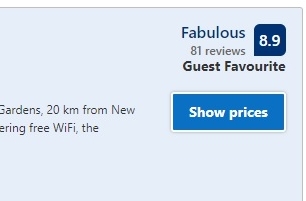
Last year, we were booking our daughter into a simple home-stay by the sea in Kerala, India. While we sat in the owner’s office, I spotted a framed certificate issued by the Booking.com website. It showed that the home-stay had earned a 9.8 out of 10 satisfaction rating. I congratulated the owner for achieving this. Sadly, he told me, the latest rating was now 9.4.
“That’s still pretty good,” I said.
“Maybe,” the owner replied, “but it keeps going down. The problem is the Indian guests who stay at my place.”
“Why?” I asked.
“When foreigners come and pay £10 per night, they know what to expect,” the owner began, “but when Indians come here they expect accomodation worth £100 even when they are only paying £10”
“The problem is,” he continued, ” that Indians arrive expecting included breakfast, a swimming pool, and other facilities, for which they would usually have to pay £100 or more. These are not available at £10 per night. So, when they write their reviews on Booking.com, they give us a low rating, which is not fair given how little they have to pay. These low ratings bring down my overall rating.”
I sympathised with the man, who then admitted:
“I would rather have no Indians staying here. I prefer the foreigners because they know what to expect of budget accommodation.”
When I stay at places that I have booked on Booking.com, I tend to be over generous with my rating unless there is something very seriously bad about the place. Also, when choosing where to stay, I am not put off by ratings of just over 6 out of 10. I have often found hotels with lowish ratings to have been under-rated because people have been over-critical about minor defects.
So, when you next rate a place you have visited, try to be fair and reasonable with your ratings.

I write a great deal in my spare time. Apart from blogs like this one, I write books about subjects that require a considerable amount of research. I have a British Library (‘BL’) reader’s card, which gives me access to an unbelievable collection of material. However, even though I live not far from the BL, it is quite time-consuming getting to and from the material inside the library. Apart from security checks at the BL, one must leave many items, which are forbidden in the reading rooms (e.g. food, drink, all kinds of writing implements apart from pencils), in a locker in te basement. Once in the reading rooms, the BL becomes a joy to work in.
Over the years, I have been using another kind of library. It is on-line, and is reached by typing https://archive.org/ . Using its superb search engine, you can explore its collection in many ways, such as by author, by title, by keywords, etc. What comes up, if you are lucky, is a set of scanned volumes of relevant books or pamphlets. By clicking on an item, you are given the option of downloading it (.pdf, Kindle, and other formats), reading the scanned book using a very practical online reader, or reading a typed transcript of the entire text online. If the item is one you need, it is a lot easier reading it via this website than having to ‘schlep’ to the BL. This is especially the case if you do not live in London.
If you have not come across this website and you are looking for texts published long ago and not so distantly, head for archive.org, and give it a try!
My picture is part of a screen-shot of a page of results from archive.org

During the 1970s and ’80s, I used to take pictures on my film camera using colour slide (diapositive) film. To enjoy these, they were best projected onto a good quality screen
Setting up the projector was quite a nuisance. Finding an audience amongst my friends was not always easy and, if they were willing to watch my slideshows, keeping them awake was also often difficult.
Turning the clock forward to the present era of digital cameras and the internet, the situation has changed. First of all, pictures may be easily uploaded on to the internet. Secondly, the existence of social media websites allows a far larger potential audience for one’s photos than ever before. Pictures can be posted on websites which are viewed by those with special interests or on others, like Instagram and Facebook, which allow the non specialised viewers as well as experts to see the images.
A wonderful thing about uploading one’s photos is that there are opportunities for viewers to comment on the pictures. This, I find to be very valuable. Other people point out things that I had not noticed or understood. I like this.
Unlike slideshows of the past, audiences can enjoy as many or as few of the uploaded pictures as they want without having to look at numerous slides politely whilst dying of boredom!

 yamey
yamey 