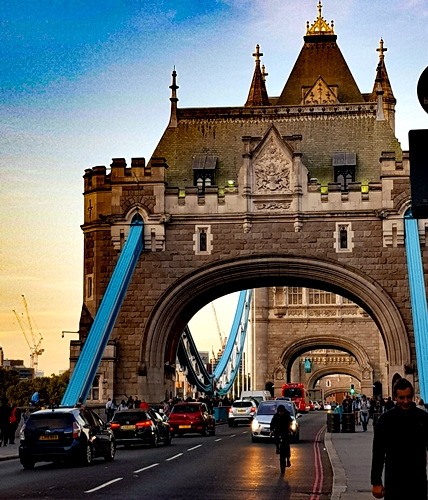
Archways, traffic, people,
river flows beneath:
I am seeing Tower Bridge

Archways, traffic, people,
river flows beneath:
I am seeing Tower Bridge
I hope that this piece will not sound ungrateful, dear reader.

When I was a child and in my early teens, my parents, who were art-lovers, took my sister and I to Florence every summer. As a child, I failed to appreciate what a treat these visits were. At the end of the summer when school recommenced, my friend N and I would compare notes about our holidays. N visited Llandudno in North Wales every summer with his parents. He would relate how they had climbed the Great Orme, travelled on a special tramway, and stayed at a marvellous hotel overlooking the sea. What was I able to tell N? Well, nothing that I believed would rival the exciting things that N had experienced. What, for example, was the Uffizi art gallery in Florence when compared with the Great Orme in Llandudno? I mention the Uffizi in particular, because our annual visits to this treasure house of art filled me with despair. I wrote of this place in my book “Charlie Chaplin Waved to Me” (available from Amazon and Bookdepository.com) as follows:
“The aforementioned Uffizi was another of the places that we often visited in the morning. I used to dread having to walk through its seemingly endless series of inter-connected galleries filled with masterpieces. The only thing that sustained me during this ordeal was the promise of an ice-cream afterwards or the promise of the opportunity to buy a paper cone filled with corn to feed the pigeons in the Piazza Signoria outside the gallery.
One of the first pictures that we always used to stop and admire was the Portinari Triptych painted by the Flemish painter Hugo Van der Goes in about 1475. That was during the time when the Florentine merchant Portinari, who commissioned it, was living in Bruges in the building which became the hotel in which we often stayed. My father, who is fascinated by the iconography of Renaissance art, explained to us the meanings of everything in this beautiful picture. My very young sister absorbed this information so well that year after year she could explain to us, and also to other tourists, who gathered around to listen to her, the reasons that particular things were depicted in it. For example, she could relate why there were a certain number of lilies in the vase near the bottom of the central picture; and why there was a barely visible devil’s horn at its top left, just above the horn of a cow grazing in the holy manger. This horn only became apparent after the picture was cleaned in the early 1960s.”
The museums and my late mother’s seemingly endless visits to the dress-maker and countless shoe shops added to my lack of enjoyment of Florence. However, it was not all gloom and doom. The food we ate was lovely and there were some cultural sights which I enjoyed. And, Florence did hold some mysteries, one of which was solved between two successive annual visits. Let me quote from my book again:
“The River Arno flows through Florence. It is traversed by a number of bridges, the most famous of which is the Ponte Vecchio. This is covered, like the mediaeval London Bridge used to be, with buildings and shops. The most interesting feature of this old bridge was the‘secret’ corridor that ran along its buildings just beneath their roofs. This, so my father often told us, linked the Uffizi on one side of the Arno with the Palazzo Pitti on the other side, the Oltrarno. Thispassageway, which must be about almost half a mile in length, allowed Florence’s rulers to move between these important buildingsunobserved by the public. It was closed to the public when we used to visit the city.
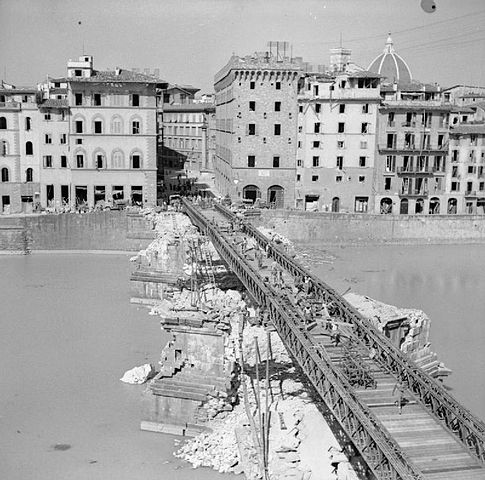
Ponte Trinita in 1944. [Source: https://commons.wikimedia.org/wiki/File:The_British_Army_in_Italy_1944_NA17848.jpg%5D
When the Germans retreated at the end of WW2, they demolished all of the bridges across the Arno except the Ponte Vecchio. They decided that as its carriage way was far too narrow to accommodate military vehicles and large troop movements, it could not have been used by the Allied armies chasing them. My father said it was a tragedy that this bridge was saved whereas its neighbour a few yards downstream was demolished. This bridge, the Ponte Santa Trìnita, was a masterpiece designed by the renaissance artist Bartolomeo Ammanati (1511-1592). His Fountain of Neptune is an important and much photographed landmark in the centre of Florence.
When we first visited Florence, the bridge, which was painstakingly reconstructed after the war from the fragments found scattered about under the waters of the Arno, had two statues at each of its ends. Three of these were complete, but one of them was missing its head. This was the only bit of the bridge that had not been recovered. One summer, when we were visiting the city, my father pointed at the bridge and asked us if we noticed anything different about it. We discovered that the missing head had been found, and was back in its rightful place; the bridge was complete again. This must have been in 1962, as the head was only recovered late in 1961.”
Most people reading this blog article, will probably think that I was so lucky to have visited Florence so often, and they would be justified. However, to a young boy as I was, I could not appreciate it properly. Now, many years later, I realise that my exposure to the arts at such a tender age was a great gift bestowed by my parents, even if it meant that I never saw the Great Orme.
An artist creates
what eyes can see:
then playfully the brain digests

Cracked Egg by Jeff Koons, on display at Christie’s auction house in London (UK)
While I was practising as a dentist, people at parties often asked me what I did for a living. Telling them what I did often brought the conversation to a quick conclusion.

Medjugorje is a small town in Bosnia and Herzogovina. Between 1942 and ’45 during the Nazi occupation of Yugoslavia, over sixty Roman Catholic friars were killed there, allegedly by Communist resistance fighters. In 1981, when this area was still part of the former Yugoslavia, some six children claimed to have seen visions of the Virgin Mary. Despite opposition by the Yugoslav authorities, Medjugorje rapidly became a place of pilgrimage. The authorities softened their opposition to this during the last few years leading up to the country’s tragic disintegration.
I used to visit friends in Belgrade often during the late 1970s and throughout the 1980s. I flew back and forth, often on flights operated by Jugoslovenski Aerotransport (‘JAT’), one of Yugoslavia’s two major airlines, the other being the former Aviogenex. A friend of mine in Belgrade was once looking after some visiting German bankers, when he told them:
“Yugoslavia has two state airlines. Germany only has one … now that the Luftwaffe has been closed down.”
Many of the JAT flights between Belgrade and London touched down at Zagreb to pick up passengers. In the ‘80s, Zagreb was an airport used by pilgrims visiting Medjugorje. I was travelling back to London with a friend from Belgrade. We had occupied two of a set of three seats. We used the middle seat, which was free when we boarded, to store some of our hand-baggage. Many people boarded at Zagreb, including a man who occupied the middle seat. He told us that he had just been to Medjugorje, and asked my friend:
“Do you believe in the Blessed Virgin Mary?”
“I would love to discuss that with you,” she said, “but not now because I have a terrible headache.”
The pilgrim turned to me, and then asked me something.
Not having heard it properly because of the noise made by the ‘plane’s engines, I replied:
“I am a dentist, actually.”
After that, our initially chatty pilgrim neighbour did not say a word during the flight to London.
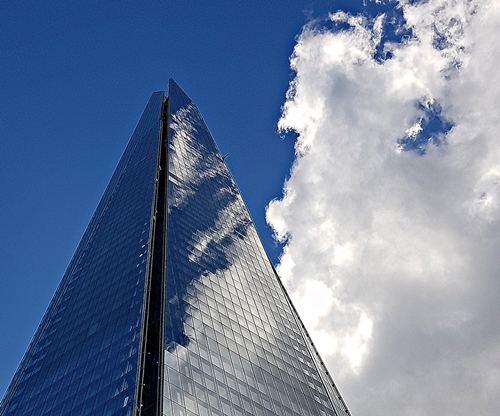
clouds with buildings coalesce
architecture and nature:
glory of sky

Food can be scarce
but when it’s abundant
let folk have plenty of choice

I attended Golders Hill School, a primary school in in Golders Green, between 1956 and 1960. It was a high-achieving school for boys and girls with an all female teaching staff. Founded in 1908, just after the Underground was extended from Hampstead to Golders Green, it still works today but in a greatly enlarged ‘campus’.
We used to spend all day at school. Lunch was served at 1 pm. We sat at various long tables. The children sitting on the table which ate its food fastest were rewarded with a piece of confectionary from a box of ‘Dolly Mixture’.
I was a fussy eater. Having had a difficult few first months of life, my mother was happy to see me eating anything at all. I was not forced to eat anything I did not fancy. Actually, there were few foods that I was prepared to put in mouth. A particular dislike of mine, which remains with me to this day, is green peas. Their taste, or even just thinking about them, makes me feel nauseous. I can recall that my mother was keen that I should get to like these nauseous little green spheres. She would put a few on my plate. To avoid eating them, I employed the following delaying tactict: I would first slowly peel a pe, and then carefully cut into four pieces. My parents soon tired of watching, and eventually attempts to make me consume them were abandoned.
Almost nothing that was served at Golders Hill appealed to me apart from steamed pudding and the oddly named ‘spotted dick’. Main courses often came served with cubed carrot, chopped green beans, and green peas. I would not touch them. No table that I sat on would ever be rewarded with pieces of Dolly Mixture.
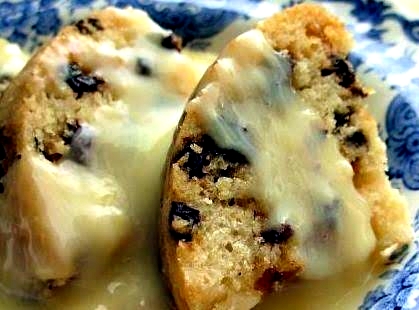
Spotted Dick with custard – source: https://www.justapinch.com
I was shifted to the slow table, where the four slowest eaters in the school sat trying to finish their food during the play time that followed lunch. I remember nothing about the three other members of the slow thable except that they were all girls and one of them was called Rhoda.
Even if I had been kept at the slow table for the rest of the day, there was no way that I would be able to finish what was in front of me. I devised a solution. I put whatever I could not eat into the pockets of my short trousers (‘shorts’), visited the toilet, and then emptied the unwanted food into the toilet pan, and flushed it away. This worked for most foods including slices of canned fruit.
My biggest challenge, and I can only remember it happening once, was gooseberries in hot custard. I felt that putting this in my pockets was not at all a good idea. In desperation, I carried my filled bowl to the closed door of the staff room. I knocked on the door, hoping that whomever answered would take pity on me. A forlorn hope because many of the teachers were quite formidable. I hoped that it would not be the large Miss Fitzgerald, who frightened me greatly. If it was Miss Dredge, I would have felt happier.
I cannot say who it was that opened the door. But, as soon as it opened I dropped the plate with all of its contents ont the feet of the teacher at the door. It still puzzles me why I was neither punished nor told off for my act of carelessness, or was it defiance.
PS: I still dislike peas, but now I love gooseberries.

artist, paints, and wall,
ideas and ability:
go make a mural
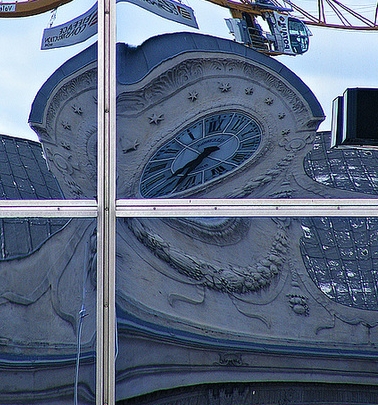
All of the relatives in my parents’ generation were born in South Africa. Some might say that they were ‘Africans’ although many Africans might not agree. One of these always arrived at our house at least an hour before we had invited him, and another usually did not arrive until one hour after we had invited him. My parents, on the other hand, were sticklers for punctuality.
For several years, I worked in a dental practice, which might have well been described as the “United Nation of bad teeth.” My patients had originated from all over the world. They came from, for example: Brazil, Algeria, Morocco, Tunisia, the West Indies, Spain, Portugal, tropical and southern Africa, the former Yugoslavia, India, Pakistan, Afghanistan, Ireland, and a few from the UK. Few of them appreciated the importance of punctuality.
We operated an appointment system in the practice. Patients booked specific times on particular days for their chance to visit me or one of my colleagues. Most of them either turned up at the wrong time or not at all. Consequently, my days were broken up into periods of frenetic activity separated by periods of inactivity, plenty of time to read a book.
One afternoon, a Tunisian gentleman turned up for his appointment at the right time on the correct day. I was so surprised that I said to him:
“How nice. You’ve come on time. Most of my other patients are not as courteous as you. They come whenever they feel like it, if at all.”
The patient listened, removed his coat, sat in my dental chair, and then said:
“Yes, that what we call in French ‘rendez-vous africaine’”
Somehow, after hearing that, my patients’ erratic attendance and timing began to make sense with me, and no longer bothered me. It also chimed with the erratic timings of some of my South African relatives.
Experience learn’d
damages suffer’d
must consider safety first
My late mother was involved in a motor car accident near Cape Town in South Africa when she was a young girl in the 1930s.
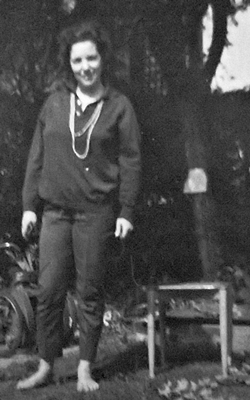
“Our family dentist, at least the first one who ever looked after me (during the 1950s and early 1960s), was Dr Samuels, an elderly Jewish refugee from Nazi Germany. This kindly man, who must have been in his late 60s or early 70s when he treated me, told my mother how he had to smuggle gold out of Germany. When he, and for that matter any other Jew, was fleeing from Germany in the 1930s, it was not permitted to carry anything of financial value out of the country. His resourceful wife prepared sandwiches for his journey. Instead of filling them with lettuce leaves, she filled them with sheets of gold leaf – a material that used to be used a great deal in dentistry. Thus, if he had encountered inquisitive Nazi officials on the train, he could have concealed the gold he was carrying by munching his precious sandwiches. I am not sure when he retired, but I remember him telling my mother that he would not cease practising until the last of his patients abandoned him. I do not know when this was, but I do know that he helped to conceal from us the fact that my mother was missing some teeth.
In all the 28 years that I knew her, I had no inkling that my mother had two missing front teeth. I knew that she had missing teeth because she often reminded us about the accident that she had suffered, but it was not until she was dead that I discovered, almost by chance, that it was two of her front teeth that she lost.
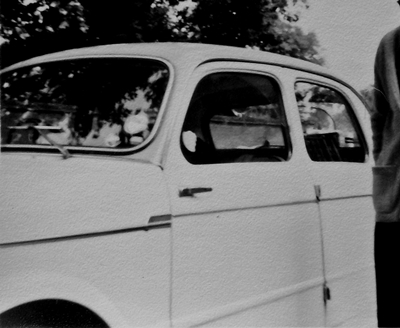
I am sure that it was having been involved in this accident that led to my mother having seat-belts installed in our Fiat Millecento. She arranged for this to be done at least 20 years before they became mandatory in the UK. I have no idea how and from where she got the idea of installing car seat-belts in 1960, but she did. And, with a little persistence she found somewhere where these items, which were almost unknown in cars, could be installed in our Fiat.
Seat-belts were not routinely fitted into cars before the 1980s, with the exception of some Swedish cars such as Saab and Volvo. There were very few of these on British roads in the early 1960s. Therefore, my mother’s idea of installing them into our Millecento in 1960 was little short of revolutionary. The two front seats of the car were fitted with complex harnesses. A strap went over each of the wearer’s shoulders and these were connected together by a waist strap. The people in the front ended up wearing what looked like the sort of safety harness worn by a jet pilot. These complicated straps were extremely difficult to adjust properly.
The rear of the car was fitted with two lap straps such as are found in aircraft passenger seats. My sister and I used one each except when there was a third person in the back. In this case, my sister and I had to share one strap. To avoid fighting, my mother separated us in the strapby placing a pillow between us.”
The passage written above is an extract from a book, “Charlie Chaplin Waved to Me”. It does not mention the extra locks my mother had fitted in the rear doors of our car. These were to prevent my sister and me from opening the doors while were diving. Had we been in an accident, it would have made it very difficult for rescuers to open these doors as the keys were attched to the ring with the car keys.
I only learnt about my mother’s missing fron teeth when after her tragic demise, I found her partial denture lying around in our house.
“Charlie Chaplin Waved to Me” is available by clicking : HERE
Also available on Kindle
Travelling by bus through Gujarat is interesting…
Hop on a bus and travel through Gujarat: see the country and enjoy the people
More excerpts from “Travels through Gujarat, Daman, and DIU“, a travelogue by Adam Yamey, available HERE IN PAPERBACK and HERE ON KINDLE
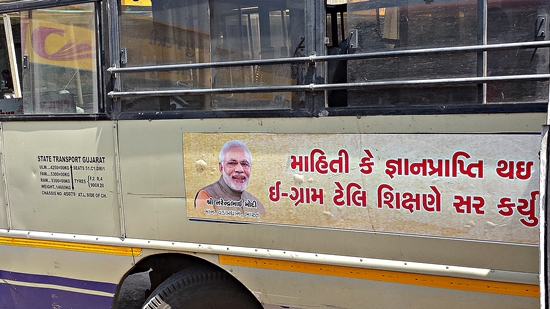 Narendra Modi on the bus
During our eight weeks of travelling through Gujarat, Daman, and Diu, we made much use of public transport. We used mainly buses. As in other parts of India, some buses are run by private companies, and other by the local state, in our case Gujarat, which operates under the name ‘Gujarat State Road Transport Corporation’ (‘GSRTC’). At the outset, we made the assumption that privately-run buses are bound to be better than those run by the state. It was only near the end of our travels that we discovered that we had made an erroneous assumption.
 Local bus in Daman
Here are some extracts about buses…
View original post 603 more words

 yamey
yamey 
