African Art Fair 2018

AFR 2

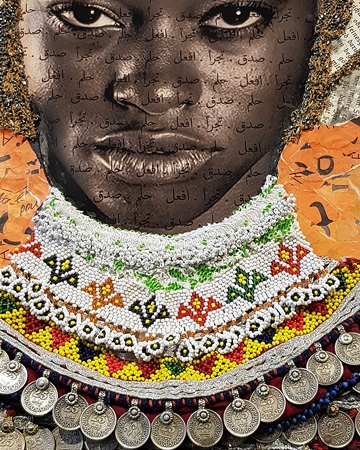
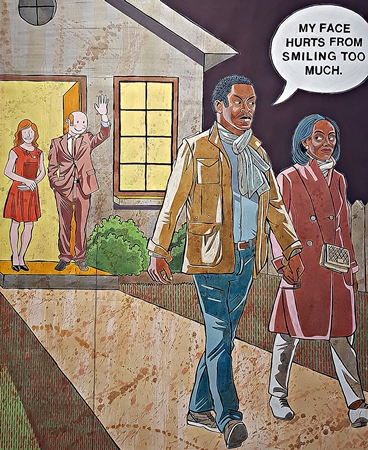
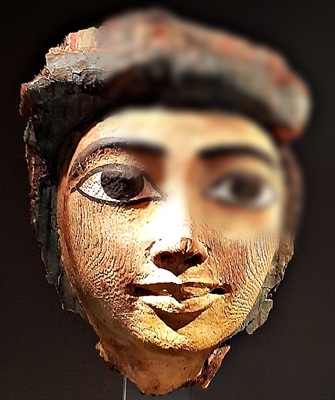
“The Contemporary African Art Fair (1 – 54)” is held annually at London’s Somerset House. This year it was a very exciting show full of vibrant, creative artworks mainly, but not exclusively, created by Africans with little or no European ancestry.

AFR 4

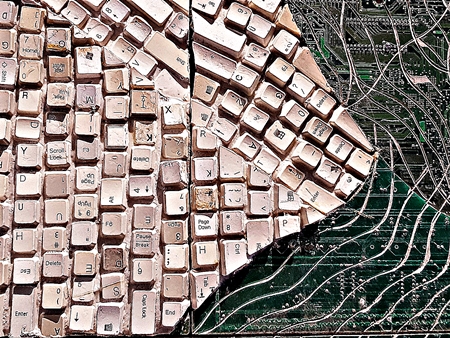
Many of the works use recycled waste materials such as bits of paper, engine parts, spent bullets and retired armaments, electronic components, and so on. Almost every art work is a fine aesthetic object when seen as a whole. Looking into any of these works in detail is like beginning to explore Africa, its troubled past and challenging present.

AFR 1

Africa is beginning to emerge from its colonial past. Africans are taking control of their destinies. Yet, at this exhibition, which is where a series of galleries display thier wares, mot of the dealers, who earn considerable commissions are ‘White’ Europeans. Maybe colonialism is not quite dead yet!

AFR 3

The tests of time and taste

CONTR 0

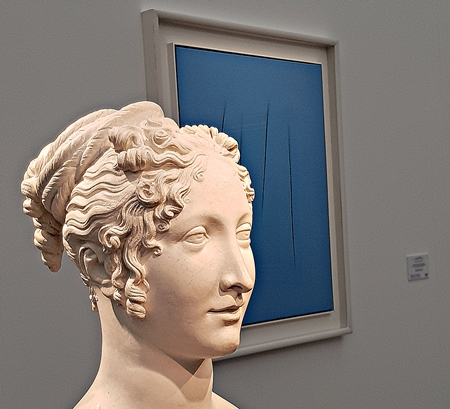
Is it fair to juxtapose works of modern or contemporary art with great masterpieces, which have stood the test of time?

CONTR 6

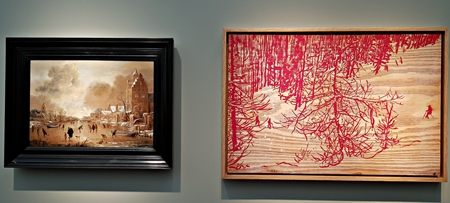
We were fortunate to have been given (by our daughter) complimentary tickets to the 2018 Frieze Masters exhibition held in Regents Park. It is part of a larger art fair, Frieze, held in London annually.

CONTR 4 Lowry

The Frieze Masters show contains stalls set up by art dealers, displaying only works made no later than the year 2000 AD. I must admit that I was expecting to see works of art only made during the 19th and 20th centuries. To my great delight, the artworks on display were made anytime between ancient times (several centuries BC) and 2000 AD.

CONTR 2

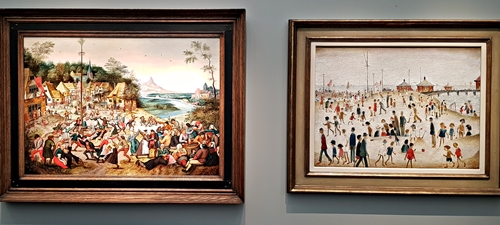
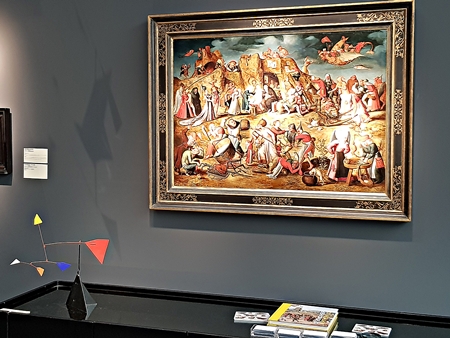
Although the more recently made (i.e. 20th century) artworks are of the highest quality, they are often on display close to artworks made many centuries earlier. Some of the gallery stalls contain a mix of modern art and much older works. Placing some 20th century works (e.g. Calder) near to older classical works (e.g. Brueghel and Cranach) is not fair to the newer works.

CONTR 5

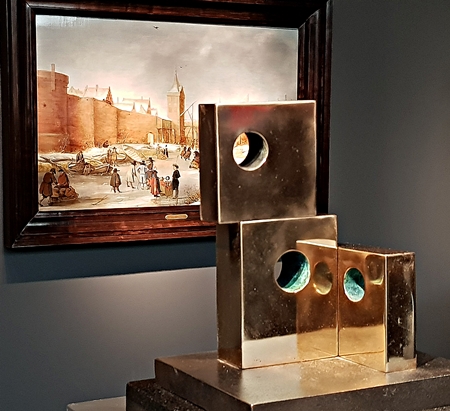
The older artworks, which have stood the test of time and satisfied the tastes of many generations of viewers, make the nearby contemporary works seem weak in comparison. This is not always the case. Some small sculptures by Barbara Hepworth seemed very comfortable next to their far more venerable neighbours. Also, to my surprise some ancient classical carvings stood harmoniously close to some abstract art works made in the second half of the 20th century.

CONTR 1 Calder

The older works of art on display have been treasured for many centuries. Probably, what we see today is the best of what was produced long ago. Even at the time when they were made, their excellence must have been obvious when seen beside other works, now lost and long-forgotten, which were created at the same time.

CONTR 3 hepworth

I question how many of the more recent (19th and, especially, 20th century) works of art, which I saw at Frieze Masters, will still attract both interest and high prices in, say, fifty or a hundred years’ time. And, I also ask myself how many of the newer works will be able to evoke the feelings of aesthetic wonder that, say, a Brueghel or a Cycladic sculpture have been able to do for so many centuries.  

CONTR 7

Do exams maketh man?

STUDY 0

Today, getting a place to study a clinical subject (medicine, dentistry, and veterinary science) requires the candidate to achieve very high grades in the state university entrance exams (the ‘A Levels’). Grades lower than A or A* (the highest) greatly reduce a candidate’s chances of obtaining a place on a course to study for any of these three professions.

Note: in the A Levels, the top grade is A or A*, the lowest is E. Thus, A is better than B, and B beter than C … and so on

In 1969, I applied to study physiology at University College London (‘UCL’). In those days, most departments at the college required applicants to attend an interview session before they gave the candidate an offer conditional on the person achieving specified A Level grades. The Physiology Department invited prospective students to spend a whole day at the college. I turned up, not knowing what to expect.

During my day at the department, I was interviewed one-to-one by two different sets of staff members. They did not ask straightforward questions that could be answered if you had learnt the A Level syllabus by rote. For example, I was asked: “What would limit the size of the largest insect?” This is not something covered by the A Level syllabus. To answer this, I had to think ‘out of the box’, using my knowledge of insect anatomy and physiology. Another interviewer asked me about my hobbies. One of them was, and still is, collecting maps. “How interesting,” the questioner answered a bit dubiously, “It is also my hobby. What exactly interests you about maps?” I cannot remember my answer, but it seemed to satisfy him.

In addition to these intimate interviews, there were group sessions, during which small groups of candidates discussed topics with some of the academic staff. We were also given coffee, lunch, and tea. At each of these refreshment breaks, we mingled with students and academic staff, all of whom engaged each of us in conversation. By the end of the day, the members of the department must have gained a fairly detailed impression of the candidates they had met.

After a few days, I received a letter (there was no email in 1969) offering me a place conditional on my achieving at least three E grades (lowest grade of pass) at A Level. The Physiology Department and others at UCL made this kind of ridiculously low offer if they wanted a candidate. They knew from the extensive interview process what kind of student they were going to get and did not want him or her to have to worry about achieving high grades. Of course, they preferred their students to obtain high grades at A Level, and we all did. They would have accepted us with lower grades, but this was rarely necessary. Most of the graduates of the Physiology Department eventually moved on to completing higher degrees (masters and doctorates).

Until the early 1980s, candidates wishing to study dentistry or medicine were interviewed and offered places providing they achieved a minimum of C grades in their A Levels.

During the 1970s, I became friendly with someone who used to interview prospective dental students at UCL. She sat on an interviewing panel with the then Dental Dean, Mr Prophet, and another senior dental clinical academic. Each candidate was asked about aspects of his or her life, anything to get them talking. Each candidate was also asked whether they either played a musical instrument or did some kind of handicraft (for example sewing or model-making). Anyone who did either of these things was likely to be sufficiently dextrous to be able to practise dentistry. After the candidate left the room, the interviewers asked themselves only one question, providing the youngster they had just seen had satisfied them that he or she was dextrous. The question they asked themselves was: “Would we be comfortable being treated by him or her?”

Candidates, who had satisfied the interviewing panel, were offered places on the dental course conditional on them achieving mid-range grades at A Level: three grade Cs. The admissions panel were quite lenient. If someone they wanted under-achieved at A Level, say they only manged to get two Cs and one D, they admitted the candidate. It is worth noting that of all the dental schools in London at that time, that at UCL produced a higher proportion of dentists who went on to become dental academics than any of the other dental schools, all of which asked for students to achieve grades higher than Cs for admission.

I qualified as a dentist in March 1982. A couple of years later, I re-connected with ‘Mr G’, the technical tutor, who taught me the art and science of removable prosthetics (i.e. making dentures). I used to see him regularly because he carried out some prosthetic laboratory work for my patients.

In the mid-1980s, things had changed at UCL. To gain admission into the dental course, candidates were required to achieve top grades (all As) at A Level. The first year of the dental course was then, as it had been in my time, not clinical: it was taught in departments other than those in the Dental School. The subjects studied were academic (rather than clinical): biochemistry, general anatomy, physiology, and special dental anatomy. In the second year, the students moved into the Dental School, where they began clinical their studies on patients without teeth – in the Prosthetics Department, which is where I first met Mr G.

During the second year, we burnt our fingers and got covered with plaster of Paris while making dentures for our toothless patients. We also studied dental materials, both practically in the lab and theoretically in the lecture theatre. The materials course involved some essay writing, as did most of the other courses we had to take. Nobody in my class year struggled over these. We might have resented spending time on them, but we managed.

One day in the mid-eighties, by which time all the students in the second year of the dental course had achieved high grades at A Level, Mr G told me something that surprised me. He said that many of the students entering the second year, were incapable of writing essays. So much so, that the Prosthetics Department had to put on a course of essay-writing to teach these high achievers how to write. Worse than that, when the students were told to look up things in the library, they turned around to Mr G and said things like: “Why should we? You do it. You’re paid to teach us.”

With such an arrogant attitude, how were these people going to handle the often-nervous patients in their dental chair?
STUDY 1

When our daughter and her class-mates applied for (non-clinical) undergraduate studies, the criterion for getting considered at all, was predicted A Level grades. If the predicted grades were low, universities would not even begin to consider a candidate. If they were high enough, then the chances of being given a conditional offer increased. Few universities bothered to interview candidates. They tended to rely on grade predictions, teachers’ reports, and ‘personal statements’ written by the candidates. It is said that a picture is worth a thousand words. I would say that a face-to-face interview  far more  valuable than any grade predictions or ‘personal statements’ as a means of selecting people seeking admission to a university, or even a job.

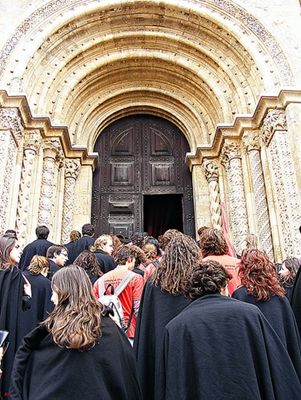
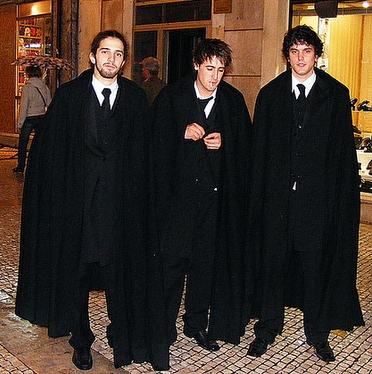
Photographs of students in Coimbra (Portugal), taken by Adam Yamey

The pencil and the peas

PENCIL 2

I spent three years working on the experimental aspects of my PhD topic at University College London (‘UCL’) in a laboratory in the Physiology Department. Throughout that time there were always one or two other PhD students working in the same room. ‘Wink’, our supervisor’s wife, was a chemist. She often worked alongside us. Generally, the atmosphere in the laboratory was very congenial.

We were joined by a new PhD student sometime during my second year in the lab. Fortunately, I cannot recall her name, but let’s call her ‘June’.

One morning, June asked me whether she could borrow a pencil from me. As pencils were few and far between in our lab, I said to her: “Make sure you give it back, please.” To which she answered in an unfriendly tone: “Don’t be so Jewish.”

Now, it so happens that I am born Jewish. Although I am the least observant (in religious terms) Jewish person you are ever likely to meet, I am not happy when the word ‘Jewish’ or ‘Jew’ is used pejoratively. Wink must have seen my face flush, because she said to June: “That was unnecessary.”

Although it was almost innocuous, the pencil incident made me wary of June.

Some month’s later, Wink and her husband invited all their PhD students to be their guests at the annual Physiological Society Dinner, which was being held at UCL. I was seated beside Wink and opposite June. When the main course arrived, there were green peas on our plates. I do not like these small round spheres at all.

June noticed me pushing them aside on my plate, and said: “Is your religion also against peas? I must remember that when I invite you around to my place for dinner.” Feeling my face warming, I said to June: “Even if you were to beg me to come to eat at your place, I would have no hesitation in refusing.” Hearing that, June’s face turned bright red. She stood up and without saying anything, left the dining hall. Wink turned to me, and whispered: “Well said, Adam.”

June abandoned her PhD and our lab not long after this dinner.

PENCIL 1

Now, many years later, I am still sensitive about anti-Semitic remarks, but also deeply curious as to why European people make them, often when they have had little or no contact with Jewish people. In India, which I visit often, although there have never been many Jewish people there, there is barely, if any, prejudice against them. Often Indian people extol the virtues of Jewish people.

Gifts of the grateful

In the 1980s, I visited my friends in the former Yugoslavia frequently. Also, I visited Albania and what is now independent Kosovo. During my trips, I picked up a large vocabulary of Serbo-Croat, including quite a selection of outrageous swear words. Grammar has always been beyond me in foreign languages, and often in my own. My interest in Albania and my brief visits to Albanian-speaking parts of the Balkans resulted in me acquiring some vocabulary in Albanian, but far less than in Serbo-Croat. Until the 1990s, I believed that my fragmentary knowledge of these languages would be useless outside the Balkans.

gift 2

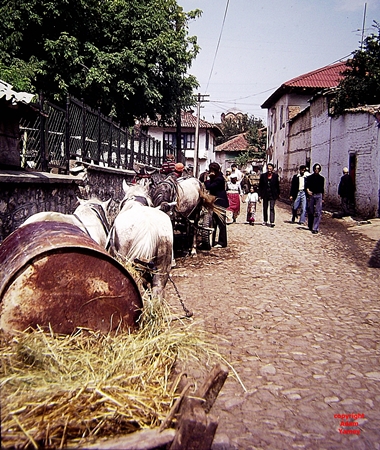
Prizren in Kosovo, pre-1990

During one trip to Belgrade, a friend arranged for me to be an observer in a clinic of a leading oral surgeon. I turned up at a large hospital and spent a couple of hours watching the surgeon reviewing a series of his patients. Although I was grateful to be allowed to watch the great man, I learned little that was relevant to practising dentistry. However, one aspect of this clinic interested me greatly. As each patient entered the consulting room, he or she presented the surgeon with a gift: a bottle, a large piece of cheese, a ham, etc.

The last patient to enter, a man in a somewhat shabby suit, entered and sat in the dental chair without having presented a gift. After his mouth had been examined, the surgeon took the patient and me out into a corridor. We walked through the hospital to a room with locked doors. My host unlocked it, we entered, and he locked the doors behind us. After a brief conversation, the patient handed the surgeon a small brown envelope, which he thrust into his jacket pocket. Then, after the doors were unlocked, the patient went one way, and we went another way. As we walked along the corridor, my host patted the pocket containing the envelope, and before bidding me farewell, said: “Pornographic photographs.”

gift 5 saraj

Poster of Marshal Tito in Sarajevo, Bosnia in the 1980s

My last visit to Yugoslavia was in May 1990.  Soon after that, wars broke out in the Balkans, and the former Yugoslavia disintegrated painfully to form smaller independent states. In the early to mid-1990s, there was terrible strife in Bosnia. Many people fled as refugees to places including the UK. In the late 1990s, Kosovo suffered badly from warfare between the Serbs and the ethnic Albanians. Many of the latter fled to the UK.

I moved from one dental practice outside London to another in London, an inner-city practice, in 2001. A significant number of my patients there had come from the former Yugoslavia as refugees. I was the only person in the practice who could greet them in Serbo-Croat or Albanian. Maybe, I was only one of a few dentists in London at that time who had this ability.

To the Albanian speakers my vocabulary was restricted to words such as ‘hello’ and ‘good-bye’, which brought smiles to their faces. Following a trip to Communist Albania in 1984, I recalled the Albanian words of political slogans such as “Long live Enver Hoxha”, “Enver’s party”, and “Long live the Peoples’ Party of Albania.” As many of my Albanian patients had come from Kosovo rather than Albania, these slogans meant little to most of them.

gift 3 travnik

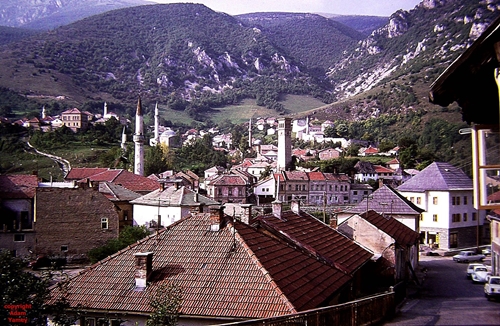
Travnik, Bosnia, 1975

My limited Serbo-Croat was more extensive than my Albanian. I could entertain some of my Bosnian and Serbian patients with polite small-talk. Many of the ex-Yugoslav patients, like those I had seen long before in Belgrade, brought me gifts. Even those, with whom I felt I was not getting along with well, brought me, usually, bottles of home-made alcohol (e.g. rakia, slivovitz, and loza) that had been distilled by relatives who had stayed behind in the former Yugoslavia. These strong alcoholic drinks were delicious, smooth, and delicately flavoured. One fellow plied me with DVDs of the latest Hollywood and other films that he had ‘pirated’. One lovely lady from Bosnia presented me with a pair of earrings, which her uncle had made, to give to my wife. She wears these often, and she is very grateful.

gift 4

Many Middle-Eastern patients also felt that it was appropriate to bring me gifts. Thus, a lot of delicious baklava and other similar confections came my way. Delicious as these were, they were neither good for my teeth nor for my general health. A Hungarian family kept me supplied with large gifts of paprika powder, and there was a Romanian gentleman who brought me nice bottles of wine. Incidentally, the only words of Romanian I know are “thank you” and “railway timetable”. Once, we employed a Romanian dental nurse and I told her my Romanian party-piece “Mersul trenurilor.” She pondered for a moment and then replied “Ah, the programme of the trains.”

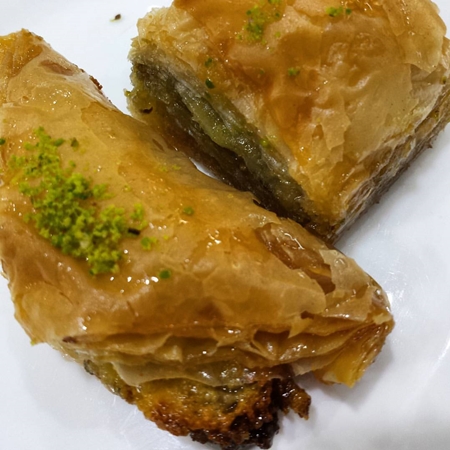
Once, my dental nurse, a friendly West Indian lady, and I were standing near a window facing the main road when a delivery van stopped nearby. A man was delivering trays of baklava to a nearby shop. I said to my nurse: “Why don’t you see if he’ll give us some to try?” She returned with a tray of baklava. Carelessly, because I was in a hurry to see my next patient, I put a large lump of baklava into my mouth, and then bit hard on it. As I was doing this, I heard a deafening bang in my head. The baklava was not too fresh. I had split a molar tooth into two parts, the smaller of which was loose in my gum.

gifts 1

Baklava

Unlike this disastrous piece of confectionary, the gifts kindly given to me by my patients did no harm. Furthermore, what I believed to be a useless tiny vocabulary of Balkan languages proved to be quite useful.  

Finally, you might still be wondering whether anybody ever took me aside to present me with an envelope containing pornographic photographs. To satisfy your curiosity, I can tell you that nobody did.