Spaghetti House

My parents loved coffee. In particular, they enjoyed drinking well-prepared Italian espresso coffee. Every Saturday morning when I was a child in the late 1950s and early 1960s, we used to drive to the car park by Jack Straws Castle, a pub near Whitestone Pond in Hampstead. Now, the pub no longer exists; it has been adapted to become a block of flats. The car park behind it, where we used to leave our car, still exists.

We used to walk down Heath Street, passing the open-air art exhibition if it was summer-time. Our first stop was a café housed within a building with a triangular floor plan, which still stands on the corner of Heath Street and Elm Row. The Pimpernel café/restaurant, which was run by Italians, no longer exists, but this is where my parents used to take their espresso coffee on Saturday mornings.

In those far-off days, espresso machines were not equipped with pre-set electronic controls as they are today. The person making the coffee had to pull down a leaver, which forced the hot water through the powdered coffee and into the cup waiting below it. The speed at which the leaver is pulled determines the rate at which the hot water flows through the coffee and the length of time that the water remains in contact with the coffee grains. These factors help affect the taste and quality of the final cup of espresso and are dependent on who operates the lever. Thus, using the manual espresso machines requires skill and experience. In my parents’ view those who worked at the Pimpernel had these skills. Whenever we visited this café, the kindly staff would give my sister and me a small matchbox sized piece of Italian nougat (‘torrone’). I remember that the piece of torrone was coated on two sides with thin edible rice paper. That there was paper which was edible really impressed my young mind.

There was another place, whose coffee gained my parents’ approval during the 1950s. This was the Bamboo Bar on Finchley Road in Golders Green. It was located under the Northern Line bridge which straddles Finchley Road close to Golders Green station and opposite a now disused covered walkway which was once an entrance to the station.

SPAG 2

Although the walkway and the Bamboo Bar have been closed for many decades, there is still an eatery in the same place, the popular Artista Italian restaurant. The latter is much larger than its predecessor.

SPAG 1

The walls of the Bamboo Bar were lined with bamboo. It was run by two Italian men, Lorenzo Fraquelli and Simone Lavarini. My parents, who both loved Italy and her people, enjoyed chatting with these fellows. In 1955, they opened the first branch of what was to become the now widespread, extensive chain of Spaghetti Houses.

As mentioned, the Bamboo Bar closed years ago. Sometime in the 1960s, another café, Bar Linda, opened next to the bus station at Golders Green. This souvenir of my childhood still survives and is thriving.

SPAG 3

One branch of the Spaghetti House chain made headline news in 1975. It was the branch, now closed, in Knightsbridge. This was the branch where managers of the various outlets of the chain would meet occasionally to deposit their takings before they were deposited in a nearby bank’s night-safe. On the days of the meetings, this restaurant was closed to the public. On Sunday 28th September, three armed men burst into the restaurant and demanded the takings that had been collected from the branch managers, who were meeting there. They bundled the managers in the basement. Luckily, one of the managers escaped and alerted the police, who arrived promptly.  The bandits held the managers hostage for three days before giving themselves up to the police. This event became known as the ‘Spaghetti House siege’. I am pleased to report that nothing remotely exciting as that has ever occurred during my years of visiting this restaurant chain.
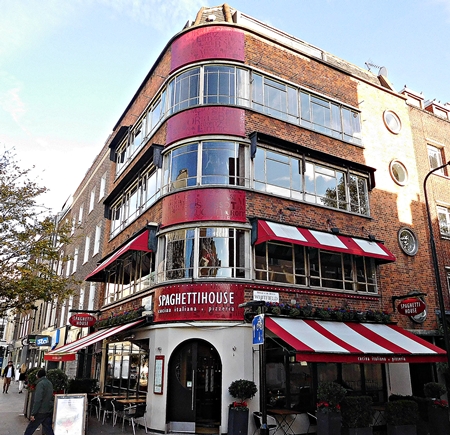
SPAG 4

The first branch, which still exists, stands on the corner of Goodge Street and Whitefield Street (see picture above). When I was a young boy, my mother often treated me to a meal at this restaurant. We became quite familiar with the staff.

Many years later in 1970-71 during my first year as a BSc student at University College London (‘UCL’), I used to treat myself to lunch at the Goodge Street Spaghetti House. It was more expensive than the numerous canteens that were available on the UCL campus, but the food was far better. The ground floor of this multi-storey restaurant, like the Bamboo Bar, had walls covered with bamboo. This has long since been replaced by newer wall coverings.  Some of the waiters who were working at the Goodge Street Spaghetti House were getting on in age by the time I began my undergraduate studies. At least one of them used to greet me as she remembered me as a child. Not only had she worked at the Spaghetti House since its opening, but she told me that she had also been a waitress at the Bamboo Bar.

We still eat the occasional meals at various branches of the Spaghetti House chain. The food is usually of a good standard. A few years ago, I met a chap with whom I had been to school before 1960. I had not seen him since about 1971, and then only extremely briefly. We agreed to meet up at a Spaghetti House restaurant. He told me that he preferred meeting people on ‘neutral territory’ in places like restaurants, rather than in homes. Although he had aged quite a bit since we were both 8 years old, he was recognizable. Almost as soon as he met me, he said to me:

“Oh, I thought I was meeting someone else, not you.”  

Happy birthday, Mr Gandhi!

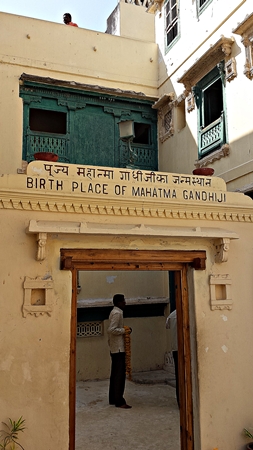
2nd of October was Mahatma Gandhi’s birthday. Here are pictures of his birthplace in Porbandar

yamey's avatarGUJARAT, DAMAN, and DIU

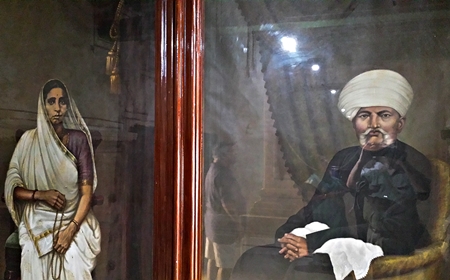
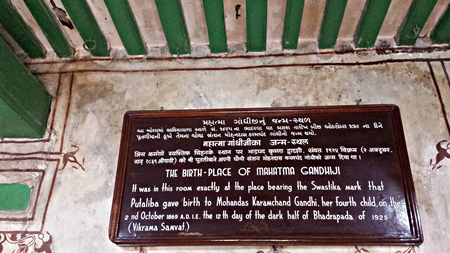
Mohandas K Gandhi, the Mahatma, was born in Porbandar (Gujarat) on the 2nd of October 1869. The house in which he was born still stands, and is now part of the Kirti Mandir memorial complex in the centre of Porbandar. Here are some photos of Gandhi’s birthplace that Adam Yamey took in March 2018:

gand 1

gand 0 Gandhi’s parents

gand 1a

gand 2 The swastika marks the spot where Gandhi was born
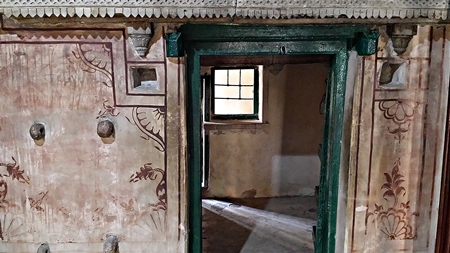
gand 3

gand 4

View original post

Summers in Florence

I hope that this piece will not sound ungrateful, dear reader.

ARY 36 HW 60s

When I was a child and in my early teens, my parents, who were art-lovers, took my sister and I to Florence every summer. As a child, I failed to appreciate what a treat these visits were. At the end of the summer when school recommenced, my friend N and I would compare notes about our holidays. N visited Llandudno in North Wales every summer with his parents. He would relate how they had climbed the Great Orme, travelled on a special tramway, and stayed at a marvellous hotel overlooking the sea. What was I able to tell N? Well, nothing that I believed would rival the exciting things that N had experienced. What, for example, was the Uffizi art gallery in Florence when compared with the Great Orme in Llandudno? I mention the Uffizi in particular, because our annual visits to this treasure house of art filled me with despair. I wrote of this place in my book “Charlie Chaplin Waved to Me” (available from Amazon and Bookdepository.com) as follows:

The aforementioned Uffizi was another of the places that we often visited in the morning. I used to dread having to walk through its seemingly endless series of inter-connected galleries filled with masterpieces. The only thing that sustained me during this ordeal was the promise of an ice-cream afterwards or the promise of the opportunity to buy a paper cone filled with corn to feed the pigeons in the Piazza Signoria outside the gallery.

One of the first pictures that we always used to stop and admire was the Portinari Triptych painted by the Flemish painter Hugo Van der Goes in about 1475. That was during the time when the Florentine merchant Portinari, who commissioned it, was living in Bruges in the building which became the hotel in which we often stayed. My father, who is fascinated by the iconography of Renaissance art, explained to us the meanings of everything in this beautiful picture. My very young sister absorbed this information so well that year after year she could explain to us, and also to other tourists, who gathered around to listen to her, the reasons that particular things were depicted in it. For example, she could relate why there were a certain number of lilies in the vase near the bottom of the central picture; and why there was a barely visible devil’s horn at its top left, just above the horn of a cow grazing in the holy manger. This horn only became apparent after the picture was cleaned in the early 1960s.

The museums and my late mother’s seemingly endless visits to the dress-maker and countless shoe shops added to my lack of enjoyment of Florence. However, it was not all gloom and doom. The food we ate was lovely and there were some cultural sights which I enjoyed. And, Florence did hold some mysteries, one of which was solved between two successive annual visits. Let me quote from my book again:

The River Arno flows through Florence. It is traversed by a number of bridges, the most famous of which is the Ponte Vecchio. This is covered, like the mediaeval London Bridge used to be, with buildings and shops. The most interesting feature of this old bridge was the‘secret’ corridor that ran along its buildings just beneath their roofs. This, so my father often told us, linked the Uffizi on one side of the Arno with the Palazzo Pitti on the other side, the Oltrarno. Thispassageway, which must be about almost half a mile in length, allowed Florence’s rulers to move between these important buildingsunobserved by the public. It was closed to the public when we used to visit the city.

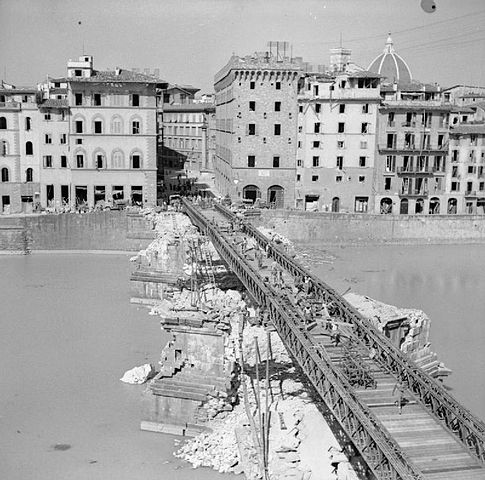
When the Germans retreated at the end of WW2, they demolished all of the bridges across the Arno except the Ponte Vecchio. They decided that as its carriage way was far too narrow to accommodate military vehicles and large troop movements, it could not have been used by the Allied armies chasing them. My father said it was a tragedy that this bridge was saved whereas its neighbour a few yards downstream was demolished. This bridge, the Ponte Santa Trìnita, was a masterpiece designed by the renaissance artist Bartolomeo Ammanati (1511-1592). His Fountain of Neptune is an important and much photographed landmark in the centre of Florence.

When we first visited Florence, the bridge, which was painstakingly reconstructed after the war from the fragments found scattered about under the waters of the Arno, had two statues at each of its ends. Three of these were complete, but one of them was missing its head. This was the only bit of the bridge that had not been recovered. One summer, when we were visiting the city, my father pointed at the bridge and asked us if we noticed anything different about it. We discovered that the missing head had been found, and was back in its rightful place; the bridge was complete again. This must have been in 1962, as the head was only recovered late in 1961.

Most people reading this blog article, will probably think that I was so lucky to have visited Florence so often, and they would be justified. However, to a young boy as I was, I could not appreciate it properly. Now, many years later, I realise that my exposure to the arts at such a tender age was a great gift bestowed by my parents, even if it meant that I never saw the Great Orme.

Pilgrim on a ‘plane


While I was practising as a dentist, people at parties often asked me what I did for a living. Telling them what I did often brought the conversation to a quick conclusion.

MARY

Medjugorje is a small town in Bosnia and Herzogovina. Between 1942 and ’45 during the Nazi occupation of Yugoslavia, over sixty Roman Catholic friars were killed there, allegedly by Communist resistance fighters. In 1981, when this area was still part of the former Yugoslavia, some six children claimed to have seen visions of the Virgin Mary. Despite opposition by the Yugoslav authorities, Medjugorje rapidly became a place of pilgrimage. The authorities softened their opposition to this during the last few years leading up to the country’s tragic disintegration.

I used to visit friends in Belgrade often during the late 1970s and throughout the 1980s. I flew back and forth, often on flights operated by Jugoslovenski Aerotransport (‘JAT’), one of Yugoslavia’s two major airlines, the other being the former Aviogenex. A friend of mine in Belgrade was once looking after some visiting German bankers, when he told them:

“Yugoslavia has two state airlines. Germany only has one … now that the Luftwaffe has been closed down.”

Many of the JAT flights between Belgrade and London touched down at Zagreb to pick up passengers. In the ‘80s, Zagreb was an airport used by pilgrims visiting Medjugorje. I was travelling back to London with a friend from Belgrade. We had occupied two of a set of three seats. We used the middle seat, which was free when we boarded, to store some of our hand-baggage. Many people boarded at Zagreb, including a man who occupied the middle seat. He told us that he had just been to Medjugorje, and asked my friend:

“Do you believe in the Blessed Virgin Mary?”

“I would love to discuss that with you,” she said, “but not now because I have a terrible headache.”

The pilgrim turned to me, and then asked me something.

Not having heard it properly because of the noise made by the ‘plane’s engines, I replied:

“I am a dentist, actually.”

After that, our initially chatty pilgrim neighbour did not say a word during the flight to London.

The slow table

Food can be scarce

but when it’s abundant

let folk have plenty of choice

ADAM small


I attended Golders Hill School, a primary school in in Golders Green, between 1956 and 1960. It was a high-achieving school for boys and girls with an all female teaching staff. Founded in 1908, just after the Underground was extended from Hampstead to Golders Green, it still works today but in a greatly enlarged ‘campus’.


We used to spend all day at school. Lunch was served at 1 pm. We sat at various long tables. The children sitting on the table which ate its food fastest were  rewarded with a piece of confectionary from a box of ‘Dolly Mixture’.


I was a fussy eater. Having had a difficult few first months of life, my mother was happy to see me eating anything at all. I was not forced to eat anything I did not fancy. Actually, there were few foods that I was prepared to put in mouth. A particular dislike of mine, which remains with me to this day, is green peas. Their taste, or even just thinking about them, makes me feel nauseous. I can recall that my mother was keen that I should get to like these nauseous little green spheres. She would put a few on my plate. To avoid eating them, I employed the following delaying tactict: I would first slowly peel a pe, and then carefully cut into four pieces. My parents soon tired of watching, and eventually attempts to make me consume them were abandoned.


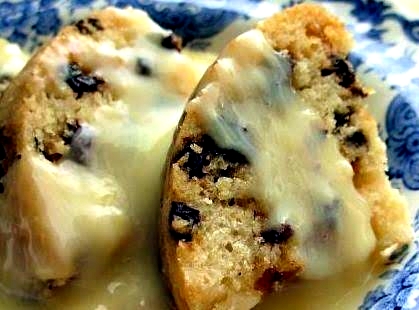
Almost nothing that was served at Golders Hill appealed to me apart from steamed pudding and the oddly named ‘spotted dick’. Main courses often came served with cubed carrot, chopped green beans, and green peas. I would not touch them. No table that I sat on would ever be rewarded with pieces of Dolly Mixture.

spotted

Spotted Dick with custard – source: https://www.justapinch.com

I was shifted to the slow table, where the four slowest eaters in the school sat trying to finish their food during the play time that followed lunch. I remember nothing about the three other members of the slow thable except that they were all girls and one of them was called Rhoda.


Even if I had been kept at the slow table for the rest of the day, there was no way that I would be able to finish what was in front of me. I devised a solution. I put whatever I could not eat into the pockets of my short trousers (‘shorts’), visited the toilet, and then emptied the unwanted food into the toilet pan, and flushed it away. This worked for most foods including slices of canned fruit.


My biggest challenge, and I can only remember it happening once, was gooseberries in hot custard. I felt that putting this in my pockets was not at all a good idea. In desperation, I carried my filled bowl to the closed door of the staff room. I knocked on the door, hoping that whomever answered would take pity on me. A forlorn hope because many of the teachers were quite formidable. I hoped that it would not be the large Miss Fitzgerald, who frightened me greatly. If it was Miss Dredge, I would have felt happier.


I cannot say who it was that opened the door. But, as soon as it opened I dropped the plate with all of its contents ont the feet of the teacher at the door. It still puzzles me why I was neither punished nor told off for my act of carelessness, or was it defiance.


PS: I still dislike peas, but now I love gooseberries.

African meeting

Timewarp_500

All of the relatives in my parents’ generation were born in South Africa. Some might say that they were ‘Africans’ although many Africans might not agree. One of these always arrived at our house at least an hour before we had invited him, and another usually did not arrive until one hour after we had invited him. My parents, on the other hand, were sticklers for punctuality.

For several years, I worked in a dental practice, which might have well been described as the “United Nation of bad teeth.” My patients had originated from all over the world. They came from, for example: Brazil, Algeria, Morocco, Tunisia, the West Indies, Spain, Portugal, tropical and southern Africa, the former Yugoslavia, India, Pakistan, Afghanistan, Ireland, and a few from the UK. Few of them appreciated the importance of punctuality.

We operated an appointment system in the practice. Patients booked specific times on particular days for their chance to visit me or one of my colleagues. Most of them either turned up at the wrong time or not at all. Consequently, my days were broken up into periods of frenetic activity separated by periods of inactivity, plenty of time to read a book.

One afternoon, a Tunisian gentleman turned up for his appointment at the right time on the correct day. I was so surprised that I said to him:

“How nice. You’ve come on time. Most of my other patients are not as courteous as you. They come whenever they feel like it, if at all.”

The patient listened, removed his coat, sat in my dental chair, and then said:

“Yes, that what we call in French ‘rendez-vous africaine’”

Somehow, after hearing that, my patients’ erratic attendance and timing began to make sense with me, and no longer bothered me. It also chimed with the erratic timings of some of my South African relatives.