Unknown's avatar

About yamey

Active author and retired dentist. You can discover my books by visiting my website www.adamyamey.co.uk .

Seeing John Travolta in Serbia

The film “Saturday Night Fever”, starring John Travolta, was released at the end of 1977. It reached the UK in 1978, the year that I first spent a lengthy holiday in Belgrade, the capital of the former Yugoslavia. In this excerpt from my book “Scrabble with Slivovitz”, which is about Yugoslavia before its dismemberment in the 1990’s, I recalled some aspects of socialising in Belgrade. (The photos of Belgrade were taken in the late 1970s, early 1980s).

B2 BEOGR 82 Terazije with intourist

We spent every evening eating out in restaurants such as Vuk, Doboj, and Mornar, as well as visiting Mira’s friends. Her father was a diplomat, and many of her acquaintances were the children of members of the upper echelons of Yugoslav society. Almost all of them lived in spacious apartments, which made many middle-class British homes seem modest in comparison. My knowledge of the Serbo-Croatian language was almost non-existent during this first visit to Belgrade. Most of the people to whom I was introduced spoke English with varying degrees of competence; many of them were almost fluent. Naturally, most of the conversation was in their mother tongue. I listened quietly, imbibed the (often smoky) atmosphere, and sipped numerous glasses of almost neat vodka, which was my favourite alcoholic drink at that time.

B3 BEOGR 86 View into a yard

We used to return to Strahinjića Bana late at night or in the early hours of the morning. We often encountered the workers who were hosing clean the main streets long after most people had gone to bed. Sometimes, in jest, they aimed their powerful jets of water at our feet and made us dart out of their reach. Once or twice, I remember waking up the morning after an evening of particularly heavy vodka consumption and noticing that the surface of the skin of my limbs and digits were slightly numb. I know now that temporary paraesthesia of the skin is a common after-effect of this particular drink and is the cause of many deaths in Russia. When someone ‘sozzled’ with vodka lies down in the snow, they are unable to feel its coldness because of this anaesthetic effect of the drink, and they are literally chilled to death.
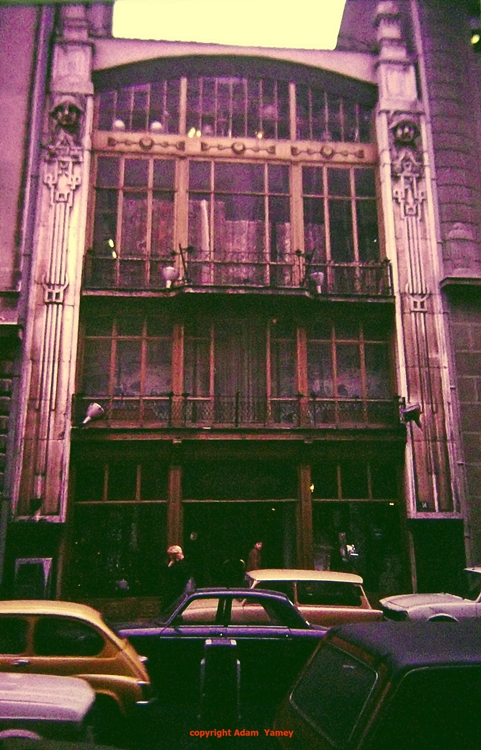
B4 BEOGR 86 7 Juli facade

Just before setting off for my first stay in Belgrade, I accompanied one of my numerous cousins to the cinema in London in order to watch the recently released film “Saturday Night Fever”. It was not a film that I would have chosen to see. In those days I preferred intellectual arty films, many of which were screened at the now long since demolished Academy Cinemas in Oxford Street. However, to my surprise, I enjoyed it. In Belgrade, Mira asked me whether I minded seeing “Saturday Night Fever”. Her cousin Ana, who was much younger than mine in London, wanted to see it, and she was taking her with Peter. Out of politeness, I did not say that I had already seen it in London; I agreed to join them. The cinema was of a design that I had not seen before. The seats were not raked, but the screen was placed high enough so that no one sitting in a seat behind another would have his or her view blocked. I saw the film again, but this time with Serbo-Croatian subtitles. It was not dubbed. Had it been, it might have been an even more amusing experience.
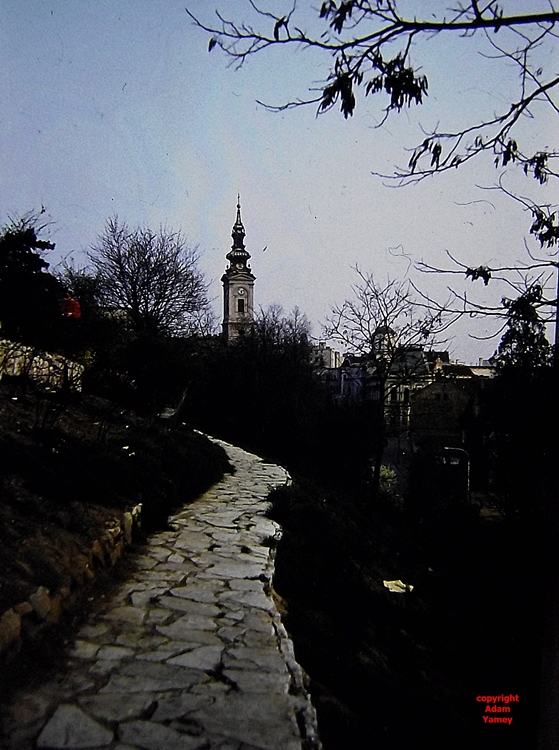
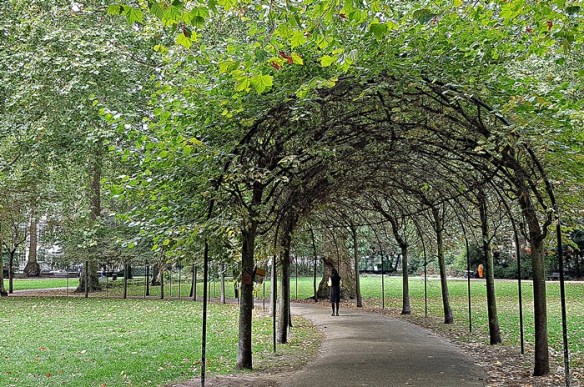
B1 BEOGR 82 Kalmegdan path

Once when visiting friends in Budapest in Hungary many years later, I watched a Benny Hill show dubbed into Hungarian, which greatly improved its entertainment value.

B5 PASS Crossings YU GR

After my first visit to Belgrade, I joined my parents in Greece for a driving holiday around the Peloponnese peninsula. Wherever we stopped, music from “Saturday Night Fever” was being played in the background. It was all the rage that summer. During our journey we stayed at a hotel in the southern town of Gytheion. The hotel’s restaurant had a gramophone, which was playing a rather slow, slightly mournful tune. Soon, I realised that it was a number from Saturday Night Fever. It was being played at the wrong speed, 33 rpm instead of 45! Nowadays, the film not only brings back happy memories of a trip to the Balkans …


Once upon a time in Yugoslavia

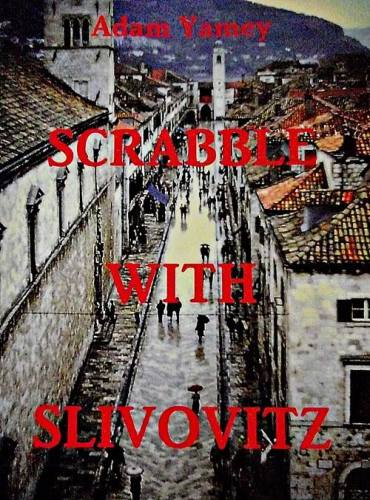
Scrabble with Slivovitz” by Adam Yamey is available as a paperback or Kindle from Amazon. The paperback is also obtainable via lulu.com, Barnes & Noble,  and Bookdepository.com

Parsis and Jews in India

Two minority religions in India: the Parsis and the Jews

yamey's avatarGUJARAT, DAMAN, and DIU

Cyrus the Great, King of Persia and a Zoroastrian, ended the Jews’ long captivity in Babylon, and commanded them to rebuild the temple in Jerusalem

PAR 0 Market near Bhadra Fortress, Ahmedabad
The places of worship of two of India’s minority religions face each other at one end of a small street in central Ahmedabad, not far from the busy market-place by the Bhadra Fortress. One building is the Magen Abraham Synagogue. Opposite, is a Parsi Fire Temple (‘agiari’). Both the Parsis and the Jewish people settled in India long ago and have lived there peacefully ever since. In proportion to their small numbers compared with the rest of India’s huge population, both communities, especially the Parsis, have made a disproportionately large positive contribution to the success of the country. In view of the great benefits they have provided to the country, some say that the Parsis are the ‘Jews of India’…

View original post 840 more words

Ticket to Sofia

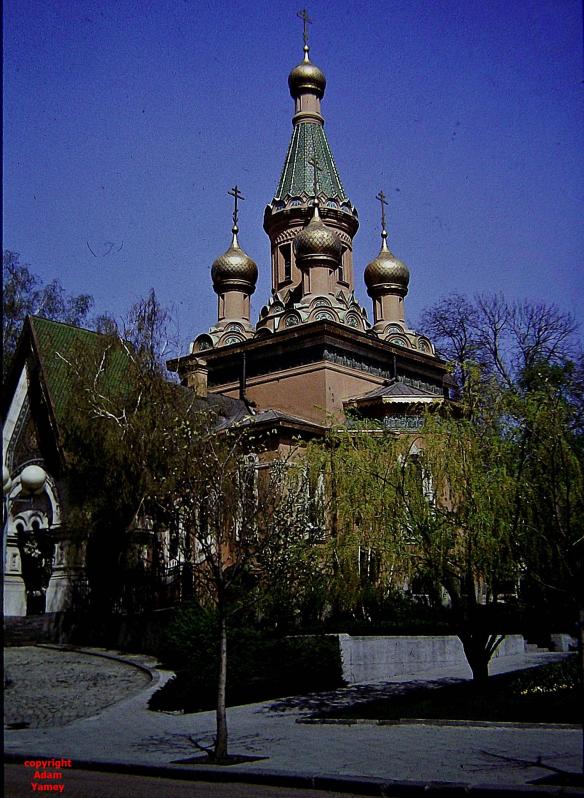
BULG 1 sofia church

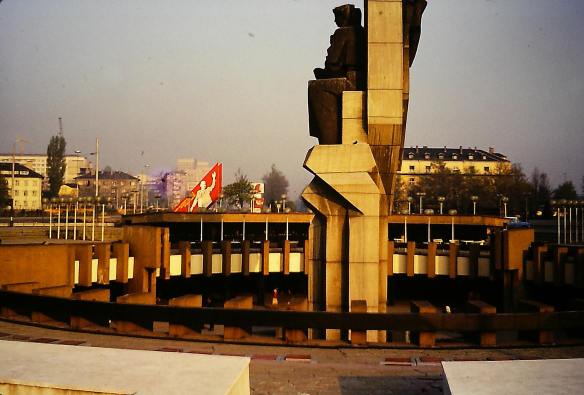
A church in Sofia, 1983

I decided to travel to Bulgaria in Easter 1983; it was close to Yugoslavia and I had not been there before. I wanted to travel by train rather than air, and to visit friends on the way. I planned to start my journey from Rainham, the village in Kent where I had been practising dentistry for just over a year.


I went to the local station and asked about buying a return ticket from Rainham to Sofia. I was told that as this was not a commonly made journey I needed to go to a special office at London’s Victoria Station to get this prepared. I did as I was instructed, paid the fare, and was informed that my ticket would be ready for collection a week later. Armed with this bespoke ticket and a Bulgarian visa, I left Rainham for Dover, crossed the English Channel by steamer, and then boarded a train bound for Milan.

BULG 4 Sofia outskirts

A factory on the outskirts of Sofia, 1983

My future wife, Lopa, was living in Milan, where the company for whom she worked as a management consultant was based. During the few days that I stayed with her, I met Dijana (from Belgrade) and her then boyfriend quite by chance in the Piazza del Duomo, the huge square in front of the cathedral. They came to eat with us at Lopa’s flat, where her mother was also staying during a long visit from India. Dijana, whose interests in feminism were developing rapidly at the time, was impressed that Lopa’s mother was a doctor, a gynaecologist. She held female professionals in much higher regard than male ones.

After dinner, Dijana and her friend washed the dishes. I remember that when her unshaven boyfriend, who was desperately attempting to empathise with her burgeoning feminism, was washing a pan, he pointed out that he was washing the outside of the pan as well as the inside. He claimed vociferously and self-righteously that most men ignored the outsides of cooking pans, whereas women always washed them. I believe that his close relationship with Dijana was short-lived.

BULG 3 Sofia univ

University of Sofia, 1983

I continued my rail journey to Belgrade, where I stayed, as usual, with Raša. I learned that disaster had struck: there was a grave shortage of coffee in the city. This was truly a tragedy amongst its citizens, most of whom drank vast quantities of the stuff. I promised Raša that if I saw coffee for sale in Bulgaria, I would bring him some on my return. A few days later, I met my friend Shabnam at Belgrade’s railway station. She had arrived from London, and was joining me on the trip toBulgaria.

When our train had crossed the border and entered Bulgarian territory, a Bulgarian immigration official came into our compartment and examined our passports. After handing them back to us, he sat down and asked us where we were going. When we said that we were visiting Bulgaria and going no further, he smiled. It was, I felt, an expression of genuine joy. He was so pleased that we were taking the trouble to visit his country rather than simply using it as a corridor, as most travellers did on their way to Turkey.

BULG 1a Sofia Station

A railway station in Sofia, 1983

At the main railway station in Sofia we exchanged some of our Sterling for Bulgarian Lev at an official bureau-de-change. I had read that it was best to avoid black market currency exchanges because, even though a highly favourable rate of exchange could be expected, there were serious penalties for foreigners who used unofficial money-changers. Even at the official rate of exchange, we found everything in Bulgaria to be ridiculously cheap by our standards.

The station was quite far from the city centre. We hired a taxi to take us there. When we reached the destination, I asked how much we needed to pay. I spoke in my primitive Serbo-Croatian which was useful for making me understood in Bulgaria. This was not surprising as Bulgarian and Serbo-Croatian are quite closely related on the family tree of languages. The driver replied,“One Pound, one Dollar, one Deutschmark, one Swiss Franc…” “But we have Lev,” I interrupted, waving some Bulgarian currency notes at him. The driver stuck his nose into the air contemptuously, and said, “Two.” I pointed at the meter, which indicated a fare of one Lev, and said, “It says ‘one’.” He turned around and pointed at the two of us, and said, “Two, you are two people.” I gave up and paid. After all, 2 Lev was worth about 3 pence in those days.

BULG 5 Sofia dimitrov

Mausoleum of Bulgarian Communist politician Georgi Dimitrov[1882-1949] in Sofia, 1983

A lady at the tourist office arranged for us to stay in some private accommodation, and then explained how we should reach the place. I asked her to repeat the information as I had not heard it properly. She looked at me sternly, and said in English, “You need to concentrate better.”


This is an excerpt from my book “Scrabble with Slivovitz”, which is available on Amazon and bookdepository.com

BULG 0 Scrabble

The maharajah’s garage

Guide books and garages

yamey's avatarGUJARAT, DAMAN, and DIU

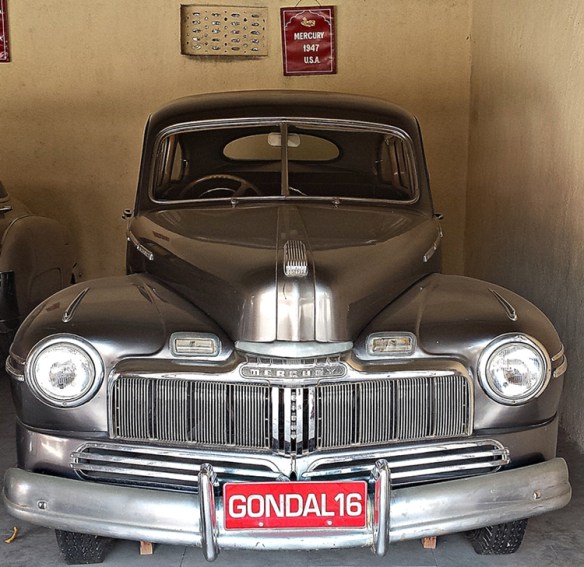
I am not sure that we would have discovered the collection of cars assembled by the maharajahs of Gondal had we not had a detailed guidebook to Gujarat. Maybe we might have learned about it by chance but being in possession of a guidebook made certain that we were aware of it.

book 3

Detailed guidebooks of Gujarat, written in English, are few and far between. During the planning and our actual trip, we made use of two books.

book 1

Philip Ward’s “Gujarat Daman Diu – A Travel Guide” was published in 1994. Like his excellent guidebook to Albania, Ward presents Gujarat and its associated former Portuguese colonies in the form of a detailed, informative travelogue. It is a book that is both designed to be read in an armchair and to be used ‘on the road’. However, it was written before the earthquake of 2001 and its practical information is out of…

View original post 568 more words