I say serviette
You say napkin
Does it make so much difference ?

I say pavement
You say sidewalk
The mighty Atlantic divides us


I say serviette
You say napkin
Does it make so much difference ?
I say pavement
You say sidewalk
The mighty Atlantic divides us

There was a young receptionist at one of the dental surgeries where I once worked. Let us call her ‘M’. Engaging her in conversation was not easy, but I tried often and succeeded occasionally.
Once, M announced that she was taking a week’s holiday. When she returned, I asked her:
“How was your holiday?”
“Ok,” M replied vaguely.
“And, where did you go?” I asked.
“I don’t know.”
“Really?” I queried.
“I just got a last minute package trip and got in the ‘plane,” she told me.
“If you don’t know where you went, what was it like?” I asked.
“Not very exciting, really. All of the beaches were covered with black rocks and stones.”
I guessed that M had probably been to one of the volcanic islands in the Atlantic. It surprised me that someone could take a flight somewhere and have no idea where she had landed. What if something awful had happened to her? Who would have known where she was?

Most people are very apprehensive about making a visit to the dentist. But, how many dentists are filled with apprehension at the prospect of seeing patients? Almost every day during my 35 years of practising dentistry, I walked into my surgery with a feeling of worry, concern about what might happen during the day.
The average non-dental person might not realise that treating patients is like walking on thin ice. With many patients in the UK just itching to sue the dentists, whom they fear, even the slightest thing might lead to a legal confrontation between the patient and the dentist. Clearly when a patient suspects that the dentist has made a clinical error, pulled the wrong tooth for example or made a filling that keeps failing, recourse to compensation is sometimes reasonable. However, something far less ‘life-threatening’ like a verbal misunderstanding can lead a litigious person to attempt to obtain remedial compensation. So, to avoid trouble and also to ensure that a patient leaves satisfied, the prudent dentist must treat each patient with tact, delicately, and clinical excellence. All that seems quite reasonable.
However, there are patients, whom the dentist dreads. The very sight of their name on the day’s appointment list can ruin the dentist’s day from the moment he spots it. These people, many of whom I wish I had been courageous enough to dismiss, often exploit the dentist’s desire to provide them with excellence. They ask for the impossible, or for things they know that they cannot possibly afford, and they are never satisfied. Worse still, they keep coming back to the surgery for minor matters, which are often unresolvable because of their sad personalities. I may sound a bit harsh, but many of the persistent complainers that I saw were unemployed, receiving their treatment free of charge (because of state subsidies), and had little else to do apart from sit in dentists’ waiting rooms.
Then, there are the dental obsessives. These patients are often quite charming until they reach the subject of their teeth. Even what you and I might hardly notice becomes a major problem for them, even a life crisis. They will keep asking the dentist to redo some small repair on a tooth because they, and only they, can perceive that there is some minute imperfection. And because of fear of complaints and litigation, I used to plough on with these people and long for retirement. Sometimes, I felt like telling them that in the grand scheme of life, a minor ‘defect’ in the teeth is nothing compared with having a major illness, or starving during a famine, or being injured in a traffic accident, but I ‘bit my tongue’.
Despite my continual anxiety about keeping the patients on my side, there was the odd occasion when a patient was genuinely grateful for something I had done. Those expressions of gratitude were worth more to me than whatever fee my treatment had attracted.
So, next time you have to visit the dentist and are filled with fear, spare a thought for the dentist, who might well be feeling the same as you, but cannot show it because it would wreck your confidence in him or her.
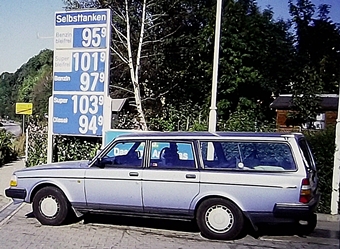
I passed my driving test in mid-1982, shortly after qualifying as a dentist. Like many dentists I have met, I went through a phase of fascination with cars.
My first car was second-hand. I was advised to buy something not to expensive just in case during my first months on the road I was to have had an accident. I bought an Austin Allegro from a local dealer. It seemed in great condition given its low price. However, it had at least one annoying defect: it would stop suddenly without warning. This defect was due to a loose connection in the ignition system. After a very few months, the car began emitting blue smoke from its exhaust. This was due to some major defect in the engine, which would have cost more to repair than the car itself. When I confronted the dealer, who had sold me the Allegro, he reccommended that I bought a new car. I told him that I was not happy with his response because I had had the car for such a short time.
A local garage did something temporary to the engine to improve its part-exchange value, but also advised me to obtain another vehicle. To my great surprise, the local VW dealer offered me a very good part exchange price if I bought a VW. I bought a VW Polo Formel E. This was not a car for using on the Formula One racetracks, but a comfortable, very easy to drive, practical small car. The ‘Formel E’ related to the fact that the car had a gear setting that allowed low fuel consumotion. This car served me well and would have kept on going for many years, but I had my eyes on owning a Volvo.
The first Volvo I bought was a Volvo 340, a descendant of the Dutch DAF models. Like the Allegro, mine had a persistent problem. It also stopped suddenly and without warning. Despite many visits to the local Volvo dealer, no one could solve the problem. Eventually, Volvo recalled my car for a modification to rectify a design fault in the carburettor. After that, the 340 behaved well and survived a rear end shunt with very little damage. My lust for another car sent me back to the car showrooms after about two years.
I bought a Volvo 240 estate car. Though enormous and looking aerodynamically inefficient, this car was superb. It handled as easily as my relatively tiny VW Polo had done, and it could fly along if speed was needed. Once on the autobahn in West Germany, I managed to move the car at 105 mph uphill, and even then my foot had not completely pressed the accelerator pedal to its fullest extent. This spacious, easily manoevrable car carried me right across Europe from Kent to Belgrade, and on another trip from Kent to Budapest. Why I traded in this Volvo 240 for a newer Volvo 240, I cannot recall. Both 240s were excellent, but a new model of Volvo had arrive on the market place.
I part exchanged my perfectly good Volvo 240 estate for a brand new Volvo 850 saloon. This was a complete disappointment after the 240 models. It looked good by Volvo standards but was not pleasurable to drive. When I took it to a Volvo dealer a couple of years later, I was offered a pathetic part-exchange price against a new Volvo. I was told that the 850 did not sell well second-hand.
Very disappointed with Volvo, I rang the local Saab dealership. When they learned my wife was pregnant, they offered to bring a model of the Saab (in our price range) to our home so that I could take it for a test-drive. As soon as I sat in the driving seat, I knew that we had to own a Saab. We bought a Saab 900, which lasted us well for a few years, and would have lasted us much longer had we not decided to trade it in for a newer model before its resale price dropped too far. We bought a Saab 9-3, which sadly lacked some of the quality of the first Saab we owned.
Ten years ago, we set out to attend our friends’ golden wedding anniversary party in rural Kent. Before leaving London, we replaced our four tires as required after we had the results of our car’s official car inspection (MOT test). We arrived early and decided to visit a bonsai nursery that we had seen a few years earlier. When we returned to the car, ready to drive to the party, I turned the ignition key and all that happened was a grinding noise from the engine. We called the AA (roadside assistance), who arrived quickly. The engineer looked at the enging and discovered that the fan belt had slipped off its mountings. Worse than that, one of the parts of the engine thatrelied on the fan belt had a severely distorted metal part. We asked the enginner roughly how much it would cost to repair the fault. He said he thought it would be at least £300.
Now, when I had last visited the Saab garage, I had asked for a part-exchange quote for our now ageing car. I was told that £400 would be generous. Consequently, we decided not to replace the car, but to sell it to scrap dealers, who gave us a paltry sum for it. Since then, we have not owned an auto, and life has been, surprisingly, less stressful.
You may be wondering how we reached the party. The kind AA engineer took us to a local car hire place, and we picked up a car (paid for by the AA as part of our membership plan), and arrived quite late at the party.

At first sight, I thought I saw a man standing alone and naked out in the waves at Margate on a sunny but very windy afternoon. Crazy, I thought to brave those rollers on suchb a cold day and without a wet suit. Then, I noticed that he was coloureed green and motionless despite the battering he was getting from the sea. He was not a man, but a sculpture.
This sculpture braving the sea is Another Time created in 2013 by the British sculptor Antony Gormley (born 1950).
The clever thing about this sculpture is placing it in the water. Though static, the waves dashing against it can create the illusion that the sculpted man is moving. Also, by putting it in the sea, the whole sea becomes an important part of the artwork.
Although I am not too keen on Gormley’s art works, this piece at Margate, just outside the Turner Contemporary art gallery satisfies me greatly.
You can now see the sculpture and the waves in this short video: http://www.ipernity.com/doc/adam/48815810
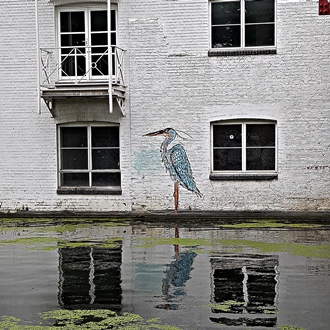
Bird on a wall
Watery reflecti-on:
Grand Union Canal

I travel a great deal and sometimes get lost. It is then that I might ask a passer-by for directions. Generalising a bit, the kind of answer you get tends to vary from country to country.
During trips to the USA, I have either been told that the person I asked has absolutely no idea at all or I have been given very precise, accurate directions.
In the UK, if you ask directions from the average person you meet by chance, several things might happen. First of all, you might be given accurate directions. More likely, you will recieve a vaguer reply like:
“I think it’s somewhere in that direction. Follow that road, and then ask again.”
Because most British people want to be helpful, you might be told:
“I think I’ve heard of it. You could try going that way, but I’m not sure.”
But, it is very rare that you will be told:
“I’ve absolutely no idea.”
In India, asking directions can result in a small conference taking place. People within earshot of the person you first asked will join in the discussion. Often each person will point in a different diection in an attempt to be helpful and also to have the chance to meet a stranger. Like the Americans, who will happily admit ignorance of places that do not have any importance in their lives , many Indians also only know how to reach places where they need to be but not others. But, unlike the Americans, Indians do not want to disappoint visitors to their country by not supplying some kind of answer.
Of course, all of the above is highly generalised. But, here is one specific example, which occurred in Istanbul, Turkey. We were looking for some place of interest, but could not find it. We entered a shop. Without having any knowledge of Turkish, we managed to make it clear what we were looking for. Without hesitation, the shop keeper abandoned what he was doing, becckoned us to follow him, and then walked with us through the area until we reached our desired destination.

A flower pressed
Between the leaves of a book:
Memory of times past
Picture modified from alamy.com

The first alcoholic drink that I enjoyed in my early teens was Martini Vermouth. I liked it neat with a piece of ice.
One evening, a wealthy relative invited my parents and me to join them at London’s Savoy Hotel, where they were staying. Before dinner, we had drinks in their suite. I must have been about fourteen then.
The room service waiter arrived, and we ordered drinks. I asked for my then usual Martini. Soon, the drinks arrived. I was handed a large glass tumbler with a thick base. It contained a clear liquid that did not look like Martini to me. Also, it did not smell like Martini, and its taste did not resemble anything I had drunk previously. Being a polite young fellow, I did not remark on it, but just sipped it slowly whilst the adults chatted.
When it was time to get up and descend to the dining room, I had an odd sensation. I stood up and looked at the floor which seemed to be undulating like the waves in the sea. Whatever I had drunk had gone straight to my head. What I had been served was not the dry Martini, which comes straight from the bottle, but the cocktail Dry Martini, which is mostly gin and only a dash of Martini. You live and learn.
picture source: http://www.diffordsguide.com
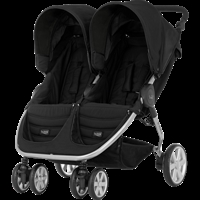
All public transport buses in London have dedicated areas for buggies (baby strollers, push-chairs etc.) Other passengers need to, or are made to feel that they need to, move out of the way so that a buggy can be parked in the designated area. So far so good. Many child carers use their childrens. buggies as shopping trolleys, often overloaded with bags of merchandise. Often, the child or children being transported in the buggies are removed from them during the bus journey and then occupy a passener seat. The empty buggies then simply take up space that could be used by other passengers on a crowded vehicle.
Now, there are clear signs by the designated ‘buggy area’ that state quite clearly that the area is also for use by persons confined to wheelchairs. These signs also make it very clear that wheelchair users have priority over buggies in the special area on the bus.
Clashes, often quite uncivil, occur if too many carers pushing buggies are competing for the the limited space available for buggies and wheelchairs. Or, even worse, battles can break out between whelchair users who want to board a bus and buggy owners, who are already on board the bus. Both the child carers and the wheelchair-bound people can often behave quite unpleasantly. Unlike the wheelchair occupant, almost all baby buggies can be folded up and placed in the luggage area that is available on every bus.
Yesterday, it was a sunny afternoon and I was travelling in a bus past Swiss Cottage in north west London. The buggy/wheelchair area was occupied by two baby buggies and a folded buggy was in the luggage area. We stopped at a bus stop where a man in a wheelchair was waiting. He wanted to board the bus, but the owners of the buggies occupying the designated area would neither fold their buggies nor leave the bus to make space for the priority user, the wheel chair user. The bus driver had to get out to sort out the stand-off. He wanted the buggy users to disembark, but they would not budge. In the end, the wheel chair bound fellow behaved decently, saying he would wait for the next bus.
In my opinion, both wheelchair passengers and buggy pushers can easily manage to wait (especially when the weather is good) until a bus arrives with sufficient space. After all, the wheelchair user is sitting and waiting as is the buggy borne child, who is often far too big and independently mobile to be confined to a buggy. What do you think, dear reader?
Picture from: https://www.britax-roemer.co.uk/pushchairs/strollers
 yamey
yamey 