The slow table

Food can be scarce

but when it’s abundant

let folk have plenty of choice

ADAM small


I attended Golders Hill School, a primary school in in Golders Green, between 1956 and 1960. It was a high-achieving school for boys and girls with an all female teaching staff. Founded in 1908, just after the Underground was extended from Hampstead to Golders Green, it still works today but in a greatly enlarged ‘campus’.


We used to spend all day at school. Lunch was served at 1 pm. We sat at various long tables. The children sitting on the table which ate its food fastest were  rewarded with a piece of confectionary from a box of ‘Dolly Mixture’.


I was a fussy eater. Having had a difficult few first months of life, my mother was happy to see me eating anything at all. I was not forced to eat anything I did not fancy. Actually, there were few foods that I was prepared to put in mouth. A particular dislike of mine, which remains with me to this day, is green peas. Their taste, or even just thinking about them, makes me feel nauseous. I can recall that my mother was keen that I should get to like these nauseous little green spheres. She would put a few on my plate. To avoid eating them, I employed the following delaying tactict: I would first slowly peel a pe, and then carefully cut into four pieces. My parents soon tired of watching, and eventually attempts to make me consume them were abandoned.


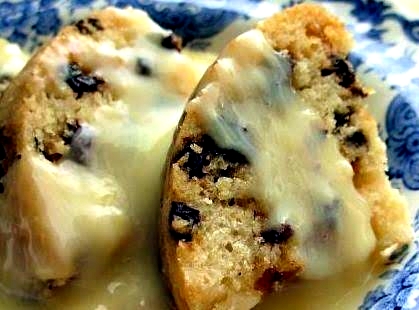
Almost nothing that was served at Golders Hill appealed to me apart from steamed pudding and the oddly named ‘spotted dick’. Main courses often came served with cubed carrot, chopped green beans, and green peas. I would not touch them. No table that I sat on would ever be rewarded with pieces of Dolly Mixture.
spotted

Spotted Dick with custard – source: https://www.justapinch.com

I was shifted to the slow table, where the four slowest eaters in the school sat trying to finish their food during the play time that followed lunch. I remember nothing about the three other members of the slow thable except that they were all girls and one of them was called Rhoda.


Even if I had been kept at the slow table for the rest of the day, there was no way that I would be able to finish what was in front of me. I devised a solution. I put whatever I could not eat into the pockets of my short trousers (‘shorts’), visited the toilet, and then emptied the unwanted food into the toilet pan, and flushed it away. This worked for most foods including slices of canned fruit.


My biggest challenge, and I can only remember it happening once, was gooseberries in hot custard. I felt that putting this in my pockets was not at all a good idea. In desperation, I carried my filled bowl to the closed door of the staff room. I knocked on the door, hoping that whomever answered would take pity on me. A forlorn hope because many of the teachers were quite formidable. I hoped that it would not be the large Miss Fitzgerald, who frightened me greatly. If it was Miss Dredge, I would have felt happier.


I cannot say who it was that opened the door. But, as soon as it opened I dropped the plate with all of its contents ont the feet of the teacher at the door. It still puzzles me why I was neither punished nor told off for my act of carelessness, or was it defiance.


PS: I still dislike peas, but now I love gooseberries.
The boys from South London

mobile phone stolen

contacts imag-es vanish:

 modern  tragedy


phone

For several years I worked in a west London practice near Portobello Road . My patients came from families that had originated in many parts of the world. Almost all of them had lively characters. They were not your average quiet provincial types, who respect professionals – a bit too much in my opinion. They were unpredictable in their punctuality and behaviour. This made every one of my working days exciting, sometimes a bit too much so.

‘J’ was a frequent attender with many dental concerns. Although he made appointments, I could be sure that the appointment times were those that he was least likely to appear at the surgery. His timing was erratic to say the least.

When J arrived, he ignored the reception desk and would come straight into my surgery even if I was already treating a patient. If I was in the midst of treating someone, he would respect my asking him to wait until I was free. He would then hover around outside my surgery, and if the wait was too long for him he would disappear, only to reappear unannounced and unexpectedly a few days or weeks later.

One afternoon when I was free, J, who was not a nervous patient, ran into my surgery. He was too agitated to sit down in my dental chair. Instead, he leant against one of the walls of my small room.

“What’s the matter?” I asked.

“It’s bad, man.”

“Can you tell me about it? Do you want to talk?” I asked.

“My mobile ‘phone has been nicked.”

“Sorry to hear that.”

“I know who took it.”

“Really,” I said, “then, can’t you get it back?”

“I don’t know, man. But, I know who nicked it, and I am going to get the boys from South London to put him six feet under.”

Having said those worrying words, he settled into my dental chair.

Examining a recurring dream

The sleeping brain

powerhouse of fantasy

fertile playground of   dreams


Dreams


Many of us experience dreams that recur periodically, not necessarily every night, but from time to time. Here is mine.

I dream that I am about to take a mathematics exam. I know that I have had a year to study for it, but have done nothing about it. Maybe, I can ‘wing it’ without study, but I am sure that I cannot. There are only a few days left to study, but something tells me that neither will there  be enough time, nor will I ever get started. I will tell you how the dream ends later on.

Ever since I was about 8 years old, I have been writing examinations. First, there were simple tests to enter preparatory school. At the end of each school year, we sat a series of written tests. Then, there were more (and much more difficult) papers for admission to secondary school to be attempted when I was 12.  At age 16, I had to write state examinations in eight subjects, the Ordinary Level (‘O Levels’, now ‘GCSE’).  A year later, a few more state examinations, and then when I was 18, I had to take the difficult Advanced Level exams that could make or broke a candidate’s chances of entering a University.

At the end of each year of my BSc course in physiology, there were examination papers, the results of each of them counting towards the quality (grade) of the degree I would be awarded. 

Following that, I had a three year break from exams while I researched and then wrote up my PhD thesis.

I entered dental school, where for five years I had to pass endless numbers of examinations of all sorts: practical, written, and viva-voce.

Eventually, I graduated as a dentist. However, there was one more examination to be taken: the driving test!

I have never found writing examinations stressful.

My recurring dream ends as follows. After pondering the hopelessness of my prospects via-a-vis the forthcoming mathematics exam in my sleeping brain, it occurs to me that it does not matter after all, because already I had a BSc, a PhD, and a dental degree. Then, I wake up.

This dream ending might have a basis in reality. When I was ready after completing the dental course, I took the set of dental qualifying examinations arranged by the Royal College of Surgeons. I passed them.

Three month’s later, after I had been working with patients in practice for most of that time, I returned to the dental school to take the university dental examinations. I was already qualified, and did not really need the extra qualification, but I went along nevertheless.  The university exams required me sitting a number of written papers along with a clinical test. While sitting on an uncomfortable chair, scribbling exam essays at high speed, I paused for a moment. As in my dream, I asked myself why was I bothering  to waste time on attempting to attain this superfluous  qualification when I had so many already.