AMAZING SCULPTURES AND COLLAGES BY A BRITISH POP ARTIST

HUMOUR, IMAGINATION, PLAYFULNESS, wit, social criticism, and creativity – these are all words that can be applied to the works of the artist Peter Blake, which are on show in a superb exhibition at the Waddington Custot gallery in London’s Cork Street until the 13th of April 2024.

Blake was born in 1932 in Dartford (Kent). He studied art at Gravesend Technical College, and then at the Royal College of Art in Kensington. He is a leading British exponent of Pop Art, which, according to Wikipedia:

“… is an art movement that emerged in the United Kingdom and the United States during the mid- to late-1950s.The movement presented a challenge to traditions of fine art by including imagery from popular and mass culture, such as advertising, comic books and mundane mass-produced objects. One of its aims is to use images of popular culture in art, emphasizing the banal or kitschy elements of any culture, most often through the use of irony.”

One of Blake’s most familiar works is the album sleeve for the Beatle’s LP “Sgt. Pepper’s Lonely Hearts Club Band”, which he designed along with Jann Haworth, his wife between 1963 and 1979. I wonder how many Beatle’s fans know that Blake was involved with making the image on this.
The exhibition at Waddington Custot is dedicated to Blake’s sculptural works. There has not been one during the last 20 years. Although there are many of his sculptures in the gallery’s three interconnecting rooms, many of his ingeniously witty collages are also on display. Employing images from comics, old books, and other printed matter, these collages are so carefully assembled that unless one looks at them closely and extremely obliquely, it is difficult to realise that these artefacts are not prints but collages.

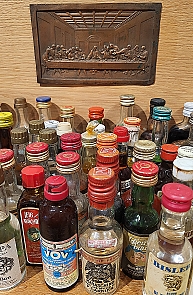
The sculptures are with only a very few exceptions, wonderful assemblages or tableaux constructed with found objects. For example, one of these is a shelf overloaded with miniature booze bottles, all positioned beneath a miniature image of Leonardo da Vinci’s depiction of the Last Supper. There are several model sailing boats, on which Blake has placed plastic models (toys) of people expressing a range of behaviours. Other sculptural assemblies are more complex and need to be seen rather than described. I mentioned ‘exceptions’ at the beginning of this paragraph. This refers to four objects – they look like large stones (one of which is a carved stone head) – which Blake called “Found Sculpture”. Each of these is mounted on its own plinth. By doing so, the artist has ‘elevated’ these natural objects to the status of ‘fine art’, and as the gallery’s hand-out said, they challenge:

“… conventional notions of artistic materials …”

I loved the exhibition. Every exhibit is both interesting and beautiful … and great fun. As the show’s hand-out correctly stated, Blake’s sculptures are:

“… by turns quirky, endearing or engaged with conceptual concerns.”

His creations:

“… offer starting points for imagined narratives, each with a glimmer of Blake’s typically gentle, English sense of humour.”

And this is quite correct. Skilfully conceived and executed, Blake’s works provide nourishment for both the eye and brain in a delightfully digestible form.  If you view the exhibition with an open state of mind, you are bound to gain great enjoyment from it.
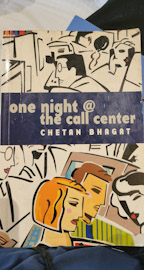
One Night at the Call Center and its author

THE AUTHOR CHETAN Bhagat was born in 1974 in New Delhi. He was educated at two prestigious institutions: Indian Institute of Technology (Delhi) and the Indian Institute of Management (Ahmedabad). After graduating he had various jobs including working at the Hong Kong office of the bankers Goldman Sachs. There, he was unhappy with his boss, whom, according to Wikipedia, he:
“ … characterized the villain in his second novel One Night @ the Call Center.”

The novel about the call centre was first published in 2005. The villain is Bakshi, the head of a department of a call centre that services customers in the USA. As its title suggests, the book is about one night at the call centre and its main characters are five young people working under Bakshi. I will not give the plot away, but I can tell you that the story is both entertaining and, in parts, profound. All that I will reveal is that the problems that the five workers are experiencing and described in the novel become insignificant after they receive a telephobe call … from God. But, do not worry: the book is not a religious tract. The book deals with many things, including the perception that some young Indians have: that their country is inferior to the USA.

Chetan Bhagat is a highly creative and imaginative story teller. His plots are rich in unexpected twists and turns. He has a great eye for detail and a good understanding of the minds of young Indians and they way they perceive today’s world.

Recently, a couple of people suggested that Bhagat’s humour is inadvertent rather than intentional. I completely disagree with this point of view. He concocts humorous situations in his novels with great care and expertise, and inserts them in his stories skilfully. Like Chinese sweet and sour dishes, Bhagat’s novels contain a harmonious blend of humour and seriousness, both complementing each other intelligently.

What I particularly enjoy about Bhagat’s writing – and by now I have read four of his novels – is his easy-going narrative style. As I read his books, I felt as if he was a good friend sitting and chatting with me in a bar or cafe. His books are easy to read yet full of profound observations about life, expressed effectively but with a light touch.

My uncle and his joke

MY MOTHER’S BROTHER, my Uncle Felix, told a joke that goes like this. A man is told that eating ‘poy’ was the secret to having a good life. So, he travelled the world in search of poy. He visited each continent and many countries, but to no avail.

Eventually, he reached a remote monastery in the highest Himalayas, and asked one of the monks for poy. The monk invited him into the kitchen, and said to him: ”Today, we have Shepherds poy, cottagepoy, fish poy, steak and kidney poy, apple poy … just choose which you want.”
Thus, the joke ended.

Goan poyie

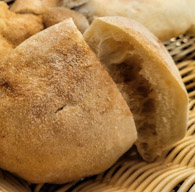
During our visit to Goa, we have really discovered poy. Actually it is spelled ‘poyie’. It is not a pie as is suggested by my uncle’s joke, but a circular bread with a hollow interior. So, unlike the man in the joke, we have truly found ‘poy’. My uncle died many years ago. I would have liked to have been able to tell him about our discovery.

Game of cones in Cornwall

SOME BUSINESSES HAVE chosen names that amuse me. There are plenty of fish and chip shops called ‘The Codfather’. In the small Essex town of Coggeshall, there is a fish and chips shop named ‘Coddes Hall’. And Royal Tunbridge Wells (in Kent) has one of these outlets, which serves fried fish and chips, with the name ‘Happy Friar’. If they have not already been used, I will suggest the following as appropriate names for seafood outlets: ‘Upon my Sole’, ‘The only Plaice’, ‘The Prawn Broker’, and ‘Get on your Skate’.

There is a hair salon in west London’s Ealing district called ‘Pure Barberism’. And when we are in London, one of our favourite coffee shops in Kensington calls itself ‘Perky Blenders’.

You may be excused for asking where this collection of gimmicky names is this leading to? Well, I was inspired to write this short piece after eating some ice cream in the charming Cornish seaport called Fowey (pronounced ‘foy’). The ice creams were sold at a shop called ‘Game of Cones’. I enjoyed the ice cream much more than the only two episodes of the TV show that inspired the ice cream parlour’s name.

New York! New York!

IN THE SUMMER OF 1992, I began planning a trip to the USA. It was going to be the first trip that I had made to that country since 1963, when our family lived in Chicago for the last three months of that year. While we were in Chicago, President JF Kennedy was assassinated. Most of my 1992 trip was to stay with friends who lived in Manhattan. I was also going to stay in Boston with some other friends. When my cousin Anthea heard that I was going to be in New England, she suggested that I looked up some cousins of my father, who lived in Providence, Rhode Island.

NY 1 Near 42nd Street_ (2) BLOG SIZE

I was keen not to waste a moment in Manhattan. So, unusually for me, I spent many hours of my spare time at home reading numerous guidebooks to New York. Each of these detailed tomes contained a section on keeping safe in New York. Each one of these explained what to do WHEN you get mugged rather than IF you get mugged. It seemed to me that getting mugged in New York was an inevitable experience for tourists in the city. The more I read, the more anxious I became. As the date of departure drew closer, my inclination to cancel my trip increased steadily. However, my desire to visit New York was greater than my fear of the dangers described in my guidebooks. I decided that should I get mugged, as seemed inevitable, I did not want all my money to be taken. I wanted to be left with some so that I could make my way back to where I was staying after the robbery had taken place. I decided that a safe place to hide my ‘emergency’ cash would be inside my sock beneath the sole of a foot. This is what I did every day in Manhattan, but, fortunately, the guidebooks were not entirely accurate: I was not mugged.

Plenty of beggars tried to entice me to put money into the paper cups they held out hopefully. Once, I succumbed and threw a coin into one of these cups, and its owner shouted:

“Is that all? I was hoping for a hundred Dollars,” adding a few seconds later, “well, it’s a start.”

I loved Manhattan. I loved the quick wittedness of almost everyone I met. I felt as if I was taking part in a Woody Allen comedy, but the things said by New Yorkers were often far cleverer and funnier than any of Woody’s lines.

One purchase I wanted to make in New York was a padded winter jacket. When I entered one shop, I explained what I wanted. When I told the salesman that I wanted both outside and inside pockets, he exclaimed:

“Hey, what are ya? Some kind of secret agent?”

He sold me a superb jacket, which I used until a couple of years ago.

My father had told me to look up one of his first cousins, who lived in Manhattan. She lived high up in an apartment on Fifth Avenue. Its windows overlooked The Metropolitan Museum and Central Park. After dinner, I announced that I would walk the few blocks to where I was staying. She was dead against this and insisted I went by taxi. As she and her husband were seeing me off, she said:

“Press the elevator button marked ‘taxi’.”

I boarded the lift, found the button, and pressed it. The lift descended and when the doors opened on the ground floor, I could see a taxi waiting just outside the doors to the apartment block. I was amazed. I had never encountered such a thing before. I felt like a country bumpkin marvelling over the wonders of the big city. This button that summoned taxis seemed to me an example of what made ‘America great’.

It was fun visiting my friends in Boston back in 1992. However, after the excitement and uniqueness of Manhattan, I was not as trilled by the city as many other visitors are.

I took a train from Boston to Providence. It was the time of the famous ‘Fall’ colours. The journey afforded me with a great opportunity to view the outstanding display of autumn leaf colours, which far exceeded my expectations. I had no idea about what sort of time I would be spending with my newly discovered cousins in Providence. My main worry was that they would not take me sightseeing. So, I told them that I would be arriving on a train that reached Providence in the late afternoon but boarded one which arrived in the middle of the day. That allowed me a few hours to look around before I met them.

After spending a few hours on my own in Providence, I returned to the station platform, and then walked up the stairs to the waiting area where I had planned to meet my relatives. I had no idea what any of them looked like. They had no idea about my appearance. I entered the waiting area and found that a lot of people were seated there. I scanned the faces and spotted an elderly lady sitting with two young boys. I fancied that the face of one of these looked like I did when I was only a few years old. Then, I thought that I was being silly, but I was right. I approached the elderly lady, the grandmother of the two boys and introduced myself. Greta, widow of one of my father’s cousins, said she had noticed me and thought that I had a family resemblance to her late husband. She drove us to her daughter’s home in a large American saloon car, swinging the steering wheel with gusto whenever a change of direction was required. My cousin’s family did take me sightseeing. I particularly remember the roads in an Italian neighbourhood. The median road markings were in the three colours of the Italian flag.

I enjoyed my trip to the USA in 1992. My next visit to Manhattan was in 2007. Things had changed a lot since 1992. The city seemed to have lost its edgy, almost electric feel. Gone were the men on the pavements with their paper cups and witty comments. Also missing, were the endless stream of dubious characters walking, often menacingly, along the corridors of the Subway trains. Although Manhattan had probably become a safer place for its inhabitants, I felt that it had become almost twee in comparison to what I had found so exciting in 1992.

Sadly, now in April 2020 as I write this piece, New York City is facing one of its greatest, if not greatest, crises: a viral epidemic that is trying to outdo the Spanish Flu that occurred at the end of WW1. May it return to normal as soon as possible.

The dream coat

jacket

About 28 years ago, I was looking for a new winter coat or outdoor jacket. I knew that it had to be warm and have pockets both inside and outside the garment. One Saturday afternoon, I entered a clothing shop on London’s Oxford Street. A well-dressed male shop assistant politely listened to me explaining what I was seeking. He thought for a moment before saying:

“I know exactly what you need, sir”

“What?” I asked.

“What you need is a Dannimac.”

“I see,” I replied, not knowing what he was talking about.

“But, there’s only one problem, sir.”

“Yes. What?” I enquired.

“Well, sir, they don’t make them any more.”

I left the shop amused but without having purchased a coat.

Some months later, I was in New York City, still not having acquired the coat of my dreams. As prices seemed very reasonable in Manhattan, I decided to search for my coat there. I entered a shop that seemed well-stocked but not at the high end of the market, and then explained my requirements. When I mentioned the inside pockets, the chatty salesman interrupted me, saying:

“Inside pockets? Why do you need those? Are you some kind of private detective or maybe you’re a secret agent.”

I was not sure how to answer that, but I went away having bought a superb jacket that fulfilled all of my criteria. That puffy jacket with its inside and outside pockets and brilliant insulation served me well for over 20 years. It showed little sign of wear and tear despite much use. However global warming, and trips to the tropics during winter have rendered it obsolete. I have given it away.

Time zones and … O Juice

clock


I am writing this on the 30th of March,  the day after that on which the UK was scheduled to leave the EU, but did not. This day, Saturday,  is in the last weekend of March. Early on Sunday morning, we shift from Greenwich Mean Time to British Summer Time, by advancing our clocks by one hour.

In late 1994, while we were on holiday in California, we decided to drive over to the State of Arizona to see Lake Havasu City. After London Bridge was dismantled in 1968, its stones were carefully labelled and sent to Lake Havasu City, where it was reconstructed. By 1971, the bridge had been re-built in a picturesque lakeside position where it has become one of Arizona’s major tourist attractions.

After settling into a motel, we wandered over to a restaurant. For the duration of our evening meal we were the only diners. I ordered ‘New York Steak’, which turned out to be strips of beefsteak. Soon after taking our order, the waitress returned and asked: “D’ya want it with or without O Juice?”

I had never heard of eating steak with orange juice, so I said:

“Excuse me, what did you say?”

She replied, slightly impatiently: 

“O juice, you know kinda gravy.”

What sounded like ‘O Juice’ was the waitresses attempt to pronounce the French culinary term ‘au jus‘.

After eating our meal, it was only eight o’clock. We asked the waitress where were all of the other diners and why was she clearing all the tables and stacking the chairs, getting ready to close the eatery.

“It’s  getting late you know”

“But it’s only eight,” we retorted.

“Nope, it’s nine,” she informed us.

We had not realised that by crossing from California to Arizona, we had moved into a time zone one hour ahead of California.

Better on a camel

While travelling through Gujarat in western India, I have seen many camels (? dromedaries) working as beasts of burden. They are well suited to the arid semi desert climate of Gujarat. The camels remind me of airline jokes I learnt in my childhood. Each joke gives another meaning to an airline’s name or acronym.

BEA was British European Airways. The joke version was Big Empty Aeroplanes;

TAP, Portuguese Airlines became Take Another Plane;

The Greek company Olympic became Only Like Your Money Pay In Cash;

EL AL, the airline of Israel, became Every Landing Always Late.

And this brings me to humped beasts of burden.

BOAC, which was British Overseas Airways Corporation, became Better On A Camel.

Postscript

When the petroleum company ESSO first became established in India, workers in Indian companies worked half day on Saturdays. Esso workers got a whole day off on Saturdays. So, ESSO became known as Ever Saturday Sunday Off.