Time flies

I DO NOT KNOW ABOUT YOU, but I am finding that time hurtles past during the so-called ‘lockdown’, which severely limits our movements and activities to our local environments. Although I needed little stimulus to do so because I find it enjoyable, it has made me look back into my past more than ever before. This morning (19th of May 2020) on BBC Radio 4, the author Ian McEwan spoke eloquently and with great insight about the perception of time and how it changes during a period of forced inactivity such as long-term prison sentences and our present virus-induced predicament. I was heartened to learn that he and I agree about the effects of ‘lockdown’ on the perception of time’s passage. Having got that ‘off my chest’, I will return to yet more nostalgia. I am going to write about my recollections some of the first ever holidays I enjoyed. These happened when I was well under ten years old. So, my memories may be a little hazy and, also, influenced by what I remember being told about these trips when I was a bit older.


Hermanus_1024 BLOG


In 1955, when I was three years old, my parents took me to South Africa. We travelled by sea. During the voyage, we crossed the Equator. I have seen photographs taken on board of me dressed in a sheet. When we crossed the Equator, so I was told by my mother, the children on board took part in a fancy-dress party. Unprepared for this, but always resourceful, my mother used a sheet from our cabin to dress me up as a Roman in a toga. Sadly, these photographs have been lost.

On arrival in Cape Town, I faintly recall something that I did on the dockside. There were tracks like tram lines embedded in the ground, along which huge cranes moved. I inserted my tiny foot into the groove of one of these, and then could not remove it. I imagine that my mother, who was excessively anxious about my well-being when I was very young because my birth had been fraught with difficulties, must have been very concerned that her precious child (that is me, folks) would be crushed by a crane on the move. My foot was extracted and with no long-term effects.  

Two other recollections of the trip to South Africa relate to our stay in Port Elizabeth, where my father’s mother and sister lived. One faint memory is my concern about the sinister look of the cacti on display in a greenhouse in a park. Another relates to being offered and rejecting smoked salmon – I was an unadventurous eater until my late teens.  

I cannot remember visiting King Williams Town (‘King’) in the Eastern Cape in 1955, but about 60 years later I discovered that we did. Several years ago, I was researching at the British Library, leafing through old issues of the “Cape Mercury”, a newspaper published in King. In one of the issues published in 1955, I discovered an article describing our visit to King. The reason we went there was to visit my great grandmother Hedwig Ginsberg, my mother’s grandmother. As she was the widow of a Senator and herself a prominent citizen of King, her social life and that of her son Rudolph, a Mayor of King, was recorded in the paper’s gossip columns. Our visit to King was described. I quote from what I discovered:

Mrs Yamey … whom many of you will have met in her single days. They now have an adorable little son, Adam, aged three.”

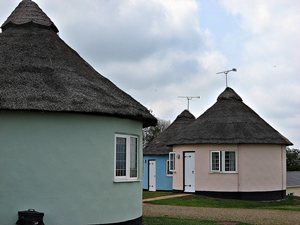
Another trip that I recall vaguely was less exotic. It was to Winterton-on-Sea in Norfolk (UK). I was taken there by my uncle and aunt and their then young daughter. I recall staying in a round hut. Although I did not know it then, the round hut was based on the design of the South African rondavel, a circular hut with a conical roof. Many years later, I re-visited Winterton-on-Sea. The resort colony of rondavel-like dwellings was still being used by holidaymakers. The place, set amongst sloping sandy dunes, had originally been set up by people from South Africa, but had long since changed hands.

My parents were not keen on seaside holidays. However, I can remember two that we made when I was very young. In each case we travelled with friends, who lived in Kent. Arthur Seldon was one of my father’s first friends and collaborators when he came to London from South Africa in the late 1930s. His wife Marjory, who was born on the very same day as my mother, was one of my mother’s closest friends. The Seldons had three sons, one of whom has become quite prominent in public life.

One year, we accompanied the Seldons to the North Sea beach resort, Noordwijk in the Netherlands. This must have been in the second half of the 1950s, just over a decade since the end of WW2. I remember that we kept moving our beach blanket from one patch of sand to another. This was done whenever my mother heard neighbouring holidaymakers speaking in German. During WW2, my mother had worked for the Red Cross in Cape Town. As the war drew to a close, she read Red Cross reports of the atrocities being uncovered in recently defeated Germany. I suppose she thought that there was a good possibility that any adult speaking German in the late 1950s might well have once been at the very least a Nazi sympathiser.

One day when walking back from the beach, I stepped on a nail protruding from some driftwood. I remember an unusual sensation as the nail penetrated the sole of my foot, but it was not pain. My mother, always anxious about me, rushed me to a local doctor, who gave me an injection for tetanus, something I had never heard of at that tender age.

The other holiday with the Seldons was in Bognor Regis on the south coast of England. We had hired a two-storey house for the stay. I remember my mother checking it out before we decided who was going to sleep where. She decided that the Yamey family, mine, was to take the ground floor. The Seldons, she decided, were to occupy the first floor. She had discovered that the windows on the upper floor had low sills, making it easy for people to fall from them. This was not a risk that she was prepared to take. It seemed that it did not bother her to worry about the Seldons risking falling out of these windows. And, as far as I know, it did not worry the Seldons, who survived.

Sometime in the 1950s, we visited Hilversum in Holland. It was the home of one of our live-in helps, Truus Vollmer. She stayed with us for two years and became good friends. Her father worked for Radio Hilversum. Every now and then, he made gramophone records for me. They played at 78 rpm and were unusual because they played from close to the central label outwards towards the edge of the disc. The recordings included sounds of trams, trains, buses, and other forms of transport. One of the records, which I played often, included a recording of the Dutch St Nicholas Day song, with the words:

“Sinterklaas Kapoentje,

Leg wat in mijn schoentje,

Leg wat in mijn laarsje,

Dank je Sinterklaasje!”

During our visit to Hilversum, which I remember dimly, Mr Vollmer tried to record my voice. This was later presented to me on one of his records. I was extremely shy as a small boy. The recording starts with the voices of various adults (some with Dutch accents) and my mother, saying:

Come on, Adam … Say something … Why not sing something? … Come, say something … Come along … It’s not difficult … Don’t be shy … etc.”

Eventually, my voice can be heard saying sulkily:

I don’t want to”, and nothing else.

We made several trips to Holland at that time. We always stopped for lunch in Rotterdam, where we ate in the restaurant of a large department store, the Bijenkorf. If I remember correctly, my parents enjoyed eating club sandwiches there. To my knowledge, they never ate them anywhere else.

After 1960, when we stayed close to the sea in Cyprus, our family visited the seaside rarely, and never by design. My mother could not swim, and the sight of water made her uneasy – she was extremely prone to seasickness. My father did enter the sea occasionally, but never for long. The seaside was not my parents’ ‘thing’, nor is it mine.

Well, as I mentioned at the beginning, time feels as if shoots past during the ‘lockdown’. It seems but a few minutes since I woke up in the morning to listen to the latest news of doom and gloom on the radio, but now it is mid-afternoon. Years ago, when I was at school, a 45-minute Latin lesson seemed to last a whole day and I dreaded the occasional double-length Latin lessons we had to endure. Now, it seems that 45 minutes passes in a flash and even a three hour wait in an airport departure lounge seems to shoot past. Yes, our perception of time is a curious thing.


Picture showing rondavels at Winterton -on-Sea

A chance meeting

BRIDIE WAS OUR DAUGHTER’S babysitter for several years. She also collected her from school and looked after her until one of us returned from work. Although she was well over 80 when we first employed her, Bridie was a very sprightly, energetic woman.

LondonUnderground_GoldersGreenStation


She had been brought up in the wilds of western Ireland. Every day, she used to walk several miles over the hills to go to school. She moved to England as a very young lady. On arrival in Britain, she was at first given shelter by the Salvation Army. She had to promise them she would become teetotal. She kept this promise.

One day, Bridie told us an interesting story. When she was young before WW2, she worked as a maid for a Jewish family in north London’s Golders Green.  She wore uniform. There was one uniform for daytime and a different one for the evenings.

When Bridie was not working for us or ironing for our friends, the Wilsons who had introduced her to us, she used to roam around London taking advantage of her free bus pass (given to Londoners over 60 years old).

One day, Bridie visited Golders Green. When she was waiting for a bus to take her home, an elderly gentleman in the queue said to her:

“Excuse me, but are you Bridie?”

“I am,” she replied.

“Well, you looked after me when I was a child sixty years ago”

Bridie realised that the man was from the family, for whom she had worked in Golders Green before WW2.

A bus approached. The man asked her:

“Are you getting on?”

Bridie nodded, thinking he had asked a different question. The man jumped on the bus, leaving Bridie standing by the bus stop. Had she heard his question correctly,  he would have waited behind to reminisce with her: an opportunity lost for ever.

Ever since hearing about Bridie’s chance encounter, I have always considered her story as being rather sad.


Picture of Golders Green bus staion (Wikipedia)

A road through my childhood

IT IS BECOMING AN ADDICTION: I must write something every day. It is probably a harmless compulsion, but it gives me great pleasure. Today, I will write about a road that did not exist until 1835. It runs northwards from the centre of London. It was built to bypass the hills on which Hampstead perches. The old route to Finchley and Hendon from central London passed across these hills before Finchley Road, originally a toll road, was constructed. Part of Finchley Road connects the suburb of Golders Green with Swiss Cottage. For five long years I travelled along this stretch.

HALL BLOG

Swiss Cottage is named after a pub, Ye Olde Swiss Cottage, which still resembles many people’s idea of what a Swiss chalet should look like. The pub is a descendant of the Swiss Tavern, built like a Swiss chalet. Opened in 1804, it stood on the same spot as its most recent avatar. It stood on the site near one of the toll booths built for collecting money from people using Finchley Road in earlier times.

There was another toll collecting place at Childs Hill, between Golders Green and Swiss Cottage. This toll gate was next to the now demolished Castle pub. For five years, I passed through Childs Hill on my way to the Hall School near Swiss Cottage.

I attended The Hall between 1960 and 1965. The Hall, founded in 1889 (the year the Eiffel Tower was built) was a private school for boys preparing boys for entry into private secondary schools, misleadingly called ‘public schools’.

During my time at the Hall, several bus routes plied between Golders Green and Swiss Cottage: 2, 2a, 2b, and 13. The fare was five pence (less than 2.5p) for children. I used to say to the conductor: “five-penny half, please”.

The bus journey to and from The Hall was tedious and slow. This was because Finchley Road was being widened. The roadworks began before I entered The Hall and continued after I left it five years later. To widen the road, which was lined by houses and shops all the way between Childs Hill and Swiss Cottage, every garden by the roadside had to be cut short. There was a garden centre in a long greenhouse near Finchley Road Underground station opposite the present O2 Centre.  More than three quarters of its length was demolished to permit road widening. All in all, the long section of road being ‘improved’ caused the rush hour traffic to move sluggishly. After 5 years of enduring this, I used to be able to recite from memory and in the correct geographical order the names of all the shops along Finchley Road. Today, hardly any of them exist. Even the large, still extant department store John Barnes has changed its name to John Lewis. Gone is the remains of the garden centre and the Edwardian Swiss Cottage public swimming pool. During my time at The Hall, this place closed when the then new Swiss Cottage Library and swimming pools opened close to the swiss style pub. Another of many disappearances is that of Cosmo, a restaurant that used to be popular with refugees from Central Europe and later with my wife, who loved the Hungarian cherry soup served there.

The Camden Arts Centre stands at the corner of Arkwright Road and Finchley Road.  The arts centre faces across the main road the start of Lymington Road, which soon runs along the side of a large grassy open space. This is where Hall School boys played football and cricket. We used to walk two by two with one of our teachers from the school to and from the field, a distance of at least a mile.

The Hall School was an ‘elite’ establishment. Almost all the pupils had parents who were listed in “Who’s Who”, or royalty, or were extremely wealthy. Several of my fellow pupils were sons of Greek shipping magnates. One of these used to be driven from the school to Lymington Road in his chauffeur driven Bentley, which he pronounced ‘bantly’. Occasionally, he used to offer teachers a lift in his luxurious vehicle.

The sports field in Lymington Road was opposite a small newsagent-cum-sweetshop. We were not supposed to enter this during school hours, which included time at the sports field. And, because we walked back to school after a sporting session, there was little chance to explore it, but somehow, we managed. The shop was amazingly well-stocked with cheap sweets. I discovered that if I walked from Swiss Cottage to Lymington Road, the fare from there to Golders Green was two pennies (there were 240 old pennies in one Pound) cheaper than from Swiss Cottage. This gave me two pennies on top of what I was given daily to buy snacks (in my case, read ‘sweets’) on the way home.

At Swiss Cottage, there was one sweet shop near my bus stop. It was a branch of Maynard’s inside the subterranean foyer of the Underground station. The sweets it sold were poor value: there was nothing for under three (old) pennies. In contrast, the shop on Lymington Road was full of sweets costing less than one (old) penny. For example, one penny bought four ‘blackjacks’ or a large chewy item called a ‘refresher’. And, for three pence, a ‘Sherbet Fountain’ (still available on the internet for 132 [old] pence or 55p). This used to consist of a paper cylinder containing a fizzy lemon flavoured white powder into which there was a black cylindrical straw made of liquorice (used to suck up the powder). The thing looked just like an unexploded firework. In short, It was worth walking about a mile to save on the bus fare and then to spend it in a place where my money had much better buying power.

At the end of the day, I disembarked at Golders Green near the Underground Station. There used to be many children from other schools mingling there on their journeys home. One incident at this place remains in my mind, but before relating it, you need to know what we wore at The Hall. The colour that predominated in the school uniform was pink, which was considered rather strange for a boys’ school. Blazers and peaked school caps also contained black trimmings. One of these, which was prominently sewn on to our caps and the outer breast pocket of our pink blazers trimmed with black, was a black Maltese cross. The way that the school’s emblem was drawn was closer to the shape of the German Iron Cross than to the real Maltese cross. By the time I was attending The Hall, I had already become interested in the Holocaust (the Shoah). Golders Green had many Jewish people living there and several shelves of its public library were filled with books about the deeds of Hitler and his followers. I borrowed and read many of them. Therefore, I was horrified when I stepped off the bus at Golders Green one afternoon, and then some schoolboys from another school shouted at my friend and me:

“Look, the Nazis have arrived.”

Is it not strange what one cannot forget?


Picture from https://www.uniform4kids.com/ 

.

A slice of lemon

TU 5 Genuine old Dutch architecture BLOG


MY FATHER WAS BORN in Cape Town in South Africa.  His childhood was spent in the small town of Tulbagh not far from Cape Town.  His father had a general store in Tulbagh. The family lived across the yard behind the shop in a house on Church Street.

In 1969, Tulbagh suffered a devastating earthquake.  The town’s authorities decided to rebuild the houses in Church Street to make them resemble the original appearance of the sort of houses that Dutch settlers built when they first arrived in the Cape.

Some years after the earthquake,  my father paid a visit to Tulbagh. He said that his former home in Church Street in neither resembled the place where his family had lived nor had ever looked like it did after its ‘restoration’ following the earthquake. In addition,  he felt that the town looked far smaller than it did when he was a child.

In 2003, I visited Tulbagh with my wife and daughter. We stayed in a bed and  breakfast in one of the picturesque houses on the restored Church Street,  a few doors away from my father’s childhood home.

We visited the house where my father once lived. It was another bed an  breakfast. Had I known it was, I would have booked a room there. The landlady showed us around. She had no idea that her back garden had been part of the yard behind my grandfather’s shop on the next street.

There was a lemon tree laden with lemons growing in the back garden of my father’s former home. We asked our host if we could pick a couple of lemons, one for my father and the other for his only surviving sibling, my aunt Elsa. She agreed.

Before leaving South Africa, wr managed to buy an official school tie as used in Tulbagh High School,  where my father studied (in Afrikaans, rather than his mother tongue English) until he entered Cape Town University.

In 2003, it was  12 years since the official ending of apartheid laws. These laws included prohibition of inter-racial intimate relationships. We expected that by 2003 we would have seen, if not many at least a noticeable noticeable number of mixed-race couples. I think that in the one and a half months we spent in South Africa we saw only three. The members of two of the couples were not born in South Africa. It was only in Tulbagh that we met a young ‘white’ Afrikaner with his arm around a ‘black’ African girl. They were both studying at Tulbagh High School.

When we returned to Cape Town, we gave Elsa the lemon that had been growing in the back garden of her childhood home in Tulbagh. She showed little interest in it and put aside.

A day or so later, Elsa was preparing gin and tonic for us at sunset. She need a lemon. Her eyes fell on the lemon that we had brought from Tulbagh. She seized it, and cut slices of it to drop into our drinks. So much for sentimentality!

As for the High School tie, we presented that to my father when we got back to London. He thanked us, then said:

“ I don’t need that. I left the school long ago.”

Eye and brain

MEMORIES TRIGGERED BY A PHOTOGRAPH RECENTLY TAKEN NEAR OUR HOME

I first met Catherine during the final year of my BSc in 1973. She was teaching mammalian reproductive physiology. After that, I met her again in 1977 when I began studying dentistry and also attended weekly etching and engraving classes taught by my mother’s cousin Dolf #Rieser. Catherine was another of Dolf’s pupils, and one of his best. I stopped attending these classes on 1982, when I moved to Kent.

Occasionally, I visited Catherine and her husband Brian in a street near where this picture was taken, a street close to our flat.

In about 1994, when Lopa and I had been married a few months, we ‘bumped’ into Catherine in a street quite by chance. We invited her and Brian to dinner. Thus began a close friendship between them and us.

Soon after our daughter was born, we had major building work done in our small flat. Catherine and Brian kindly let us stay at tjeir place for a few weeks.

Catherine employed an elderly lady called Bridie to do ironing several days a week. Bridie and our young daughter fell in love with each other. Catherine suggested that Bridie would probably be a good babysitter for our little one.

Although Bridie was well into her eighties, she was alert and very sprightly. When our daughter was old enough to attend school, Bridie would often collect her and look after her at home until we returned from work.

Bridie was (is??) a committed Roman Catholic. Our daughter, even when a toddler, took a great interest in matters theological. One day, Bridie told our daughter that if you are good in life, then you will go to heaven when you die. To which our daughter, who has an Indian mother, replied:
“Well, us Indians never die, Bridie. We just keep coming back again.”
This indicated an early appreciation of the concept of reincarnation.

Sadly, both Brian and Catherine are no more than memories now. However, whenever we walk in the streets near where they used to live, we remember them vividly. Dolf Rieser left this life long before ourvtwo friends. As for Bridie, we have no idea. If she is still around, she would have passed her hundredth birthday long ago.

What is in a name

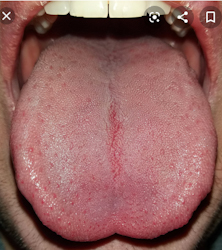
When I was a young child, I used to love eating slices of tongue. It was a cold meat that I really enjoyed. In those days, I never thought about the name of the meat, that is ‘tongue’.

When I was about 10 years old, I put ‘two and two together’ and realised that what I had been eating was once a living animal’s tongue. This realisation put me off eating tongue. I have hardly ever eaten tongue since that discover of what is in its name.

The curious thing is that, with plenty of knowledge of anatomy, I have no difficulties eating, say, liver or pancreas (‘sweetbreads’) or stomach (‘tripe’).

Picture from Wikipedia

Tulips and traffic

When I was a young child, probably less than ten years old, we made one of our regular family holidays to Holland. My parents, having studied Afrikaans to varying degrees of competence, felt easier visiting a country like Holland where the native language, Dutch, was not too exotic for someone to comprehend with a knowledge of Afrikaans.

One Saturday afternoon, my parents decided to take us to see the tulips at Keukenhof gardens. I cannot recall anything about the flowers.

However, I do not think I will ever forget the car park at Keukenhof. We had parked our car early in the afternoon when the parking area was fairly empty. When we came to leave, the car park was very full.

Everyone wanted to leave at the same time. A disorderly tsunami of vehicles converged on the exit gates. Nobody seemed to be regulating the traffic. It took us well over an hour to escape from the motorised mayhem.

Sadly, I associate Keukenhof with traffic rather than tulips, and although I love tulips, seeing them often brings Keukenhof to mind.

Cups of ice-cream and…

Remembering the 1960s in Florence, Italy

florence

The short Via dei Tavolini was another of our regular morning destinations in Florence. Situated in the heart of the city between the Duomo and the Uffizi, we visited this street frequently during each visit to the city. It contained 3 important shops: the ice-cream shop called Perché No? (‘Why not?’), a dress material shop, and a shop with the name  ‘Busti Biondi’. It was in the latter that my mother had her brassieres made to measure.

During my earlier visits to Florence, when my parents were less confident of their spoken Italian, they were assisted by Giorgio, who owned the material shop between the ‘bra’ shop and the ice-cream parlour. Giorgio, who had learnt English from British soldiers during WW2, translated for my parents. Like so many Italians, he was fond of children, and we grew to like him. For years, he used to send my sister first day covers of newly minted Italian postage stamps. His patience must have been impressive because my mother was not an easy customer. She and my father spent what seemed like hours in Busti Biondi whilst the bras were tried on, discussed, and returned for endless
alterations.

My mother was buxom, a trait shared by many ladies in her family, and extremely particular that things should be just right. As far as I was concerned, the positive feature of these visits to the Via dei Tavolini was seeing and talking with Giorgio as well as the chance to enjoy cups of some of Florence’s best ice-cream. We thought that Perché No? was the best ice-cream place in the city, but others favoured Vivoli, a gelateria close to the church of Santa Croce. We did try that place, but it failed to change our high opinion about our favourite place close to my mother’s bra shop. If it had not been for my mother’s breasts we would not have met Giorgio and might have never discovered Perché No.


This is a brief extract from my book “Charlie Chaplin waved to me” available on Kindle and also as a paperback by clicking HERE


photo source: wikipedia

Boxes

Corgi

When I was very young, I had a best friend called Rick (not his real name!). He lived within a short walking distance from my family home. During weekends, we spent a great deal of time in each others houses.

Both Rick and I had large collections of toy model vehicles made mainly by the Dinky Toy and Corgi Toy companies. I kept my collection in a wooden box in no particular order. In time, the model vehicles looked used, battered, and scratched.

In contrast, Rick and his younger sibling kept their vehicles much more carefully than me. Each vehicle was kept in the box in which the manufacturer supplied the toy. When we wanted to play with these toys, each vehicle was removed from its box and then we handled them very carefully. Rick’s collection was in superb condition. When we had finished playing with the vehicles, which included a fine model of a mobile rocket launcher complete with a detachable rocket, we packed each of them into their own boxes.

I lost touch with Rick when we reached our early twenties. Many years later when the Internet became commonly used, I tried to re-eastablish contact with him, but in vain. He never appeared on internet searches. Eventually, I decided to ring his parents’ telephone number, which had remained etched in my brain. To my great surprise, Rick’s mother, by now over 90 years old, replied. I asked her about Rick. She replied:

You have just missed him, dear. He died a few months ago.”

Some time later, we visited Rick’s widow, whom I had never ever met. After feeding us lunch, I mentioned the model cars and other vehicles. Without saying anything about them, she beckoned me to follow her into another room. It was, she explained, Rick’s study while he was alive. Arranged neatly around the room on shelves was Rick’s collection of Dinky and Corgi toys, including the rocket launcher. And to my great surprise and delight, each of the toys, still in pristine condition, was sitting on top of its own box.


picture source: https://www.toyhunteruk.co.uk/

My artistic mother

HELsculpt2


My late mother died at the age of 60 in 1980. Her mother, who was born late in the 19th century in South Africa, held an old-fashioned opinion that girls should not attend university however bright they were. My mother would certainly have been able to cope with a university course of study, but, instead, she enrolled in the prestigious Michaelis  School of Fine Art in Cape Town. Founded in 1925, it is now ironically a department of the University of Cape Town.

Mom studied commercial art. Her first employment was hand painting posters, advertising cinema films. When I began visiting India in the 1990s, many film posters were still being painted by hand. Often, we saw workers perched on rickety bamboo scaffolding, painting the details of huge posters. Two years ago while visiting Bhuj in Kutch (part of Gujarat), we found a workshop where two men produced hand painted posters. They told us that the demand for these was dying out rapidly. It is interesting to note that, like my mother, the great Indian artist MF Hussain began his creative life as a painter of cinema posters.

Returning to my mother, she designed and painted advertising material for the Red Cross in Cape Town during WW2. In 1947, she followed her fiancé, my father, to the UK. She married in 1948, and I arrived a few years later. According to my father, Mom took painting classes with the the famous Sir Stanley Spencer (1891-1959).  Sometime after that, she began creating sculptures.

When I was born, I had a torticollis (twisting of muscles of the neck beyond their normal position) that caused my head to be bent to one side. At that time in the early 1950s, the doctors told my mother that there was nothing to be done about this, and we would just have to live with it. My feisty mother refused to believe this. Every day, she manipulated my head and neck and gradually corrected the situation. Whether it was this manipulation that caused my mother to become a sculptor, I cannot say. However, one of her first sculpures was a terracotta mother and child, which she reproduced much later as an alabaster carving (see photo above).

When I was a young child, my mother used to attend the sculture studios at the St Martin School of Art in London’s Tottenham Court Road. She was not a student; she used the facilities and received advice from other sculptors including Philip King and Antony Caro. At that time, she became a close friend of the sculptor Dame Elizabeth Frink, who visited our home regularly. At St Martins, Mom learnt how to weld and work with metal. She created several quite attractive abstract metal artworks. Being a perfectionist, she destroyed much of what she made, but not before having it photographed by a competent photographer. Sadly, these photos have gone missing.

By the time I was a teenager, my mother had ceased working at St Martins, possibly not of her own volition. She rented a large garage in Golders Green and used it as a studio, where she created huge abstract sculptures in timber. She found working on her own to be lonely. However, without the benefit of proper lifting equipment, she produced quite a few sculptures.

Around about 1970, Mom began complaining of back pains, which she thought were the result of the heavy work she was doing in her garage. She abandoned the garage and more or less stopped creating any artworks except for a very few abstract pen and ink drawings, which she considered good enough to be framed.

The back pains continued. My mother became disillusioned with the contemporary art scene. She was familiar with the great renaissance  works of art which she visited every year in Florence (Italy), and comparing these with what she and her contemporaries were producing added to her disinclination to produce any more art of her own. For the last ten years of her life, Mom continued to search (unsuccessfully) for an interest to replace the creation of art. Tragically, she died young because of a cancer, which might well have been contributing to her long-lasting back pain.

Whatever the reason, if an artist loses the urge to create, it must produce a huge hole in his or her life, something like losing a loved one.