A brief glimpse of the past

PANZ


“… and set off after the cab. He dismissed it by Panzer’s Delicatessen on Bayswater Road…

So, wrote Frederick Forsyth in his novel The Fourth Protocol

If you look for Panzers today, you will not find it in Bayswater. There is a Panzer’s delicatessen in St Johns Wood, but it is not the same firm.

The shop was on Bayswater, facing the Czech Embassy, between Linden Gardensand Claricarde Gardens.  Panzers was still in business in 1985. It closed sometime after that (before 1993). 

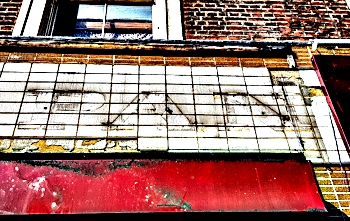
A couple of days ago, I noticed that the shop front of a recently closed branch of  the wine retailer Oddbins was being renovated. The sign board above the display window had been removed, revealing some old tiling. Barely discernable on the tiling were three letters ‘PAN’, these being the first three letters of ‘Panzers’. For a brief time, the remains of the now long-gone delicatessen mentioned by Frederick Forsyth may be seen by passers  by. Soon, it will either be removed or covered up.

This long lost shop also appears in another well-known novel, 84 Charing Cross Road by Helene Hanff. She wrote:

She painted until one and then drove me down to Kensington for lunch … 

… She took me to a little Italian place for lunch, down near where she and Leo live, called Panzer’s Pasta and Pizza …”

A photograph taken in the 1970s shows that there were two Panzers close to each other in Bayswater (see: https://rbkclocalstudies.wordpress.com/2018/09/20/notting-hill-gate-the-other-high-street/). I have posted a detail from it. The branch, whose sign was partially revealed recently is marked with a red arrow. The other branch, which I suspect was the one in Helene Hanff’s book, is marked with a yellow arrow:

PANZERS 

What? No kitchen…

During my early years in dental practice, I came across two instances of people living in houses without  kitchens.


antique burn burning close up


The first instance concerned one of my fellow dentists. He bought a house from a lady, who only used a microwave oven. Her home had no kitchen. My colleague had to convert one of the rooms in his new home into a kitchen. 

The second example was also connected with dental practice. It was the home of one of my dental nurses, whom we shall call ‘S’. She was a delightful young lady, who worshipped the late Marilyn Monroe. Sadly, her eyesight was not quite adequate enough for working in a dental surgery. She and the senior dental surgeon in the practice decided that she should seek another type of employment, which she did.  On her last day of working with me in my surgery, I gave S a small bottle of Chanel No 5 perfume as a ‘thank you present’. S was thrilled. I could not have chosen a better present. S told me that Chanel No 5 was all that her heoine Marilyn Monroe wore in bed. Well, I had no idea about the filmstar’s habits, but I was pleased that inadvertantly I had chosen the right gift for my visually-challenged dental assistant.

If you are now thinking that I have strayed from my subject, you are wrong. While S was working in our practice, she revealed that her mother hated cooking, so much so that there was neither kitchen nor dining room in the house where S lived with her family. S told me that the family ate every meal, including breakfast, at restaurants and cafés near their home.

Maybe I am too conventional, but I was surprised to learn that people who are able to afford accomodation with a kichen or kitchenette choose not to have one. In complete contrast, my wife told me that some of her ancestors lived in homes (in India) with two widely separated kitchens: one for meat and one for vegetarian food.


Photo by Fancycrave.com on Pexels.com

History on a stone in Bhavnagar

Amazing how much historical information may be obtained by studying a neglected stone…

yamey's avatarGUJARAT, DAMAN, and DIU

The Pil Garden in the centre of the city of Bhavnagar (in the Saurashtra district of Gujarat) is a pleasant place to relax. Triangular in plan, the park is named in honour of Sir James Braithwaite Peile (1806-82)[1]. Educated at Oxford University, he entered the (British) Indian Civil Service in 1855. He went to India the following year. He learnt Gujarati and worked in many places in Gujarat including Bhavnagar. Between 1874 and ’78, Peile served as a Political Agent in Saurashtra. He helped to coordinate the activities of the numerous heads of Princely States in the area, including that of Bhavnagar. He also helped organize famine relief during the great famine of 1877. Peile gained the respect of the heads of the Princely States. Mr Peile described the Kingdom of Bhavnagar as follows:

With flourishing finances and much good work in progress. Of financial matters I…

View original post 1,072 more words

Dining in Kerala

gecko

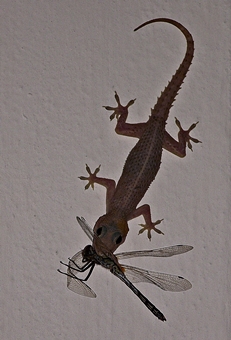
While eating our dinner one tropical evening in a lovely restaurant in Fort Cochin (Kerala, India), I looked up and noticed that high up on the wall overlooking us there was another diner, definitely not a vegetarian.

Clinging to the wall

An insect in its jaws:

A gecko stares at me

The simple life

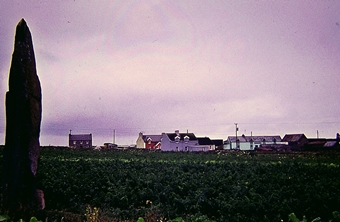
KILSHANNIG 76 Standing stone


A long time ago, I remember seeing an advertisement issued either by Aer Lingus or the Irish tourist board, which said:

“In Ireland, it rains every fifteen minutes for a quarter of an hour”

During my first visit to the Republic of Ireland (Eire) back in 1976, I stayed with some friends in their secluded country house far south of Dublin. Remote as it was, it had a telephone, but it was without a dial. To use the ‘phone, it was necessary to lift the receiver and then turn a small crank several times. This crank sent a signal to the operator at the exchange, who then connected you to the switchboard. Next, you told the operator which number you required, and he or she then tried to connect you.

One night, there was a fierce storm with much wind. On the morning following, one of our party wished to make a ‘phone call. After several attempts to alert the operator with the cranking mechanism, we concluded that the storm had damaged the line connecting the house to the exchange. We thought that it would take many days before this would be repaired. One of my friends suggested that we got in the car and followed the telephone line to discover how and where it was damaged.

Soon, we found the place where the problem had occurred. The wind had caused the two wires that led to the house to become tangled in the branches of the tree. One of my friends stood on the roof of our vehickle and using a long stick, a branch that had been brought down by the storm, managed to disentangle the wires. When we returned to the house, we discovered that the problem had been resolved. Life was so simple in those days! 

Two heads on the football field

WIMB


Back in March 2017, I was flicking idly through the London Evening Standard. So idly was I flicking that I looked at the sports pages, which I usually ignore. There was a large photograph of football players in orange shirts. Absent-mindedly, I stared at them, and then suddenly I noticed that their shirts had black double-headed birds printed on them. Knowing that the national symbol of Albania is a double-headed eagle, I wondered whether this was an Albanian team.  It was not. It was AFC Wimbledon, a team based in the southwest suburb of London, Wimbledon.

Soon, I discovered that Wimbledon’s municipal coat of arms bears a double-headed eagle. A trip to Wimbledon Library did not prove useful in my quest to discover why this two-headed bird should appear on the Borough’s crest. Various Internet websites suggested that it was there as a reminder that Julius Caesar had camped somewhere in what is now Wimbledon.

It is believed that the Ancient Romans used the eagle as a heraldic symbol, but it was usually the single-headed variety. It is unlikely that they used the double-headed variety, which dates back to Ancient Babylon and maybe before. It is likely that it was first used in a ‘Roman’ empire context after the fall of the Ancient Roman Empire, by the Byzantine Empire, a successor to that earlier Roman Empire, in the 12th century AD when it was adopted by Isaac I Komnenos (c. 1007 – c. 1060). His family originated in Paphlagonia (now ‘Paflagonya’ in Turkey) in Anatolia. Double-headed eagles were associated with the Hittites, who had lived in the area, notably in the city of Gangra (now ‘Çankırı’ in Turkey). A plausible theory, but probably unprovable, is that the double-headed bird migrated from the Hittites into Byzantine usage.

This brings us back to Wimbledon. From the little evidence that I have presented, the connection with Julius Caesar and the London borough’s crest seems weak. Whatever the real story, the crest is not an ancient one. It was designed and granted as late as 1906.


Part of  an image from http://www.sportinglife.com

Cheese is nice


Once, we spent a weekend with a German friend living in Germany. She was a great cook and spent much time preparing delicious meals for us in her kitchen. 

I was sitting in the living room, which was next to the kitchen when I heard our hostess angrily shouting what sounded to me like “cheese is nice”. Now, I would be the first to agree with that sentence. However, she kept repeating it angrily whilst crashing about in the kitchen. I could not see why anyone except possibly a vegan could possibly use that sentence so angrily.

After a while, it dawned on me that our friend was not talking to herself about cheese, but about Jesus, whose name she pronounced as ‘Cheesus’. What she was really saying angrily in her strong German accent in English was ‘Jesus Christ’.

Breathing the past

CHARLIE


I always enjoy visiting places with interesting historical associations. For example, it gave me a thrill to enter the room in a house in Porbandar (Gujarat, India) where Mahatma Gandhi was born, and to stand in Sarajevo at the very spot where Gavrilo Princip shot the Austrian Archduke and his wife in 1914.

I hope that the following excerpt from my book “Charlie Chaplin waved to me” can begin to explain my fascination for visiting places with great historical significance either for me or the world in general:

To reach Oxford Circus, the starting point of our trips to the West End,
we used to take the Northern Line of the Underground to Tottenham
Court Station, and change there to the Central Line. In the 1960s, there
were signs that directed the passengers from the Northern line to the
Central, but these involved using a number of staircases and walking
quite a distance. My mother ignored the signs, and headed straight for a
passageway at one end of the southbound Northern Line platform. This
was clearly labelled ‘No Entry’. My mother knew better than to obey
this because she knew that it was a shortcut to the Central Line
platform. Today, it is the recommended route. Whenever I walk along
this once ‘forbidden’ passageway, I wonder whether amongst the
billions of molecules that make up the air in that circular passage there
is maybe at least one molecule of the carbon dioxide or nitrogen that
was once breathed out of my late mother’s lungs. And, do the echoes of
her footsteps still reverberate even ever so faintly in this busy
passageway?

It is the thought that I might be sharing even one molecule of the air breathed by the persons who gave a place the historic interest for me that gives me an irrational thrill. It is for this reason that I feel unable to visit places like Auschwitz and Dachau. I do not wish to breathe the air that might possibly have been around when the Nazis and their unfortunate victims occupied such places. 

This might seem a bit ridiculous as the chances of breathing the same molecules of air that say my mother or the Archduke of Austria inspired are extremely miniscule, but what is the joy of life if not full of quirkiness.


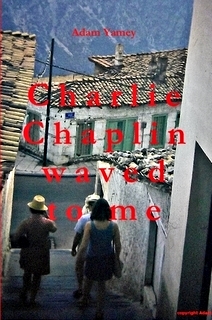
Charlie Chaplin waved to me” by Adam Yamey is available from:

Amazon, Lulu.com, and bookdepository.com, as well as on Kindle