Directions

directions


I travel a great deal and sometimes get lost. It is then that I might ask a passer-by for directions. Generalising a bit, the kind of answer you get tends to vary from country to country.

During trips to the USA, I have either been told that the person I asked has absolutely no idea at all or I have been given very precise, accurate directions. 

In the UK, if you ask directions from the average person you meet by chance, several things might happen. First of all, you might be given accurate directions. More likely, you will recieve a vaguer reply like:

“I think it’s somewhere in that direction. Follow that road, and then ask again.”

Because most British people want to be helpful, you might be told:

“I think I’ve heard of it. You could try going that way, but I’m not sure.”

But, it is very rare that you will be told:

“I’ve absolutely no idea.”

In India, asking directions can result in a small conference taking place. People within earshot of the person you first asked will join in the discussion. Often each person will point in a different diection in an attempt to be helpful and also to have the chance to meet a stranger. Like the Americans, who will happily admit ignorance of places that do not have any importance in their lives , many Indians also only know how to reach places where they need to be but not others. But, unlike the Americans, Indians do not want to disappoint visitors to their country by not supplying some kind of answer.

Of course, all of the above is highly generalised. But, here is one specific example, which occurred in Istanbul, Turkey. We were looking for some place of interest, but could not find it. We entered a shop. Without having any knowledge of Turkish, we managed to make it clear what we were looking for. Without hesitation, the shop keeper abandoned what he was doing, becckoned us to follow him, and then walked with us through the area until we reached our desired destination.


Dry Martini

martini


The first alcoholic drink that I enjoyed in my early teens was Martini Vermouth. I liked it neat with a piece of ice.

One evening, a wealthy relative invited my parents and me to join them at London’s Savoy Hotel, where they were staying. Before dinner, we had drinks in their suite. I must have been about fourteen then. 

The room service waiter arrived, and we ordered drinks. I asked for my then usual Martini. Soon, the drinks arrived. I was handed a large glass tumbler with a thick base. It contained a clear liquid that did not look like Martini to me. Also, it did not smell like Martini, and its taste did not resemble anything I had drunk previously. Being a polite young fellow, I did not remark on it, but just sipped it slowly whilst the adults chatted.

When it was time to get up and descend to the dining room, I had an odd sensation. I stood up and looked at the floor which seemed to be undulating like the waves in the sea. Whatever I had drunk had gone straight to my head. What I had been served was not the dry Martini, which comes straight from the bottle, but the cocktail Dry Martini, which is mostly gin and only a dash of Martini. You live and learn.


picture source: http://www.diffordsguide.com

Buggy battles

Buggy


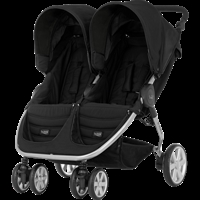
All public transport buses in London have dedicated areas for buggies (baby strollers, push-chairs etc.) Other passengers need to, or are made to feel that they need to, move out of the way so that a buggy can be parked in the designated area.  So far so good. Many child carers use their childrens. buggies as shopping trolleys, often overloaded with bags of merchandise. Often, the child or children being transported in the buggies are removed from them during the bus journey and then occupy a passener seat. The empty buggies then simply take up space that could be used by other passengers on a crowded vehicle.

Now, there are clear signs by the designated ‘buggy area’ that state quite clearly that the area is also for use by persons confined to wheelchairs. These signs also make it very clear that wheelchair users have priority over buggies in the special area on the bus.

Clashes, often quite uncivil, occur if too many carers pushing buggies are competing for the the limited space available for buggies and wheelchairs. Or, even worse, battles can break out between whelchair users who want to board a bus and buggy owners, who are already on board the bus. Both the child carers and the wheelchair-bound  people can often behave quite unpleasantly. Unlike the wheelchair occupant, almost all baby buggies can be folded up and placed in the luggage area that is available on every bus.

Yesterday, it was a sunny afternoon and I was travelling in a bus past Swiss Cottage in north west London. The buggy/wheelchair area was occupied by two baby buggies and a folded buggy was in the luggage area. We stopped at a bus stop where a man in a wheelchair was waiting. He wanted to board the bus, but the owners of the buggies occupying the designated area would neither fold their buggies nor leave the bus to make space for the priority user, the wheel chair user. The bus driver had to get out to sort out the stand-off. He wanted the buggy users to disembark, but they would not budge. In the end, the wheel chair bound fellow behaved decently, saying he would wait for the next bus.

In my opinion, both wheelchair passengers and buggy pushers can easily manage to wait  (especially when the weather is good) until a bus arrives with sufficient space. After all, the wheelchair user is sitting and waiting as is the buggy borne child, who is often far too big and independently mobile to be confined to a buggy. What do you think, dear reader?


Picture from: https://www.britax-roemer.co.uk/pushchairs/strollers

Such is life

pill


Quite a long time ago when I was in my twenties, I was invited by an Italian friend to stay at the hotel, which his parents ran in the Val ‘d’Aosta in a mountanous part of north west Italy. The hotel, which was quite luxurious, catered mainly for elderly clients. 

We used to eat meals in the hotel’s elegant dining room. All of the tables had starched table cloths and napkins (serviettes), beautifully polished glassware, and shiny silver cutlery. What struck me as surprising was that by almost every table setting, there were small bottles filled with tablets and capsules of varying shapes and colours. These were laid out ready for those of the diners who were required to take medicines with their meals.  The image of the medicine bottles as table settings has stuck in my my mind more than the rest of my stay at the hotel.

Now, many years later, although I rarely eat at such elegantly laid tables as in the hotel in the Val d’Aosta, I too need to have my collection of assorted tablets every breakfast and evening meal. I never imagined that I would be doing this when I was staying at my friend’s parents’ hotel. Well as the annoying saying goes “such is life“.

It has its uses

Psychedelic headscarf_240


In the UK, unlike some countries in Europe, we have a fairly liberal attitude towards Moslem women covering their heads and faces to a greater or lesser extent. In the last dental practice where I worked until I retired, our patients came from all over the world. A not insignicant number of our female patients were Moslems who wore some kind of head covering. A few of them insisted on being treated by female dentists, but most of them did not mind seeing one of the male dentists.

One of my female Moslem patients came to the UK from a north African country. She always wore a loose-fitting headscarf, but did not cover up her face. One day, she needed to have a front (incisor) tooth removed. I explained to her that the situation was such that she would have be without any replacement for it for 24 hours – I cannot remember why. 

Will you be able to cope without that tooth for a day. The gap will show every time you speak or smile,” I said.

Picking up the end of the scarf she was wearing, she covered her mouth with it, and then said humorously:

This has its uses!

And with that comment, she allowed me to remove the troublesome tooth, and then left the surgery with her face covered. She looked like a typical Moslem woman wearing a face-covering. Nobody would have guessed that she was missing a front tooth.

How far do you go?

Story line_500


There are many ways of choosing books to read. Some people go by the ‘blurb’ on the cover or the subject matter as suggested by the title, others by the first few pages, some by the last few pages, and yet others simply by the reputation of the author.

Having chosen one, how do you decide whether to read it from start to finish or to abandon it?  

If I can get through the first ten or so pages, I will continue reading it. So, I conclude from this that when I am writing a book it is very important to engage the reader from the very first page. In addition, when the book appears on sites like Amazon, the sample that becomes available for potential buyers is these first few pages.

If I am not enjoying a book by the hundredth page, I will happily stop reading the book, and then choose another. If, on the other hand, I am fully enjoying or finding a book interesting as I reach page 100, there is a very good chance that I will read the whole book.

What is your decision-making process for deciding whether or not to stick with a book?

Conducted by an Albanian

OLSI 1


The Victorian gothic St Stephens Church in Gloucester Road has great acoustics for orchestral music. On the evening of the 15th of June 2019, we attended a wonderful concert of “Symphonic Dances” performed by the London City Philharmonic Orchestra. I have been to several other concerts where this ensemble has played. This time the orchestra had been enlarged so considerably that it only just fitted into the space available for them at the east end of the church. This magnificent collection of first-class musicians was masterfully and sensitively conducted by the Albanian conductor Olsi Qinami, who studied at the Academy of Arts in Tirana and then at the Ecole Normale de Musique in Paris.

The ambitious programme consisted of three symphonic dance pieces, all composed in the USA. Variations on a Shaker Theme by Aaron Copeland (1900-90), son of Jewish immigrants from Lithuania, got the concert off to a tuneful start. This was followed by a memorably good rendering of the vibrant Symphonic Dances by Leonard Bernstein (1918-1990), son of Ukranian Jewish parents. This exciting piece contains familiar tunes from Bernstein’s musical drama West Side Story. After an interval, there was a piece, Symphonic Dances, composed late in the life of Sergei Rachmaninoff (1873-1943), who emigrated to the USA from Russia in 1918.

The three pieces were all by composers, whose families had ‘roots’ in the former Russian Empire, but each of them was completely different. All three were highly enjoyable. Olsi Qinami seemed to be able to get the best out of the orchestra seemingly effortlessly. He stood on his podium calmly without any dramatic gestures and achieved wonders with his large well-disciplined orchestra, which according to the programme notes contains players from all over the world including two with Albanian names (Pranvera Govori, violinist, and Idlir Shytu, cellist).

In summary, I am truly pleased that I did not miss this concert. It was pure joy throughout. Although Olsi’s previous concerts have all been outstanding, “Symphonic Dances” was his best so far. I look forward to the next, which will be in St Stephens Church on Saturday, 5th of October 2019.

Flying rats

pigeons


My late mother was awfully concerned about avoiding germs. For example, every can of food had to be washed before opening it just in case rats or mice had scampered across it in a warehouse.  Also, when we visited toilets in public places in the 1960s, we were told to put toilet paper on the seats so that we would not pick up germs that other users had left behind. Interestingly, in many public toilets nowadays, notably on aeroplanes, disposable toilet seat covers are provided. Mum would have approved of this development.

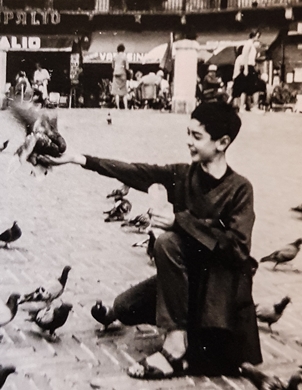
Recently while rummaging through some old photographs, I came across one of me, aged about 10, in Siena, Italy. I was kneeling on the floor feeding pigeons that had flown on to my hand. As a child, I loved doing this. My parents would buy me a paper cone filled with corn seeds. I would fill my palm with some of these, and then pigeons used to perch on my finger tips and pick up bits of corn with their beaks. I remember that the pigeon’s ‘feet’ felt quite soft. Feeding these creatures was a real treat.

Well, I was not unusual. Many people enjoy feeding birds from their hands. Today, in London’s Kensington Gardens there are flocks of green parakeets that happily feed from visitors’ hands.

The surprising thing was that my germ conscious mother permitted my sister and me to feed pigeons as described already. In New York, pigeons are known as ‘flying rats’. Pigeons are are actually less hygienic than rats and they carry mites, which irritate human skin. I cannot believe that pigeons in Italian cities in the 1960s were any cleaner than those flying about today. Had my mother been aware of the pigeons’ unsavoury lack of hygiene, feeding these creatures would have been totally forbidden to my sister and I. I am pleased that she did not realise that the dear flying rats are so filthy!