Time flies

I DO NOT KNOW ABOUT YOU, but I am finding that time hurtles past during the so-called ‘lockdown’, which severely limits our movements and activities to our local environments. Although I needed little stimulus to do so because I find it enjoyable, it has made me look back into my past more than ever before. This morning (19th of May 2020) on BBC Radio 4, the author Ian McEwan spoke eloquently and with great insight about the perception of time and how it changes during a period of forced inactivity such as long-term prison sentences and our present virus-induced predicament. I was heartened to learn that he and I agree about the effects of ‘lockdown’ on the perception of time’s passage. Having got that ‘off my chest’, I will return to yet more nostalgia. I am going to write about my recollections some of the first ever holidays I enjoyed. These happened when I was well under ten years old. So, my memories may be a little hazy and, also, influenced by what I remember being told about these trips when I was a bit older.
 

Hermanus_1024 BLOG


In 1955, when I was three years old, my parents took me to South Africa. We travelled by sea. During the voyage, we crossed the Equator. I have seen photographs taken on board of me dressed in a sheet. When we crossed the Equator, so I was told by my mother, the children on board took part in a fancy-dress party. Unprepared for this, but always resourceful, my mother used a sheet from our cabin to dress me up as a Roman in a toga. Sadly, these photographs have been lost.

On arrival in Cape Town, I faintly recall something that I did on the dockside. There were tracks like tram lines embedded in the ground, along which huge cranes moved. I inserted my tiny foot into the groove of one of these, and then could not remove it. I imagine that my mother, who was excessively anxious about my well-being when I was very young because my birth had been fraught with difficulties, must have been very concerned that her precious child (that is me, folks) would be crushed by a crane on the move. My foot was extracted and with no long-term effects.  

Two other recollections of the trip to South Africa relate to our stay in Port Elizabeth, where my father’s mother and sister lived. One faint memory is my concern about the sinister look of the cacti on display in a greenhouse in a park. Another relates to being offered and rejecting smoked salmon – I was an unadventurous eater until my late teens.  

I cannot remember visiting King Williams Town (‘King’) in the Eastern Cape in 1955, but about 60 years later I discovered that we did. Several years ago, I was researching at the British Library, leafing through old issues of the “Cape Mercury”, a newspaper published in King. In one of the issues published in 1955, I discovered an article describing our visit to King. The reason we went there was to visit my great grandmother Hedwig Ginsberg, my mother’s grandmother. As she was the widow of a Senator and herself a prominent citizen of King, her social life and that of her son Rudolph, a Mayor of King, was recorded in the paper’s gossip columns. Our visit to King was described. I quote from what I discovered:

Mrs Yamey … whom many of you will have met in her single days. They now have an adorable little son, Adam, aged three.”

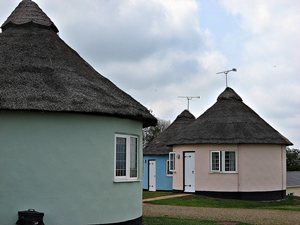
Another trip that I recall vaguely was less exotic. It was to Winterton-on-Sea in Norfolk (UK). I was taken there by my uncle and aunt and their then young daughter. I recall staying in a round hut. Although I did not know it then, the round hut was based on the design of the South African rondavel, a circular hut with a conical roof. Many years later, I re-visited Winterton-on-Sea. The resort colony of rondavel-like dwellings was still being used by holidaymakers. The place, set amongst sloping sandy dunes, had originally been set up by people from South Africa, but had long since changed hands.

My parents were not keen on seaside holidays. However, I can remember two that we made when I was very young. In each case we travelled with friends, who lived in Kent. Arthur Seldon was one of my father’s first friends and collaborators when he came to London from South Africa in the late 1930s. His wife Marjory, who was born on the very same day as my mother, was one of my mother’s closest friends. The Seldons had three sons, one of whom has become quite prominent in public life.

One year, we accompanied the Seldons to the North Sea beach resort, Noordwijk in the Netherlands. This must have been in the second half of the 1950s, just over a decade since the end of WW2. I remember that we kept moving our beach blanket from one patch of sand to another. This was done whenever my mother heard neighbouring holidaymakers speaking in German. During WW2, my mother had worked for the Red Cross in Cape Town. As the war drew to a close, she read Red Cross reports of the atrocities being uncovered in recently defeated Germany. I suppose she thought that there was a good possibility that any adult speaking German in the late 1950s might well have once been at the very least a Nazi sympathiser.

One day when walking back from the beach, I stepped on a nail protruding from some driftwood. I remember an unusual sensation as the nail penetrated the sole of my foot, but it was not pain. My mother, always anxious about me, rushed me to a local doctor, who gave me an injection for tetanus, something I had never heard of at that tender age.

The other holiday with the Seldons was in Bognor Regis on the south coast of England. We had hired a two-storey house for the stay. I remember my mother checking it out before we decided who was going to sleep where. She decided that the Yamey family, mine, was to take the ground floor. The Seldons, she decided, were to occupy the first floor. She had discovered that the windows on the upper floor had low sills, making it easy for people to fall from them. This was not a risk that she was prepared to take. It seemed that it did not bother her to worry about the Seldons risking falling out of these windows. And, as far as I know, it did not worry the Seldons, who survived.

Sometime in the 1950s, we visited Hilversum in Holland. It was the home of one of our live-in helps, Truus Vollmer. She stayed with us for two years and became good friends. Her father worked for Radio Hilversum. Every now and then, he made gramophone records for me. They played at 78 rpm and were unusual because they played from close to the central label outwards towards the edge of the disc. The recordings included sounds of trams, trains, buses, and other forms of transport. One of the records, which I played often, included a recording of the Dutch St Nicholas Day song, with the words:

“Sinterklaas Kapoentje,

Leg wat in mijn schoentje,

Leg wat in mijn laarsje,

Dank je Sinterklaasje!”

During our visit to Hilversum, which I remember dimly, Mr Vollmer tried to record my voice. This was later presented to me on one of his records. I was extremely shy as a small boy. The recording starts with the voices of various adults (some with Dutch accents) and my mother, saying:

Come on, Adam … Say something … Why not sing something? … Come, say something … Come along … It’s not difficult … Don’t be shy … etc.”

Eventually, my voice can be heard saying sulkily:

I don’t want to”, and nothing else.

We made several trips to Holland at that time. We always stopped for lunch in Rotterdam, where we ate in the restaurant of a large department store, the Bijenkorf. If I remember correctly, my parents enjoyed eating club sandwiches there. To my knowledge, they never ate them anywhere else.

After 1960, when we stayed close to the sea in Cyprus, our family visited the seaside rarely, and never by design. My mother could not swim, and the sight of water made her uneasy – she was extremely prone to seasickness. My father did enter the sea occasionally, but never for long. The seaside was not my parents’ ‘thing’, nor is it mine.

Well, as I mentioned at the beginning, time feels as if shoots past during the ‘lockdown’. It seems but a few minutes since I woke up in the morning to listen to the latest news of doom and gloom on the radio, but now it is mid-afternoon. Years ago, when I was at school, a 45-minute Latin lesson seemed to last a whole day and I dreaded the occasional double-length Latin lessons we had to endure. Now, it seems that 45 minutes passes in a flash and even a three hour wait in an airport departure lounge seems to shoot past. Yes, our perception of time is a curious thing.


Picture showing rondavels at Winterton -on-Sea
Himalaya Palace

HIM 1 BLOG


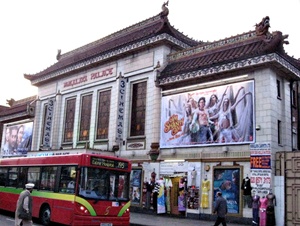
THE HIMALAYA PALACE cinema in the London suburb of Southall, an area where many people of Punjabi descent live, showed only Bollywood films from India, usually the latest releases. Being keen on these films, we often made the long trip from our home to Southall to watch them. During our regular visits to India, always including Bangalore, we take time to see Bollywood films in the country where they are created.

We were in Bangalore in December 2001 when the blockbuster film “Kabhi Khushi Kabhie Gham” (ie ‘sometimes happy, sometimes sad’) was released all over India. We were staying with my in-laws,  and everyone decided that we had to see it.

We chose a cinema near the famous Mavalli Tiffin Rooms (MTR), a long established popular eatery in Bangalore. It was decided that we should have breakfast there before seeing a morning screening of the film. So popular is MTR, that queuing is always required before getting a table. It was my first visit to this highly esteemed place and I hope my last. Everything we were served was almost dripping with ghee, which is part of its attraction for its many fans.

The cinema was a few steps from MTR. After buying tickets, we had to wait in another queue. This one was to await one’s turn to have bags searched by security personnel. I thought this was to prevent weapons and bombs from entering the auditorium, but it was not. The security people were searching for food and drinks. So-called ‘outside food’ could not be brought into the cinema because it risked reducing the sales of overpriced snacks and drinks sold by the cinema.

When we reached our seats, my sister-in-law showed me her basket, lifted a shawl within it, and revealed the sandwiches and other snacks beneath.  So inefficient were the security people that they had not delved into the bag with any seriousness of purpose.

Before the film started, my sister-in-law offered me and the rest of the family rolls of compacted cotton wool rather like those that dentists stuff into patients’ cheeks to dry the mouth. She said we might need them because the volume of the soundtrack would be very high. I declined them, and enjoyed the full impact of the sound.

At the Himalaya in Southall before the start of any film, a sign would be projected. It said something like:

“Please do not talk during the performance.”

This was a pointless exhortation because at the Himalaya the soundtrack was played so loud that even if you screamed at your neighbour, they would not have heard you.

Sadly, the Himalaya Palace (built 1929) is no longer a cinema. It closed in 2010. When we last visited Southall a few years ago, the Chinese style front of the Himalaya, complete with dragons, still existed, but its interior had become a covered market.

Nowadays, well at least before the pandemic arrived,  we watch Bollywood films that are shown regularly (at least one per week) at a Vue cinema in London’s Shepherd Bush.

Providing you miss the Friday and Saturday screenings of the latest releases, the audiences are usually minute, often less than ten people in an auditorium that can seat well over 150 people. Even before the pandemic, social distancing  was the norm during the screenings because empty seats usually greatly outnumbered occupied ones.

Most Bollywood films are long, usually over two and a half hours. So, there is an interval during their screening. The point at which the interval occurs is chosen by the film maker to leave the audience at a point of high suspense in the story.

Once during an interval at a Bollywood screening at the Vue, we sat in the almost empty cinema and heard two ladies, sitting several rows in front of us, chatting in Italian. Out of curiosity,  we asked them in Italian why they had chosen to see a Bollywood film. Their reply surprised us.

The two women were members of an Akshay Kumar fan club in Calabria in the far south of Italy. They had only ever before seen films starring Akshay on video screens.  They were staying far away from Shepherds Bush in Dulwich when, to their delight, they discovered that the film we were watching, starring Akshay, was being screened in Shepherds Bush. They had come to see one of Akshay’s films on the ‘big screen’ for the first time.

Bollywood’s films have captured the hearts of people all over the world. They were even  popular in the former USSR. When we visited Albania in 2016, we discovered that they, as well as Indian TV soap operas, had captured a significantly large audience of Albanians. These films would not have been shown in Albania prior to the downfall of its Stalinist style regime in 1991.

Until it is safe to do so again, my wife and I will have to enjoy armchair screening of our Bollywood DVDs. Enjoyable as these are, they are an incomplete substitute for ‘in your face’ full blast performances in a cinema auditorium.

Spare time

Now that many of us are being encouraged not to leave our homes unless it is strictly necessary, we have more time to enjoy our immediate surroundings and, maybe, do a little sorting out.

I have been looking through numerous photographs, scattered around our residence in albums or packets provided by the photographic shops that used to develop films and print the images on them. It is a fulfilling armchair journey of discovery.

Gradually, I am posting some of these photos, many of which were taken 20 plus years ago, on the internet. My only regret is that many of them are unlabelled, so that I am not always sure when and where I took them.

The photo attached to this short piece was taken somewhere in Hungary, probably in the late 1990s.

Gandhi and the plague

GANDHI BLOG

IN THE CURRENT CORONAVIRUS OUTBREAK, infection is spread from person to person in close contact with one another. Isolation and quarantine are likely to be effective in eventually reducing the rate of infection.

At the end of the 19th century and beginning of the 20th, another deadly pandemic, the bubonic plague, spread around the world. It was then believed that separating people from each other was likely to help arrest the plague. It was not because bubonic plague is rarely contagious, but usually transmitted by a vector.

While researching the life of my great grandfather, Franz Ginsberg, sometime Mayor of King Williams Town and later a South African Senator, I needed to explore the history of bubonic plague in South Africa. While doing so, I discovered that the young Indian lawyer, Mahatma Gandhi, also entered the story. The following is extracted from my article that was published in a South African medical journal back in 2008:

INVISIBLE INVADERS

When the Boer forces, provoked by the British, started invading the Cape Colony in 1899, another invasion, covert in nature, was also beginning to threaten the area. The hidden enemy, a bacterium, lives in the blood of fleas and the rats (and other rodents) whose blood they ingest. These fleas are also partial to feeding off the blood of humans. When an infected flea feeds off the blood of a susceptible human, that person runs the risk of developing an often fatal illness known as ‘bubonic plague’. When my great-grandfather Councillor Franz Ginsberg (1862-1933) was serving on the Borough Council of King William’s Town in 1899, little was known about the transmission of the plague, even in the scientific world, except that its causativeagent was the bacterium Yersinia pestis (Y.pestis). This ‘bug’ is named after one of its discoverers Alexandre Yersin (1863-1943).

PESTILENT FLEAS

Today, much is known about the mechanism of transmission of Y. pestis. Bubonic plague is an example of a zoonosis: a disease that normally exists in other animals, but also infects humans. The danger to humans is that the bacterium is carried in the blood of certain kinds of rat, and that these rats often live in close proximity to humans. The rats serve as a mobile reservoir for this pest, but they are susceptible to its ill-effects. When a flea bites an infected rat, it ingests the blood of the rat and some of the bacteria living in it and the bacteria multiply within the flea’s digestive tract, causing considerable harm to the flea itself. If this same flea should bite a human, the human victim will receive some of the bacteria from the flea because the flea, while feeding, regurgitates some of its Yersinia-infected stomach contents into its human victim, who may then begin to exhibit the symptoms of bubonic plague. The plague can produce numbers of victims in epidemic or pandemic proportions. The Black Death, also known as ‘The Second Pandemic’, killed between one third and one half of the population of Europe and Asia between 1347 and 1351. It is thought by some to have been a pandemic of (bacterial) bubonic plague but others feel that it was a viral infection. The ‘Third Pandemic’ began in China’s Yunnan Province in 1855, and is known to have been caused by Y.pestis. Its dissemination around the world in the decades that followed was facilitated by global shipping. Rats and their fleas were frequent stowaways on ships, and as infected rats moved from port to port so did the bubonic plague.

AN UNWELCOME IMPORT

In September 1896, the bubonic plague reached India (most probably from Hong Kong) and had claimed its first of many victims in the port of Bombay. News of the plague spread faster that the plague itself. In 1896, the Natal Medical Council discussed the bubonic plague – by then well-established in India – and its relevance to Natal. The Council decided that the whole of India should be regarded as an infected area, and that all ships entering the ports on the coast of Natal should be quarantined.

In January 1897, an anti-Indian demonstration was held in Durban to protest against the landing of ‘asiatics’ on board two Indian-owned ships which arrived there in mid-December 1896. The ships had been held in quarantine for 25 days. A group of Indians in Durban, including Mohanlal K Gandhi (later to be known as ‘Mahatma Gandhi’) who had just arrived in Durban on one of these two ships, the ‘Courland’, sent a long ‘memorial’ protesting against this to the Secretary of State for the Colonies in London. Its authors shrewdly noted:

‘…that the quarantine was more a political move against the Indians than a safeguard against the introduction of the bubonic plague into the Colony’,

and they provided evidence that the measures taken to effect quarantine were done ineffectively and too late to have been of any practical use. Despite measures such as these, bubonic plague reached South Africa sometime between 1899 and 1901.

The Natal medical community had some grounds for its fears that the plague might arrive from India. At a meeting of the Borough Council of King William’s Town in February 1899,13 it was announced that the bubonic plague had arrived in Port Louis on the island of Mauritius (a place that ships sailing from India to South Africa may have visited occasionally), and the Council had received a letter from the Town Office of Port Elizabeth, asking for the support of King William’s Town in their request for the government to enforce quarantine regulations (the Transvaal and Orange Free State prohibited entry to Indians in early 1899).

My great-grandfather, Franz Ginsberg, moved that the Council of his town should cooperate with that of Port Elizabeth. Although fear of importing the dreaded plague was the cause of an anti-Indian demonstration in this port as early as about 1897, the disease only began to occur in the town in April 1901 –soon after its arrival in grand style in Cape Town in March 1900 (having possibly arrived on board a ship from plague infested Rosario in Argentina). As early as November 1900, a doctor in King William’s Town reported eight cases of bubonic plague amongst Africans, three of these leading to death. By early 1901, the inhabitants of King William’s Town had good reason to worry about the plague.


Mustard

My father’s grandfather lived in Cape Town (South Africa) during the Spanish influenza pandemic at the end of the first world war.

He was terrified that he would be afflicted with the deadly illness. He had heard that applying a mustard plaster would help him avoid the disease. So, he smeared his stomach with mustard and covered it with an adhesive plaster. Then, he retired to bed.

After about three days, my great grandfather developed a high temperature. Fearing the worst, he summoned a doctor. The medic tore of the plaster to reveal the damage that the mustard was causing. It had ‘eaten’ through the skin, which was then becoming infected. The infection caused by the mustard was causing the fever, not the dreaded ‘flu.

My great grandfather survived the Spanish ‘flu. What killed him several years later was something that was supposed to protect him from illness. He died following an adverse reaction to an anti-tetanus injection.

Going viral

Two bees or not two bees_240

I hope that I am not tempting fate by writing this!

I am puzzled by the excessive anxiety over the coronavirus outbreak, which is encouraged by politicians and the press.

On the one hand, the public is informed that the virus outbreak will lead to dire consequences on a global and local scale.

On the other hand, we learn that apart from a couple of susceptible groups at the two extremes of the age range, being infected by the virus is highly unlikely to cause the infected person to suffer much if anything at all.

What are we to believe? Should we be panicking as our politicians seem to be suggesting, or should we not let the coronavirus affect our mental harmony?

Whatever the answer, it is best to be careful!


Finally, here is a thought provoking article to read:

https://www.psychologytoday.com/gb/blog/culture-mind-and-brain/202002/the-coronavirus-is-much-worse-you-think