
In a gauzy gown,
wandering through the dark,
ignoring Tower Bridge

In a gauzy gown,
wandering through the dark,
ignoring Tower Bridge
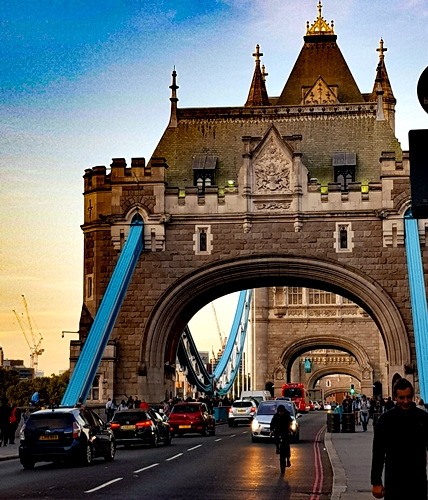
Archways, traffic, people,
river flows beneath:
I am seeing Tower Bridge
An artist creates
what eyes can see:
then playfully the brain digests

Cracked Egg by Jeff Koons, on display at Christie’s auction house in London (UK)
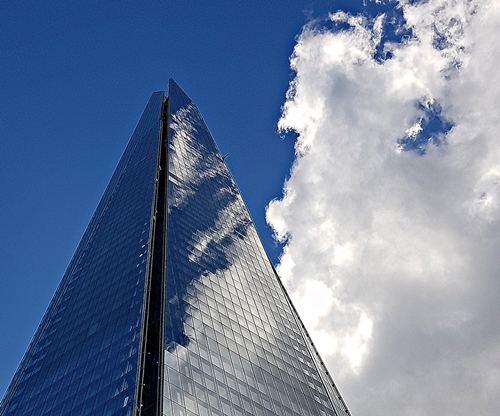
clouds with buildings coalesce
architecture and nature:
glory of sky


artist, paints, and wall,
ideas and ability:
go make a mural
Experience learn’d
damages suffer’d
must consider safety first
My late mother was involved in a motor car accident near Cape Town in South Africa when she was a young girl in the 1930s.
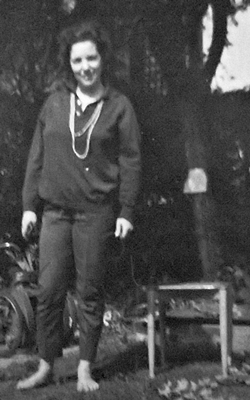
“Our family dentist, at least the first one who ever looked after me (during the 1950s and early 1960s), was Dr Samuels, an elderly Jewish refugee from Nazi Germany. This kindly man, who must have been in his late 60s or early 70s when he treated me, told my mother how he had to smuggle gold out of Germany. When he, and for that matter any other Jew, was fleeing from Germany in the 1930s, it was not permitted to carry anything of financial value out of the country. His resourceful wife prepared sandwiches for his journey. Instead of filling them with lettuce leaves, she filled them with sheets of gold leaf – a material that used to be used a great deal in dentistry. Thus, if he had encountered inquisitive Nazi officials on the train, he could have concealed the gold he was carrying by munching his precious sandwiches. I am not sure when he retired, but I remember him telling my mother that he would not cease practising until the last of his patients abandoned him. I do not know when this was, but I do know that he helped to conceal from us the fact that my mother was missing some teeth.
In all the 28 years that I knew her, I had no inkling that my mother had two missing front teeth. I knew that she had missing teeth because she often reminded us about the accident that she had suffered, but it was not until she was dead that I discovered, almost by chance, that it was two of her front teeth that she lost.
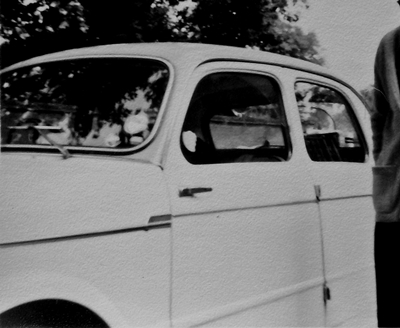
I am sure that it was having been involved in this accident that led to my mother having seat-belts installed in our Fiat Millecento. She arranged for this to be done at least 20 years before they became mandatory in the UK. I have no idea how and from where she got the idea of installing car seat-belts in 1960, but she did. And, with a little persistence she found somewhere where these items, which were almost unknown in cars, could be installed in our Fiat.
Seat-belts were not routinely fitted into cars before the 1980s, with the exception of some Swedish cars such as Saab and Volvo. There were very few of these on British roads in the early 1960s. Therefore, my mother’s idea of installing them into our Millecento in 1960 was little short of revolutionary. The two front seats of the car were fitted with complex harnesses. A strap went over each of the wearer’s shoulders and these were connected together by a waist strap. The people in the front ended up wearing what looked like the sort of safety harness worn by a jet pilot. These complicated straps were extremely difficult to adjust properly.
The rear of the car was fitted with two lap straps such as are found in aircraft passenger seats. My sister and I used one each except when there was a third person in the back. In this case, my sister and I had to share one strap. To avoid fighting, my mother separated us in the strapby placing a pillow between us.”
The passage written above is an extract from a book, “Charlie Chaplin Waved to Me”. It does not mention the extra locks my mother had fitted in the rear doors of our car. These were to prevent my sister and me from opening the doors while were diving. Had we been in an accident, it would have made it very difficult for rescuers to open these doors as the keys were attched to the ring with the car keys.
I only learnt about my mother’s missing fron teeth when after her tragic demise, I found her partial denture lying around in our house.
“Charlie Chaplin Waved to Me” is available by clicking : HERE
Also available on Kindle
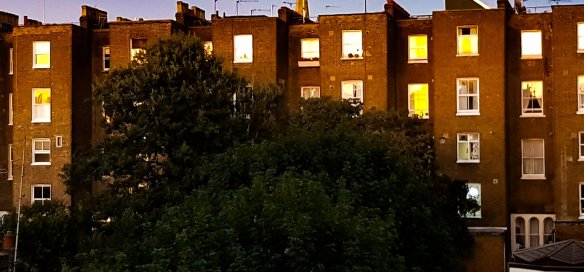
west facing windows
reflecting the sun-
its slowly dying embers
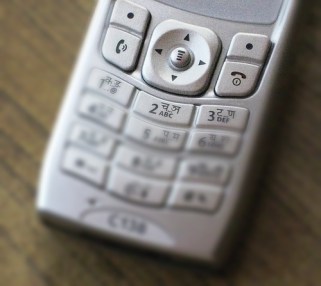
mobile phone stolen
contacts imag-es vanish:
modern tragedy
For several years I worked in a west London practice near Portobello Road . My patients came from families that had originated in many parts of the world. Almost all of them had lively characters. They were not your average quiet provincial types, who respect professionals – a bit too much in my opinion. They were unpredictable in their punctuality and behaviour. This made every one of my working days exciting, sometimes a bit too much so.
‘J’ was a frequent attender with many dental concerns. Although he made appointments, I could be sure that the appointment times were those that he was least likely to appear at the surgery. His timing was erratic to say the least.
When J arrived, he ignored the reception desk and would come straight into my surgery even if I was already treating a patient. If I was in the midst of treating someone, he would respect my asking him to wait until I was free. He would then hover around outside my surgery, and if the wait was too long for him he would disappear, only to reappear unannounced and unexpectedly a few days or weeks later.
One afternoon when I was free, J, who was not a nervous patient, ran into my surgery. He was too agitated to sit down in my dental chair. Instead, he leant against one of the walls of my small room.
“What’s the matter?” I asked.
“It’s bad, man.”
“Can you tell me about it? Do you want to talk?” I asked.
“My mobile ‘phone has been nicked.”
“Sorry to hear that.”
“I know who took it.”
“Really,” I said, “then, can’t you get it back?”
“I don’t know, man. But, I know who nicked it, and I am going to get the boys from South London to put him six feet under.”
Having said those worrying words, he settled into my dental chair.
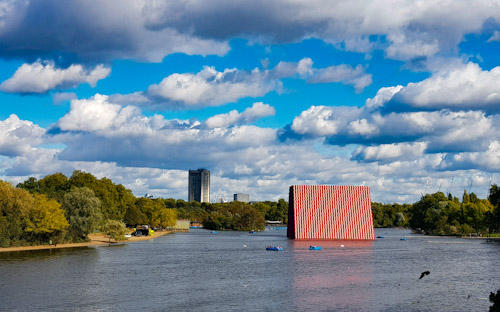
Clouds hover
Over the serene Serpentine:
Hyde park on a Sunday

 yamey
yamey 