A disappointment in the heart of Udaipur (Rajasthan)

THE ENTRY TICKETS to the City Palace in Udaipur (Rajasthan, India) were reduced in price today (25 November 2025) because parts of it were closed because a major wedding had just been held within them.

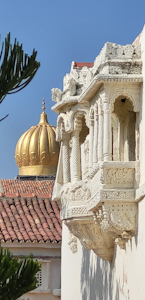
The palace, which is perched on a hill high above Pichola Lake, began to be constructed in 1553. Over the next 400 years, its construction continued. Overall, it is an example of typical Rajput architecture, sharing features that can be seen in other royal palaces in Rajasthan.

On entering the palace today, we confronted with a sea of debris, the remains of temporary structures used during the wedding. It looked as if a bomb had exploded. The crowds of tourists had to avoid bumping into the numerous workmen carrying boards and planks that were the remains of the demolished temporary structures. It was not a pleasant way to enter a historic building.

Visitors to the palace are obliged to follow a route through its various rooms and courtyards. The passageways co necting these are narrow, featureless, airless, and crowded. Moving through the palace was an unpleasant experience.

Was it worth the effort? I think it was not. Evenif there had been no debris and workmen, the palace would not have impressed me. The City Palace in Udaipu is no way as elegant and beautiful as the royal palaces I have seen elsewhere in Rajasthan, notably those in Amer (Amber near Jaipur), Jodhpur, and Bikaner.

Well, after having seen the City Palace, one of the main ‘attractions’ of Udaipur, I would certainly give it a miss should we ever visit the city again.

An interesting discovery in a café in Udaipur (India)

A MAJOR ATTRACTION in Udaipur (Rajasthan,  India) is its Lake Pichola. There are plenty of hotels and eateries close to the water. One of these is Jheels Ginger café.  This small establishment is next to the waterside and has great views of the lake. Also it has a small bookshelf. On it, my wife found a book that aroused my interest.


An entry in the Canadian dictionary

The book, which was falling to pieces, was “Compact Dictionary of Canadian English” edited by Thomas Paikeday, and published 1976 in Toronto. It was the first Dictionary of English as used and spoken in Canada.


Thomas Paikeday was born in Thiruvananthapuram, India in 1926. He completed his studies at Madras Christian College (1958) and the University of Madras (1960). Then, he became a lecturer of English at the University of Delhi. In 1964, after studying in the USA at Boston College and the University of Michigan, he became a lexicographer.


Paikeday was a pioneer in the use of computers for collecting and analysing data for compiling dictionaries. He  became highly respected amongst lexicographers, linguists, and other scholars. He died in 2019 at Oakville, Ontario, Canada.


It was strange discovering a dictionary of Canadian English lying discarded in a café in Udaipur. But given that it was in India that its editor was born, it seemed quite both appropriate and really amazing.

Before becoming one of India’s most famous artists he worked in a bank

KRISHEN KHANNA CELEBRATED his one hundredth birthday in July 2025. The NGMA (National Gallery of Modern Art) in Bombay is currently holding a superb exhibition showcasing his paintings. The show is beautifully displayed and the artworks are skilfully illuminated.

Khanna was born in Lyallpur, now in Pakistan. After the Partition of India in 1947, he worked as an official in Grindlays Bank in Bombay. However, before Partition, he had already begun painting. The bank job was just to help keep him and his family going after they had left/fled what became the Pakistani part of Punjab.

Soon after arriving in India, Khanna began associating with members of Bombay’s Progressive Art Group that included notable creators such as FN Souza and MF Hussain. Thereafter, his painting career took off, and his reputation soared.

The exhibition at the NGMA surveys Khanna’s extraordinary range of paintings. Their subject matter ranges from political to historical to religious … and much more. The show, which demonstrates the artist’s amazing versatility and great artistic skill, continues until 12 December 2025, and should not be missed if you are in Bombay.

Views from the top of a building in Bangalore

Just before leaving Bangalore (for Bombay), my friend Mansoor Ali took me to see the BLR Design Centre. It is located on the top floors of a building on the corner of Church Street and Museum Road, and is a fine example of good modern design.

According to the centre’s website, the institution is:
“A collaborative workspace focussed on transforming urban living environments through architectural partnerships, cultural dialogue and design-driven solutions.”

The views from the centre’s roof terrace are wonderful. What particularly intrigued me were the reflections of buildings that can be seen on the glasswork of the Sobha Mall, which is across the street from the BLR Design Centre.

Problems with identifying gender in London and Bangalore (Bengaluru)

WHEN OUR DAUGHTER was about two years old and able to walk unassisted, she often wore overalls (jump suits), rather than girlish frocks. One day we were walking in London’s Kensington Gardens when we passed a couple of elderly ladies.  One of them looked at our child, and said to us: “What a cute little boy you have”

We replied:

“Actuually, she is our daughter.”

To which one of the ladies said to her friend: “it’s so difficult to tell one from the other these days.”


The former Men’s Bar at the Bangalore Club

Some months later, we were in India at the Bangalore Club (in Bangalore). In those days, the late 1990s, the club had a Men’s Bar, to which only men were admitted. Its wood panelled walls bear hunting trophies and archaic weapons.

One day, I was having a drink in that bar with my father-in-law, when our daughter arrived in the adjoining room with my wife. Excited to see us, our daughter,  dressed in her overalls, dashed into the Men’s Bar. An elderly gentleman, seeing a child in the bar, said to our daughter:

“You are too young to come in, young man. When you are 21, you will be welcome here.”

To which, my wife standing close to the entrance, said: “She’s our daughter.”

The gentleman then responded: “In that case, you will never be able to enter our bar”.

 How wrong he was.

Sometime during the early twenty-first century, the rules changed: now both men and women can use what had been the Men’s Bar.  Now, this bar has been renamed: it is simply The Bar.

Today, almost 28 years later, nobody would have any difficulty identifying our daughter as a young lady.

Getting fixed in Bangalore (Bengaluru), India

KALIM REPAIRS JEWELLERY in Jewellers Street in the Commercial Street district of Bangalore (Bengaluru). He sits on the pavement on the shaded east side of the street in the morning and in the afternoon,  he moves to the west side to keep out of the sun. He can mend almost every kind of jewellery. When restringing necklaces, he uses both his hands and his feet, to keep the thread taut.


Kalim at work

Kalim is one of many people we visit in the Commercial Street area to get repairs done. These craftsmen include tailors, a bag repairer, dyers, darners, watch repairers, locksmiths, and jewellers. We have known all of them for years.


The great thing about these skilled workers is that they will skilfully repair almost anything. On the UK,  people like this are few and far between.


You can read about these wonderful people in and around Commercial Street in my book “88 DAYS IN INDIA: A JOURNEY OF MEMORY AND DISCOVERY”.

The book is available from Amazon https://www.amazon.co.uk/88-DAYS-INDIA-JOURNEY-DISCOVERY/dp/B0FKTFBFM2/

A Boer officer in Bangalore 1901

GEORGE GLAESER MUNNIK was a  Boer  during the first Anglo-Boer War (1899-1902). He was captured by the British and imprisoned in the south of India. During his time in India, he was taken to Bangalore briefly and was put up in the West End Hotel.

In his autobiography,  Munnik recalled:

We arrived in Bangalore early in the morning and went to the West End
Hotel. This hostelry stands in extensive grounds and consists of about
half-a-dozen bungalows, each a hundred yards apart and holding six
visitors; each has its own cook, butler, etc…

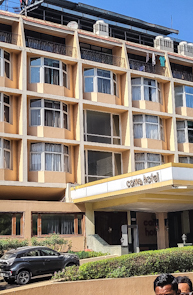
The hotel still exists and is one of the finest in Bangalore. Although enlarged since Munnik stayed there, it stands in beautifully maintained grounds.

To discover why the British took this POW from his prison camp to a deluxe hotel in  Bangalore, you will need to read my book “Imprisoned in India”.  It is available as a kindle from Amazon: https://www.amazon.in/IMPRISONED-INDIA-South-African-Bangalore-ebook/dp/B07Z2S4V3P/     

OR  as  a paperback from: https://www.lulu.com/shop/adam-yamey/imprisoned-in-india/paperback/product-1y5j98em.html?q=Yamey&page=1&pageSize=4

Feeding the pigeons in Jaipur (Rajasthan)

Here is a brief excerpt from my book “88 DAYS IN INDIA: A JOURNEY OF MEMORY AND DISCOVERY”, In this sample, I am writing about pigeons in Jaipur (Rajasthan) and elsewhere:

While we were being driven around the city, we passed areas where food and
water were being distributed to some of the city’s many pigeons. The provision
of food for pigeons (as well as street dogs and other animals) is commonly
found in many other cities and villages we have visited in India. In Jaipur, we
saw vendors selling passersby seeds for the birds. Earlier in 2024, when we
were in Istanbul, we saw similar vendors at an area (near the Spice Bazaar)
where pigeons were plentiful. As a child during the early 1960s, my parents
used to buy me cones full of corn for feeding the pigeons in the Piazza Signoria
in Florence (Italy). Long ago, I remember pigeon feed being sold in London’s
Trafalgar Square. However, now Londoners regard pigeons as pests, which
should not be fed. One of London’s former Mayors, Ken Livingstone, who
ended selling of pigeon food in the square in 2001, called pigeons: “rats with
wings”.

Although feeding pigeons has caused India’s population of these
creatures to increase to alarmingly high levels, Shreemoyee Chakraborty
(quoted in an article published by theprint.in in November 2024) noted:
In India feeding pigeons is not just a habit; it has a religious and
cultural significance as well.

In an online article about Vastu Shastra (published on vastulabh.com), it was
pointed out that:

“Pigeons have long been associated with Goddess Lakshmi, the deity
of wealth and prosperity. According to Vastu Shastra, pigeons are
believed to bring positive energy and good fortune into the home.
However, there are differing opinions and specific guidelines on how to
interpret their presence.”

So, it is likely that feeding these winged creatures in India has a good chance of
continuing despite the occasional attempts of some municipal authorities,
including in Jaipur, to reduce their population.

If you wish to purchase a copy of this book, hasten to Amazon’s website:

A friendly encounter in a cathedral in Pondicherry (India)

Between late 2024 and early 2025, we spent 88 days travelling 4000 miles through India. I have published an account of this fascinating odyssey in my book, “88 DAYS IN INDIA: A JOURNEY OF MEMORY AND DISCOVERY”, which is available from Amazon (https://www.amazon.co.uk/dp/B0FKTFBFM2). Here is a very brief excerpt from the book. It describes what happened when we were sitting in a cathedral in the formerly French colony of Pondicherry.

HERE IS THE EXCERPT:

We sat inside the spacious cathedral’s cool interior within reach of the draught
coming from a fan attached to one of the pillars supporting the long nave’s high,
barrel-vaulted ceiling. As we were relaxing in the cooling breeze, a small group
of Indians entered, and went to the front pews, where they knelt and prayed in
front of the high altar. Amongst them was a young couple dressed in their finest.
Each of them had lavish flower garlands (malas) around their necks. As they
walked away from the front of the church towards where we were seated, we
asked them if they had just married. They told us that that was the case. They
had been married in another church and wanted to pray in the cathedral. These
friendly people invited us to join them in the church’s sunlit entrance while
photographs were being taken of them, of us, and of us with them. They asked
us for our blessing.

Opposite the cathedral on a corner plot, we entered a large bookstore. Tables
covered the floor. They were laden with books, mostly new, but not arranged in
any obvious order. Along one side of this vast hall, there were ..
.

END OF EXCERPT