AT PRESENT I AM WRITING another book about travels in India. It describes a journey we made through the following Indian states: Karnataka, Maharashtra, Rajasthan, Gujarat, Madhya Pradesh, Kerala, and Tamil Nadu. During this journey we travelled along a road in Gujarat called THE ROAD TO HEAVEN.
My working title for the book is “ROAD TO HEAVEN AND A PASSAGE THROUGH INDIA”.
Without having read the as yet unfinished book, is this a title that would make you consider reading it, OR CAN YOU SUGGEST A BETTER TITLE?
If I use your suggested title, I will, of course, acknowledge your help.
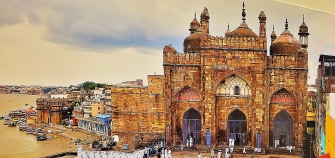
MOST PEOPLE ASSOCIATE Varanasi (Benares) with Hindu temples and practices. However, the city is important to other religions, notably Islam.
The largest mosque in Varanasi
Recently, we viewed an exhibition called “Mughal Banaras” at SOAS Gallery in London. It was a collection of excellent photographs taken by architect and photographer Jateen Lad who collaborated with historian Malavika Kasturi.
In a Hindu math (monastery) which existed during the time when the city was under Mughal rule, there is a collection of Mughal firmans (official documents) on display, including one written by Dara Shikoh, who was murdered by his brother Aurangzeb).
We were fortunate to have met Jateen at the exhibition, and he showed us around. His superb commentary brought the pictures to life, and discussed the historical importance of, and the current circumstances of the Muslims in the city.
NOT FAR FROM the Bhadra Fort in Ahmedabad (India), on Bhadra Road, there are two shops that sell tasty, crystallised fruits (my favourites are orange slices with their rinds and pineapple) and a large selection of imported: sweets, biscuits, dates, nuts, and other mainly edible items suitable for gifts. In one of the shops, I noticed that there was a wide range of spice mixes made by a company called Shan. As we have used this excellent brand often at home, I looked at them.
Now, Shan is a Pakistani company (founded in Karachi in 1981), and at present Pakistan and India are not on the best of terms. So, I was interested to note that a Pakistani brand was on sale in a shop in India. When I looked at the packaging, I noticed that they were not labelled ‘Product of Pakistan’, but instead ‘Product of the UAE’. After looking at several boxes, I notice that one or two of the many that were on the shelf had the words ‘Product of Pakistan’. I wondered whether the shop owners had noticed this.
PS: The company has factories in UK, Pakistan, Saudi Arabia, and UAE
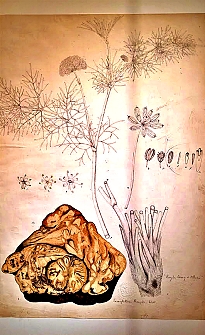
ALMOST AS SOON as English people began visiting India, and later colonising it, they took an interest in the flora of the Indian Subcontinent. Their interest was both scientific and commercial: looking for plants that could be exploited to make a profit. Many of the early English explorers of India’s flora worked in an era before photography was invented, or in the early days before colour photography became possible. Instead of making photographs of botanical specimens, detailed drawings and paintings of plants were created. Until I visited an exhibition at Kew Gardens, which runs until 12 April 2026, I believed that all the intricately detailed botanical images had been created by English and other European people.
The exhibition, “The Singh Twins: Botanical Tales and Seeds of Empire”, is divided into two related but quite different sections. One section contains colourful, contemporary artworks by the Singh Twins. The other, subtitled “Flora Indica: Recovering the lost histories of Indian botanical art” contains 52 botanical illustrations by Indian artists commissioned by British botanists between 1790 and 1850. Each one of them is rich in detail, delicately drawn and/or painted, and a delight to behold. Not much is known about the Indian artists apart from their names, and where they were based. The artists were both Hindus and Muslims, and their pictures combine traditional Indian draughtsmanship with the kind of scientific realism required by the English botanists who commissioned them. Compared to other Indians employed by British botanists, they were well paid, receiving up to £500 per month in today’s money.
Most of the Indian artists, whose works were on display were based in Bengal: most in Berhampur, others in Calcutta and Darjeeling. Other artists were in Burma, Saharampur, and Nepal. All of them were male. Over 7500 drawings of flora in South Asia were commissioned by the East India Company, and were created entirely by Indian artists. Some of these images reached Kew in 1879 from the Company’s India Museum, established in London in 1801 and closed for good in 1879.
The exhibition is well-displayed with informative labels. It is in the Shirley Sherwood Gallery of Botanical Art. This contemporarily designed edifice is close to the much older Marianne North Gallery, which houses a huge collection of botanical images created by Marianne North (1830-1890). Although her paintings are superb, those by the Indian artists in the exhibition have a certain delicacy that is lacking in many of North’s often quite bold depictions of flora.
The “Flora Indica” exhibition is showing alongside the Singh Twins’ artworks, which are imaginative, witty, and provide a satirical view of the consequences of European colonisation, particularly of India and Africa. Rich in floral details, the images complement those created much earlier by the Indian botanical artists.
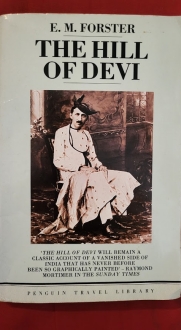
SOON AFTER READING “A Passage to India” by EM Forster (1879-1970), published in 1924, I read this author’s “The Hill of Devi”, first published in 1953. Forster made two visits to the Princely State of Dewas Senior, which ins in what is now Madhya Pradesh, not far from Indore and Ujjain. His first visit was in 1912, and the second in 1921. During the second visit, he spent several months as private secretary to the Maharajah of Dewas Senior.
“The Hill of Devi” consists mostly of letters that Forster wrote from India to his mother and other people. In them, he described the typical often extraordinary events he experienced in Dewas Senior. He also describes the people whom he met and with whom he worked including the friendly but indecisive Maharajah. The letters, interspersed with commentary, provide a view of what life was like in a relatively unimportant kingdom within British India.
The letters were all written before Forster published his “A passage to India”. In his book “The Hill of Devi”, Forster noted that he had begun “A Passage…” before staying in India in 1921, and tried to finish it while staying in Dewas Senior, but was unable to do so. He completed it after his return to England. The letters published in his “The Hill of Devi” contain much material that he later incorporated into hs “A Passage …”.
I enjoyed reading the collection of letters. Because they were letters often written in haste and, originally not for a public audience, they have an immediacy even though they are not the finest works of the author. Nevertheless, they were most interesting because recently I have visited the region in which Dewas Senior is located, and stayed in places that must have formerly been similar to that about which Forster wrote.
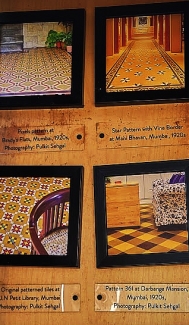
WHEN WE WERE in Bombay in November 2025, we saw exhibition related to the Bharat Tile Company. Founded in 1922, this company produces cement floor tiles. It pioneered this manufacturing process in India as part of the Swadeshi Movement, which encouraged self-sufficiency as opposed to a dependence on goods manufactured abroad, notably in Britain. It was part of the road to Indian Nationalism and independence from British rule. Bharat’s aim was to produce high quality tiles that reduce or replace imports and meet the highest international standards. In this it was successful. The company captured the Indian market, and as its website noted:
“Our craftsmanship graces the palaces of Maharajas, Raj Bhavans, distinguished residences, prestigious hotels, vital hospitals, vibrant clubs, bustling offices, bustling factories, cooperative housing societies, esteemed educational and religious institutions, as well as busy airports and railway stations.”
The exhibition displayed the types of tiles, how they are made, their designs, examples of their usage, and how they have been exported to destinations all over the world. The patterned floors that can be created with these tiles, and there are many of them to be seen in buildings all over India, are described in the exhibition as “tapestry in cement”.
CURRENTLY MANY MUSEUMS in the ‘Western World’ are pondering over the idea of returning some of their exhibits to the territories from where they were obtained. A controversial example of this quandary are the fragments from Athen’s Parthenon, which are known as the Elgin Marbles.
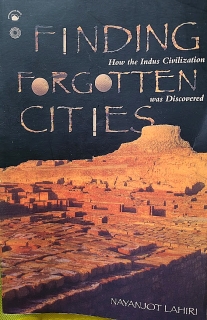
From 1899 to 1905, Lord Curzon was the Viceroy of British India. In her book “Finding Forgotten Cities”, Nayanjot Lahiri describes how Curzon was concerned about preserving and conserving India’s many archaeological and historical sites, and promoting the work of archaeologists in what was to become the Archaeological Survey of India (‘ASI’). Concerning artefacts removed from India, it was Curzon who arranged for some ancient artefacts to be returned from the British Museum to where they came from in India. The most important thing that Curzon did in relation to Indian archaeology was to appoint the archaeologist John Marshall (1876-1958) to supervise and plan archaeological activities within the Indian subcontinent. It is Marshall and his highly trained colleagues including many Indians such as Rakhaldas Banerji, DR Bhandarka, KN Dikshit, and DR Sahni, who are important protagonists in Lahiri’s story about how the extensive remains of Harrappan (or Indus Valley) civilisation came to be discovered. The book also includes much information about the Italian archaeologist Luigi Pio Tessitori (born 1887 in Udine, Italy, died 1919 in Bikaner, Rajasthan), whose discoveries eventually contributed much to the unravelling of the mystery of Harrapan civilisation.
Apart from the above-mentioned, Lahiri describes the lives and archaeological work of a whole host of other people working in India. She describes how the earlier archaeologists were fixated on finding remains of places mentioned in early texts including the Vedas, classical author’s histories of Alexander the Great’s incursions into the Indian subcontinent, Buddhist and Jain sources, and accounts by early Chinese travellers in India. When the remains of what is now recognised as the very old Harrapan civilisation (as early as about 3000 BC) began to be discovered, it was gradually realised that these were not compatible with the stories written in the ancient texts. Although at first nobody knew the age of these findings, the fact that they were discovered deeper beneath the ground than the artefacts that could be dated, Marshall and his colleagues believed that they had stumbled on remains from a time far earlier than had been hitherto discovered by archaeologists in India. Amongst these and at various different locations, seals inscribed with pictograms or symbols began to be discovered. Later, these seals became important in dating the Harrapan civilisation.
Lahiri’s well-documented, scholarly account reads like a thriller. Not only does she relate the story of the discovery of the Harrapan civilisation and the archaeologists who found it, but also she tells of the difficulties that Marshall encountered ensuring that the ASI was adequately funded. And she tells of the remarkable way that the ageing of the civilisation became possible after Marshall had published his findings with many illustrations in the widely read, non-scholarly Illustrated London News in 1924.
I never believed that I would read a book about archaeology and find it un-put-downable, but Lahiri’s fascinating book was just that. It is a book that should interest both archaeologists and lay readers. I began reading it soon after revisiting one of India’s major Harrapan sites, that at Dholavira in Kachchh (Gujarat), and I am pleased that I did.
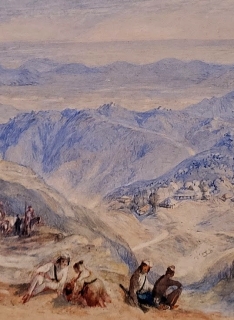
ALTHOUGH THE ROYAL Academician John Zoffany (1733-1810) visited India and created paintings there, the younger and more famous Academician JMW Turner (1775-1851) never visited the country. Yet, an exhibition at the Tate Britain in London, which is showing until 12 April 2026, contains two of Turner’s depictions of Indian landscapes.
Both Zoffany and Turner lived and worked before the birth and full exploitation of photography. Travellers could record their impressions of places both by writing and by sketching or painting. Amongst the many who went out to India in the nineteenth and earlier centuries, there were plenty of officials (both military and civilian) who recorded what they saw by sketching and with paints. It would seem that these people were skilled artists probably because art was included in their education. The images created were important for surveying and topographical purposes as well as, perhaps, a way of passing time in outposts where there was little else to do when the work of the day was over.
Turner, who had become a successful artist, was often commissioned by print publishers to create images that could later be reproduced as mass produced editions of engravings. He painted images of places he had visited as well as places he had never been to. India was one of the latter. However, he created beautiful watercolour depictions of Indian landscapes based on sketches that had been made by British army officers when they were based in India. The two ‘Indian’ watercolours on display in the exhibition are “Musooree and the Dhoon from Landor” (painted in 1835) and “Rocks at Colgong on the Ganges in Bihar” (painted c1835). Both are exquisitely executed and less ethereal than some of his better-known paintings.
“Turner was a great and inventive colourist. If you look at his work from the beginning to the end of his life, the early works are quite dark and sombre, but the later ones are full of colour – brilliant yellow, red, blacks, crimsons, blues. Even if he hadn’t been to somewhere like India, he lived in a place where a lot of people had and they were bringing back descriptions of a more colourful place than England, which was smoky and dark and dull and raining all the time. People were coming back to this England with memories of a place that was full of colour. This was bound to change people’s ideas. In Sir John Soane’s museum in London, there is a bright yellow living room, almost an Indian yellow. That was a yellow that was introduced in Turner’s lifetime, much brighter than anything available before. The tastes for those colours would definitely have been brought back from the empire.”
Even if we cannot be certain, it is possible that some of the pigments brought back from India might have found their way on to his glorious canveses.
The two Indian landscapes form only a minute part of a large, well-attended show setting the works of Constable and Turner side-by-side. Yet, seeing them really helped make the exhibition a ‘hit’ for me. Soon, I will write about other aspects of this show that caught my interest.
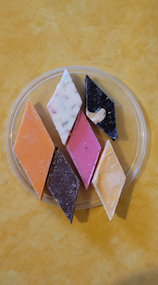
WHEN WE VISITED both Munnar (5200 feet above sea) and Kodaikanal (7300 feet above sea level), both on the Western Ghats in southern India, we noticed many shops selling teas, herbs, spices, oils, and chocolate. All of the shops claimed to be selling homemade chocolate, and what I sampled of it was on the whole both tasty and good quality. The variety of different types of chocolate was remarkable. One could buy plain dark and milk chocolate, with or without nuts, as well as different coloured chocolates flavoured with fruit essences. The flavours of the fruit chocolates tasted as if real fruit had been used rather than synthetic flavourings.
Both Munnar and Kodaikanal have good climates for both cocoa growing and especially for processing it into chocolate. However, cocoa grows better at altitudes lower than those of Munnar and Kodaikanal. Much of this crop is grown in the southern Indian states of Kerala, Karnataka, Tamil Nadu, and Andhra Pradesh. One shopkeeper told us that despite this, much of the cocoa used comes from a warehouse in Pune (Maharashtra).
Chocolates from Munnar
According to a website (www.sterlingholidays.com/blog/kodaikanal-indias-chocolate-factory/), when American missionaries arrived in the Kodaikanal district in 1845, they discovered a number of interesting plant species. Amongst these, growing wild, was a plant that Europeans had previously not known to exist in India: the cocoa plant. As a result, Kodaikanal became the first place in India to produce chocolate. Growth in the popularity of chocolate in India only began to take off when Cadbury, a British company, began importing the confection in 1948. Now, it also manufactures its chocolate products in India.
Although large companies such as Amul and Cadbury produce excellent chocolates, what can be bought in the many small shops in Munnar and Kodaikanal is also very acceptable and more interesting in taste than the industrial products.



 yamey
yamey 