Biography of fiction by an author from South Africa

SOMEONE SENT ME a message on Facebook, recommending me to read “Arctic Summer”, a novel by the South African author Damon Galgut (born 1963). It was a great recommendation, and I am grateful for it. The story is about the author EM Forster (1879-1970), whose books include “A Passage to India”.

Galgut’s superbly written, well-researched, fascinating novel is a fictional biography of Forster during the period between, and including, his first two visits to India. It also mentioned Forster’s third later visit. The book is not only a biography of Forster, but also a fictional biography of the writing of “A Passage To India”: the biography of a novel. The book also explores Forster’s yearning for the physical love of men, and the frustrations he faced, many of them of his own making. And Galgut, in writing this book, also gives an insight into the difficulties that authors can face when writing fiction.

Galgut’s book reads as well as does his protagonist’s Indian novel. I read “Arctic Summer” after reading “A Passage to India”. Having read the books in this order made a lot of sense. However, if you pick up Galgut’s book first, it will most likely make you want to read “A Passage …”.

I enjoyed Galgut’s novel so much that I am keen to read some more of his work.
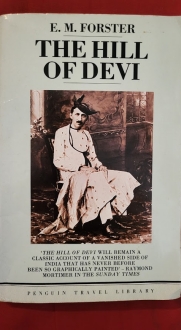
Letters written from a princely state in India during the colonial era

SOON AFTER READING “A Passage to India” by EM Forster (1879-1970), published in 1924, I read this author’s “The Hill of Devi”, first published in 1953. Forster made two visits to the Princely State of Dewas Senior, which ins in what is now Madhya Pradesh, not far from Indore and Ujjain. His first visit was in 1912, and the second in 1921. During the second visit, he spent several months as private secretary to the Maharajah of Dewas Senior.

“The Hill of Devi” consists mostly of letters that Forster wrote from India to his mother and other people. In them, he described the typical often extraordinary events he experienced in Dewas Senior. He also describes the people whom he met and with whom he worked including the friendly but indecisive Maharajah. The letters, interspersed with commentary, provide a view of what life was like in a relatively unimportant kingdom within British India.

The letters were all written before Forster published his “A passage to India”. In his book “The Hill of Devi”, Forster noted that he had begun “A Passage…” before staying in India in 1921, and tried to finish it while staying in Dewas Senior, but was unable to do so. He completed it after his return to England. The letters published in his “The Hill of Devi” contain much material that he later incorporated into hs “A Passage …”.

I enjoyed reading the collection of letters. Because they were letters often written in haste and, originally not for a public audience, they have an immediacy even though they are not the finest works of the author. Nevertheless, they were most interesting because recently I have visited the region in which Dewas Senior is located, and stayed in places that must have formerly been similar to that about which Forster wrote.

EM Forster and some caves in Mandu (Central India)

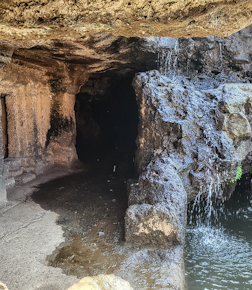
I AM OVER HALFWAY through reading “A Passage to India” by EM Forster (1879-1970). In this exciting novel, which contains the author’s acute observations about the minutiae of India as it was before Independence and to a large degree after,  Dr Aziz, an Indian, ill-advised (in my opinion) accompanies two English ladies to the Marabar Caves (a fictional name). Trouble ensues, and Dr Aziz is arrested.  I will not give away the rest of what I have read so far, but will mention some caves in Mandu (Madhya Pradesh), which we visited on Christmas Day 2025.


The caves are close to the scant remains of Mandu’s Lohani Gate. Easy to enter, they were excavated and converted into chambers or cells where Hindu priests or yogi might once have resided. Archaeological evidence suggests that the caves were excavated and modified in the eleventh or twelfth century. They predate all of the other archaeological sites in Mandu.


Fortunately,  our visit to these caves was less eventful and sinister as is described in Forster’s excellent story. In fact, the Lohani Caves are delightful, and considering how close they are to Mandu’s most visited places, they are  ignored by most tourists.


Now, I must leave you and get back to my tattered copy of “A Passage to India”.

PS: by “minutiae” I include Forster’s detailed description of the behaviour of Indian squirrels and the Echo Point at Mandu, which we saw recently, as well as the curious echo effects at the Gol Gumbaz in Bijapur, which I have experienced.