Do not let this drama deter you from eating meat

THE PARK THEATRE in London’s Finsbury Park was opened in 2013. We have seen many productions there and they have all been good to excellent. “The Meat Kings! (Inc.) of Brooklyn Heights”, written by Hannah Doran, is showing until 29 November 2025, is no exception, as we discovered after watching it last night (1 November 2025). A word of warning is owed to vegetarians and vegans: the play is set in the meat cutting room of a family butcher’s shop somewhere in New York City. But do not let this deter you because the main points of the play are not about carving and slicing meat.

In the play, Paula Caffarelli is the owner of Cafarelli & Sons. Her great grandfather, an immigrant from Sicily, founded the firm 100 years ago. She tends to hire people released from prison to work in her cutting room. Three of her employees are ex-convicts and the fourth is an immigrant from Mexico. One of the ex-prisoners, Billy (acted brilliantly by Ash Hunter), must earn to pay his mother’s exorbitant medical fees. David, who used to make a fortune on Wall Street but has fallen on hard times, Is Paula’s senior meat cutter. JD is the Mexican. During the play, Paula takes on a new cutter, T, also recently released from prison. At the beginning of the play, Paula’s staff fool around and take life easily. However, it is not long before Paula’s business begins to suffer economically, and her staff members reveal their personal problems. Things reach a stage where Paula needs to reduce the number of her staff, and some of her cutters begin plotting against the others.

This well-acted, superb play is both entertaining and disturbing, but never uninteresting. As the theatre’s website explained, the play:

“… carves into the dark underbelly of America’s anti-immigration policies and the brutal sacrifices that drive the pursuit of prosperity.”

It adds a note of warning:

This production contains butchery; references to prison, suicide and illness; discussions of racism & xenophobia. Also contains strong language and references of a sexual nature. Please note, this production does not use real meat.”

The play comes to a tragic end as the characters, to use an appropriate phrase, knife each other in the back. I enjoyed the play, and believe that seeing it would not disturb those who avoid eating meat. However, it might put you off crossing the Atlantic from east to west.

Never come to Holland again with this passport

DURING THE 1980s, I used to drive from my home in Kent through Europe to Hungary and Yugoslavia. I used to take the car across the sea on the Olau Line that ran between Sheerness in Kent and Vlissingen in Holland. In those days, I held an old-style UK passport. With hard covers, it was dark blueish black. On the front cover, there was a coat of arms embossed in gold and words in gold lettering mentioning it was a British passport. There were two horizontal slots in the front cover. These were lined with white paper. On one of them, the passport holder’s name was written by hand, and on the other, the passport number.

I used to carry my passport in my trouser pocket. So with time, it gradually got a bit bent as it pressed against my leg. Another thing that happened was that the gold coat of arms and the gold lettering wore so thin that they were barely visible. Likewise, my name on the cover also began to become less distinct.

At various demanding frontiers, such as the borders to Communist countries such as Albania, Bulgaria, and Hungary, the tatty appearance of my passport was of no concern to the often-over-zealous border officials. However, it did cause trouble in a place where I least expected it.

On one occasion, after disembarking at Vlissingen, I handed my passport to the Dutch immigration official. He looked at it, and then wandered away with it. About 10 minutes later, he returned with it, holding it gingerly by one of its corners. As he handed it to me, he said:

“Next time you are coming in Holland, you must have a new passport.”

Clearly my passport’s appearance was not in harmony with the Dutch sense of tidiness and orderliness.

Does it matter which cricket team you support?

IN 1960, THE CONSERVATIVE politician Norman Tebbit devised what has become known as ‘the cricket test’ to ascertain how well immigrants had become integrated into the life of the United Kingdom and how loyal they had become to their adopted home. It related to which team they supported when the team from their country of origin was playing test cricket against a British team. He suggested that those immigrants who support their native country’s cricket team rather than England’s  are not significantly integrated into the United Kingdom

My father was an immigrant. He was born, brought up, and educated in South Africa. He took a keen interest in professional sport, when it was presented on the radio (we did not have a television at home). I remember seeing him sitting at his desk in his study working with the radio on in the background. He delighted in listening to radio commentaries of cricket and tennis matches. I am not sure whether he was able to visualise the games in his mind, or whether he was only interested in the scores, or both. When, after apartheid was ended in South Africa, and the South African cricketers were once again playing the English team, he was asked which of them he hoped would win. He said:

“It does not matter to me,” he replied, “I support both of them.”

I wonder whether this counted as a pass or fail in Tebbit’s cricket test?

An unexpected story told in a cafe in London’s North Kensington

LAST YEAR I READ a fascinating book, “Staying Power”, written by Peter Fryer and first published in 1984. It is a history of black people in Britain from the time of the Roman conquest until 1984. In it, the author gives plenty of examples of the hostile reception that black people arriving in Britain received from their racist British neighbours and workmates.

Today (the 28th of March 2024), I was sitting in the Lisboa Patisserie, a cafe in North Kensington’s Golborne Road, when I began chatting about the ‘good old days’ with a gentleman, who is a few years older than me. He told me that he had come to Britain from the West Indies in the early 1950s when he was 8 years old. Having read Fryer’s book and having heard stories of racist behaviour, I asked him whether it had been difficult for him and his family after they arrived in England. I was astonished and very pleasantly surprised by his reply.

He told me not to believe that everything was as bad as is often recorded. From the moment his family arrived, the English people they encountered were all very kind and friendly. As an example, he described what happened when his family were evicted from their flat by their (black) landlord. They were literally out on the street with nowhere to go. Two English (i.e., white) ladies, who were chatting to each other over a garden fence, saw them, and asked what had happened. Hearing their plight, one of them said that she had a spare room in her attic, where they could live until they found somewhere of their own.

The gentleman in the café told me that once they had settled into new accommodation, they were at a loss as to how to deal with things that they had not had previously encountered in the West Indies. For example, back in the Caribbean, their home did not have electricity or gas or many other domestic things that were usual in British homes in the 1950s. It was their white milkman, who came to their rescue. If there was something they could not deal with – for example replacing a fuse – their milkman would come into the house and help them out.

Our friendly neighbour in the café said that he could give me many more examples of kindness and friendliness of white British people, which his family had encountered. However, as he could see that we had finished our coffees, he concluded by saying that contrary to, as he put it: “what millennials only want to hear”, it was not all bad as far as white British behaviour towards immigrants from the Caribbean were concerned. He did not know that I do a lot of writing, but he said that I should write down what he told us as it needed to be known – and that is what I have done.

I must add that his story is somewhat unusual because even today, we still hear of too many cases of intolerance and even harm to Afro-Caribbean people.

PS: although this has been published on the 1st of April, it is NOT an April Fool’s joke!

British and Chinese

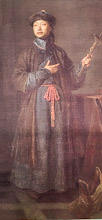
I BET YOU DID NOT KNOW that Michael Alphonsus Shen Fuzong (c1658-1691) was the first documented person from China to visit England. I did not know that he met King James II in 1687. Furthermore, did you know that the Chinese sculptor Tan-Che-Qua (c1728-1796) from Canton, who visited London between 1769 and 1772, not only exhibited at London’s Royal Academy but also met King George III before returning to his native land. Maybe, I might have stumbled across these two notable men from China by accident had I not visited the British Library today (the 20th of March 2023), but this is highly unlikely. Until the 23rd of April 2023, there is a fascinating, well-displayed exhibition called “Chinese and British” at London’s British Library.

Beginning with the earliest Chinese visitors to Britain, this splendid exhibition charts the growth and considerable achievements of Chinese people who chose to live in Britain. John Hochee (1789-1869) was one of the first people from China to have settled permanently in England. He arrived from Canton in 1819, worked as a property manager with John Fuller Elphinstone (1778-1854; son of William Elphinstone a Director of the EIC: see https://www.rh7.org/factshts/hochee.pdf), whom he probably met whilst working for the East India Company in China. Hochee married an English lady, Charlotte Mole, and James (1832-1897), one of their seven children, became a surgeon. John was naturalized in Brighton in November 1854.

Since Hochee (Ho Chee) settled in Britain, many more people from China have followed in his footsteps. The exhibition at the British Library illustrates this well. Early settlers included many who had worked on ships and had landed in Liverpool or London. Chinese communities became established in the 1880s, notably in London’s East End. The Chinese in Britain established businesses to serve their community and their British neighbours. Chinese restaurants and laundries figured largely amongst the early enterprises. With the advent of laundrettes in the 1950s and 1960s, the Chinese laundry business faded away, but still today the Chinese are very important in Britain’s catering industry. It was after WW2 that restaurants and take-aways really took off in Britain. These outlets supplied both British and Chinese food. Many of their workers and owners were from Canton and Hong Kong.

During WW1, nearly 100,000 Chinese men provided support for The British Army in Europe – digging trenches, burying the dead, and other tasks. Some of these men had signed 3-year contracts, which obliged them to return to China after the war, which most of them did. The exhibition devotes some space to the activities of these men.

Apart from what I have already described, the exhibition has displays illustrating the many other achievements of the Chinese British. One exhibit that particularly amused me was a selection of books in English by Chinese British authors. They were displayed on a ‘lazy Susan’, a revolving serving platform often found in the centre of round tables in Chinese restaurants.

All in all, I am very pleased that a post on Instagram alerted me to this interesting exhibition, and I encourage everyone to visit it.

For the deserving poor of Padstow

THE CONVOLUTED COAST of Cornwall is dotted with picturesque little ports. One of these is Padstow, which has become well-known because it contains restaurants and other food-related establishments connected with the TV celebrity chef Rick Stein. It is also famous for its centuries’ old annual Oss celebrations held on May Day.

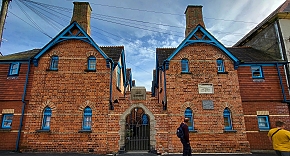
While walking around the streets of the tiny town of Padstow, I came across a disused cinema, which bears a commemorative plaque. Opened in 1924 as the Cinedrome, this became the Capitol cinema. It closed in 1996. However, another relic of the past is still in use around the corner in Middle Street. I am referring to the Padstow Almshouses. This is a small two-winged complex of brick-built houses with some Victorian gothic features.

The main entrance to the complex is surmounted by a granite block carved with the following: “1875 Almshouses”. A plaque located on one of the two facades of the complex informs the viewer that these almshouses were financed by subscriptions raised by friends of John Tredwin to remember him. John Tredwin, who was born in 1818 in Padstow, died at St Columb in Cornwall in 1870. Tredwin, who was a timber merchant and shipbuilder, was involved in the construction of various public works in Padstow. He was also enrolled in the 1st Cornwall Artillery Volunteer Corps, and by 1861 he had become a Captain.  The 1851 Census revealed that by then he and his family were living in St Columb.

John Tredwin was mentioned in a book, “The Cornish Overseas. A history of Cornwall’s ‘Great Emigration’” by Philip Payton:

“The ‘John & Mary’, owned by the Padstow shipbuilder John Tredwin, was engaged in the classic export of immigrants and import of timber that made the Atlantic trade so lucrative in North Cornwall …”

Since the days of the likes of John Tredwin, Padstow has become a relatively insignificant port. Instead, it has become a popular destination for tourists. Although it is undoubtedly an attractive little place, it is outrivalled in charm by other Cornish ports such as Polperro, St Ives, Mousehole, Port St Isaacs, Fowey, and Falmouth. Padstow deserves a visit, but not a long one.

Eyes facing the ocean from Madeira

STARING OUT TO sea at Calheta on the Portuguese island of Madeira is a bronze bust of a man wearing 18th century clothing and a bow tie. The sculpture depicts Sebastián Francisco de Miranda y Rodríguez de Espinoza (1750-1816). Born in Caracas in what is now Venezuela, Miranda became a military leader and a revolutionary fighting for his country’s liberation from Spanish rule. Regarded by many as the forerunner of Simon Bolivar (1783-1830), the great liberator of several Spanish South American colonies and born in Caracas, Miranda ended his life in a Spanish prison in Cadiz.

The plaque below the bust in Calheta records (translated from the Portuguese on a website: https://statues.vanderkrogt.net/object.php?record=ptma108):

“The Sons of the municipality of Calheta in the lands of Venezuela at the bicentenary of the Independence in honour of its precursor ‘Generalisimo, Sebastian Francisco de Miranda’ ‘The most universal Venezuelan’”

I interpret this as meaning that the bust was erected by descendants of people from Calheta, who had emigrated to Venezuela.

The bust was created by the Venezuelan sculptor Julio César Briceño Andrade, who was born in Caracas in 1950. It was unveiled in Calheta by Lucas Rincón Romero, the Venezuelan Ambassador to Portugal, on the 5th  July 2011.

Miranda was the son of a man, who had migrated to Venezuela from the Spanish Canary Islands. His mother was born in Venezuela. Although, he crossed the Atlantic several times, I do not know whether Miranda ever set foot on the island of Madeira.

Like those from Calheta, who migrated to Venezuela, many others have migrated from Madeira to various parts of the world over the years. I have been told that many of the Portuguese speakers in South Africa had their roots in Madeira. Having seen the bust in Calheta, clearly Venezuela was another destination.

Now, with difficulties that Venezuela has been facing, some its citizens with Madeiran heritage are returning to the island as can be seen in an article published on-line (www.euractiv.com/section/global-europe/news/madeira-an-island-of-refuge-for-venezuelans-of-portuguese-origin/):

“No one knows the exact figure but the authorities in Madeira consider that about 6,000 Venezuelans of Portuguese descent have taken refuge on their island, where they found themselves in an extremely precarious situation. “They arrive with nothing, many are sick, these are people lacking a great deal,” said the President of the Portuguese archipelago, Miguel Albuquerque. These people are second or third generation Portuguese, descendants of those who left Madeira decades ago in search of a better life in Venezuela. They are now making the opposite journey.”

Reading this made me think about South Africa, to which many Europeans, including my parents’ families, travelled in search of a better life. After the ending of apartheid, many of their descendants have left the country because they had become concerned about their futures in a land where Europeans no longer hold the upper hand.

A novel idea

BY 2010, I HAD DONE a great deal of research on the backgrounds of both my parents’ families. I had published a few papers in prestigious genealogical journals, such as the former “Stammbaum” published by the Leo Baeck Institute in New York. I felt that it was time to combine the results of my investigations into a great compendium. I started compiling this with a view to publishing it eventually. After writing a couple of chapters, I sent them to a wise friend to get her reactions to what I had done so far. She wrote back that she was impressed by the research I had done but found that the chapters of my great compendium made for dull reading. She suggested that I should abandon the enterprise and instead choose one of my ancestors and write a novel based on what I had discovered about his or her life. I liked the idea.
ALI BLOG

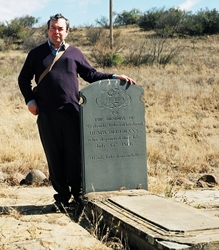
Adam Yamey at the grave of his ancestor Heinrich Bergmann. In Aliwal North, South Africa

I chose Heinrich Bergmann (1831-66), my mother’s grandmother’s cousin. He was the first person to whom I am related to have left Europe for South Africa. He sailed from London to Cape Town in 1849, hoping to meet someone who had migrated from his village in Bavaria to South Africa. That person had left Cape Town by the time Heinrich arrived. He soon became employed by the German Jewish traders, the Mosenthals, and within a year of landing in Africa, he was put in charge of opening and running a branch of the firm in the newly established town of Aliwal North. Within a short time, Heinrich became very wealthy and was regarded by a highly respected banking family in Frankfurt-am-Main as being a suitable bridegroom for their daughter. The happy couple returned to Aliwal North from Germany, after they married. However, Heinrich’s rapid increase in prosperity led to problems that could only be resolved by taking a drastic measure. 

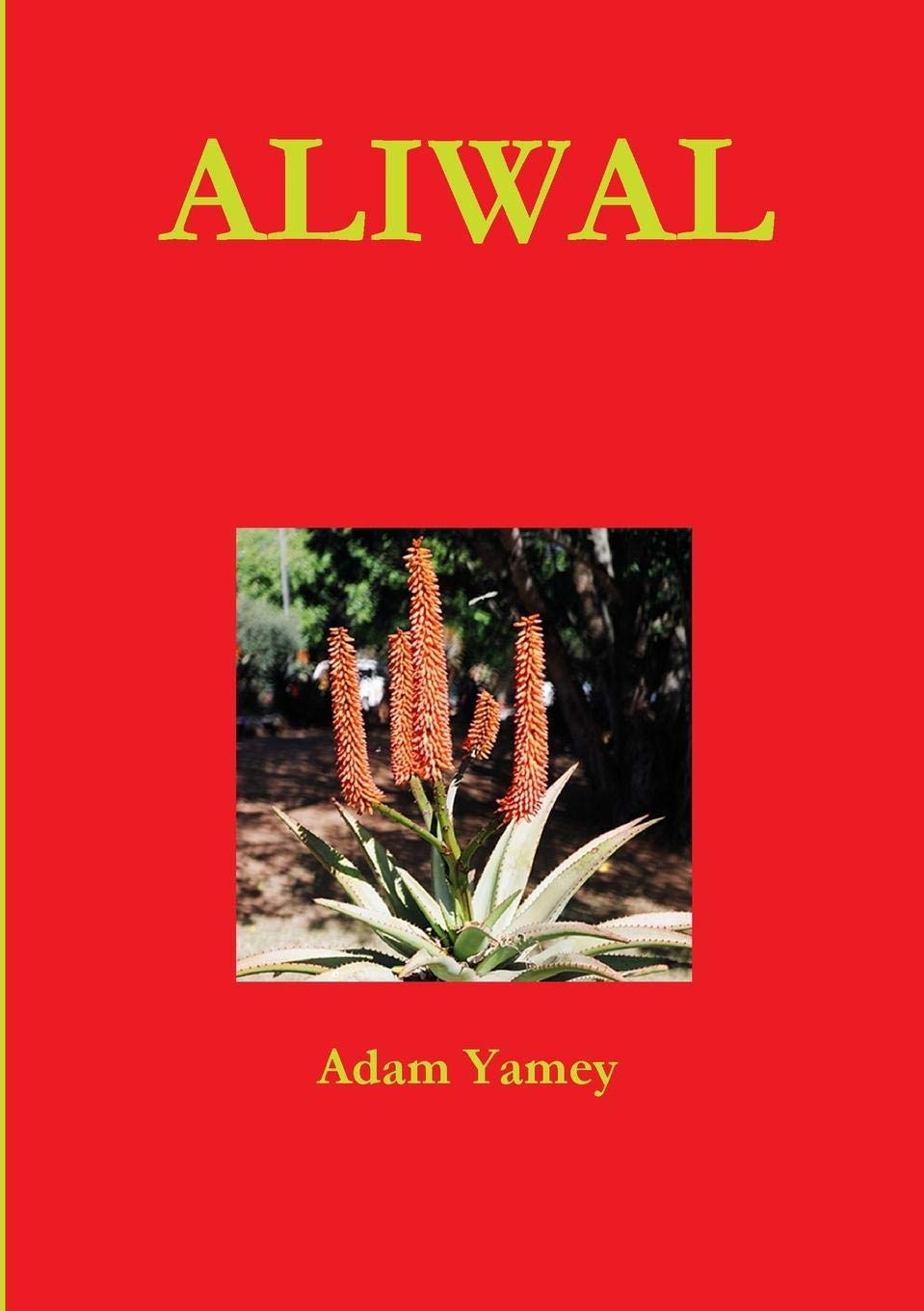
I wrote a novel, “Aliwal”, based on what I knew about Heinrich and the times he lived in. As the cause(s) of his downfall are not clear, I invented a sequence of events to replace the gaps in my knowledge of his short life.  I embarked on my novel-writing not having read a novel for over twenty years. Some people who have read “Aliwal” say that can be seen in my writing and what I produced was more like a narrative than a modern novel. I cannot argue with that. Except for the last few chapters, the denouement, which I invented, what I have written is largely based on historical research. I tried to transport myself back to mid-19th century Germany and South Africa to explore the kind of experiences that my ancestor may have encountered. For example: how did he learn English so quickly? Did he need a passport to travel? How did he find his spouse? What was it like landing in Cape Town in 1849? What was it like travelling through the arid interior of the Cape Colony? How did a young Jewish man interact with the English, the Boers, and the Africans? What was it like doing business in rural communities? I hope that all of these and other matters have been adequately covered in my novel.

When I read through what I wrote 10 years ago, I wondered if it would be worth bringing out a revised edition with a new ending. Let me think about that. Now here is an excerpt from the original version. In it, Heinrich is travelling from Cape Town to Graaff-Reinet in the heart of the Cape Colony soon after landing from London and meeting Mr Caro, with whom he is about to work.

THE EXCERPT FROM “ALIWAL”

They travelled for well over a week, lumbering from one pothole to the next, leaving behind them clouds of dust that hung above the road along which they had come. Heinrich clung onto the bench on which he was perched in order not to be thrown to the ground. This journey was more uncomfortable that any he had made in Europe. He thought that even the worst tracks around Dittenheim were not as bad the one along which they were travelling, and this was the main road to Graaff Reinet! They crossed numerous dried up streams and riverbeds. Most of these were without a bridge. This made the crossings slow and dangerous. The wiry, muscular native helpers sweated profusely as they eased the wagons down one bank of a riverbed, and then steadied them as they were hauled up the other. They had to take care to avoid damaging the wheels and axles of the wagons. Whenever they reached a pool or any other water, Caro ordered the convoy to stop to allow the oxen to rest and drink. Heinrich used these breaks as an opportunity to stretch his legs and give his aching backside a rest.

The days slipped by. They met few other travellers apart from the infrequent wagon trains heading back to the coast, and post carriers who hurried past them on horseback. The few Europeans they encountered were mostly Dutch speakers, eking out a living on their isolated farms. After having drunk coffee with some of these farmers, Heinrich remarked:

“These Afrikaners are friendly, open, and welcoming.”

“Yes, Heinrich, they are, especially to us Jews, because they regard us highly.”

“That makes a change!”

“They welcome us because they read in the Old Testament, whose words they follow closely, that we are God’s ‘Chosen People’, and understand our flight from Egypt.”

“Why?”

“Not so long ago, many of the Dutch fled from the British, whom they regard as oppressors. They piled their possessions in to wagons like ours, and left the Cape, crossing the Orange River – their ‘Red Sea’ – in search of their ‘promised land’. They are trying to live the way they choose, without interference from outsiders. The main thing is, as far as we Jews are concerned, that the Afrikaners respect us as fair and honest people, and like doing business with us.”

“And how do the English regard us?”

Caro did not answer immediately. He looked ahead towards the flat horizon, and then said:

“The English are not easy people. They say one thing, but often mean something else. Mastering their language is one achievement but deciphering what they really mean is quite another. Their attitude towards us is more of tolerance than acceptance. It is odd that the British, who have spread themselves all over the globe, are wary of foreigners and what they consider to be foreign ways. They put up with us Jews because we are useful to them and we don’t make trouble, but they’re not at ease with us.”

He turned away from Heinrich, and, standing precariously on the wagon’s seat that tilted as the vehicle crossed a pothole, ordered the men to stop and set up camp for the night. Then, turning to Heinrich, he said:

“To succeed with the English, we need to try to be, or at least to seem to be, more British than they are. We must emulate their ways when dealing with them, so that they feel that they should treat us as equals rather than ‘inferior foreigners’.”

After the sun had set, Heinrich and Caro sat by the embers of the fire having just eaten tasty steaks from a small hartebeest that Caro had shot earlier that day. They were enjoying a post-prandial brandy when Caro announced:

            “We must do something about your name.”

 “My name, what’s wrong with it?”

 “Even when your accent fades away and your English improves, your name, ‘Heinrich’, will always label you as foreign.”

Heinrich remembered the shipping agent in London: Gladstone, formerly ‘Goldstein’.

Caro plucked a meerschaum pipe from his jacket pocket and lit the tobacco in its ivory bowl carved in the shape of a sheep’s head. His face, barely visible in the dim evening light, brightened for a moment. He sucked on his pipe, and then, after blowing a cloud of smoke towards Heinrich, he coughed, cleared his throat, and said: 

“From now on, you must call yourself ‘Henry’. It is a name which you will share with eight kings of England! Keep ‘Bergmann’, but change the way you pronounce it.”

Heinrich looked puzzled. Caro sucked noisily on his pipe, and then said:

“From now on you are ‘Berg-man’, not ‘Berch mun’ – try to express your name in your mouth, not in your throat!”

Caro looked at Heinrich sternly for a moment, and then asked him his name.

“My name is Henry Berg … mann.”

END OF EXCERPT
ALI cover

In case you feel intrigued and want to read more, my book is available on Amazon: https://www.amazon.co.uk/gp/product/144618322X/ and also on Kindle.

 

The road to Hogsback

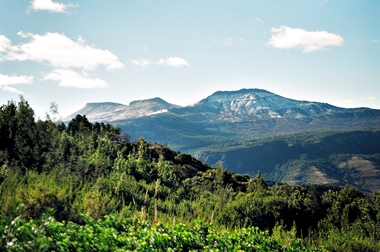
In August 2003, the middle of winter in South Africa, we made a long tour around the Cape Province, visiting small places that figured in the history of my family’s sojourn (beginning 1849) in South Africa. Here is an account of our journey to Hogsback in the Eastern Cape. The writer JRR Tolkien is supposed to have been inspired by the landscape near Hogsback, but not all are agreed on this. The author was born in South Africa (in Bloemfontein), but left the country aged less than three years.

HOG 0

Between Barkly East and Dordrecht

We sped on from Barkly East to Dordrecht. It was at Dordrecht in 1884 that my great grand uncle Sigmund Seligmann with his partner, another Jewish gentleman, Moss Vallentine opened their first business, a retail store. Later, he opened a general store in Barkly East, where his nephew, my mother’s father, became the town’s only Jewish Mayor.

HOG 1

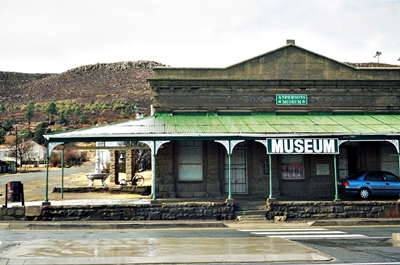
Dordrecht Museum

Dordrecht, a smallish place, still has several nineteenth century buildings including one with an elegant arcade supported by cast-iron pillars that serves as a museum. Andre Coetzee, the museum’s curator, pointed out an old shop opposite the museum that he believed had originally been Seligmann’s.  He seemed very certain that this was the building, but he could not show me any evidence to confirm this.

The rain and snow continued to shoot past us, propelled by a fierce wind. Between Dordrecht and Queenstown, we crossed a plain that was quite different to anywhere we had been so far. The plain was quite literally dotted with thousands of ‘black’ peoples’ dwellings, some with rondavels as out-houses. There were few fences. People and animals wandered across the road. The countryside was much less manicured than any other inhabited places we had so far visited in the Cape. Derelict cars were frequently seen. We were in Chris Hani District that includes the town of Queenstown and was under the Apartheid regime part of one of the so-called ‘Homelands’. 

Queenstown is not an attractive town but has a lively buzz and good shops. A sign in the town centre advised motorists to pay for parking at a “mobile parking meter”. This meter turned out to be a person who hangs around the parking area carrying a machine on which he or she records your arrival and departure times and based on these determines how large a parking fee needed to be collected. We found a wonderful spice shop run by a Pakistani man. He had a special table on which he can make spice mixtures to order and, also, had ready-made mixtures including one, very strong in flavour apparently, called “Mother-in-law Masala”. We visited a large branch of Woolworths as many people had commended this chain store to us. We were disappointed: it was like Marks and Spencer’s used to be in the UK many years ago.

We drove via Whittlesea to the tiny village of Seymour. A road marked incorrectly on our map as “narrow but with tarmac, not for four-wheel drive vehicles alone”, led from Seymour up the side of a mountain to Hogsback. This road proved to be the worst surface that I have ever driven on. Compared to it, Joubert’s Pass (near Lady Grey), was a motorway. It got progressively worse as we painfully slowly approached Hogsback.

The road had everything against it and us. There were potholes, and deep furrows where streams of water had eroded the gravel. Bare rock showed through the road and made steps that had to be carefully negotiated. Worst of all were large rounded boulders, which were difficult to drive around as the narrow road was bounded either by ditches or by walls of rock. We were lucky that we neither capsized the car nor grounded it, nor damaged the sump or some other vulnerable part of its under surface. Navigating around or across some of these dangerous obstacles reminded me of performing a particularly difficult surgical dental extraction. Just as I had to take care not to damage a hidden nerve or blood vessel during an extraction, I had to drive to avoid injuring some important part beneath the car. Had we broken down on this deserted, barely frequented road, we would have been in big trouble. There was no mobile ‘phone coverage in the area. Hair raising to say the least: I still shudder when I remember this journey. Later, a cousin in Cape Town told me that when he had used this road, he had grounded his vehicle and thereby damaged its fuel line. Things improved at the end of the road. We were amused to see a road sign at the Hogsback end of this road that advised “Road not recommended for caravans.”

HOG 2

A view from Hogsback

We found our accommodation: a collection of cottages called The Edge. The name refers to the position of the cottages which is at the very edge of the summit of the Hogsback ridge over which can be seen a view of the coastal plain over a thousand feet below. Our cottage was large but unheated except for a small, inadequate fireplace poorly located in one corner of the cottage remote from the bedrooms. We ate an excellent curry made by Dion and Shane who own a restaurant near our cottage. All night the snow fell, and the wind howled.

HOG 3

A church in Hogsback