SO FAR – THAT is since January 1994, the very best biryani I have eaten was at Paragon in Calicut (Kerala) in 2006. It was a Moplah recipe – Arabic and Indian flavours combined most harmoniously. Last December, I enjoyed an almost as good biryani in the restaurant of the Sifat International Hotel in Surat (Gujarat).
Biryani at Bheema’s
When in Bangalore, where we find ourselves often, we like to visit Bheema’s restaurant on Church Street. It serves Andhra-style cuisine. I have never been disappointed with the biryani dishes served there. Although not as supremely superb as the two biryanis I have mentioned already, Bheema’s delicious biryanis are way above average – in my humble opinion.
THE DHRABUDI TRMPLE complex is near the sea about 5 miles east of the town of Mandvi (Kutch, Gujarat). It is located ated next a small Freshwater lake, where pilgrims can bathe. Our driver told us that baby boys are brought to be blessed at the temple when they reach their first birth anniversary. When we visited, we saw a group of people doing a puja in the open air. They were respecting the first death anniversary of one of their relatives.
While wandering around the temple compound, we saw a group of Rabari women seated in the shade, under a large banyan tree. The Rabari are nomadic cattle and camel herders, as well as shepherds. In India, they aremost frequently found in Gujarat, Punjab, and Rajasthan.
Worshippers come from far and wide to do pujas at the mandir. The temple offers free meals to pilgrims. These are served in a large dining hall. One wall of this is lined with numerous portraits of people who have died. We were told that diners pick up a thali and other eating utensils before lining up to be served food.
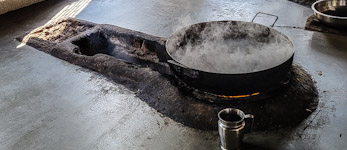
Pit containing glowing charcoal for cooking
The kitchen, which is next door to the dining hall is vast. It was spotlessly clean. I saw a few gas rings, but what really fascinated me was the other method by which food is heated up. I saw three or four pits sunk into the floor. Each one is shaped like a large spoon. Glowing charcoal is heaped in the bowl of the ‘spoon’, and can ve spread along the stem. Pots are placed above the charcoal. The arrangement reminded me of the Turkish ocakbaşı. I imagine that the cooking speed can be adjusted by varying the amounts of glowing charcoal beneath each of the enormous cooking pots.
We did not stay to join the pilgrims having lunch. Although the temple cooks kindly invited us, we had lunch awaiting us at my wife’s cousin’s home.
I always enjoy visiting place of worship. What made Dhrabudi special for me was being shown its wonderful kitchen.
THE LAW GARDEN in Ahmedabad was developed into a park in about 1997. Previously, it had been a vast triangular vacant plot in the heart of an affluent residential area. Named after an adjacent college of law, it was an undeveloped, rather disreputable bit of land. In 1997, it was tidied up and turned into what is now a pleasant place for people to relax and ‘take the air’.
Market stalls can be found along the street on one side of the park. After dark, a busy night market springs to life. This existed even before the park was completed.
Many of the stalls sell clothing made using colourful traditional patterned textiles – both embroidered and printed. Several stalls were selling cloths embroidered with small mirrors – work from Kutch.
In addition to clothing, there were hawkers selling toys and balloons. Foodsellers pushed small barrows from which they sold fruit, confectionery, and soft drinks.
This lively market reminded me a little of Fashion Street in Bombay, but it is somewhat smaller and offers less variety. The Law Garden night market is well worth a visit.
DURING OUR HONEYMOON in 1994, we travelled around places in southern India. At one point, we had to change trains at Coimbatore in Tamil Nadu state. With a few hours to spare, we ate dinner at a modest small restaurant near the station.
At Bheema’s restaurant in Bangalore
We sat down and banana leaves were placed on the table in front of us. These served as plates. There was no menu. A waiter hurried around the restaurant, stopping next to each diner and placing dollops of vegetarian culinary preparations on the leaves. He returned and placed a pile of steamed rice next to the mounds of vegetable items. He kept running from table to table, replenishing foods as required by the diners. This seemingly endless distribution of food set us back a total of 12 Rupees, which in 1994 was about £0.40 (yes, 40 pence). The coffee we drank at the end of the meal was the same price.
Yesterday, the 9th of November 2023, I was reminded of this experience whilst watching a waiter serving Andhra style vegetable preparations on a banana leaf in Bheema’s restaurant on Bangalore’s Church Street. Naturally, the meal cost a lot more than we paid in Coimbatore in 1994, but it was still very good value.
YESTERDAY (16th SEPTEMBER 2023), we met one of my cousins in Hampstead village. We ate a very satisfactory lunch at The Flask pub in Flask Walk. We chose items from the ‘brunch menu’. Each of the three dishes we ordered was tasty and generous in portion size. The dish with wild mushrooms was exceptionally good.
Long ago, there were two pubs with the word Flask in their names in Hampstead: The Upper Flask and the Lower Flask. The Upper Flask was located close to where East Heath Road meets the top (northernmost) end of Heath Street, close to Whitestone Pond. It was a meeting place for noteworthy cultural figures, but it was closed in 1750. The pub in Flask Walk, where we ate lunch, was known as The Lower Flask. Here is something about it from my book “Beneath a Wide Sky: Hampstead and its Environs”:
“Once upon a time, Hampstead had two pubs or taverns whose names contained the word ‘Flask’. This is not surprising because the word ‘flask’ used to be common in the naming of pubs. One of them, the erstwhile Upper Flask, has already been described. The other, the once named ‘Lower Flask’, now renamed, is on Flask Walk, not far from Hampstead high Street. The Upper Flask was a remarkable establishment, as already described. It figures several times in ‘Clarissa’, a lengthy novel by Samuel Richardson (1689-1761), first published in 1747. The Lower Flask pub (in Flask Walk) is also mentioned in the novel, but unflatteringly, as:
“… a place where second-rate persons are to be found often in a swinish condition …”
Unlike the Upper Flask, the Lower Flask is still in business, but much, including its name and clientele, has changed since Richardson published his novel. Located at the eastern end of the pedestrianised stretch of Flask Walk, the Lower Flask, now The Flask, was rebuilt in 1874. Formerly, it had been a thatched building and was a place where mineral water from Hampstead’s chalybeate springs was sold. Oddly, despite visiting Hampstead literally innumerable times during the last more than 65 years, it was only on Halloween 2021 that I first set foot in the Flask pub, and I am pleased that I did. The front rooms of the pub retain much of their Victorian charm and the rear rooms, one of them with a glass roof, are spacious.”
Although the Flask Pub is interesting enough, there are plenty more interesting places to see along Flask Walk and in other parts of Hampstead. You can discover these by reading my book, which is available from Amazon websites such as:
DURING THE LATE 1950s and much of the 1960s, my mother created artworks in the sculpture workshops of St Martins School of Art, which was then located on Charing Cross Road near to Foyles bookshop. My mother was a keen follower of the recipes of Elizabeth David (1913-1992), who introduced Mediterranean food to British kitchens. Near to St Martins in Old Compton Street, there were many food shops that supplied the ingredients that were required to follow Ms David’s recipes accurately. There used to be a French greengrocer between Charing Cross Road and Greek Street. This was one of the only places where ‘exotic’ salads such as mâché (lamb’s lettuce) could be purchased. Further west along Old Compton Street, there was a Belgian butcher, Benoit Bulcke, which cut meat in the French style, which my mother preferred. She claimed that English butchers were not ‘up to scratch’. Both these shops have long since disappeared. Another Soho establishment, which we used to visit regularly, was Trattoria da Otello in Dean Street. We went there so often that we were treated like old friends. Now, sadly, that wonderful restaurant is no more.
Three Old Compton Street shops frequented by my mother are still in business. They are the Algerian Coffee Stores, whose appearance has barely changed since the early 1960s when I first remember entering it; and a supplier of Italian foods: I Camisa & Son. Lina Stores, which my mother also used to visit still exists, but its branch on Brewer Street (and other newer branches) seems to have become more like restaurants than Italian delicatessens.
During school holidays, I used to accompany my mother on trips from Golders Green, where we resided, to the West End. On most of these excursions, food shopping in Soho was on our itinerary. So, as a youngster I got to know these various food shops quite well. As an innocent child, I associated Soho with food shopping rather than its other more colourful activities.
Every visit to Soho involved a stop at Bar Italia on Frith Street. There, I would be treated with a cappuccino while my mother drank an espresso. From when I first knew it in the early 1960s (or possibly the late 1950s), the overall appearance of Bar Italia has barely changed. As a friend remarked on a recent visit, the cracked Formica counter opposite the bar is typical of how cafés would have been fitted out back in the 1950s.
Bar Italia is almost three years older than me. It was founded in late 1949 by Lou and Caterina Polledri. Lou was born in the Italian city of Piacenza. According to the Bar’s website, some of the above-mentioned Formica was put in place in 1949, when the establishment was for its time ‘state-of-the-art’. The floor is that which was laid down by members of the Polledri family in 1949.
When it opened, Soho had a large Italian community, which much appreciated the Bar Italia as a home-away-from-home. At the far end of the small establishment, there is a television that broadcasts Italian TV, mostly sporting events. Each time I visit the place, the screen sems to have been replaced by a larger one. However, I cannot recall whether there was a television in place when I visited as a child. What I do remember is that next door to Bar Italia, there used to be a Greek restaurant called Jimmy’s, which, for some reason, my mother never took us there.
Once a local for the Italian community, Bar Italia has become somewhat of a Soho landmark and tourist attraction. In addition to coffee and alcoholic drinks that would be available in any local bar in Italy, Bar Italia now also serves hot meals. It also sells Portuguese ‘natas’, which are not typical fare in bars in Italy. Apart from this change, the prices of its excellent coffee have shot up to levels higher than most London cafés charge. Whereas one can expect to pay from on average £2.80 to “£3.20” for an espresso, Bar Italia is now charging over £4.20. I mention this, but do not begrudge them because by patronising Bar Italia we are helping to preserve a delightful historical London landmark.
NOW watch this lovely little video about the place:
UNTIL I WAS ABOUT 18, I drank a pint of chilled milk in the morning and another when I came home from school. I did not drink all the varieties of milk that were supplied by the milkmen who worked for the Express Dairy Company, but chose the ‘homogenised’ variety, which did not have cream at the top of the bottle. Never once whilst drinking this refreshing slightly watery liquid did I ever imagine that I would one day visit an exhibition about milk. Today, the 29th of July 2023, I viewed an exhibition called “Milk”, which is being shown at the Wellcome Collection in London’s Euston Road until the 10th of September 2023. Amongst the numerous exhibits displayed in this beautifully curated show, the following particularly interest me.
There was a collection of decorated porcelain cream jugs. Each one was shaped like a cow. Cream used to be poured into the hollow cow via a hole in its back. Then, a lid was placed to cover that orifice. To use the cream jugs, the cows were tilted so that the cream could flow out of another hole through creatures’ mouths.
There was a terracotta model of a mule carrying two trays laden with cheeses. This Ancient Roman artefact dating back to the 3rd or 2nd century BC was found by archaeologists in Southern Italy. In times long before refrigeration, making cheese was one way of preserving milk for future use.
I saw a metal lactometer, which was used to determine the amount of water in milk. My wife said that when she was a child in India, milk used to be delivered to the door. To check whether the milkman had watered it down, her mother used a lactometer just like the one on display at the exhibition.
Our daughter spotted an 18th century etching depicting St Bernard of Clairvaux kneeling before the Virgin holding the Christ Child. As the saint knelt before the Virgin, he received a squirt of her milk from her breast. This was supposed to grant him wisdom and eloquence. When she was studying History of Art, our daughter wrote a thesis about this curious episode – The Lactation of St Bernard’.
A rather uninteresting looking exhibit proved to be most fascinating. It consisted of two milk testing forms, which had to be completed after a farmer’s batch of milk had been tested for diseases, bacteria, fat content, and protein content. The forms on display related to milk produced by cattle on the Dartington Hall Estate in Devon. The Estate was founded to research the merits of various scientific farming methods. One of the founders of the Estate was the agronomist Leonard Elmhirst (1893-1974). What made him special in my mind was that after meeting the great Rabindrath Tagore (1861-1941) in the USA in 1913, he later (in 1922) set up for Tagore an Institute of Rural Reconstruction near Tagore’s university at Shantiniketan (now in West Bengal). After marrying Dorothy Straight, Elmhirst and his wife established the Estate at Dartington in 1925. It was modelled on what he had founded near Shantiniketan.
There were plenty of other exhibits that were both visually interesting and thought provoking. A theme that I felt pervaded the exhibition is related to the colour of milk – white. Because milk is often perceived as being healthy, pure, and virtuous, it may also nourish the malevolent ideas of white racists. One of the exhibits showed a video of Trump supporters cavorting around, each one of them waving large bottles of white milk whilst shouting racist and anti-Semitic slogans. Yet, the ancestors of racists like these were perfectly happy to snatch the newborn babies of black slaves away from their mothers, so that these unfortunate women could be forced to breast-feed the babies of the white women of the families who owned them. Their milk was white, but not their skin colour. To compensate for these and other harsh reminders that all is still not well in the racial tolerance scene, the exhibition includes a satirical film from You Tube ( https://youtu.be/cevXg_SlT-Q ), which makes fun of people with racist tendencies.
Well, it never occurred to me that milk and racism might be considered in the same brackets until I visited the splendid show at the Wellcome Collection. It is well worth seeing not only because of its historical and scientific aspects, but also for its artistic and sociological content.
DESPITE THE PRESENCE of many distinctive buildings constructed on the south bank of the River Thames since the end of WW2, the OXO tower built in about 1929 is still a noteworthy and unusual landmark. OXO, just in case you do not already know, is a company that is most famous for its meat extract cubes, which can be dissolved to make soups, nutritious teas, and gravies. The company uses a process for making meat extract (in liquid form) that was invented in 1840 by the German scientist Baron Justus von Liebig (1803-1873). In 1866, Liebig’s Extract of Meat Company (‘LEMCO’) was founded in Britain. At first it produced the liquid form of the meat extract, which was quite costly. So, they developed a cheaper solid form, which was sold as OXO cubes, and they are still available today.
In the 1920s, LEMCO acquired the riverside building (opposite St Paul’s Cathedral), which had been first used as a power station for the Post Office. The company modified it considerably to produce an edifice with Art Deco features. This was designed by the company’s architect Albert Moore between 1928 and 1929. LEMCO wanted their effectively new building to include a tower with illuminated advertising signs. However, at that time, planning permission for skyline advertising near the riverfront was refused. The architect came up with a brilliant solution to get around the planning regulations.
The square tower was designed with three windows on each of its four external walls. Each set of windows were shaped as a pair of circles separated by a cross shaped like an ‘X’. Thus, each of the four sets of windows spelled the name ‘OXO’. Even during daytime, when there are no lights switched on behind the windows’ glass panes, the name OXO can be seen from quite a distance. Because they were designed as windows, the planning authorities were in a weak position to object, and LEMCO got away with their attempt to use the tower to advertise.
By the 1970s, the OXO building had fallen into disuse. In the 1990s, the building along with its distinctive tower began to be redeveloped for use as housing, retail, and recreational purposes (including a now famous restaurant). At night the windows on the tower now are surrounded by neon lighting and the windows spelling out ‘OXO; can be seen from afar. OXO still exists, but it is now owned in the UK by Premier Foods.
THE FIRST PLACE I practised dentistry was in Rainham, Kent. Every Thursday, we climbed into my then boss’s open-topped TR 7 sports car, and drove down the High Street to a pub called The Cricketers. There, we used to enjoy a hearty meat and two veg lunch. One of the waitresses, a middle-aged woman, was a patient at the practice and always made sure that we were given large portions. On other days, I used to eat either in the practice or in one of the other local eateries. Sometimes, I would go into the local branch of Tesco’s supermarket to buy myself a few items for lunch. These always included either a Mars bar or a chocolate covered honeycomb caramel called a Crunchie. All the cashiers in the supermarket knew where I worked, and often, whilst I was paying, they would raise the Mars or Crunchie in the air, and shout:
“Look what the dentist is eating!”
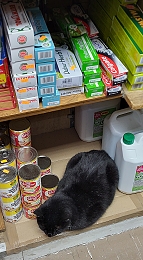
Recently, I entered a grocery shop near Portobello Road. I noticed a black cat resting on a shelf surrounded by tins, bottles, and boxes containing tubes of toothpaste. Seeing this creature reminded me of my days long ago in Rainham. There was a small ‘corner shop’ across the road from our surgery. The lady who owned it made very acceptable, generously filled sandwiches. Every now and then I used to buy one of her sandwiches for lunch. I used to accompany this with a packet of potato crisps. These packs were kept in an open topped cardboard box in no particular order. I used to rummage through its contents and select the pack that I fancied.
One day, I entered the shop to buy my lunch. When I turned to look at the box containing the packs of crisps, I saw a very plump cat comfortably curled up on top of the packets of crisps. Despite the fact that the crisps were sealed in their packets, I did not feel like choosing one. As I left the shop, I wondered where else that cat chose to rest during the day. Thinking about that put me off ever entering that little shop again.