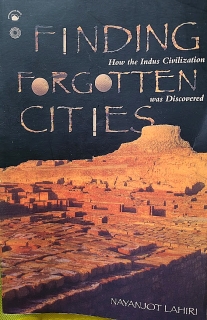
A new book about discovering the delights of England will be available soon

I AM AWAITING the arrival of a proof copy of my NEW BOOK about exploring lesser-known places in England to arrive from the printer.

After I have checked it for quality issues, it will soon be available for you to read.

SO, WATCH THIS SPACE!

A little introduction to the forthcoming book:

Footpaths in the Painted City: a journey of discovery

HERE IS A BOOK which I have found fascinating. It is “Footpaths in the Painted City” by Sadia Shephard. It was published in 2008. The American born author’s father was an American Protestant, and her mother a Muslim from Pakistan. Her mother’s mother, Nana, converted to Islam when she married in Pakistan. However, early in the book, Sadia reveals how she discovered that Nana was born Jewish in pre-independence India.

What made the book especially interesting is that Nana was born into a Beni Israel family. Nobody is sure of the origins of the Beni Israel Jews, who reside mainly in the western Indian state of Maharashtra. It is commonly said that they are the descendants of Jewish people who left Israel after the destruction of the Second Temple in Jerusalem, and made their way by land and sea to the western coast of the Indian Subcontinent. They have adhered to all the rituals followed by members of other Jewish communities for many centuries. Until some European traveller in India recognised their adherence to Jewish religious ways of life during the nineteenth century, it is said that the Beni Israel community were unaware that they were Jews.

In her book, Sadia tries to discover more about Nana’s life story and the Beni Israel community into which she was born. To do this, the author travelled to both Pakistan and India. Her account of her time in India, investigating what remains of the country’s Beni Israel communities is fascinating and gives the reader a good idea of what a young lady experienced while living on her own for several months in India.

I have greatly enjoyed reading this engaging and moving book, and can recommend it to anyone interested in Judaism in India, the Beni Israel community, family history, travel, and any combination of these.

Your comments about this introduction to a new book about India would be very welcome

I am at present writing a book about my recent travels in India. I would be most grateful if you would read through this draft of my opening paragraph, and send me your observations about it. Would you want to read further? The paragraph is beneath this photograph taken in Jaipur.

Early one morning in February 2025, our British Airways Boeing 777 jet began moving away from the oddly designed, apparently ‘eco-friendly’, Terminal Two at Bangalore’s International Airport. As the aeroplane taxied smoothly towards the runway, I watched the parched airport terrain and its assortment of buildings, some painted with red and white checkerboard patterns, slipping past. Then with a certain suddenness heralded by an increase in the noise of our jet engines, we accelerated along the runway. Soon, we became detached from the soil of India. As the aircraft rose higher and higher, random memories flashed through my mind. These included eating laal maas on a rooftop in Jaisalmer; a distraught restaurant owner in Jodhpur; a Dutch cemetery on the Coromandel Coast; hawkers wandering up and down a railway carriage in West Bengal; riding through Bangalore in a Jesus autorickshaw; blessing a newly married couple in Pondicherry; tasting homemade nolen gur in Murshidabad; attending an aarti on the Ganges; eating ravioli in Auroville; the ghost of Tipu Sultan; and much more. After flying over the west coast of India, all these experiences and a whole host of others that we had enjoyed during our 88 day stay in India (between November 2024 and February 2025) became, like the Indian coastline over which we flew, distant memories which I hope will remain etched permanently in my mind. In the pages of this book, I will revive these and a whole host of other reminiscences and explore them in detail. I want my readers to enjoy and understand what we experienced during our almost three month long stay in India.

A book about the Gujaratis by Salil Tripathi

WITH ABOUT SIX hundred and forty pages of text, this book published in 2024 covers a lot of ground. Much of what Tripathi writes about Gujarat and the Gujaratis is fascinating. However, the author’s definition of who is a Gujarati may differ from that of many others. His definition of a Gujarati is anyone whose mother tongue is Gujarati. Thus, he includes groups such as the Parsis, the Bohras, and the Khojas. None of those groups, all of whom have Gujarati as their mother tongue, would usually describe themselves as Gujaratis, even if they reside in Gujarat. Although Kachchhis generally speak Kachchhi amongst themselves, most speak Gujarati as well, but most of them would disagree with Tripathi’s calling them ‘Gujaratis’. By using his definition of a Gujarati, the author was able to include many people, who would not have described themselves as Gujarati, in his book.


The book is a mine of information about people that the author describes as being Gujaratis. Much of this information is fascinating, but there were occasional passages that I  felt should have been shortened or omitted. Although Tripathi deals a lot with some of the sadder aspects of life in Gujarat, he also injects humour into his text. However,  he notes that Gujaratis are proud of Mahatma Gandhi, a Gujarati, but in recent years, they seem to be forgetting what he stood for.


I am glad that I read this book, but would advise those planning to read it that it is more of an encyclopaedia than a portrait of the Gujaratis. Tripathi covers a great deal, but I felt that at the end of it, my understanding of the soul of Gujarat and its people had only increased by a small amount.

Much more than 5000 years of the history of India in one short book

IT DID NOT TAKE LONG for me to read “The Shortest History of India” written by John Zubrzycki and published in 2023. I raced through the book not because it is short (264 pages) but because it is superbly written and highly engrossing.

 The author covers many of the key features of what is known about the complicated history of what is now India. He does not simply provide the reader with a simple list of facts, but also includes interesting comments about the events he mentioned. At times, he questions some conventionally accepted views and explanations of events and concepts.


The first half of the book covers the history of India from prehistoric times until the arrival of Europeans at the end of the sixteenth century.  The period from then until the 2020s occupies the second half of the book. And much of the final 90 pages (34% of the text) deals with the period from 1857 until just afternoon the covid19 pandemic. So, I  feel that if anything  needs criticism it is that too much of the book is concerned with the last 4 centuries of India’s extremely long history. That said, the book is a first class, highly readable introduction to the amazingly complex story of the jigsaw puzzle of kingdoms, colonies, and empires that became India in 1947.

Stafford Cripps, Mahatma Gandhi, and an art gallery in London’s Islington

JUST OVER SEVEN years ago, I bought a book, which I put on a bookshelf without reading it, and then forgot about it. This September (2024) I found it whilst sorting through our book collection. It is a biography of the British politician Stafford Cripps (1889-1952), who visited India in March 1942. Winston Churchill had sent him there to negotiate with leading Indian Nationalists (including Gandhi, Jinnah, and Nehru) to keep them loyal to the British war effort in exchange for self-government when WW2 was over. It was up to Cripps, then a Labour politician, to formulate the proposed deal. The mission was not a success because Churchill thought that Cripps had offered the Indians too much, and the Indians thought his offer was not enough: they wanted independence immediately.

There have been many books written about Stafford Cripps. The one I found in my collection, “Stafford Cripps. A biography”, was published in 1949, when Cripps was still alive. When I looked at the book after ‘discovering’ it, what surprised me was the name of its author: Eric Estorick.

Until I looked at the book today (3rd of September 2024), I had only associated the name Estorick with a fine museum of 20th century Italian art – The Estorick Collection of Modern Italian Art. This is housed within Northampton Lodge, a Georgian building which was once the home and offices of the architect Sir Basil Spence (1907-1976), who was born in Bombay. This is in Canonbury, which is just north of Islington. The collection was established by the American Eric Estorick (1913-1993) and his German-born English wife Salome (1920–1989) after WW2.

Eric Estorick was none other than the author of the biography of Cripps, which I ‘unearthed’ today. Born in Brooklyn (NY), son of Jewish emigrés from the Russian Empire, he was awarded a PhD in sociology at New York University. In 1947, he married Salome (née Dessau), who was an artist. Eric’s interest in art began before that when he met the American photographer and gallery owner Alfred Stieglitz (1864-1946). The Estoricks began collecting art soon after the end of WW2. During their honeymoon, the Estoricks were introduced to the works of the Italian Futurists. The Collection contains several good examples of their works. In 1960, Eric opened the Grosvenor Gallery in London’s Davies Street. His first exhibition was a display of modern sculpture. It was in his gallery that my mother exhibited some of her sculptures in 1965, in an exhibition called “Fifty Years of Sculpture. Some aspects 1914-1964”.  She must have been introduced to Eric at the time.

Apart from his interests in art, Eric Estorick was a prolific author. In addition to writing three books about Stafford Cripps, he wrote others about politics as well as art. One of his books, which was published privately, was a history of the Marks and Spencer firm, in which he worked for some time. It was in that company that Salome Estorick had worked. Marks and Spencer had been a customer of her father’s textile manufacturing firm.

Having found my copy of Estorick’s book and skimmed its contents, I will not be putting it into our storage unit as I had originally intended, but will begin reading it soon.

A chance discovery in a shop in Covent Garden

I ALWAYS ENJOY looking through the books on sale in charity shops (thrift shops). First of all, one often sees books that are either out of print or that you did not know existed. Secondly, occasionally, one finds real treasures.

Today, I was in an Oxfam shop near Covent  Garden when I found a book called “Muslims in India.” Edited by Ratna Sahai, it was published in the mid to late 1990s. What made it interesting is that this illustrated and quite learned book was produced for the Indian Ministry of External Affairs. In other words, it was commissioned by the Government of India. I wonder whether the present Indian Government will produce a new version of this volume.

I paid very little for the book – about 10% of what booksellers on the Internet are charging.

A resourceful lady and a book about a famous Turkish architect in Istanbul

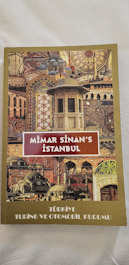
THE ARCHITECT MIMAR SINAN (c1489-1588) was the greatest of Turkish architects. There are many wonderful buildings of all sizes and for a wide variety of purposes designed by him all over Istanbul.

When visiting a tourist information office on the Asian side of Istanbul, I noticed several copies of a book called “Mimar Sinan’s Istanbul”. Beautifully illustrated with a detailed text, I quickly decided that I would love to own a copy. I asked if I could buy a copy. The official said that he could not sell me one because they were for reference only. I asked where they were sold, and was told that I could buy one at the publisher’s bookshop. The book is published by Turing. The discovery of the book occurred on a Friday.

On the following Sunday, we found the Turing shop. It was shut. We went again on Monday, and found a notice stating that it was always closed on Mondays. Tuesday was a public holiday. So, we did not bother going to the shop. On each of our abortive visits, I could see the book on a shelf in the shop, but could not quite see its title.

On Wednesday, the shop was open. We entered it, and discovered that they only stocked the Turkish edition. As it is beautifully illustrated and remarkably cheap given its fine quality, we purchased a copy.

Later that day, my wife Lopa had an ingenious idea. We were not sure whether it would work, but it was worth a try, especially as the tourist office was close to where we wanted to go the next day.

On the following day, we took the ferry to the Asian side, carrying with us the brand new copy of the Turkish edition of the book about Sinan, and returned to the tourist office. Lopa asked the official, who remembered us, whether we could exchange our Turkish book for one of the office’s books in English. Without hesitating, the official said:
“Why not. We don’t have a copy in Turkish.”

He handed us a copy of the book in English, and we gave him our Turkish copy. I was very pleased and full of admiration for Lopa’s resourcefulness – especially as it was her birthday.

THY HAND, GREAT ANARCH BY NIRAD CHAUDHURI

HAVING BEEN BEFRIENDED by the author’s son Prithvi, and having seen some of his father’s belongings stored in the Calcutta Club (in Kolkata), I finally got around to reading a book that I bought almost 30 years ago. The 960-page volume by Prithvi’s father, Nirad C Chaudhuri (1897-1999), is called “Thy Hand, Great Anarch”, and was first published in1987. The title comes from a couplet in a poem by Alexander Pope (1688-1744):

“Thy hand, great Anarch! lets the curtain fall;

And universal Darkness buries All.”

This pessimism well summarises what Chaudhuri has written in his enormous tome.

The book is the second part of Chaudhuri’s autobiography. It covers the period from 1921 to 1952 – the years leading up to the end of British rule in India and the first few years after the country gained its independence. Chaudhuri was a keen observer of what was going on in India during this period. Without pulling any punches, he gives his often-critical opinions of what was going on in the country, and never fails to point out what he felt was being done wrong both by the British and also by the Indians fighting for the end of British rule. Although he wrote this book long after 1952, he quotes from things he wrote during the period he described. He did this, I believe, to prove to the reader that his frequently idiosyncratic opinions were not as a result of looking back with hindsight, but were what he thought at the time.

One of Nirad’s chief criticisms of the various different freedom fighters was that they all expressed their dislike of British rule but, according to him, none of them proposed plans for how India was to be ruled if or when independence was achieved. I have read several books about the history of India’s fight for freedom, and most of them portray leaders such as Gandhi, Nehru, Vallabhai Patel, and Subhash Chandra Bose as heroic figures. This was not how Nirad portrayed any of them. Having been the personal secretary of Bose’s brother Sarat Bose, Nirad was in a good position to observe many political events at close hand. As for Gandhi, he wrote (giving his reasons):

“To take the question of his contribution to Indian independence first. It is a blatant falsehood to say that he or his movements brought it about, whatever their moral effect.”

This was not an opinion I had come across before in histories of the struggle for India’s independence. It is his highly individual and original views that help to make his book so engaging. He writes very scornfully of Subhash Chandra Bose’s politics and his cooperation with the British Empire’s enemies during WW2. As for Jinnah – the ‘father’ of Pakistan – he showed less disdain, writing:

“I must set down at this point that Jinnah is the only man who came out with success and honour from the ignoble end of the British Empire in India.”

Unlike members of the Indian National Congress and their opponents – the British Government, Jinnah:

“… never made a secret of what he wanted, never prevaricated, never compromised, and yet succeeded in inflicting an unmitigated defeat on both the British Government and the Indian National Congress.”

Although I got the feeling that Chaudhuri admired the British and believed that Indians would fare better by being part of the British Empire than they would in an India ruled by Indians, his book is by no means short of criticism of the British as colonists, during the last years of empire, and after India became independent. Figures such as Attlee and Mountbatten get little or no praise from Nirad. At the beginning of a chapter called “Mount Batten Piled on Mount Attlee”, he wrote:

“As if Attlee single-handed was not enough to complete the work of demolition begun by the more cunning mediocrity. Baldwin, he piled on himself Lord Mountbatten to add greater work to his policy, which brought endless misfortunes to the Indian people.”

As the book’s title suggests, the text contains Nirad’s views on the anarchy he perceived developing as India approached independence, and then after having achieved it. It is not surprising, given what he wrote and thought about the country of his birth that Nirad chose to move to England (in about 1982) and lived there until he died. Many readers might be surprised or even horrified by what the author wrote, but he takes care to make whatever he thought sound reasonable to his readers. There are parts of the book which I found hard going – difficult to comprehend, but I ploughed on regardless, and was pleased that I did.