Stafford Cripps, Mahatma Gandhi, and an art gallery in London’s Islington

JUST OVER SEVEN years ago, I bought a book, which I put on a bookshelf without reading it, and then forgot about it. This September (2024) I found it whilst sorting through our book collection. It is a biography of the British politician Stafford Cripps (1889-1952), who visited India in March 1942. Winston Churchill had sent him there to negotiate with leading Indian Nationalists (including Gandhi, Jinnah, and Nehru) to keep them loyal to the British war effort in exchange for self-government when WW2 was over. It was up to Cripps, then a Labour politician, to formulate the proposed deal. The mission was not a success because Churchill thought that Cripps had offered the Indians too much, and the Indians thought his offer was not enough: they wanted independence immediately.

There have been many books written about Stafford Cripps. The one I found in my collection, “Stafford Cripps. A biography”, was published in 1949, when Cripps was still alive. When I looked at the book after ‘discovering’ it, what surprised me was the name of its author: Eric Estorick.

Until I looked at the book today (3rd of September 2024), I had only associated the name Estorick with a fine museum of 20th century Italian art – The Estorick Collection of Modern Italian Art. This is housed within Northampton Lodge, a Georgian building which was once the home and offices of the architect Sir Basil Spence (1907-1976), who was born in Bombay. This is in Canonbury, which is just north of Islington. The collection was established by the American Eric Estorick (1913-1993) and his German-born English wife Salome (1920–1989) after WW2.

Eric Estorick was none other than the author of the biography of Cripps, which I ‘unearthed’ today. Born in Brooklyn (NY), son of Jewish emigrés from the Russian Empire, he was awarded a PhD in sociology at New York University. In 1947, he married Salome (née Dessau), who was an artist. Eric’s interest in art began before that when he met the American photographer and gallery owner Alfred Stieglitz (1864-1946). The Estoricks began collecting art soon after the end of WW2. During their honeymoon, the Estoricks were introduced to the works of the Italian Futurists. The Collection contains several good examples of their works. In 1960, Eric opened the Grosvenor Gallery in London’s Davies Street. His first exhibition was a display of modern sculpture. It was in his gallery that my mother exhibited some of her sculptures in 1965, in an exhibition called “Fifty Years of Sculpture. Some aspects 1914-1964”.  She must have been introduced to Eric at the time.

Apart from his interests in art, Eric Estorick was a prolific author. In addition to writing three books about Stafford Cripps, he wrote others about politics as well as art. One of his books, which was published privately, was a history of the Marks and Spencer firm, in which he worked for some time. It was in that company that Salome Estorick had worked. Marks and Spencer had been a customer of her father’s textile manufacturing firm.

Having found my copy of Estorick’s book and skimmed its contents, I will not be putting it into our storage unit as I had originally intended, but will begin reading it soon.

A chance discovery in a shop in Covent Garden

I ALWAYS ENJOY looking through the books on sale in charity shops (thrift shops). First of all, one often sees books that are either out of print or that you did not know existed. Secondly, occasionally, one finds real treasures.

Today, I was in an Oxfam shop near Covent  Garden when I found a book called “Muslims in India.” Edited by Ratna Sahai, it was published in the mid to late 1990s. What made it interesting is that this illustrated and quite learned book was produced for the Indian Ministry of External Affairs. In other words, it was commissioned by the Government of India. I wonder whether the present Indian Government will produce a new version of this volume.

I paid very little for the book – about 10% of what booksellers on the Internet are charging.

A resourceful lady and a book about a famous Turkish architect in Istanbul

THE ARCHITECT MIMAR SINAN (c1489-1588) was the greatest of Turkish architects. There are many wonderful buildings of all sizes and for a wide variety of purposes designed by him all over Istanbul.

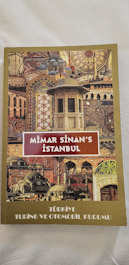
When visiting a tourist information office on the Asian side of Istanbul, I noticed several copies of a book called “Mimar Sinan’s Istanbul”. Beautifully illustrated with a detailed text, I quickly decided that I would love to own a copy. I asked if I could buy a copy. The official said that he could not sell me one because they were for reference only. I asked where they were sold, and was told that I could buy one at the publisher’s bookshop. The book is published by Turing. The discovery of the book occurred on a Friday.

On the following Sunday, we found the Turing shop. It was shut. We went again on Monday, and found a notice stating that it was always closed on Mondays. Tuesday was a public holiday. So, we did not bother going to the shop. On each of our abortive visits, I could see the book on a shelf in the shop, but could not quite see its title.

On Wednesday, the shop was open. We entered it, and discovered that they only stocked the Turkish edition. As it is beautifully illustrated and remarkably cheap given its fine quality, we purchased a copy.

Later that day, my wife Lopa had an ingenious idea. We were not sure whether it would work, but it was worth a try, especially as the tourist office was close to where we wanted to go the next day.

On the following day, we took the ferry to the Asian side, carrying with us the brand new copy of the Turkish edition of the book about Sinan, and returned to the tourist office. Lopa asked the official, who remembered us, whether we could exchange our Turkish book for one of the office’s books in English. Without hesitating, the official said:
“Why not. We don’t have a copy in Turkish.”

He handed us a copy of the book in English, and we gave him our Turkish copy. I was very pleased and full of admiration for Lopa’s resourcefulness – especially as it was her birthday.

THY HAND, GREAT ANARCH BY NIRAD CHAUDHURI

HAVING BEEN BEFRIENDED by the author’s son Prithvi, and having seen some of his father’s belongings stored in the Calcutta Club (in Kolkata), I finally got around to reading a book that I bought almost 30 years ago. The 960-page volume by Prithvi’s father, Nirad C Chaudhuri (1897-1999), is called “Thy Hand, Great Anarch”, and was first published in1987. The title comes from a couplet in a poem by Alexander Pope (1688-1744):

“Thy hand, great Anarch! lets the curtain fall;

And universal Darkness buries All.”

This pessimism well summarises what Chaudhuri has written in his enormous tome.

The book is the second part of Chaudhuri’s autobiography. It covers the period from 1921 to 1952 – the years leading up to the end of British rule in India and the first few years after the country gained its independence. Chaudhuri was a keen observer of what was going on in India during this period. Without pulling any punches, he gives his often-critical opinions of what was going on in the country, and never fails to point out what he felt was being done wrong both by the British and also by the Indians fighting for the end of British rule. Although he wrote this book long after 1952, he quotes from things he wrote during the period he described. He did this, I believe, to prove to the reader that his frequently idiosyncratic opinions were not as a result of looking back with hindsight, but were what he thought at the time.

One of Nirad’s chief criticisms of the various different freedom fighters was that they all expressed their dislike of British rule but, according to him, none of them proposed plans for how India was to be ruled if or when independence was achieved. I have read several books about the history of India’s fight for freedom, and most of them portray leaders such as Gandhi, Nehru, Vallabhai Patel, and Subhash Chandra Bose as heroic figures. This was not how Nirad portrayed any of them. Having been the personal secretary of Bose’s brother Sarat Bose, Nirad was in a good position to observe many political events at close hand. As for Gandhi, he wrote (giving his reasons):

“To take the question of his contribution to Indian independence first. It is a blatant falsehood to say that he or his movements brought it about, whatever their moral effect.”

This was not an opinion I had come across before in histories of the struggle for India’s independence. It is his highly individual and original views that help to make his book so engaging. He writes very scornfully of Subhash Chandra Bose’s politics and his cooperation with the British Empire’s enemies during WW2. As for Jinnah – the ‘father’ of Pakistan – he showed less disdain, writing:

“I must set down at this point that Jinnah is the only man who came out with success and honour from the ignoble end of the British Empire in India.”

Unlike members of the Indian National Congress and their opponents – the British Government, Jinnah:

“… never made a secret of what he wanted, never prevaricated, never compromised, and yet succeeded in inflicting an unmitigated defeat on both the British Government and the Indian National Congress.”

Although I got the feeling that Chaudhuri admired the British and believed that Indians would fare better by being part of the British Empire than they would in an India ruled by Indians, his book is by no means short of criticism of the British as colonists, during the last years of empire, and after India became independent. Figures such as Attlee and Mountbatten get little or no praise from Nirad. At the beginning of a chapter called “Mount Batten Piled on Mount Attlee”, he wrote:

“As if Attlee single-handed was not enough to complete the work of demolition begun by the more cunning mediocrity. Baldwin, he piled on himself Lord Mountbatten to add greater work to his policy, which brought endless misfortunes to the Indian people.”

As the book’s title suggests, the text contains Nirad’s views on the anarchy he perceived developing as India approached independence, and then after having achieved it. It is not surprising, given what he wrote and thought about the country of his birth that Nirad chose to move to England (in about 1982) and lived there until he died. Many readers might be surprised or even horrified by what the author wrote, but he takes care to make whatever he thought sound reasonable to his readers. There are parts of the book which I found hard going – difficult to comprehend, but I ploughed on regardless, and was pleased that I did.

Tea makers and politicians in India

MY LATEST BOOK, “The Hitler Lock & Other Tales of India”, is mainly aboutmy very varied and fascinating experiences of travelling in India and only a little bit about Adolf Hitler. Here is a brief excerpt from the book:

Some say that when he was a young boy at school, India’s Prime Minister Narendra Modi helped in his family’s tea stall. Although he never became a chaiwallah, I have met one tea maker who became actively involved in politics. He was the owner of Chai Day Teahouse in Bangalore’s Johnson Market. I visited his establishment a couple of times in 2016, but when I looked for it four years later, it had disappeared.

Chai Day was more of a café than a tea stall. It had tables and chairs within its premises. What struck me immediately was that the walls of the seating area were covered with slogans, such as “Don’t promise when you are happy. Don’t reply when you are angry. Don’t decide when you are sad.”, and “We are not use less. We are used less”, and “Thanking you your faith for Syed Arif Bukhari.” The latter refers to the name of the owner, and the fact that he used to, and may still, put himself forward for election to positions, including MLA, in the Government of Karnataka. He told us that he is an independent and that his symbol is an electronic calculator. Just in case that is meaningless to you, I should explain that all political parties in India identify themselves with symbols as well as their names. For example, the Congress Party symbol is a raised right hand, and that of the BJP is a flowering lotus. This is done so that voters who have difficulty reading can find the party for which they want to vote. After chatting amiably with the charming Mr Bukhari, he said:

“If one chaiwallah can become a Prime Minister, maybe I can do the same.”

He might have been joking, but who can tell what the future will bring.

We are fond of drinking tiny cups of sweet, milky, often spiced, tea at the numerous tea stalls that can be found all over India.  During a visit to the Gujarati city of Baroda (Vadodara), we spoke to two tea makers one morning. One of them was a charming lady, who told us about the working life she led. She operates her stall from 630 am until 730 pm daily. She boils her tea with milk and spices on a gas ring, as do most other chaiwallahs. Each of her gas cylinders contain enough fuel (domestic LPG, which contains butane or propane or a mixture of them) to keep her stall going for 15 days.

The other chaiwallah we spoke with was Gopal. He has a tea stall near the entrance to one of the former pols (see below) of Vadodara. He works from 10 am to 6 pm. His stall was very busy when we visited it that morning. It faces a peepal tree with numerous Hindu offerings around the base of its trunk. One of the daily offerings to the gods is the first cup of tea that Gopal makes each morning. Like many other chaiwallahs we have visited in Gujarat, Gopal adds fresh herbs and spices to his tea. That morning, he had large sprigs of mint leaves and bunches of lemon grass and ginger. He pounds the latter in a pestle and mortar. He told us that pounding the ginger releases more flavour than grating it, which is what many other tea makers do. I asked Gopal whether I could take photographs of him and his stall. He allowed me to do so. As we were leaving him, he told his customers proudly (in Gujarati):

“Our Prime Minister must go to the UK and USA to have his picture taken. See, people from the UK have come all the way from London to Vadodara to photograph me.”

[Note: A pol is an ancient form of gated community, built for protection, found in the historic centres of Varodara and (more prevalently) in Ahmedabad].

You can buy a copy of the book either as a paperback or as a Kindle e-book from Amazon:

Driving on roads on India

WHEN I FIRST visited India – that was in January 1994 – I carried my British and International driving licences with me. Boldly, I drove in the heavy traffic and densely crowded streets of the busy City Market area of Bangalore and also all the way to Ootacamund (‘Ooty’) – over 270 Km, and that was before the highway was constructed. You can share in these experiences by reading my book about travels in India, “The Hitler Lock & Other Tales of India”. This book/kindle is available from Amazon (https://www.amazon.co.uk/HITLER-LOCK-OTHER-TALES-INDIA/dp/B0CFM5JNX5/ ), and IF you live in India, from: https://store.pothi.com/book/adam-yamey-hitler-lock-and-other-tales-india/ .

Get a taste of my latest book about travelling in India

Recently, I published a book, “THE HITLER LOCK & OTHER TALES OF INDIA”, which is about some of my experiences of frequent visits to India over a period of thirty years. It consists of an introductory prologue and 101 short pieces of prose. To get some idea about what the book contains, here is one of them.

“IMPROPERLY DRESSED

In August 2008, we spent a few days at a beachside hotel just north of the city of Calicut (Kozhikode) in Kerala. Our accommodation was in the village of Kappad, where it is said that the Portuguese Vasco da Gama might have first set foot on Indian soil in 1498. Whether he did or did not, we had a good holiday in the area despite the occasional monsoon downpours.

One afternoon, while we were being driven through the countryside near Calicut, we spotted an isolated Hindu temple in the middle of a wooded area. It was surrounded by a fence and looked interesting from the car. We stopped, and found an open gate through which we entered the temple compound. The place was deserted – there was not a soul to be seen. Out of respect for Hindu traditions, we removed our footwear before wandering around. I took photographs of what was clearly quite an old temple.

We were on the point of leaving this holy place when we spotted a pandit entering. He walked towards us, not looking too pleased to see us. Speaking in Hindi or English – I cannot remember which – he said that I was not properly dressed to be in his temple. We apologised, and then he asked me to remove my shirt. I did as he requested, hoping that this would improve his mood. After I had taken off my shirt, he asked me to remove my trousers. To be charitable to him, I guess he would rather have had me wearing a lunghi or a dhoti instead of trousers. When he asked me to take off my trousers, we decided to leave the temple compound speedily.

Had I done as he had asked and put on traditional clothing of Kerala, the priest might have felt obliged to make us feel welcome in his temple. But it is likely that he knew full well that a westerner like me was unlikely to do what he wanted, and instead would leave his compound. His actions were a subtle way of getting us to leave without needing to sound impolite or unwelcoming.”

And here is another excerpt:

“DIPLOMATIC AMNESIA

Almost immediately after I first arrived in India (in late December 1993), and a few days before our Hindu wedding ceremony, my father-in-law recommended that I visit his tailor – Mr Krishnan – to get measured up for some new suits. One of these was to be a white ‘Prince Suit’, and the other two were western style formal suits in greyish materials. The Prince Suit, a traditional Indian design with a high neck collar, was to be worn at our wedding reception after the marriage ceremony. The other garments would be useful for the many formal occasions, which my father-in-law anticipated both in India and England. He loved such occasions.

When he worked in an upmarket tailoring shop in Bangalore’s Brigade Road, Mr Krishnan had made suits for my father-in-law. When I met him, he was semi-retired and worked from his home in a small, old-fashioned house on a short lane in a hollow several feet beneath the nearby busy Queen’s Road. He was a short, elderly gentleman – always very dignified and polite. He measured me up for the suits in his front room, which served as part of his workshop. After a couple of visits to try the suits whilst they were still being worked on, I picked up the finished garments. Each of the suits fitted perfectly – ‘precision-fit’ you could say quite truthfully. Despite being so accurately made, they were not in the least bit uncomfortable. Everybody admired them. I could understand why I had been sent to Mr Krishnan.

Our next trip to India was made 20 months later when our recently born daughter had had sufficient vaccinations to allow her to travel safely. During the interval between these two holidays, my dimensions had changed significantly because of my good appetite and happy marriage. Notably, my girth had increased greatly. Sadly, the suits that Mr Krishnan had so carefully crafted no longer fitted me. We returned to see Mr Krishnan, who told us that in anticipation of my dimensions changing, he had left extra cloth within the garments for adjusting them. Without comment, he took my new measurements, and noted them down in a book. My wife, who had accompanied me, said to the tailor, mischievously:

“Just out of curiosity, Mr Krishnan, would you be able to look up Adam’s previous measurements to see how much he has changed.”

He put down his pencil, sighed, and said:

“I am very sorry, Madame, but I have unfortunately lost them.”

Mr Krishnan was not only a wonderful tailor, but also a perfect diplomat.”

If you enjoyed these, and want to read more, then please obtain a copy of my book, which is available in paperback and Kindle from Amazon sites such as

[For those who live in India, the paperback can be ordered here:

https://store.pothi.com/book/adam-yamey-hitler-lock-and-other-tales-india/]

A rook with a book in a Cornish town

THE AUTHOR DAPHNE du Maurier (1907-1989) was born near London’s Regents Park, but spent much of her childhood in Hampstead. In the summer, she travelled with her family for holidays in Cornwall. They also lived there during WW1. In 1926, the family bought the still extant Ferryside, a house next to the ferry landing at Bodinnick. The eye-catching blue and white house can be seen across the River Fowey from many points in Fowey. I believe that one of her descendants still owns, and lives in, the house.

In the centre of Fowey, on the waterfront, there is a modern sculpture of a bird holding a book with one of its claws. Called “The Rook with a Book”, it was created by the Thrussels, a father and son team of sculptors based in Bodmin Moor at a point near to the source of the River Fowey. The sculpture was unveiled in 2018 by Daphne’s son Christian. The book being held by the rook bears the title of one of Daphne’s short stories – “The Birds”, published in 1952. The story was inspired by seeing a flock of gulls attacking a farmer working on a field. It was set in Cornwall soon after WW2. What makes this short story particularly significant is that it inspired Alfred Hitchcock to create his horror film “The Birds”, which was first released in March 1963.

DISCOVER THE EXCITING RANGE OF TOPICS IN MY NEW BOOK ABOUT MY TRAVELS IN INDIA DURING THE LAST 30 YEARS

Here is a list of the chapters in Adam Yamey’s anthology of his often entertaining travel experiences in India. The book is both for those who know India and for those who do not.

The book and/or Kindle can be bought by clicking on the picture below.

LIST OF CHAPTERS

Introduction … page 9

Prologue: A book from India … 12

Saved by a nosebleed … 14

You married him? … 16

It began with a bang … 18

Shantiniketan … 20

. Maria and Job … 23

Please use the meter … 27

Mixed couples … 29

Coracles … 31

West End Hotel … 35

Less than one degree … 39

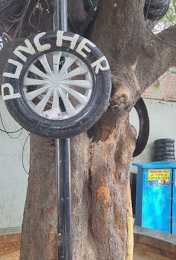
Puncher …42

Dining with the dead … 48

A generous gratuity … 50

Miner’s sauce … 52

From Kutch to Norway … 54

Looking so lovable … 56

Beneath the banyan trees … 58

Meeting Khushwant Singh … 61

A palace by the sea … 64

Monkey business … 67

Chicken 65 … 70

Diplomatic amnesia … 72

Meeting the Mahatma … 74

Feeding the cows … 79

Montecatini Terme … 83

Hummus in Hampi … 86

Clothing can be critical … 89

Traditional but trendy … 94

Facial prejudice … 96

Paradise for bookworms … 99

Wrapped up … 105

The personal touch … 108

He worked with Le Corbusier … 111

My Ferrari … 115

From Gandhi to Hitler … 117

An unusual invitation … 121

Looking for literature … 123

Of dargahs and dyeing … 127

Before my time … 130

Improperly dressed … 132

Dining at Limra … 135

Hitler on the shelf … 139

Beefsteak not biryani … 144

Independence Day … 146

Large snakes … 148

One wife four husbands … 150

One day it might be you … 153

Waterfalls and water closets … 155

Cunning old fox … 158

Kutchi beer … 161

Albanians in India … 163

Bodies in the dark … 167

Don’t let it go viral … 169

Clubbing …171

Lopchu … 175

Threads of faith … 179

Nizam’s … 184

Teapots and politics … 187

A refreshing breeze … 190

Buried not burned … 193

Gandhi’s spectacles … 197

Tea at Lothal … 201

They came from Persia … 207

Don’t take the train … 211

Defying inflation … 215

In your face … 217

Cops and crocs … 219

A curious hotel … 222

Denmark by the sea … 225

No bill food is free … 231

Espresso in Diu … 234

Maurice and Bob … 237

An Indian welcome … 242

The pandit’s wife … 244

Royal encounter … 247

Unlocking a secret … 253

Curious coffee … 255

Do they speak Hindi in Russia? … 257

Dashiki … 260

Field of cars … 263

I love Stalin … 267

Jeremy Bentham and Calcutta …269

India’s first mosque … 273

Eggs excepted … 278

Saving their necks … 280

Reclining on a rug … 283

Bollywood in Bangalore … 285

A coffee house … 289

Bargaining in Mount Abu … 291

Not long in Nepal … 295

An unexpected sight … 299

Four bangles … 303

On the safe side … 306

PHD … 308

In touch with history … 311

James and Adeline … 316

Ladies only … 318

Lost property … 320

Plants from paper … 323

A soaking in Calcutta … 325

Mapusa market … 331