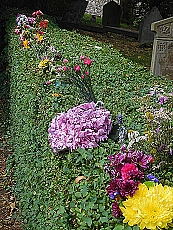
Blooms in a hedge
A church full of flowers
For a royal jubilee

Blooms in a hedge
A church full of flowers
For a royal jubilee
THE VICTORIA LINE began carrying passengers in late 1968 when I was 16 years old. I remember when this happened and how exciting it was. Recently a new railway line opened in London: the Elizabeth Line. Originally named ‘Crossrail’, it began carrying passengers several years after it was supposed to have been completed. It is supposed to convey people from east of London to well west of the city. However, what exists now (July 2022) is not exactly what I expected. In order to travel from, say, Shenfield, at the eastern end of the line to, say, Maidenhead, west of London, you need to change trains at Paddington. Currently one section of the new line runs east from Paddington, and the other runs west from that station. Unlike Queen Elizabeth’s long continuous reign, the line named to honour her has a discontinuity at Paddington.

A visitor from abroad wanted to experience the new line today, a Sunday. He was looking forward to seeing the new station platforms on the line that heads east from Paddington. Sadly the section that fruns east from Paddington does not operate on Sundays at the moment. So, we had to head west. The Elizabeth Line trains are new, but the train follows tracks that were laid down as far back as the 19th century. Apart from being over efficiently air-conditioned, the new trains are comfortable and run remarkably smoothly.
We travelled (on a train bound for Heathrow Terminal 5) to Hayes and Harlington station, and from there headed to Barra Hall Park in the old part of Hayes. There, we enjoyed a picnic before walking to the mediaeval parish church, St Mary the Virgin. We had visited it once before, but were completely unprepared for what we saw this time. The hedges lining the path leading to the south door of the church were decorated with bunches of cut flowers. A cardboard cut-out of Queen Elizabeth II greeted us at the door. The lovely church was filled with attractively arranged bouquets of flowers. Quite by chance, we had arrived whilst the church’s 57th annual Festival of Flowers was being celebrated. We were fortunate because we arrived on the 3rd of July, the last day of the festival. The festival’s theme was “A Tribute to Queen Elizabeth”. How appropriate to have travelled to it on the Elizabeth Line.
THE ARTIST DAMIEN Hirst has given London’s art lovers a great gift. In October 2015, he opened his Newport Street Gallery (near Lambeth Bridge) to the public. Housed in a former theatre scenery workshop, which has been beautifully modernised, the gallery puts on a series of exhibitions of artworks (mainly paintings) from Hirst’s enormous personal collection, which he has been creating since the late 1980s. The current exhibition, “Cloud of Witness”, which ends on the 10th of July 2022, is of works by an artist born in Australia, who created many of his paintings in London: Keith Cunningham (1929-2014). I had never heard of him before seeing the exhibition.
Cunningham arrived in London in 1949 and enrolled at the Central School of Art and Design, where he aimed to improve his skills as a graphic designer. In 1952, having developed an interest in painting, he joined the Royal College of Art (‘RCA’), where he worked alongside now famous artists including Leon Kossoff, Joe Tilson, and Frank Auerbach. He exhibited in the prestigious London Group in 1956 and the two years following. This group had been formed as an association of modernist artists, who wished to escape the restrictive criteria of the Royal Academy. In 1964, he was invited to become a full member of the Group, but for unknown reasons he declined. By 1967, he had ceased exhibiting his work and was making his living as a graphic designer and teaching at the London College of Printing. Despite this, he continued producing paintings until his death. He kept his paintings hidden from view in a spare room. So, it is fortunate for us that Damien Hirst acquired many of them and put them on public display this year.

The Newport Street Gallery website (www.newportstreetgallery.com) describes his work succinctly:
“Cunningham’s paintings were produced in London during the post-war period, an artistic environment dominated by the likes of Francis Bacon and Lucian Freud. A student at the Royal College of Art in the mid-1950s, Cunningham worked alongside major artists such as Frank Auerbach, Leon Kossoff and Jo Tilson.
Cunningham’s sombre paintings, coated in layers of dense, sculptural brushstrokes, are populated by skulls, fighting dogs and darkly altered human figures. Like his schoolmates and teachers at the Royal College, Cunningham was interested in figurative painting, transforming the reality of everyday life into loose, slowly disintegrating forms.
His canvases, like those of Bacon, Kossoff and Auerbach, are covered in powerful strokes of dark pigments conveying strikingly expressive forms. The Cloud of Witness seeks to redefine Cunningham’s role in the London art scene of the 1950s, highlighting not only his ability but also the variety of his inspirations. To this effect, it coincides with the major show at the Royal Academy of Arts, Francis Bacon: Man and Beast, encouraging visitors to compare and contrast the works of these two artists.” Having already seen the Bacon exhibition at the Royal Academy and works by other artists mentioned in the quote, I feel that it is a good summary of what we saw at Newport Street. My favourite works in the exhibition were some of the portraits and some of the more abstract works. Undoubtedly, Cunningham was a competent artist, but having seen the exhibition, I can understand why he is not amongst the better-known artists of his generation
WALKING PAST UNIVERSITY College School (‘UCS’) in Hampstead’s Frognal, I spotted something that reminded me of my schooldays, both at the Hall School (in Swiss Cottage) and Highgate School (…in Highgate!).

A part of the brick wall enclosing the grounds of UCS is inscribed with initials. Some of the bricks also have circular depressions. Those which have not been filled in have interiors which are parts of spheres. The bricks on the walls of the schools I attended used to be spotted liberally with similar circular, spherical concavities.
The concavities, which are never more than about 1.5 inches in diameter, were created using the edges of coins. If the edge of a coin is placed firmly against a brick and the twisted left and right repeatedly, the sharp coin gradually wears away the brick and creates a concavity as described.
In the days long before mobile telephones were even the stuff of dreams, mining out brickwork and inscribing one’s initials provided a perfect way for school kids to pass a few idle moments and to leave one’s mark.
Read more about Frognal and the rest of Hampstead in my new book available from https://www.amazon.co.uk/dp/B09R2WRK92

Which way will it blow?
The wind of war brings fear and rage
Let peace reign soon
ENGLISH PARISH CHURCHES are full of surprises. The church of St Mary the Virgin in the Essex village of Hatfield Broad Oak (once known as ‘Hatfield Regis’) is no exception. Its nave is a surviving remnant of a Benedictine priory founded in 1135 by Alberic De Vere (c1085-1141) The highlight of this church is a recumbent stone effigy of Alberic’s grandson, Robert de Vere, 3rd Earl of Oxford (c1155-1221), who was born in Hatfield Broad Oak. He was one of the barons who forced King John into signing the Magna Carta at Runnymede in 1215. The effigy was placed in the church either by his son or his grandson. It lies on the floor of the chancel in front of the nave and close to the high altar. Whereas in many churches, there is an unobstructed view of the altar (or a rood screen) from the western end of a church, Robert’s effigy sticks out like a sore thumb when you are looking along the length of the nave

The effigy, which is in remarkably good condition given its age, depicts Robert lying with his legs crossed. His right hand clutches a sword and there is a shield attached to his left arm. His left foot rests on something that is not easily identifiable as it has been damaged. What is most remarkable about this funerary sculpture is that Robert is almost entirely clad in chain mail. Part of his face peers through a circular gap in the armoured head dress. The carver of this monument took great pains to show the chain mail in fine detail. For me, this is what makes the effigy quite wonderful.
Fascinating as is the effigy, Robert’s family interested me because of its connection with Kensington in London. Robert’s great grandfather Alberic (or Aubrey) De Vere (1040-1112) was a tenant-in-chief of William the Conqueror. The Domesday Book records that he was a great landowner with properties in nine counties. One of these was the manor of Kensington in the County of Middlesex. His name is remembered today in the Royal Borough of Kensington and Chelsea by the street name Aubrey Walk, which leads to Aubrey House, currently a private residence.
The day before we visited Hatfield Broad Oak, we were in Coggeshall (Essex), where I spotted a memorial to a protestant martyr, Thomas Hawkes (see: https://adam-yamey-writes.com/2022/06/26/burnt-rather-than-baptised/), who had worked for the De Vere family. Had Hatfield Broad Oak not been such a pretty village, I doubt that we would have stopped there. That would have been a pity because then we would have missed seeing the chain mail clad effigy and its interesting connection with a part of west London, with which I am quite familiar.
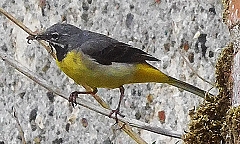
Stay still and silent
Watch carefully and say nought
Else it will take wing
WHILE ELTON JOHN was performing in front of thousands in London’s Hyde Park in late June 2022, a small ensemble was performing works by the baroque composers Pergolesi and Purcell in the large medieval gothic church in Thaxted (Essex). The superbly performed concert in Thaxted starring the Armonico Consort ended well after 9 pm. This was not a problem for the many well-healed members of the audience in the church, who lived locally and were able to feed themselves in their own homes.
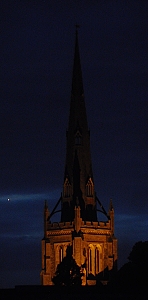
We could have eaten before the concert, which commenced at 7 pm, but were not hungry before that early hour. The pubs in Thaxted informed us that their kitchens stopped taking orders for food before 845 or 9 pm.
At a pub called the Star, someone hearing us asking about food after 9 pm, recommended we should head for Farouk’s. The bar attendant and several bystander’s agreed with our informant. The bar attendant kindly said that we could bring food from Farouk and she would save a table for us at which we could sit and eat after the concert.
Farouk is the owner of a caravan parked in a yard behind a petrol filling station in Thaxted. He and his colleagues, all from Turkey, prepare and sell Turkish food in the caravan. And, his eatery closes not at 845 or 9 pm, but at 11 pm.
After hearing superb renderings of Pergolesi’s “Stabat Mater” and Purcell’s “Dido and Aeneas” (semi-staged), we headed for Farouk’s caravan and the Star pub.
While waiting for our food to be prepared at about 9.40 pm, Farouk explained he had come from Gaziantep. He said that in his part of Turkey, which is quite close to Cyprus, Turkish is spoken with an accent that is very similar to that spoken by Cypriot Turks. During the ten minutes it took to prepare our food, Farouk took many food orders over the phone, which goes to show that in Thaxted there is a healthy demand for food after 9 pm.
We enjoyed our food at the table reserved for us at the Star. This welcoming pub is popular with locals. I suspect that its lively clientele was a different segment of Thaxted’s population from that which attended the concert in the church.
WHEN PEOPLE CONSIDER picturesque places in the eastern English county of Suffolk, the following places usually spring to mind: Bury St Edmunds, Clare, Southwold, Lavenham, Long Melford, and Sudbury. All these places deserve their reputation as sites worth visiting. Kersey is another place, which is exceptionally attractive. I had never heard about it until someone in a museum (in Essex) told me about it recently. It is far less visited than those mentioned above.

Kersey is about 9 miles west of Ipswich. The village lies on the steep slopes of the valley of a small stream, a tributary of the River Brett (which feeds the River Stour). The main road running through Kersey crosses the stream not over a bridge but by a ford (known as ‘The Splash’). The village’s name, Kersey, means a ‘wet area with cress’. It is likely that this refers to the part of the place around The Splash. The heyday of the village was long ago: it was during the 14th century when Kersey was important in the then flourishing woollen cloth production industry. The church overlooking the village, St Mary’s, dates from that prosperous era. Likewise, with many of the lovely half-timbered houses. Although their construction began in the 14th and 15th centuries, they have undergone modifications over the centuries. However, they have a picturesqueness that easily rivals that which has made the better-known places (listed above) so famous.
Apart from the church and the half-timbered Bell Inn (about 14th century), one building stands out in Kersey. This is a large building with an impressive 16th century two storeyed red brick entrance structure projecting from the rest of the edifice, which was constructed in the 15th century. Above the main entrance, there is an inscribed stone plaque set into the brickwork. It bears the following: “Ye Olde River House 1490”.
After the Black Death (1346-1353) and later the decline of the wool industry in that part of Suffolk (in about the 17th century), not much happened in Kersey between then and the present, so I was told by a local inhabitant. Nothing much replaced the textile trade, and this led to the village remaining much as it was during its best days. This is lucky for those, like me, who enjoy the charm of England’s older and eye-catching vernacular architecture. Neither I nor the inhabitant with whom I spoke could understand why Kersey, unlike places such as I mentioned at the start of this piece, is not as frequently visited by tourists. Although smaller than all the other places, it easily matches their beauty.
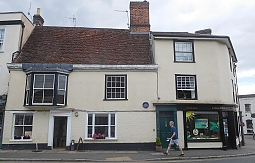
COGGESHALL IN ESSEX is an attractive place to visit. The small town contains over 300 buildings of historical interest, all of which have given protected status. Amongst these is Paycockes House, which I will describe another day. One of the many other old buildings in the centre of the town is a large house, once the home of Thomas Hawkes.
Hawkes was a retainer of John de Vere (1516-1562), the 16th Earl of Oxford, who became a supporter of the Roman Catholic Queen Mary, who became the monarch in 1553 (following the deaths of the Protestant King Edward VI and the unfortunate Lady Jane Grey). Mary decreed that England should return to Roman Catholicism and the Earl of Oxford concurred with this.
Thomas Hawkes, a fervent Protestant, decided to leave his ‘employer’, who had become sympathetic to Mary’s religious cause. He returned to his home (known as ‘Constantynes’) in the centre of Coggeshall. Unwilling to partake in any Roman Catholic practices and a vocal opposer of that branch of Christianity, Hawkes soon became regarded as heretic by the Catholic authorities.
Under great suspicion by those then in power, Hawkes did something that got him into really bad trouble: he refused to have his newly born son baptised into the Catholic faith. He was arrested and taken to Newgate Prison in London. From there, he was taken to the palace of Bishop Edmund Bonner (c1500-1569) several times, and asked to recant. Having refused each time, on the 9th of February 1555, Bonner condemned him to be burnt at the stake. After Bonner had given him one last chance to recant, he is believed to have said:
“No, my lord, that I will not; for if I had a hundred bodies, I would suffer them all to be torn in pieces, rather than I will abjure or recant.” (https://coggeshallmuseum.org/thomas-hawkes/)
After some months, Hawkes was taken to Coggeshall, where on the 10th of June 1555 he was burnt at the stake.
Hawke’s house still stands and is marked with a commemorative plaque. It was built in the mid-15th century, but has been much modified since then.
 yamey
yamey 