Unknown's avatar

About yamey

Active author and retired dentist. You can discover my books by visiting my website www.adamyamey.co.uk .

Fifth November

GUY FAWKES

Fifth November, Guy Fawkes Day

let’s  recall:

a Parli-ament saved


[In the UK, the 5th of November is remembered as being the day that many centuries ago the Houses of Parliament were saved from being blown-up by plotters led by Guy Fawkes  (1570-1606)]


Marine Ices

Whenever I am in a restaurant and presented with the dessert menu, I often order ice-cream, especially if there are fruit sorbets available. Ever since I can remember I have loved ice-cream, and I continue to do so. Let me tell you about three places where I have enjoyed eating this chilled delicacy. Two are in Italy and one is in London.

Marine 2

During my childhood, we visited Florence (in Italy) every year except 1967, the year the after city was badly damaged by a terrible flood in November 1966. Annually, my late mother used to visit a brassiere maker called Busti Biondi. The owner of this shop was unable to speak English, and my parents were not sufficiently confident of their Italian to communicate with him effectively. Near the shop in the same street, there was a textile merchant called Giorgio, who spoke good English having learnt it from British soldiers during WW2. He helped interpret during the often-lengthy proceedings at Busti Biondi. He also introduced us to one of the best ice-cream shops I have ever visited. This shop or ‘gelateria’ was called ‘Perché No’, which means ‘why not?’ I have not visited Florence since the late 1960s. The gelateria, Perché No, in Via Dei Tavolini still functions, selling ice creams as it has been doing when it opened in 1939.

Bar Cucciolo was a gelateria that stood next to the Pensione La Calcina on the Zattere waterfront (Fondamente del Zattere) of Venice’s Dorsoduro island. It was at the Calcina that our family stayed. Many years before we patronised the place, the Victorian artist and writer John Ruskin stayed there (in 1877). Although the accommodation and food at the Calcina was not great, my parents chose to satay there because it overlooked the wide Giudecca Canal and the lovely waterfront of the Giudecca Island across it.

The Cucciolo made and sold ice creams and sorbets at least as good as those that we enjoyed in Florence at Perché No? Their banana flavoured ices were my favourite. I particularly enjoyed having a cone that contained a scoop of banana and one of lemon sorbet. Writing these words makes my mouth water.

The Cucciolo was run by two men and was always very busy on summer afternoons when the sun shone brightly on the south-west facing Fondamente del Zattere. On one such afternoon we were sitting on the Calcina’s deck that projected over the water when we heard a woman beginning to scream. Her small child had fallen into the canal. Quick as a flash the plumper of the two fellows who ran the Cucciolo dived into the canal fully clothed, and then rescued the small boy. His parents hurried away with their child, barely thanking their soaking rescuer. On the next day when we were buying ice creams, he told us that his watch had been wrecked when he jumped into the canal. Also, the victim’s parents, who were not Italian, had not been in the slightest concerned that he had risked his life, limbs, and clothes, for their child whom they had not been watching carefully enough. My mother was most upset on his behalf. Sadly, the Cucciolo closed many years ago. It had already disappeared when we last visited Venice in 2007.

Marine 1

Very recently, I visited Chalk Farm. There opposite the Underground Station, to my horror, I saw a building site where once Marine Ices used to stand. In the 1960s, when I was a child this was one of the only places in London, where good quality ice-creams and sorbets were on sale. One could sit down in the parlour and eat them, or you could take them home in boxes. As I savoured their ices, I could imagine I was back in Italy either at Perché No or the Cucciolo.  

According to its website, Marine Ices was established in London in 1931. When I returned from my trip to Chalk Farm, I looked on the internet to find out what had happened to Marine Ices, and I discovered that it still exists but at a new address, which is closer to Camden Market.

Today, London is littered with great gelateria’s serving ice cream as good as I remember eating when I was a child. There are already three high quality gelaterias where I live and a fourth (a branch of a firm from Florence) is opening soon.

I thought it was a bean

Is fear of the needle 

worse than fear of the mask?

Without them, we suffer

business care clean clinic

Photo by Pixabay on Pexels.com

Many of my adult patients remembered going to the dentist when they were children and having to be put asleep under a black face-mask. This memory instilled in them a life-long fear of visiting dentists.

The day after the 17th of March 1982, when I qualified as a dentist, I was legally allowed to administer general anaesthetics for dental procedures without an anaesthetist being present. General anaesthesia is hazardous enough but without the assistance of an anaesthetist, the risks of problems multiply. I could have accidentally killed a patient on my first day in practice. For the record, I have never ever administered general anaesthetics with or without an anaesthetist.

For a brief while, a few months in the 1990s, I worked in a practice that specialised in treating dental patients while they were under general anaesthesia. The anaesthetics were administered by a visiting hospital anaesthetist, who was assisted by a fully trained anaesthetics technician. The patients, when unconscious, were intubated to maintain their breathing and all the right things were done to ensure their safety. When the patients were ‘under’, I worked on their teeth, as quickly as I could because the anaesthetist wanted to keep the patients ‘under’ for as short a time as possible.

Children were given gaseous anaesthesia through a face mask. Once, I sniffed the gas briefly. It was terrible stuff. It felt as if a knife were shooting up my nose. Most children were, quite naturally, terrified at the prospect of anything that was happening in our clinic. Getting them to accept the black mask with its attached rubber tube was often difficult. The anaesthetist was a friendly man from the Middle East. He would say to the children things like:

“This smells of peppermint.”

The child might reply:

“I don’t like peppermint.”

The doctor would then say:

“I’ve got strawberry flavour.”

“I don’t like strawberry.”

“How about some lovely banana?”

And so, it went on.

One mother impressed me. She said to her child that if he allowed the mask to be put on by the count of three, he could have a treat at McDonalds later. She counted “one”, and the child refused. And, then “two”, but the child still resisted. Then, I wondered how different it would be when she got to “three.”

I was impressed when she said:

“Two and a quarter,” and then “Two and a third”, and so on without ever reaching “three”. Eventually, her child cooperated.


I must to admit that although we got a lot of work done on fully anaesthetised patients, I did not enjoy working under these conditions. However, I enjoyed my weekly encounters with the friendly anaesthetist, ‘Dr A’. He was extremely fond of fiery chillies, which he consumed during our lunch breaks. He was always seeking hotter chillies. This was probably because his taste-buds had become partially damaged by his excessive consumption of these almost corrosive chillies.

One lunchtime, Dr A and I were sitting in the staff room with a male anaesthetic technician from an agency. Wickedly, Dr A passed him a long, thin fresh green chilli, saying:

“Try this.”

The young man put the whole green chilli in his mouth and started chewing it. Soon, his face went bright red, and he rushed to the sink to fill a glass of water. When he recovered, he turned to Dr A, and said:

“I thought it was a bean.”

PS: Nowadays, general anaesthetics for dentistry cannot be administered anywhere in the UK except in a fully-equipped hospital.

Albania’s got talent…

ALBTAL 1

The Albanian community in the UK has been in the country long enough for some of their children to have been born in the country. It would be easy for the first generation born in the UK, who have to attend British schools and mix with non-Albanians, to begin to forget their cultural heritage. However, thanks to various organizations that some of the children of Albanian heritage attend, Albanian language and cultural traditions are being kept alive in the UK. On the 27th of October 2018, I was invited to attend the finals of the, which was held in a school hall in London’s Chalk Farm.

The Albanian Ambassador to the UK, Mr Qirjako Qirko, was one of several well-known personalities who introduced the show in Albanian. He ended his speech with a few words in English. The gist of what he said was as follows. He thanked the Queen and her Government for allowing Albanians to maintain their traditions and language, which is not the case in every other country. The show which followed the speeches certainly demonstrated that despite being far from their traditional homes and many years away from them, the Albanian community is encouraging their children to keep alive the traditions of their forefathers.

ALBTAL 2

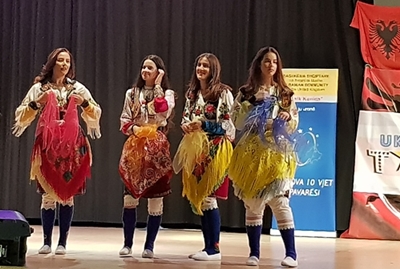
The show consisted of a series of performances by young people whose parents came from Albania or Kosovo. There were songs (traditional and contemporary Albanian as well as renderings of current and not so current popular songs in English). Small troupes of youngsters in traditional Albanian garb performed traditional Albanian dances. Others danced routines that they had choreographed themselves. Several youngsters declaimed poetry in Albanian. Naturally, the quality of performance was not uniform. Some of the young people were dazzlingly competent, the rest were not bad. None of the performers was shy or overtly lacking in confidence. Each of them performed with an enthusiasm that was refreshing to observe. The large audience around me encouraged each of the contestants as they performed on stage, cheering and clapping to the rhythm of the music. The five judges praised and gave friendly encouragement (in Albanian) to each of the performers when their act was over. Three of the judges were for singing, one for poetry recital, and one for dancing. The atmosphere in the hall was joyful and friendly. Everyone who passed my wife and me, greeted us warmly even if they had no idea who we are. It was great to discover that the famed hospitality of the Albanian people has been preserved in its British diaspora.

ALB TAL 3

Many, if not all, of the performers, who sung or recited in Albanian or who dressed up in traditional costumes and performed the dances of their ancestors, use English in their day to day life. They have given up parts of their precious spare time to learn Albanian and to help Albanian cultural traditions remain vital and vibrant. They set an example that many children of British ancestry might profitably follow.

Some views of Diu

DIU: A delightful island off the west coast of India

yamey's avatarGUJARAT, DAMAN, and DIU

DIUV 0

The island of DIU is on the south coast of the Saurashtra peninsular in the Indian state of Gujarat.

DIUV 9

Diu was a Portuguese colony from the 15th century until 1961, when it was ‘liberated’ by Indian armed forces.

DIUV 00

DIUV 14

The island is rich in arrchitecture dating back to the golden age of Portugal

DIUV 13

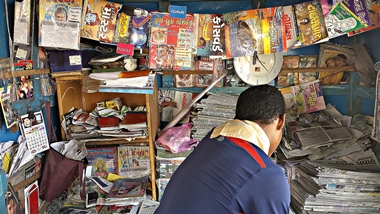
We could only find one newspaper seller in Diu. He opened for a few hours of the day only. Diu is a sleepy place.

DIUV 3

DIUV 4

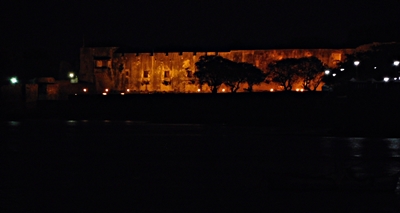
The extensive fort of Diu was built by the Portuguese. Part of it is now used as a local jail.

DIUV 1

DIUV 11

Many fishing vessels moor alongside the city of Diu.

DIUV 6

DIUV 7

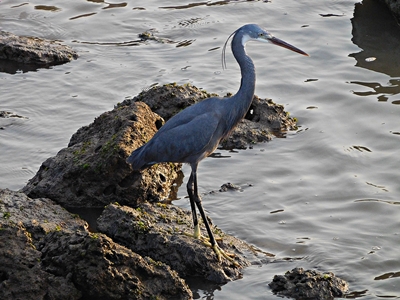
Bird-spotters can enjoy standing by the wateride, looking for various different species.

DIUV 2

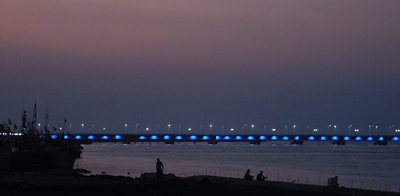
A long road bridge connects Diu Island to Ghoghla on  the mainland. Beyong Goghla, there is a frontier post between the Union Territory of Diu and the State of Gujarat. The Gujarati policemen…

View original post 46 more words

Through the tongue

During my three and a half decades working as a dentist, I have been assisted by numerous ladies varying in age from sixteen to over seventy years. ‘Carly’ was one of them. When she joined me in a practice west of London, it was the first time she had worked in a dental practice. She was a quick learner, but far from discreet.
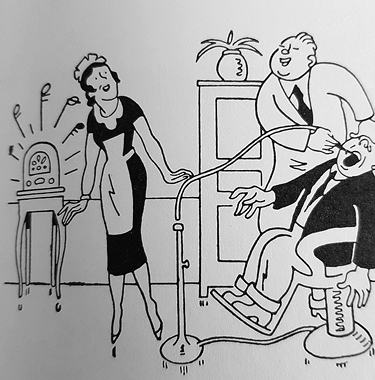
CARLY

When we had a new patient, we recorded the person’s details on the outside of a record card. One day, a smart-looking woman sat down in my dental chair, a new patient, and I asked her for her personal details: name, date of birth, address, and so on. Carly entered the information on the record card. When we had finished, Carly asked the patient:

“Are you M.R.S. or M.I.S.S?”

The lady replied:

“Miss.”

Quick as a flash, Carly said:

“I can’t see why you ain’t married. You ain’t ugly or anythink.”

The lady took this quite well. She could see that Carly meant no harm.

One Monday morning, Carly arrived and said to me:

“Ere, look at this”

She stuck out her tongue, which had a shiny silver-coloured metal stud pierced through it. I was lost for words for a moment, and then asked her if it was uncomfortable.

“No, it ain’t,” she replied, “It makes eating spaghetti difficult, though. It gets caught up on it.”

All morning, whenever a patient sat in my dental chair, she would tap the patient’s shoulder, and then say: “Wht d’ya think?” before sticking her tongue out to display her stud to the person in the chair. Most of the patients were either politely complimentary of just smiled. By now, my regular patients had got used to Carly and her friendly but cheeky manners.

Another day, Carly arrived at work. Very excitedly, she told me:

“You’ll never guess how much I paid for a large pack of prawns at Tesco’s.”

“Four pounds?” I guessed.

“No, just a quid.”

“That’s a good bargain,” I said.

“What me and me boyfriend do,” Carly explained, “is we swap the labels on the packets in the chiller so that we get the special offer prices instead.”

“Be careful,” I advised.

On yet another occasion, Carly arrived at work looking distressed. I asked her what was wrong.

“I crashed me boyfriend’s car.”

“But you haven’t got a license have you, Carly?”

“No, but I was drunk. I got in his car and drove it backwards into a lamppost.”

I am sure that the boyfriend was not pleased because throughout the day Carly was rung up by him on her mobile ‘phone. She would go out into the corridor, but because she was screaming at her chap so loudly, everyone could hear her.

During one appointment, I was beginning to scale (remove the dental tartar or calculus) a lady’s teeth. After a few minutes, while I changed instruments the lady, a well-dressed woman with airs and graces, asked me:

“Excuse me, Mr Yamey, but what exactly are you doing to my teeth?”

Before I could answer, Carly replied quickly:

“E’s cleaning the crap off yer teeth.”

The patient seemed quite happy with this simple summary.

Despite Carly’s occasional rather undignified comments, she was an excellent assistant. Patients appreciated her unpretentious, friendly, open approach and the fact that she was rarely silent. After a few months, when she had gained some experience, Carly left our practice to take up a better paid position in another dental practice. Some weeks after she had been working there, she dropped into our surgery to say ‘hallo’. I asked her how she was getting on in her new job. She replied:

“It’s ok, but they have told me not to open my mouth during the day.”

Picture source: “Der Zahnarzt in der Karikatur” by E Hinrich (1963)