

THE WHITE RANN (desert) is so named because of the layer of white salt crystals that forms on its surface in dry weather. The salt forms when salty water covering the salt flats in Kutch evaporates. We arrived in the area of the White Rann a few days after a downfall of rain. Rain dissolves the salt and the whiteness of the Rann disappears.
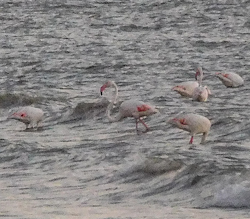
One afternoon, I walked across the salt flats behind our hotel. The water on the distant lake shimmered in the bright sunshine. The flat Rann across which I was strolling was greyish yellow with occasional patches of white. The surface of the drying salt was crunchy underfoot and sparkled as the crystals reflected the sun light.
There was no one in sight, no birds or other creatures. There was no sound apart from a gentle warm breeze that was drying the salt covered surface of the completely flat Rann.
By now you might be wondering where all of this salt comes from. A long, long time ago, an inlet of the Arabian Sea separated what is now Kutch from what is now Sindh (in Pakistan). After some seismic activity, the sea bed of the inlet was transformed into a barren desert, the Rann of Kutch. During rainy season, water collects in lakes in the Rann. Salt from the former sea bed dissolves in the water. When this water evaporates in the dry seasons, the salt is precipitated on the shore when the waters recede.
In a couple of days time, the Rann will be snow white again providing there is no more rain.


 yamey
yamey 