Spaghetti House

My parents loved coffee. In particular, they enjoyed drinking well-prepared Italian espresso coffee. Every Saturday morning when I was a child in the late 1950s and early 1960s, we used to drive to the car park by Jack Straws Castle, a pub near Whitestone Pond in Hampstead. Now, the pub no longer exists; it has been adapted to become a block of flats. The car park behind it, where we used to leave our car, still exists.

We used to walk down Heath Street, passing the open-air art exhibition if it was summer-time. Our first stop was a café housed within a building with a triangular floor plan, which still stands on the corner of Heath Street and Elm Row. The Pimpernel café/restaurant, which was run by Italians, no longer exists, but this is where my parents used to take their espresso coffee on Saturday mornings.

In those far-off days, espresso machines were not equipped with pre-set electronic controls as they are today. The person making the coffee had to pull down a leaver, which forced the hot water through the powdered coffee and into the cup waiting below it. The speed at which the leaver is pulled determines the rate at which the hot water flows through the coffee and the length of time that the water remains in contact with the coffee grains. These factors help affect the taste and quality of the final cup of espresso and are dependent on who operates the lever. Thus, using the manual espresso machines requires skill and experience. In my parents’ view those who worked at the Pimpernel had these skills. Whenever we visited this café, the kindly staff would give my sister and me a small matchbox sized piece of Italian nougat (‘torrone’). I remember that the piece of torrone was coated on two sides with thin edible rice paper. That there was paper which was edible really impressed my young mind.

There was another place, whose coffee gained my parents’ approval during the 1950s. This was the Bamboo Bar on Finchley Road in Golders Green. It was located under the Northern Line bridge which straddles Finchley Road close to Golders Green station and opposite a now disused covered walkway which was once an entrance to the station.

SPAG 2

Although the walkway and the Bamboo Bar have been closed for many decades, there is still an eatery in the same place, the popular Artista Italian restaurant. The latter is much larger than its predecessor.

SPAG 1

The walls of the Bamboo Bar were lined with bamboo. It was run by two Italian men, Lorenzo Fraquelli and Simone Lavarini. My parents, who both loved Italy and her people, enjoyed chatting with these fellows. In 1955, they opened the first branch of what was to become the now widespread, extensive chain of Spaghetti Houses.

As mentioned, the Bamboo Bar closed years ago. Sometime in the 1960s, another café, Bar Linda, opened next to the bus station at Golders Green. This souvenir of my childhood still survives and is thriving.

SPAG 3

One branch of the Spaghetti House chain made headline news in 1975. It was the branch, now closed, in Knightsbridge. This was the branch where managers of the various outlets of the chain would meet occasionally to deposit their takings before they were deposited in a nearby bank’s night-safe. On the days of the meetings, this restaurant was closed to the public. On Sunday 28th September, three armed men burst into the restaurant and demanded the takings that had been collected from the branch managers, who were meeting there. They bundled the managers in the basement. Luckily, one of the managers escaped and alerted the police, who arrived promptly.  The bandits held the managers hostage for three days before giving themselves up to the police. This event became known as the ‘Spaghetti House siege’. I am pleased to report that nothing remotely exciting as that has ever occurred during my years of visiting this restaurant chain.
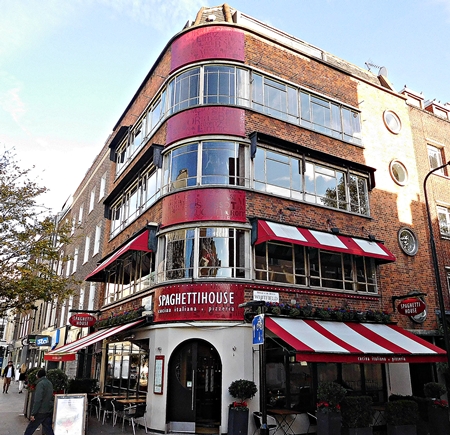
SPAG 4

The first branch, which still exists, stands on the corner of Goodge Street and Whitefield Street (see picture above). When I was a young boy, my mother often treated me to a meal at this restaurant. We became quite familiar with the staff.

Many years later in 1970-71 during my first year as a BSc student at University College London (‘UCL’), I used to treat myself to lunch at the Goodge Street Spaghetti House. It was more expensive than the numerous canteens that were available on the UCL campus, but the food was far better. The ground floor of this multi-storey restaurant, like the Bamboo Bar, had walls covered with bamboo. This has long since been replaced by newer wall coverings.  Some of the waiters who were working at the Goodge Street Spaghetti House were getting on in age by the time I began my undergraduate studies. At least one of them used to greet me as she remembered me as a child. Not only had she worked at the Spaghetti House since its opening, but she told me that she had also been a waitress at the Bamboo Bar.

We still eat the occasional meals at various branches of the Spaghetti House chain. The food is usually of a good standard. A few years ago, I met a chap with whom I had been to school before 1960. I had not seen him since about 1971, and then only extremely briefly. We agreed to meet up at a Spaghetti House restaurant. He told me that he preferred meeting people on ‘neutral territory’ in places like restaurants, rather than in homes. Although he had aged quite a bit since we were both 8 years old, he was recognizable. Almost as soon as he met me, he said to me:

“Oh, I thought I was meeting someone else, not you.”  
The slow table

Food can be scarce

but when it’s abundant

let folk have plenty of choice

ADAM small


I attended Golders Hill School, a primary school in in Golders Green, between 1956 and 1960. It was a high-achieving school for boys and girls with an all female teaching staff. Founded in 1908, just after the Underground was extended from Hampstead to Golders Green, it still works today but in a greatly enlarged ‘campus’.


We used to spend all day at school. Lunch was served at 1 pm. We sat at various long tables. The children sitting on the table which ate its food fastest were  rewarded with a piece of confectionary from a box of ‘Dolly Mixture’.


I was a fussy eater. Having had a difficult few first months of life, my mother was happy to see me eating anything at all. I was not forced to eat anything I did not fancy. Actually, there were few foods that I was prepared to put in mouth. A particular dislike of mine, which remains with me to this day, is green peas. Their taste, or even just thinking about them, makes me feel nauseous. I can recall that my mother was keen that I should get to like these nauseous little green spheres. She would put a few on my plate. To avoid eating them, I employed the following delaying tactict: I would first slowly peel a pe, and then carefully cut into four pieces. My parents soon tired of watching, and eventually attempts to make me consume them were abandoned.


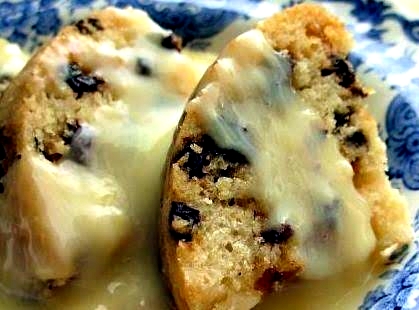
Almost nothing that was served at Golders Hill appealed to me apart from steamed pudding and the oddly named ‘spotted dick’. Main courses often came served with cubed carrot, chopped green beans, and green peas. I would not touch them. No table that I sat on would ever be rewarded with pieces of Dolly Mixture.

spotted

Spotted Dick with custard – source: https://www.justapinch.com

I was shifted to the slow table, where the four slowest eaters in the school sat trying to finish their food during the play time that followed lunch. I remember nothing about the three other members of the slow thable except that they were all girls and one of them was called Rhoda.


Even if I had been kept at the slow table for the rest of the day, there was no way that I would be able to finish what was in front of me. I devised a solution. I put whatever I could not eat into the pockets of my short trousers (‘shorts’), visited the toilet, and then emptied the unwanted food into the toilet pan, and flushed it away. This worked for most foods including slices of canned fruit.


My biggest challenge, and I can only remember it happening once, was gooseberries in hot custard. I felt that putting this in my pockets was not at all a good idea. In desperation, I carried my filled bowl to the closed door of the staff room. I knocked on the door, hoping that whomever answered would take pity on me. A forlorn hope because many of the teachers were quite formidable. I hoped that it would not be the large Miss Fitzgerald, who frightened me greatly. If it was Miss Dredge, I would have felt happier.


I cannot say who it was that opened the door. But, as soon as it opened I dropped the plate with all of its contents ont the feet of the teacher at the door. It still puzzles me why I was neither punished nor told off for my act of carelessness, or was it defiance.


PS: I still dislike peas, but now I love gooseberries.

Matterhorn

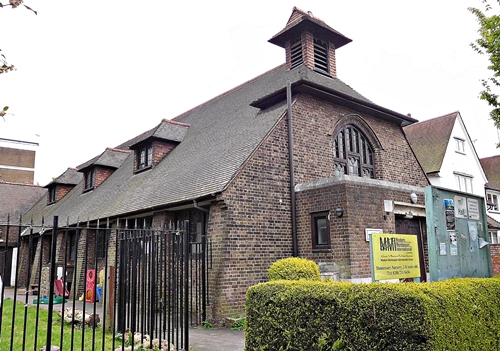
It is hard to say which is my earliest memory. I believe it was going to St Albans church hall in Golders Green (in north-west London) to collect orange juice with my parents. I was born in 1952. In the early 1950s, the government supplied young children orange juice free of charge. The juice, which was free of the ‘bits’ that are found in many of today’s orange juices, was supplied in glass medicine bottles with cork stoppers.


MATTER 1

St Albans church hall in 2017

Another early memory dates back to 1955. We had just disembarked from an ocean liner in Cape Town. There were tram-like tracks embedded into the concrete of the quay. Adventurously, I put my foot into the groove of one of the rails, and then could not remove it. This caused quite a commotion as my mother carefully detached me from the rail along which large cranes travelled. This might be an actual memory, or someone may have told me about it later.

I do remember my first morning at primary school, which I entered aged 4 years. My parents took me to Golders Hill School on the first day along with my little friend Anthony. We stood next to each other in the front row of the assembled school. Suddenly, another boy, a complete stranger, pushed himself between Anthony and me. He said: “I want to be your friend.” He was Nick, and we remained friends for almost twenty years. I have only seen Anthony once since that day at school.

Every day at Golders Hill began with assembly. We were lined up in rows while our names were called out. We were required to answer in Latin: “Adsum”. As I did not start learning Latin until after I had left the school, I had no idea why we were required to say this peculiar word, which I later discovered means ‘I am present’.

Following the roll-call, we had to recite something, which to my young mind began with something that sounded like “Our father widgeartahev’n”. This recitation included many other words that were new to me. No one ever explained why we were saying this, or what it was. It was years later that I realised that we had been saying the Lords Prayer at high speed.


MAT 2

Golders Hill School in 2017

During the morning assembly, we stood facing the teachers and the then Head Mistress, Miss Davis. The latter used to cycle to school with her three corgi dogs stuffed into the basket at the front of her bicycle. The dogs spent the day resting in her office. On the wall behind the teachers and facing us pupils there was a black and photograph of a snow-topped mountain. Why it was there, I never found out, but unlike the other mysteries of roll-call, we learned that the mountain in the picture was the Matterhorn.

The boys from South London

mobile phone stolen

contacts imag-es vanish:

 modern  tragedy


phone

For several years I worked in a west London practice near Portobello Road . My patients came from families that had originated in many parts of the world. Almost all of them had lively characters. They were not your average quiet provincial types, who respect professionals – a bit too much in my opinion. They were unpredictable in their punctuality and behaviour. This made every one of my working days exciting, sometimes a bit too much so.

‘J’ was a frequent attender with many dental concerns. Although he made appointments, I could be sure that the appointment times were those that he was least likely to appear at the surgery. His timing was erratic to say the least.

When J arrived, he ignored the reception desk and would come straight into my surgery even if I was already treating a patient. If I was in the midst of treating someone, he would respect my asking him to wait until I was free. He would then hover around outside my surgery, and if the wait was too long for him he would disappear, only to reappear unannounced and unexpectedly a few days or weeks later.

One afternoon when I was free, J, who was not a nervous patient, ran into my surgery. He was too agitated to sit down in my dental chair. Instead, he leant against one of the walls of my small room.

“What’s the matter?” I asked.

“It’s bad, man.”

“Can you tell me about it? Do you want to talk?” I asked.

“My mobile ‘phone has been nicked.”

“Sorry to hear that.”

“I know who took it.”

“Really,” I said, “then, can’t you get it back?”

“I don’t know, man. But, I know who nicked it, and I am going to get the boys from South London to put him six feet under.”

Having said those worrying words, he settled into my dental chair.