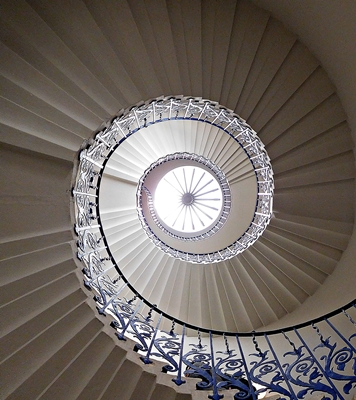
Your eye is enticed
towards a celestial light,
relentlessly

Your eye is enticed
towards a celestial light,
relentlessly

On the evening of the 20th of October 2018, I attended a superb orchestral concert called “Ephemeral Dreamscapes” at St Stephen’s Church at Gloucester Road (London SW7 4RL). The Albanian born conductor Olsi Qinami conducted the London City Philhamonic orchestra. They played four pieces. Three of them are well-known: Mussorgsky’s “Night on a Bare Mountain”, Wagner’s “Prelude & Liebestod”, and Ravel’s “La Valse”. Although everything was beautifully played, the performance of the Ravel, a very difficult piece, was outstanding.
The fourth piece on the programme has rarely been performed live, as its score, written in the 1950s by Albanian composer Çesk Zadeja (1927-97), was only recently (2012) found in a Russian archive. Zadeja, who was from Shkodra, died in Rome. It was discovered by the composer’s son, who had been searching for it for many years. Described as ‘The Father of Albanian Music’, Zadeja studied in Moscow. The work performed at the concert was a stirring orchestral suite compiled from music that Zadeja composed for the soundtrack of the film “The Great Warrior Skanderbeg”. This film, an Albanian/Soviet co-production, was released in 1953. Some of the other music in the film’s soundtrack was composed by the Russian Georgy Sviridov (1915-98). Olsi Qinami’s performance of the music by Zadeja was the British concert premiere of the work. The almost full house gave it rapturous applause.
In summary, the concert was highly enjoyable. Olsi Qinami’s conducting gets the best out of his excellent players in whatever they are playing. I get the impression, having attended several of his concerts, that his orchestral players regard him with great affection. Watch out for his next concert at St Stephens, which is to be on the 9th February 2019.

The house of God reaches
upwards to meet with
the cloudy firmament
In the second half of the 1990s, I worked in a dental practice in West London, not far from Ladbroke Grove. It was also not far from a home or shelter for mentally-compromised people. In those days, patients with psychiatric problems mixed with the other people in the local community. Many of these people attended our practice as dental patients.
‘P’, one young man, a schizophrenic so he told me, was a regular patient of mine. Usually, treating him presented no problems other than those relating to the technical details of sorting out his dental problems.
One morning, P attended my surgery. He sat in the chair, which I then set to the reclining position. Lying down, he said to me, out of the blue and without any prompting:
“Mr Yamey, I have decided to become a homosexual.”
At a loss as to how to respond adequately, I said:
“That’s nice.”
Then in a strong voice, P exclaimed:
“Mr Yamey, I love you.”
“Thank you,” I responded lamely, adding: “Let’s get on with your treatment now”.
At that moment, my dental assistant, ‘Gemma’, walked into the surgery, ready to assist me with the treatment I was about to provide P. Within seconds, P began unzipping the fly on his trousers.
“Put that away immediately,” I ordered, “otherwise we will have to summon the Police.”
P followed my instruction and behaved perfectly normally throughout the rest of the treatment session.
When the appointment was over, P sat up from the reclining position, and placed a pile of low denomination coins on the armrest closest to me.
“That’s a tip for you, Mr Yamey.”
I thanked him, and then returned the coins, knowing that he could ill afford to waste money on me.

There is a decorative drinking fountain on the Broadwalk in London’s Regent’s Park. The fountain looks like a typical Victorian gothic structure, which it is. Closer examination reveals bas-relief panels that depict: a bull standing by a palm tree; a lion next to a palm tree; and the head of a man wearing an oriental hat. This fountain would not look out of place in Bombay, which is full of structural souvenirs of the Victorian era. This should not surprise you when you learn that the fountain was a gift of Sir Cowasjee Jehangir Readymoney (1812-78) from Bombay.

Cowasjee, who was born in Bombay, received little education before becoming a warehouse clerk in Duncan, Gibb & Co. in that city. In 1837, he moved into a more lucrative job. Nine years later, he opened his own business. In 1866, he became a Commissioner of Income Tax in Bombay. Later he became a Justice of the Peace.

Readymoney lived up to his name, becoming very wealthy. He invested huge amounts of money into a wide variety of good causes including social housing (similar to that erected by Peabody in the UK) in Bombay, The University of Bombay and an Indian Institute in London. A year after being made a member of the Order of the Star of India in 1871, he was made a Knight Bachelor of the UK. These honours were awarded to recognise his great philanthropic contributions.

The fountain in Regent’s Park, which no longer issues water, was erected in 1869, nine years before Readymoney’s death. His main residence was in Bombay’s Malabar Hill district.

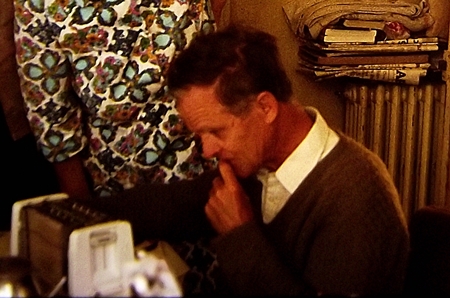
‘Doc’ mending a toaster in a friend’s home near Paris in 1978
Although my PhD supervisor was a full university professor of physiology, most people called him ‘Doc’. He was the pre-clinical tutor of the dental students, who undertook courses in academic rather than clinical departments of University College London (‘UCL’) during their first year of study. Doc’s PhD students were asked to volunteer to help teaching the basics of mammalian physiology to the dental students. I did this willingly. Once a week, I conducted tutorials for a group of six to eight dental students. Although I learnt a lot – teaching is the best was to learn, it was a case of the blind leading the blind. It was while doing this teaching that I met two of the people, who were to become owners of practices where I worked. They remembered me, but I did not remember them.
Once a week, the dental students carried out experiments in the physiology teaching lab. I assisted in the supervision of these classes. One of the experiments that the students undertook was pedalling on a bicycle rigged up to an electrical generator, which in turn was wired to a domestic lamp. The youngsters had to pedal furiously to get the lamp to glow, and while they did this their pulse rate and blood pressure was monitored.
Another experiment was connected with taste. The students had to prepare different dilutions of a chemical and used this to determine taste thresholds. The chemical used was phenylthiourea. Some of the students could not taste this at any dilution. These people were lacking a certain dominant gene that allows people to taste this substance. The point of the experiment was to teach the students both about taste and, also, about genetic variation. Doc was keen for the future practitioners to learn that we are not all ‘built’ the same way.
Another experiment was examining the effects of various chemicals on the strength and frequency of contractions of short lengths of rodent gut in oxygenated tissue media. When we did this experiment and ones like it during our BSc physiology course, we attached the contracting gut too electronic force transducers which sent electric signals to an electronic graph drawing machine.
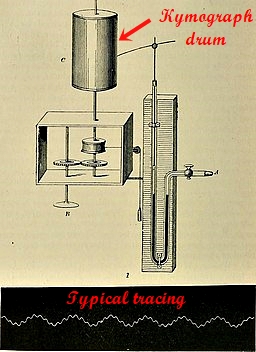
A kymograph attached to a pressure-measuring tube
Doc did not use this simple method when his dental students performed the experiment. The contractile tissue was tied to a long delicate metal lever which had a sharp point at the end of it furthest away from the fulcrum to which it was attached. Movements of the tissue caused the lever to move up and down. These movements were recorded on the smoked paper tightly attached to the cylinder (or drum) of an old-fashioned kymograph. As the lever moved in response to the contractions, the fine point at its end moved up and down and displaced the charcoal attached to the smoked paper producing a white tracing where the carbon had been removed.
Handling the kymograph drum was a tricky business. First the special plain white paper had to be tightly attached to the metal drum. Next, the drum was rotated above burning paraffin so that it became completely coated with the black particles in the smoke coming from the paraffin. When blackened, the drum and paper had to be removed from the smoking area and placed carefully on the spindle of the kymograph without touching the blackened paper so as to avoid removing the carbon coating. Attaching the gut to the kymograph lever was also tricky.
After the experiment, the paper covered with tracings had to be removed from the drum, again taking great care not to smudge the delicate layer of carbon and thereby obliterate parts of the tracings. Finally, the tracings had to be immersed briefly in a liquid lacquer that later evaporated and fixed the tracings (i.e made them immune to smudging). Only then could the students begin to make measurements of the amplitudes and frequencies of the contractions of the experimental material.
Doc had an ulterior motive in making his dental students use this highly obsolete measuring device. It was, he decided, an excellent way for future dentists to develop their manual dexterity.
As part of the pre-clinical course, Doc required that each of his students carry out a practical research project. He preferred simple projects such as measuring the blink rates of people sitting on Underground trains or assessing the rates at which peoples’ jaws moved whilst they were chewing gum. One group of students tested the theory (which has been proven) that people’s height was shorter at the end of the day than at the beginning. The main thing that concerned Doc was that his students were learning how to observe scientifically and systematically. It is most important, he felt strongly, for a clinician to be observant. He hoped that these projects would help to make these future dentists into skilled observers and therefore better clinicians.
Another reason for this project was for the students’ more immediate benefit. In the end of year physiology examination paper that he set for the dental students, he always inserted a question, which asked the student to write an essay about any aspect of physiology that interested him or her. Thus, simply by writing about the project undertaken, the student was guaranteed up to 25% of the marks.
Doc and his wife were perfect guides and became great friends during the time I was working on my PhD. I saw them socially often for many years afterwards until their deaths. It was meeting and getting to know the dental student whom I attempted to teach that was one of the reasons that I strayed into dentistry.

“The Contemporary African Art Fair (1 – 54)” is held annually at London’s Somerset House. This year it was a very exciting show full of vibrant, creative artworks mainly, but not exclusively, created by Africans with little or no European ancestry.
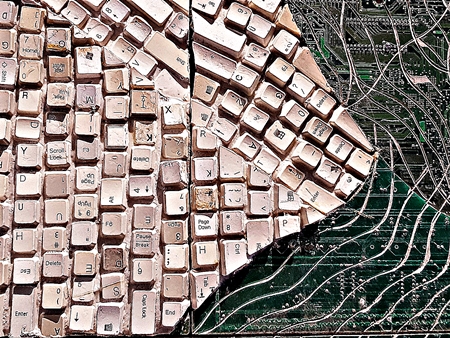
Many of the works use recycled waste materials such as bits of paper, engine parts, spent bullets and retired armaments, electronic components, and so on. Almost every art work is a fine aesthetic object when seen as a whole. Looking into any of these works in detail is like beginning to explore Africa, its troubled past and challenging present.

Africa is beginning to emerge from its colonial past. Africans are taking control of their destinies. Yet, at this exhibition, which is where a series of galleries display thier wares, mot of the dealers, who earn considerable commissions are ‘White’ Europeans. Maybe colonialism is not quite dead yet!
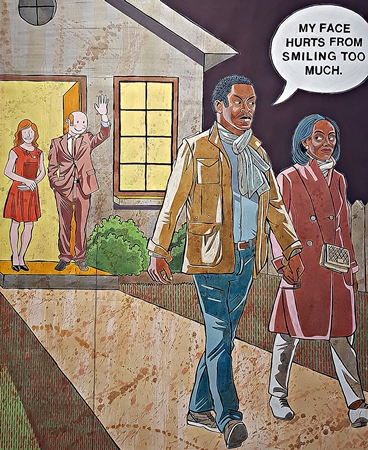
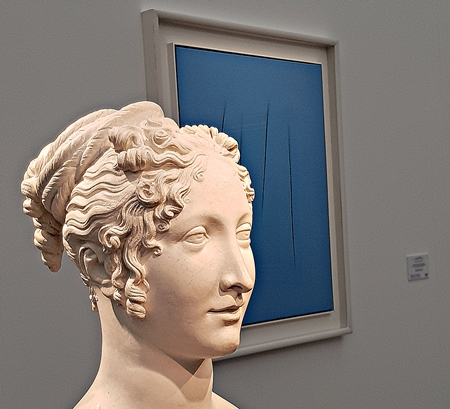
Is it fair to juxtapose works of modern or contemporary art with great masterpieces, which have stood the test of time?
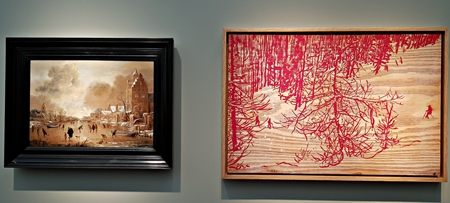
We were fortunate to have been given (by our daughter) complimentary tickets to the 2018 Frieze Masters exhibition held in Regents Park. It is part of a larger art fair, Frieze, held in London annually.
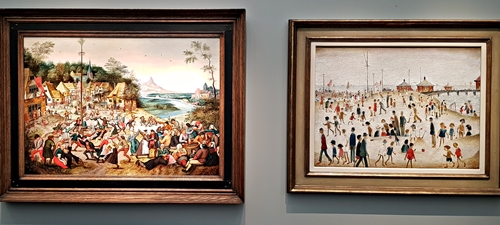
The Frieze Masters show contains stalls set up by art dealers, displaying only works made no later than the year 2000 AD. I must admit that I was expecting to see works of art only made during the 19th and 20th centuries. To my great delight, the artworks on display were made anytime between ancient times (several centuries BC) and 2000 AD.

Although the more recently made (i.e. 20th century) artworks are of the highest quality, they are often on display close to artworks made many centuries earlier. Some of the gallery stalls contain a mix of modern art and much older works. Placing some 20th century works (e.g. Calder) near to older classical works (e.g. Brueghel and Cranach) is not fair to the newer works.

The older artworks, which have stood the test of time and satisfied the tastes of many generations of viewers, make the nearby contemporary works seem weak in comparison. This is not always the case. Some small sculptures by Barbara Hepworth seemed very comfortable next to their far more venerable neighbours. Also, to my surprise some ancient classical carvings stood harmoniously close to some abstract art works made in the second half of the 20th century.
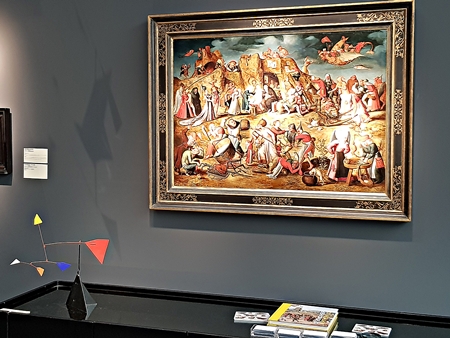
The older works of art on display have been treasured for many centuries. Probably, what we see today is the best of what was produced long ago. Even at the time when they were made, their excellence must have been obvious when seen beside other works, now lost and long-forgotten, which were created at the same time.
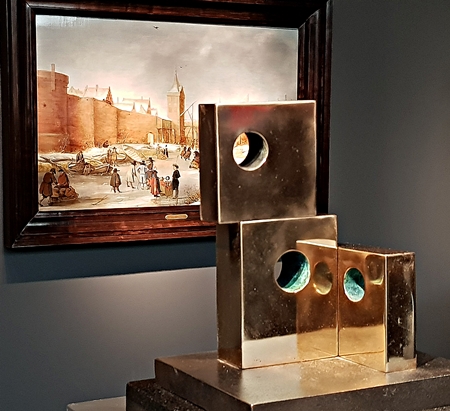
I question how many of the more recent (19th and, especially, 20th century) works of art, which I saw at Frieze Masters, will still attract both interest and high prices in, say, fifty or a hundred years’ time. And, I also ask myself how many of the newer works will be able to evoke the feelings of aesthetic wonder that, say, a Brueghel or a Cycladic sculpture have been able to do for so many centuries.

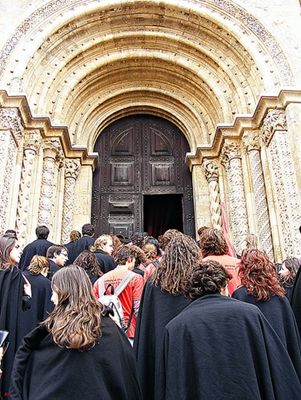
Today, getting a place to study a clinical subject (medicine, dentistry, and veterinary science) requires the candidate to achieve very high grades in the state university entrance exams (the ‘A Levels’). Grades lower than A or A* (the highest) greatly reduce a candidate’s chances of obtaining a place on a course to study for any of these three professions.
Note: in the A Levels, the top grade is A or A*, the lowest is E. Thus, A is better than B, and B beter than C … and so on
In 1969, I applied to study physiology at University College London (‘UCL’). In those days, most departments at the college required applicants to attend an interview session before they gave the candidate an offer conditional on the person achieving specified A Level grades. The Physiology Department invited prospective students to spend a whole day at the college. I turned up, not knowing what to expect.
During my day at the department, I was interviewed one-to-one by two different sets of staff members. They did not ask straightforward questions that could be answered if you had learnt the A Level syllabus by rote. For example, I was asked: “What would limit the size of the largest insect?” This is not something covered by the A Level syllabus. To answer this, I had to think ‘out of the box’, using my knowledge of insect anatomy and physiology. Another interviewer asked me about my hobbies. One of them was, and still is, collecting maps. “How interesting,” the questioner answered a bit dubiously, “It is also my hobby. What exactly interests you about maps?” I cannot remember my answer, but it seemed to satisfy him.
In addition to these intimate interviews, there were group sessions, during which small groups of candidates discussed topics with some of the academic staff. We were also given coffee, lunch, and tea. At each of these refreshment breaks, we mingled with students and academic staff, all of whom engaged each of us in conversation. By the end of the day, the members of the department must have gained a fairly detailed impression of the candidates they had met.
After a few days, I received a letter (there was no email in 1969) offering me a place conditional on my achieving at least three E grades (lowest grade of pass) at A Level. The Physiology Department and others at UCL made this kind of ridiculously low offer if they wanted a candidate. They knew from the extensive interview process what kind of student they were going to get and did not want him or her to have to worry about achieving high grades. Of course, they preferred their students to obtain high grades at A Level, and we all did. They would have accepted us with lower grades, but this was rarely necessary. Most of the graduates of the Physiology Department eventually moved on to completing higher degrees (masters and doctorates).
Until the early 1980s, candidates wishing to study dentistry or medicine were interviewed and offered places providing they achieved a minimum of C grades in their A Levels.
During the 1970s, I became friendly with someone who used to interview prospective dental students at UCL. She sat on an interviewing panel with the then Dental Dean, Mr Prophet, and another senior dental clinical academic. Each candidate was asked about aspects of his or her life, anything to get them talking. Each candidate was also asked whether they either played a musical instrument or did some kind of handicraft (for example sewing or model-making). Anyone who did either of these things was likely to be sufficiently dextrous to be able to practise dentistry. After the candidate left the room, the interviewers asked themselves only one question, providing the youngster they had just seen had satisfied them that he or she was dextrous. The question they asked themselves was: “Would we be comfortable being treated by him or her?”
Candidates, who had satisfied the interviewing panel, were offered places on the dental course conditional on them achieving mid-range grades at A Level: three grade Cs. The admissions panel were quite lenient. If someone they wanted under-achieved at A Level, say they only manged to get two Cs and one D, they admitted the candidate. It is worth noting that of all the dental schools in London at that time, that at UCL produced a higher proportion of dentists who went on to become dental academics than any of the other dental schools, all of which asked for students to achieve grades higher than Cs for admission.
I qualified as a dentist in March 1982. A couple of years later, I re-connected with ‘Mr G’, the technical tutor, who taught me the art and science of removable prosthetics (i.e. making dentures). I used to see him regularly because he carried out some prosthetic laboratory work for my patients.
In the mid-1980s, things had changed at UCL. To gain admission into the dental course, candidates were required to achieve top grades (all As) at A Level. The first year of the dental course was then, as it had been in my time, not clinical: it was taught in departments other than those in the Dental School. The subjects studied were academic (rather than clinical): biochemistry, general anatomy, physiology, and special dental anatomy. In the second year, the students moved into the Dental School, where they began clinical their studies on patients without teeth – in the Prosthetics Department, which is where I first met Mr G.
During the second year, we burnt our fingers and got covered with plaster of Paris while making dentures for our toothless patients. We also studied dental materials, both practically in the lab and theoretically in the lecture theatre. The materials course involved some essay writing, as did most of the other courses we had to take. Nobody in my class year struggled over these. We might have resented spending time on them, but we managed.
One day in the mid-eighties, by which time all the students in the second year of the dental course had achieved high grades at A Level, Mr G told me something that surprised me. He said that many of the students entering the second year, were incapable of writing essays. So much so, that the Prosthetics Department had to put on a course of essay-writing to teach these high achievers how to write. Worse than that, when the students were told to look up things in the library, they turned around to Mr G and said things like: “Why should we? You do it. You’re paid to teach us.”
With such an arrogant attitude, how were these people going to handle the often-nervous patients in their dental chair?
When our daughter and her class-mates applied for (non-clinical) undergraduate studies, the criterion for getting considered at all, was predicted A Level grades. If the predicted grades were low, universities would not even begin to consider a candidate. If they were high enough, then the chances of being given a conditional offer increased. Few universities bothered to interview candidates. They tended to rely on grade predictions, teachers’ reports, and ‘personal statements’ written by the candidates. It is said that a picture is worth a thousand words. I would say that a face-to-face interview far more valuable than any grade predictions or ‘personal statements’ as a means of selecting people seeking admission to a university, or even a job.
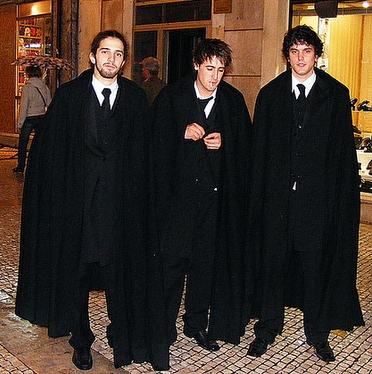
Photographs of students in Coimbra (Portugal), taken by Adam Yamey
Inspired by a wax sculpture, “Dasha”, by Urs Fischer

Like a candle, an idea
burns through her brain
burrowing still deeper

 yamey
yamey 