Revolution in north London

65 ca


Between 1965 and 1970, I studied at Highgate School (founded 1565). Its main Victorian gothic building perches on the summit of Highgate Hill. About two fifths of a mile south east of the school, an architecturally unexceptional late Victorian residential building stands on Cromwell Avenue (number 65). Although this brick edifice may not look special, it harbours the ghosts of a lesser-known episode in the history of India’s struggle for independence from the British Empire. The only thing that hints at the interesting history of number 65 is a blue plaque commemorating the fact that the Indian patriot and philosopher Vinayak Damodar Savarkar, a father of Hindu nationalism, lived there once.

In 1905, a wealthy barrister and scholar of Sanskrit, Shyamji Krishnavarma, bought number 65 Cromwell Avenue and named it ‘India House’. He intended it to be a home away from home for Indian students studying in England. However, it became more than that. It became a centre where Indian politics was discussed and acted upon.

Very soon, India House became the nucleus for Indians who wanted India to break free from the British Empire by any means possible. These included: sending propaganda and literature (including bomb-making manuals) regarded as ‘subversive’ and ‘treasonable’ by the British to India; smuggling weapons and ammunition into India; and political assassinations both in England and India. Valentine Chirol, the Foreign Editor of the Times newspaper wrote that India House was “…the most dangerous organisation outside India…”. As such, India House was under the constant vigilance of Scotland Yard, but despite this, its members were able to carry out real-life exploits that rivalled the derring-do of characters in John Buchan’s fiction.

Apart from Krishnavarma, those who congregated or lived at India House included well-known Indian patriots and freedom fighters, such as Madame Bhikaiji Cama, VVS Aiyar, VD Savarkar, Lala Lajpat Rai, Madan Lal Dhingra, and Har Dayal. The place was also visited by MK Gandhi (the future ‘Mahatma’), Charlotte Despard, David Garnett, Dadabhai Naoroji, and VI Lenin.

India House thrived until late 1909. During that year, one of its members carried out an assassination in London. After that deadly deed, activities at India House declined rapidly, and it was closed for ever by the beginning of 1910.

My new book, “Ideas, Bombs, and Bullets”, describes the history of Highgate’s India House and the activities that originated there. In addition, it explores the ideas that led Krishnavarma to ‘create’ India House and the lives led by people who lived in, or congregated, at the place. Also, it contains the background to the replica of 65 Cromwell Road that can now be viewed and entered by visitors to Kutch, an arid part of the western Indian state of Gujarat.

Until I visited Kutch in 2018, forty-eight years after leaving Highgate School, I had not known that my alma-mater is situated so close to the site of such an exciting short episode in the history of anti-colonialism. Boldly, I suggest that this story is also unknown to most pupils, who have attended Highgate School since 1905. Furthermore, Highgate’s India House and Shyamji Krishnavarma are practically unknown amongst many educated Indians, with whom I have spoken. I hope that “Ideas, Bombs, and Bullets” will help to make the exploits and aspirations of the members of India House more widely known.


BUY a paperback version of IDEAS, BOMBS, and BULLETS here:

http://www.lulu.com/shop/adam-yamey/ideas-bombs-and-bullets/paperback/product-24198568.html

BUY an e-book version of IDEAS, BOMBS, and BULLETS here:

https://www.amazon.com/dp/B07W7CYKPG/ 

The Patient Assassin

Assass


I love browsing in second-hand bookshops. Occasionally, I come across really good books that I had not previously known about. The Patient Assassin by Anita Anand (published 2019) was one such discovery.

The Patient Assassin is about the life and exploits of  Udham Singh (1899-1940), a pro-independence, anti-British activist. Some of his friends were killed in the notorious Jallianwalla Bagh massacre  in mid-April 1919. Under the command of General ‘Rex’ Dyer, several hundred innocent men, women, and children, were shot dead within the closed space of Jallianwalla Bagh, a walled public garden in Amritsar. Many others were injured in this cruel attack whose supposed purpose was to subdue the people of the Punjab so that they would not rise against British rule. 

Dyer died of illness in England, having been proclaimed a hero for his malevolent deed. Michael O’ Dwyer, the Lieutenant Governor of the Punjab, who thoroughly approved of what was done at Jallianwalla Bagh and other horrific treatment of Indians, retired to London.

Udham Singh had friends who were killed at Jallianwallah Bagh. He made it his mission to kill O’ Dwyer. The author of Patient Assassin, Anita Anand, traces Udham’s complex and mysterious life from the Punjab to London, where he shot dead O’ Dwyer at a meeting at London’s Caxton Hall in 1940. Ms Anand weaves an exciting tale based on her researches of Udham’s colourful and exciting life. Her book about a real person makes far more engaging reading than most fictional thrillers. 

I was very pleased to stumble across Anand’s book for two reasons. One is that it turned out to be an un-put-downable read. The other is that it chimes with something that I have been working on.

In mid 1909, Madan Lal Dhingra, who like Udham Singh came from the Punjab, shot dead Sir William H Curzon Wyllie, a retired important British administrator in India, at the Imperial Institute in South Kensington. This assassination horrified the British nation and many in India. 

Dhingra had come to England study engineering at University College London several years before shooting Curzon Wyllie. He had become involved in the freedom fighting activities that were centred on India House in Highgate between 1905 and early 1910. It was Dhingra’s fatal shots that hastened the demise of India House, a student hostel and meeting place which was regared by the British as a ‘centre of sedition’.  I have almost completed writing a book about India House and its members, including Dhingra, and it should be available for sale soon. Its title will be “Ideas, Bombs, and Bullets”.

Finding Ms Anand’s book quite by chance was a great delight for me. Unintentionally, it might almost be considered a kind of sequel to what I have just written.

We did not mean to visit Dubai

dubai

I must admit that Dubai was never on the long list of places that I hope to visit during my lifetime. It was a place that, without any rational explanation, I felt like avoiding. Benidorm is another of these places, as are, for example, EuroDisney, Ayia Napa, Eilat, the Seychelles, and Sharm El-Sheikh. However, when flying on the excellent Emirate Airways, it is necessary to change ‘planes at Dubai’s fantastic airport.

A few years ago, we flew from London to Bangalore (India) by Emirates, This entailed changing ‘planes at Dubai. After embarking at Heathrow Airport, we were told that our departure would be delayed while a defective aircraft component was changed. Consequently, we departed about two hours later than we should have. As a result, we missed our connection in Dubai.

At Dubai, we were directed to a desk that dealt with connection/transfer problems such as that we faced. An extremely helpful man with an exuberant moustache and beard offered to put us on the next flight to India, which would have taken us to Bombay rather than Bangalore and advised us that from Bombay, we would no longer be in the care of Emirates. This did not sound satisfactory. Then, he said:

“If you are not in a hurry, why don’t you spend a day in Dubai and take the next day’s Emirate flight to Bangalore?”, adding quickly, “Emirates will put you up in a hotel and pay for our meals and accomodation.”

We opted for that, and within a few minutes we were whisked in a limousine to a hotel close to the airport. There, we were settled in two adjoining luxurious rooms.

Next morning, we decided to see Dubai as we had most of the day to do so. We bought day tickets for the city’s superb rapid transit rail service and visited the oldest part of Dubai, on the Creek. At the Creek, we bought day tickets for the small boats that criss-cross the Creek. 

Without going into detail, we had a wonderful day in Dubai, travelling on boats, visiting museims and historic buildings, and eating superb middle-eastern food. Almost everyone we met was friendly and helpful. 

Although I would not choose to visit Dubai again unless we have to because of a missed ‘plane connection, our day in Dubai removed my previous completely unjustifiable prejudice against visiting the place. Our delayed Emirates flight did us and Dubai a great favour!

A sip of water

bottles

Like many other parts of Europe, here in London we have been ‘enjoying’ some exceptionally hot weather. Hot as it is outside, it can be even hotter on some of the lines of the London Underground system. The Central Line is one of the worst: its trains are hot as are its below ground stations.

I was travelling on the Central Line recently when I noticed a late middle-aged woman sitting opposite me. Her face was hidden under much make-up. At one point, she opened a metal water bottle, whose colour matched her dress, and took a couple of sips of (presumably) water. I guessed what would happen immediately after she had screwed the lid back on.

My guess was right. She reached into her large handbag, fumbled about, and then withdrew a bag full of cosmetics. First she examined her face in a mirror, then wiped something invisible off her chin. This was the prelude to using a furry brush to re-powder her chin and the skin between her nose and upper lip. When she was satisfied with that, she applied another layer of bright red lipstick to her already heavily ‘lipsticked’ lips. Then, she smiled to herself. I was amazed that such a tiny sip of water could cause so much trouble. 


Picture adapted from Amazon website

Indian patriots in Edwardian London: against the British Empire


Here is something to whet your appetite!

IDEAS,BOMBS, and BULLETS

Indian freedom fighters in Edwardian London

Inside a house on a quiet tree-lined residential street in north London’s Highgate, a young Indian held a revolver in one hand and repeated a solemn oath promising to give liberating India from the British greater importance than his own life…

Pandit Shyamji Krishnavarma (1857-1930) was born in Mandvi in Kutch. He earned his title of ‘Pandit’ because of his very great knowledge of Sanskrit. In the 1880s, he travelled to England where he became an assistant to Professor Monier Williams at the University of Oxford. Krishnavarma’s studies of Sanskrit at Oxford earned him great fame amongst the Indologists all over the world. He also became a barrister. On hisreturn to India, Krishnavarma served as ‘Diwan’ in various princely states, before returning to England in 1897.

FACE

By 1905, Krishnavarma had become deeply involved in the movement to free India from the grips of the British Empire. That year, he purchased a house in the north London suburb of Highgate. He named it ‘India House’ and it served as both a hostel for Indian students and a centre for plotting the liberation of India from the British.

Between 1905 and 1910, when India House was closed and sold, this place became known as a ‘centre of sedition’ and the ‘most dangerous organisation in the British Empire’. I have almost finished writing a book, to be called “IDEAS, BOMBS, and BULLETS” about Highgate’s India House and the people associated with it. 

Here is a brief introduction to my forthcoming book:

This is about a little known part of the history of India’s struggle for independence. It concerns events centred on a house in Edwardian London. It is a tale of bombs, guns, lawyers, patriots, philosophers, revolutionaries, and scholars.

A large Victorian house stands in a residential street in the north London suburb of Highgate. Between 1905 and 1910, it was known as ‘India House’, and was a meeting place and hostel for Indian students, many of whom wished to help liberate India from centuries of British domination.

In the 19th and 20th centuries before India’s independence, many young Indians came to England to be educated. This is the story of  a few of them, who came to Britain in the early 20th century, and then risked sacrificing their freedom, prospects, and lives by becoming involved in India’s freedom struggle. 

This book describes the true adventurous exploits of members of Highgate’s India House (including VD Savarkar, Madan Lal Dhingra, and VVS Aiyar) and its history.

I will give you more news about my book soon, I hope!


Blockbusters

Bauhaus

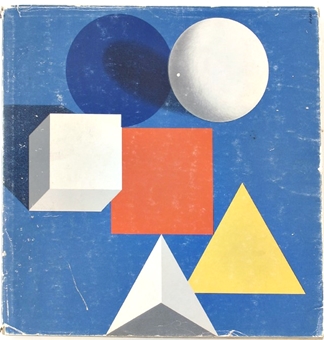
National museums in the UK do not charge entrance fees to view their permanent exhibits. However, they do charge, often quite high, fees to view special temporary exhibitions.  This is nothing new. In 1968, I saw superb exhibition at the Royal Academy about the Bauhaus school, founded in pre-WW2 Germany. It was so excellent that I visited it on three separate occasions. Likewise, with a wonderful exhibition about Tutankhamen, also held at the Royal Academy.

Now, several decades later, the museums and galleries have caught on to the idea of ‘blockbuster’ exhibitions. These try to attract vast numbers of visitors, who would not nomally visit the institution where they are being held. They often succeed in drawing the crowds, but by slightly devious means. For example, recently the Royal Academy held an exhibition called: “RUBENS AND HIS LEGACY. Van Dyck to Cezanne”. I thought, as I am sure many other visitors believed, that this was primarily an exhibition of works by Rubens. Well, it was not. There were a few paintings by this great master diluted by a far larger number of works by other artists. It would have been more honest, but less ‘sexy’ and attractive to the public, to have called this exhibition something like “THE LEGACY OF RUBENS”.

My wife visited the current exhibition at the Tate Britain, a real crowd-puller called “VAN GOGH AND BRITAIN”. Who cannot resist seeing pictures by Van Gogh? Few, judging by the crowds of people jammed into the rooms where the exhibition is being held. And, how many paintings and other works by the man who cut off his own ear were on show. There were only a few. The rest of the show was of paintings by other artists, who were definitely not of interest to the bulk of the visitors, who had paid £18 a head to see a Van Gogh show. Clearly the name of the exhibition draws in the ‘punters’. 

As with the Van Gogh exhibition, the recent Leonardo da Vinci exhibition at the National Gallery was also disappointing. A few works by the great Italian master were vastly outnumbered by works produced by inferior artists, in whom most visitors were uninterested. And, most of the ‘fillers’ in the exhibition had only tenuous connections with Leonardo.

Of course, not all blockbuster exhibitions fail to live up to their promise. Apparently, the Alexander McQueen exhibition at the Victoria and Albert Museum was a brilliant show that concentrated on the subject promised by the exhibition’s name. Another really good temporary exhibition, which attracted an entry fee, was one dedicated to Roy Lichtenstein at the Tate Modern.

Given the absence of entrance fees and the constant insufficiency of public funds, our national museums and galleries need to raise as much money as possible. The blockbuster exhibitions must be a good way of doing this. It would be better if their naming was a little more related to what the visitor is likely to see.

Out of tune

Highg


I have never been praised for having a good singing voice for a good reason. That is because  I do not have one.

I entered north London’s Highgate School, my secondary school, in 1965 having passed the fairly tough Common Entrance examinations. On the second day there, I took part in a football trial, and was advised not to play football at school. Soon after this, all of the new entrants to the school had to take a voice test. This involved standing in a long queue. One by one we reached a grand piano at which the senior music teacher, a Mr ‘Cherry’ Chapman, sat. As each boy arrived at the piano, Mr Chapman pressed one of the piano’s keys, and the boy made a sound. Depending on this sound, Mr Chapman was able to determine who had a voice good enough to be used in a choir and who did not. When it was my turn, I must have made a sound resembling that which you make for the doctor when he asks you to stick out your tongue and say “aaaaah”. My sound disqualified me from joining the choir.

One day a week, those in the choir spent an hour before lunch at choir practice. The rest of us were confined to classrooms where we were expected to read a book of our choice for one hour. This was no hardship in my case.

The pupils at Highgate School were divided into ‘houses’. Each house contained pupils from throughout the school. I was in Heathgate House, a ‘house’ for day boys rather than boarders. There were numerous inter-house competitions for various sports activities. Once a year, there was an inter-house singing competition. Each house had to produce its own choir, choose a song, practice it, and then sing it on the day of the contest. The first time that this competition occurred after I entered the school, Heathgate chose to sing (in French) the aria L’amour est un oiseau rebelle from the opera Carmen by Bizet.

Apparently, my voice detracted from the quality of Heathgate’s choir, and I was asked to leave the other singers. This was possible because the rules of the competition did not insist on every member of a house being included in the choir. Without me, Heathgate managed to win the contest.

Whenever I hear the aria, which was sung in the competition, I remember that event back at Highgate School. Unlike Shakespeare’s Julius Caesar which I had to study for a state examination and grew to hate, I still enjoy listening to performances of Carmen.


Picture source: http://www.dailymail.co.uk