One body, two heads

A short reflection on the use and origin(s) of birds with two heads

DHE 2 Blore

On a Hindu temple in Bangalore, Krnataka, India

The earliest archaelogical evidence of the existence of double-headed eagle (‘DHE’) or any other bird with two heads (each with its own neck) is in Bablylonian remains dating back to 3000-2000 BC.

The DHE is and has been used as a heraldic symbol by, for example: the Scythians, the Hittites, the Seljuk Turks, the Kingdom of Mysore (in India), pre-Columbian America, Cormwall (UK), Byzantium, the Holy Roman Empire, the Russian Empire, and several states in the Balkans. The Balkan states that use the DHE include: Albania, Montenegro, and Serbia.

DHE 0

Map showing some of the many places where the double-headed eagle has been employed

I find the DHE to be a fascinating symbol because unlike, forexample,  the cross, Star of David, and swastika, it is not a simple geometric construction, which could be created by random ‘doodling’. Also, it is not naturalistic like the commonly used  such as a lion,  single headed eagle, bear, fish, and hound. 

There is a Hindu mythological creature, a bird with two heads, the Gandaberunda, which has been adopted by the Government of Karnatak (formerly Mysore) as its state emblem. The origins of this creature are obscure, but it has been described in the ancient Hindu texts, the Vedas.

The DHE is an imaginary creature, a product of human thought. The Babylonians not only portrayed the DHE, but also other double-headed creatures.
DHE 1

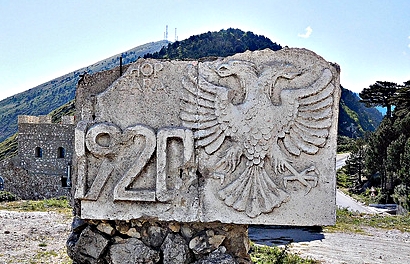
The Albanian double-headed eagle on the summit of the Llogara Pass in Southern Albania

I would like to SPECULATE that the origin of the DHE was Mesopotamia. From there, I imagine it spread through what is now Turkey to Europe, and across the Indian Ocean to India. If the DHE, or something similar appears in the Vedas, it would be interesting to know if this was by chance or as a result of some forgotten connection between Mesopotamia and the Indian sub-continent.
I love you…

Teeth_500

In the second half of the 1990s, I worked in a dental practice in West London, not far from Ladbroke Grove. It was also not far from a home or shelter for mentally-compromised people. In those days,  patients with psychiatric problems mixed with the other people in the local community. Many of these people attended our practice as dental patients.

‘P’, one young man, a schizophrenic so he told me, was a regular patient of mine. Usually, treating him presented no problems other than those relating to the technical details of sorting out his dental problems.

One morning, P attended my surgery. He sat in the chair, which I then set to the reclining position. Lying down, he said to me, out of the blue and without any prompting:

“Mr Yamey, I have decided to become a homosexual.”

At a loss as to how to respond adequately, I said:

“That’s nice.”

Then in a strong voice, P exclaimed:

“Mr Yamey, I love you.”

“Thank you,” I responded lamely, adding: “Let’s get on with your treatment now”.

At that moment, my dental assistant, ‘Gemma’, walked into the surgery, ready to assist me with the treatment I was about to provide P. Within seconds, P began unzipping the fly on his trousers.

“Put that away immediately,” I ordered, “otherwise we will have to summon the Police.”

P followed my instruction and behaved perfectly normally throughout the rest of the treatment session.

When the appointment was over, P sat up from the reclining position, and placed a pile of low denomination coins on the armrest closest to me.

“That’s a tip for you, Mr Yamey.”

I thanked him, and then returned the coins, knowing that he could ill afford to waste money on me.

Nothing changes

Palermo

It is 2018, and I am eating ice cream in Italy after the ladies in my family have just visited a shop selling brassieres.

60 years earlier, aged 6, I was doing the same thing. We used to visit Florence annually during my childhood. Every year, my mother used to buy her bras in Florence at a shop close to an excellent ice cream shop called “Perché no?” (IE Why not?). After every visit to the bra store, I was rewarded with an ice cream.

Now, here in Palermo, the same thing has happened six decades later?

Nothing changes.

An Albanian outpost

In about 1480, Albanians fleeing from the Ottoman army that was invading Albaia were given land in Sicily, just South of Palermo.

They built the town of Piana degli Albanesi on this land, and it is still thriving. Most if the inhabitants speak an archaic form of Albanian as well as Italian and preserve many Albanian traditions.

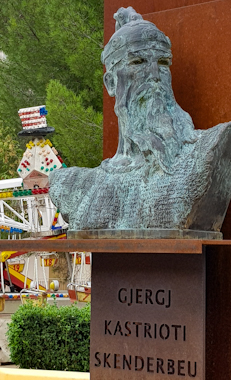
This picture shows a bust of Skanderbeg in Piana degli Albanesi. George Kastrioti Skanderbeg, national hero of the Albanians, resisted the Ottoman army for about 25 years, saving western Europe from becoming part of the Ottoman Empire.

African Art Fair 2018

AFR 2

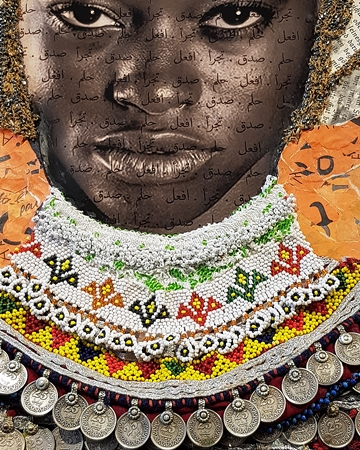
“The Contemporary African Art Fair (1 – 54)” is held annually at London’s Somerset House. This year it was a very exciting show full of vibrant, creative artworks mainly, but not exclusively, created by Africans with little or no European ancestry.

AFR 4

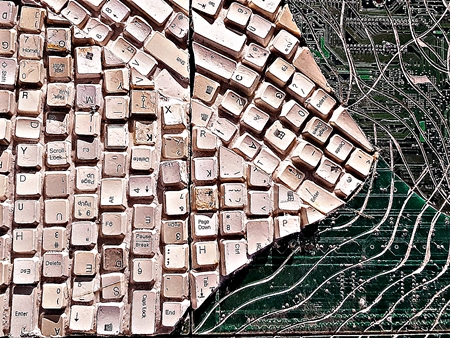
Many of the works use recycled waste materials such as bits of paper, engine parts, spent bullets and retired armaments, electronic components, and so on. Almost every art work is a fine aesthetic object when seen as a whole. Looking into any of these works in detail is like beginning to explore Africa, its troubled past and challenging present.

AFR 1

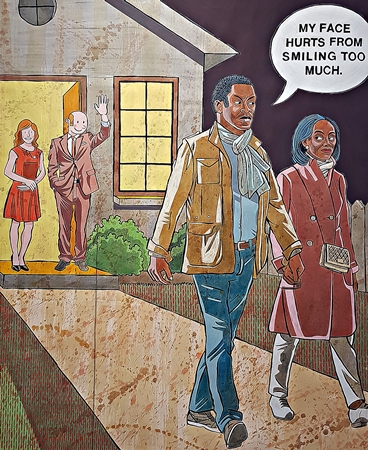
Africa is beginning to emerge from its colonial past. Africans are taking control of their destinies. Yet, at this exhibition, which is where a series of galleries display thier wares, mot of the dealers, who earn considerable commissions are ‘White’ Europeans. Maybe colonialism is not quite dead yet!

AFR 3