WE HAD TICKETS to watch the new “Barbie” film yesterday (the 7th of August 2023) at 5.50 pm at the Gate Cinema in Notting Hill Gate. We watched the advertisements and then the trailers for forthcoming films. Halfway through the trailers, emergency lights were switched on, the soundtrack disappeared, and the pictures being projected shrunk in size. There had been a power failure, and everyone was asked to leave after having been given complimentary tickets for a future screening of any film. We left without watching “Barbie”.
The next day, we travelled to Coventry to see the cathedral and the Herbert Art Gallery & Museum. At the Herbert, we saw several excellently curated exhibitions. They were far better than many we have seen in London in recent months. They were imaginatively and intelligently conceived, as well as being superbly displayed.
One of these shows was called “Divided Selves”. In simple terms, it consist of mostly recent works of art by various artists, which deal with conflicts between different groups of people all over the world.
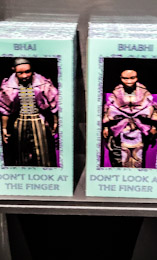
One of the exhibits is by an artist and filmmaker Hetain Patel. Part of the artwork are three sets of plastic dolls. Each doll is contained in a cardboard box with a transparent plastic window, just like the containers in which dolls are often sold. One pair of dolls was labelled ‘Bhai anmonthshi’, Bhabhi means sister-in- law in Hindustani and Bhai means brother.
We missed Barbie yesterday, but seeing Bhabhi today almost made up for not seeing the film.
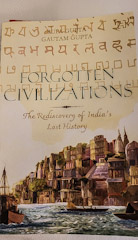
RUPA GUPTA AND Gautam Gupta have written a fascinating book with an intriguing title: “Forgotten Civilisations. The Rediscovery of India’s Lost History”. It describes 15 British men, who came to India during the British colonial era, which ended on the 15th of August 1947 and explored the Subcontinent’s early history.
The authors have written short biographies of these interesting men, highlighting the contributions they made to documenting India’s long history. The book seems to be making the case that before the arrival of these men, filled with a great enthusiasm for unearthing the past, India’s history prior to the Mughals had been largely forgotten.
Now, I am not qualified to comment on whether or not Indians had forgotten about their early ancestors, but wonder whether this history had really been lost before the arrival of the men described in the book. In many cases, these men were reliant on help from pandits who could read ancient scripts such as Sanskrit. Understanding these texts was the key to many of the ‘discoveries’ made by the subjects of the book. The existence of these texts suggests that long before the arrival of the British, early Indian history had been preserved, but maybe not as systematically as modern European historians would have preferred.
Despite my reservations about whether India had really lost or forgotten its ancient past, the book by the Guptas is fascinating (even though I have some reservations about its rather repetitive formulaic style).
Suggesting that a country had forgotten its own history might pander to readers who still harbour patronising or colonialist ideas about India. Although I have not yet seen this book on sale in British bookshops, I suspect it would might well appeal to readers, who seem to have forgotten that Britannia no longer rules the waves. I doubt that it was the Gupta’s intention that their interesting text might possibly appeal to readers who still believe that Britain is superior to other nations.
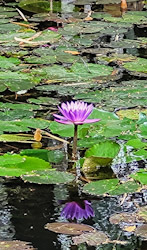
THE BEST TIME to see flowering roses in the Queen Mary’s Garden (‘QMG’) in London’s Regent Park is in the first half of June. At that time most of the 12000 rose plants in the gardens, created in 1934, are likely to be in bloom. So, it was with some trepidation that we took our friends to see the QMG, Although I did not say so, my feeling was that as far as blooms were concerned, this would be a disappointing visit. To my great surprise, it was not such a pointless visit as I had feared. There were a substantial number of rose plants either in bud or in full bloom.
Seeing the roses in bloom in November made me do a little research. I discovered that there are several varieties of rose plants that flower in autumn in the northern hemisphere. These varieties include (according to an American website): Hybrid Tea, Floribunda, Grandiflora, and Climbing Roses. According to another source, some roses have a very long flowering season that can extend into October and November.
I have no idea what kind of roses we saw during our late November visit to the QMG. However, seeing these attractive flowers made me realise that a visit to this garden as late as November need not be a disappointment if seeing flowers is your desire.
WHILE I WAS STUDYING to become a dentist (in the late 1970s), I used to attend an etching and engraving class in a studio in West Hampstead’s Sumatra Road. The class was supervised by the owner of the studio, my mother’s cousin Dolf Rieser (1898-1983). Like my mother, he was born in South Africa. They were both born in King Williams Town, but he was 23 years older than her.
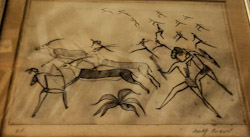
An engraving by Dolf Rieser
Dolf ‘s childhood memories evoke South Africa as it was at the turn of the century (19th/20th) and are recorded in his unfinished autobiography (dolfrieser.com). Here is an extract that gives a flavour of them:
“The climate of King William’s Town was particularly difficult to bear and my mother suffered greatly especially where her nerves were concerned. I vividly remember her awful attacks of migraine when she had to stay in a darkened room. In the end we decided to leave South Africa, as I shall relate later on . My uncle, my mother’s brother, was at that time living on the border of Basutoland. He was running a small trading post and also kept some horses and sheep. This place was right up on the high plateau and was called Moshes-Ford after the famous Basuto chief, Moshes. My uncle invited us up to him for a holiday and I think we first took a train and then had to continue by horse and carriage, which presumably was also the postal service at the time. I remember well an “ooutspan” for lunch near an immense field full of dried bones and skeletons. These were the remains of the “Rinderpest” which shortly before had nearly wiped out the cattle of South Africa. I played football with a cow or ox skull, very much to the annoyance of the grown-ups. The following night we had to spend at the German Pastor’s home and I remember how impressed I was with the enormous bed and unknown eiderdowns.”
The ’Rinderpest’ was a disease that afflicted cattle.
During his classes at Sumatra Road, he would regale us with stories of Paris in the 1920’s and 1930s, when he was there learning etching an engraving in the studios of both Stanley Hayter and Joseph Hecht. One story that sticks in my mind is how he used to attend the same Parisian café as Pablo Picasso. The great master sat at one table alongside the the other leading artists in Paris, and junior artists like Dolf sat close by at another table.
Dolf was an excellent teacher. He showed us how to etch and engrave. However, what impressed me most is that he had the ability to look at his students’ works in progress, understand what we were trying to achieve, and then provide constructive (rather than prescriptive) advice.
I really miss Dolf, even though it is so many years since he died. He had a wonderful sense of humour, was a wonderful raconteur, and, having once trained as a biologist (before becoming an artist), a wonderfully adventurous approach to his métier.
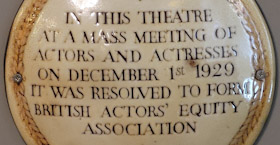
WHILE DRINKING IN the first-floor bar of the Duke of York’s Theatre (‘DOY’) in London’s St Martin’s Lane, I noticed an interesting small commemoration plaque. But before discussing that, first a few words about the theatre.
The DOY was opened in 1892 with the name ‘The Trafalgar Square Theatre’. Later, it was given its present name in honour of the Duke of York, who later became King George V. It was designed by the leading theatre and music hall architect Walter Emden (1847-1913). Amongst the many plays performed in this beautiful fin-de-siecle theatre where JM Barrie’s play, the precursor of his book, “Peter Pan, or The Boy Who Wouldn’t Grow Up” which was premiered in late 1904. The theatre was bought by the Ambassador Theatre Group (ATG) in 1992. Since its opening, many successful plays have been performed in it. The play we watched in mid-November 2022 was “The Doctor” by Robert Icke. It was a lively and engaging play that was crammed a bit too full of dilemmas that trouble us today.
The plaque, which I noticed whilst waiting to enter the auditorium was put on the wall of the bar to celebrate that on the 1st of December 1929, a mass meeting of actors and actresses was held in the theatre. Those assembled resolved to form the ‘British Actors Equity Association’. Above this plaque, there is a framed document with many signatures below the words: “We the undersigned, hereby pledge ourselves that we will not enter into any engagements with Theatre Managers on conditions which would deny our right to refuse to work with non-members of Equity.”
Amongst the signatures on this undated document, I was able to read those of Flora Robson, Hermine Baddeley, Violet and Irene Vanburgh, Marie Burke, Reginald Backs, Robert Donat, Sybil Thorndyke, Leslie Henson, Godfrey Searle, and many others.
This document marked the birth of the actors’ union known as Equity. As the document suggested, and like many other British trade unions, Equity adopted the closed-shop policy. When this was made illegal by Margaret Thatcher’s government in the 1980s, joining the union required evidence of having experience of a sufficient amount of paid professional work.
I must admit that I am not sure whether seeing the memorial to the foundation of Equity was not more exciting for me than watching the play I had come to see.
THE CRANE IS a tributary of the River Thames. Named after Cranford (Middlesex) through which it flows it is about 8 ½ miles in length. It rises as Yeading Brook and flows towards its mouth at Isleworth, just opposite the southern tip if Isleworth Ait. On its way, the Crane passes east of Heathrow Airport, Hounslow Heath, Whitton, Twickenham, and St Margarets. It also feeds the man-made Duke of Northumberland’s River, which enters the Thames about 610 yards downstream from the mouth of the Crane.
The shot tower at Crane Park
The Crane flows through beautiful, wooded parkland known as Crane Park. This incredibly peaceful open space, part of which is a nature reserve, is in Whitton near Twickenham. Part of the park is in the Borough of Richmond-on-Thames and the rest in the Borough of Hounslow. The Crane, which contains a wooded island and breaks up into rivulets occasionally, is bordered on both sides by the park. The island, Crane Park Island, now a lovely nature reserve, a peaceful oasis in a busy part of London, was created for a purpose that was far from peaceful: warfare.
In the 1760s, a gunpowder works was established in what is now the west part of Crane Park. The island was created to form a millstream for operating a waterwheel connected to a mill for grinding saltpetre (nitrates of either sodium, potassium, or calcium) used to make gunpowder. It was part of a complex of buildings that housed the Hounslow Powder Mills. Before the 19th century, what is now Crane Park would have been part of the then much vaster Hounslow Heath. The website of the Twickenham Museum noted that gunpowder mills were established on the Heath as early as during the reign of King Henry VIII.
All that remains of the Hounslow Powder Mills is a tall brick tower topped with a lead roof and a small lantern with a weathervane. It resembles a lighthouse. This was built either late in the 18th century or early in the 19th. Lying near it are a couple of circular millstones, which might have been used for grinding gunpowder. Described by some as a shot tower, it might have been used to manufacture lead shot. Molten lead would have been poured through a copper mesh near the top of the tower, and as it fell downwards, it formed into droplets, which when cooled became pellets of lead shot. This is most likely, but others suggest that the tower was part of a windmill.
Manufacturing gunpowder was a hazardous procedure, and unintended explosions were not unusual. The Twickenham Museum’s website related:
“Joseph Farington noted in his diary on Monday 25 January 1796 that: “The Powder Mills at Hounslow were blown yesterday. The concussion was so great as to break the windows in the town of Hounslow. Hoppner having been to Eaton, on his return rode to the spot where the Mills had stood, not a fragment of them remained. They were scattered over the country in small pieces. Three men were killed”… Burial records note deaths from further explosions: 5 on 17 November, 1 on 19 June 1798, 7 0n 15 July 1799, 2 on 27 June 1801, and so on through the century. Abraham Slade noted in his diary for 1859 that: “On the 29 of March the Powder Mills blew up, sending 7 poor souls into eternity in a moment. It has broken a great deal of glass in Twickenham & neighbourhood. We thought the whole place was coming down.””
The last major explosion at the Hounslow Mill was in 1915.
The powder mills passed through the hands of various operating companies: Edmund Hill, John Butts and Harvey and Grueber until 1820, then Curtis and Harvey until 1920, and then by Nobel Industries.The licence for producing explosives at Hounslow Powder Mill was revoked in 1927. In 1927, a Twickenham councillor, Frank Yates, bought the site. Later, he sold part of it for housing and the rest to Twickenham Council, who used it to create what is now Crane Park.
In addition to the impressive tower and a rusting sluice gate, several other less impressive remnants of the manufacturing complex can be seen on the island in the form of the bases of engine housings: lumps of bricks and concrete with thick metal rods protruding from them. Apart from the tower and a few other barely identifiable remnants, it is hard to believe that the sylvan and peaceful Crane Park was ever a place where the material of warfare had been produced for several centuries.
HENLEY-ON-THAMES is located at the Oxford end of a bridge across the River Thames, which separates the county of Oxfordshire from its neighbour Berkshire. Located on the old main road between London and Oxford, it retains much ‘olde-worlde’ charm. Its streets are lined with many buildings that were constructed in the 18th century and before. Some of these used to be coaching inns but are no longer. However, some of the hostelries that served wayfarers in times long ago are still serving thirsty and hungry customers today, for example: The Red Lion, where William III might have visited, now an upmarket restaurant; and The Catherine Wheel, now a branch of the Wetherspoons company. On a recent visit in April 2022, we enjoyed superb coffee at Pavilion on The Market Place, close to the Town Hall.
Beer lovers will not need reminding that Henley is the home of Brakspear & Sons, the brewery company. Founded in Henley in 1722, beer was brewed in the town since then, although some of the comapany’s products are now brewed elsewhere. Many of the brewery’s older buildings, now converted for new purposes, can be seen alongside New Street. The company’s offices are now located on Bull Courtyard off Bell Street.
The stone bridge across the river was built in 1788. It is the finishing place of the annual Henley Royal Regatta held in summer, ever since its inception in 1839. Near the bridge, stands Henley’s parish church of St Mary the Virgin, which has a 16th century tower. The exterior walls of the southeast corner of the church is an eye-catching chequerboard of alternating masonry and flint squares. The church’s interior has been much modified by the Victorians. The churchyard north of the church is surrounded mainly by almshouses. Immediately next to the north side of the church stands a two-storied, half-timbered building, the Chantry House, some of whose beams come from trees felled in 1461 (according to scientific dating methods). Between 1552 and 1778, this edifice housed a school. Since 1923, it has housed the Parish Rooms.
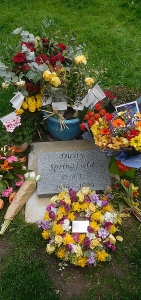
The churchyard is filled with many gravestones. One of them immediately attracts the visitor as it is surrounded by generous amounts of fresh flowers. It is a memorial to the singer Dusty Springfield (1939-1999), who died in Henley. In the 1990s, Dusty lived by the Thames at Hurley near Henley. While in the area, she suffered from several bouts of breast cancer, the cause of her demise. Her funeral at St Mary’s in Henley was attended by many of her fans and leading lights in the British popular music scene including Elvis Costello, Lulu and the Pet Shop Boys. According to her wishes, Dusty was cremated, and some of her ashes were scattered in Henley and the rest in Ireland.
Dusty was not the only music celebrity to have lived in Henley. A man we met outside his house in the town reminded us that the Beatle George Harrison (1943-2001) had also lived in the town. He also mentioned that Henley’s former MP, the present Prime Minister Boris Johnson, had attended meetings in his home, and that he could tell us a thing or two … but he did not!
This photograph I took in Cornwall reminds me of lines from the first verse of a poem, “Elegy Written in a Country Churchyard”, written by Thomas Gray (1716–1771). The lines are:





 yamey
yamey 